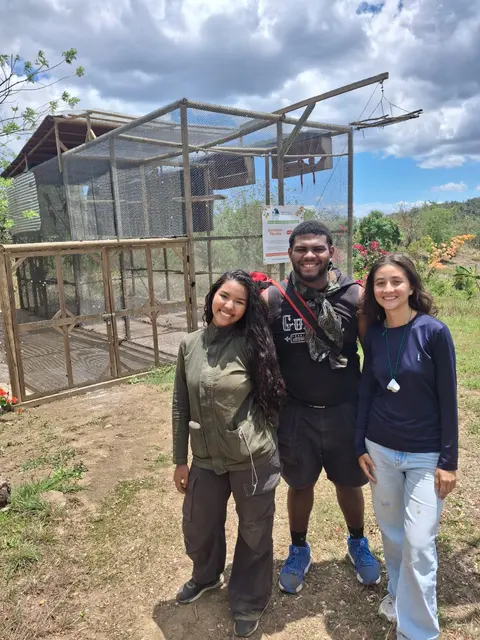
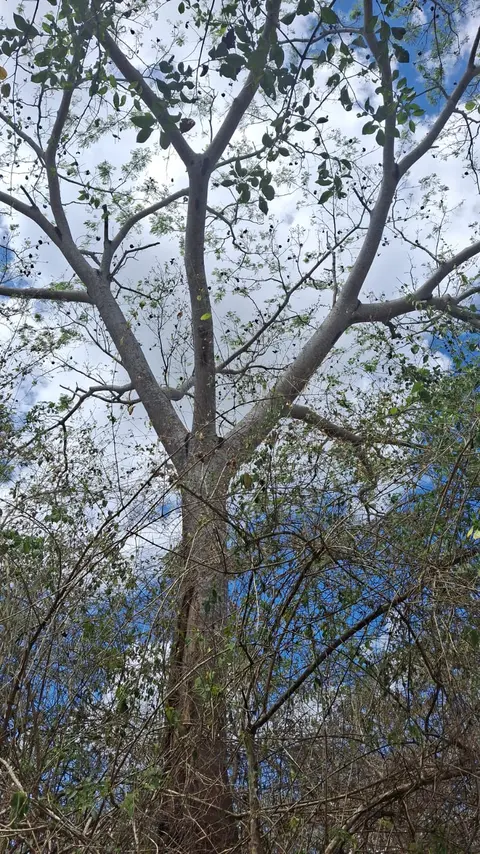
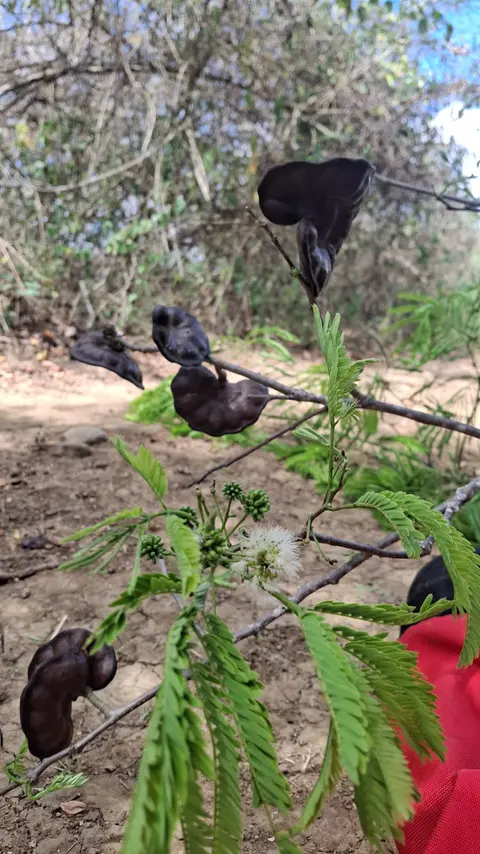
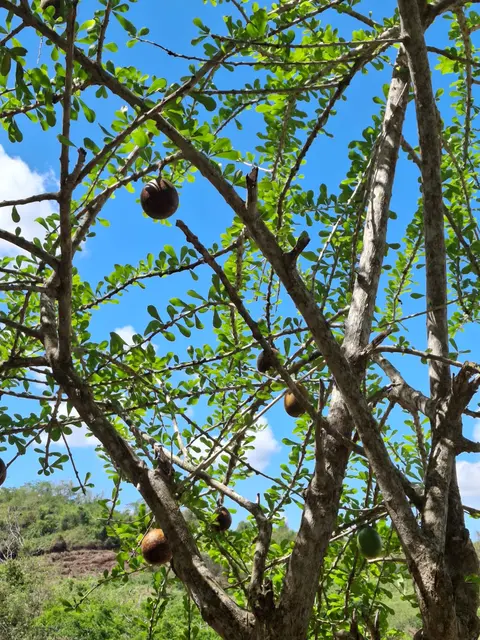
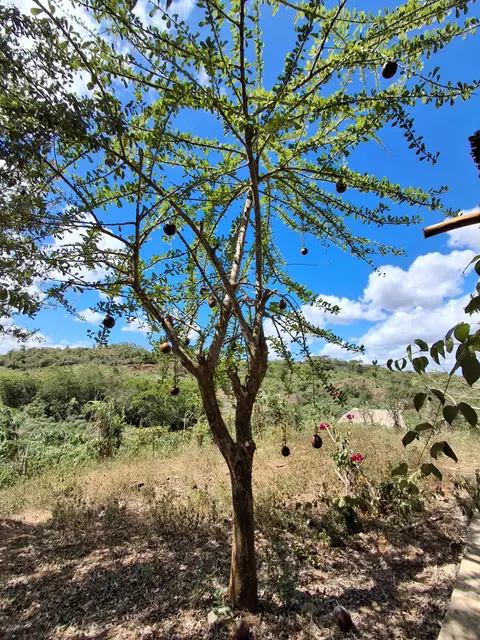
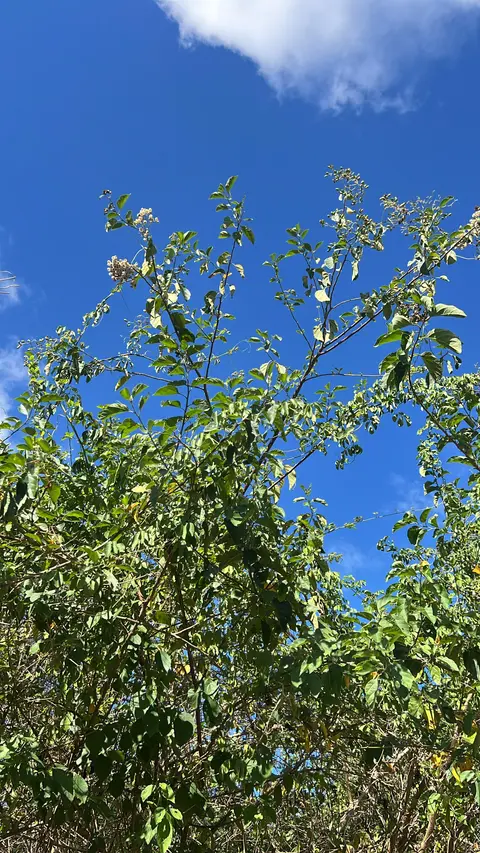
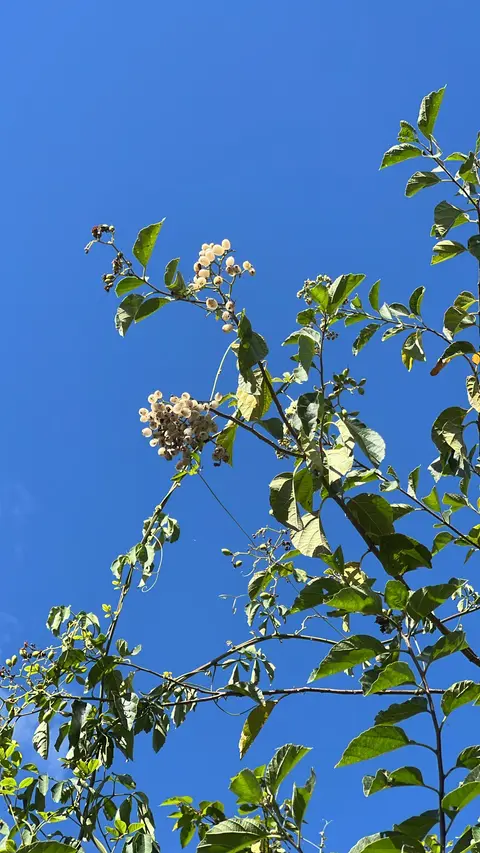
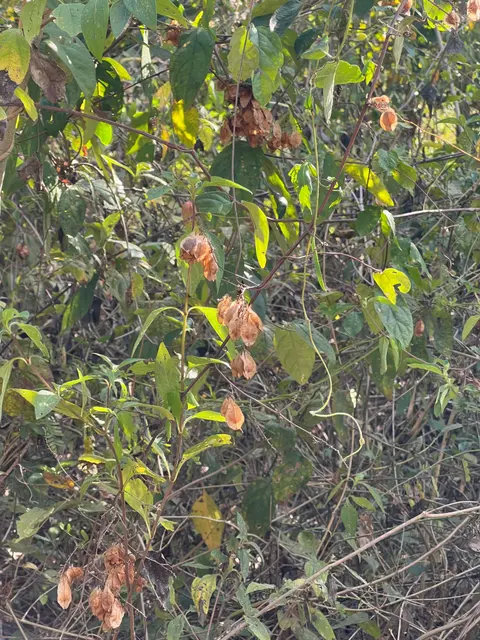
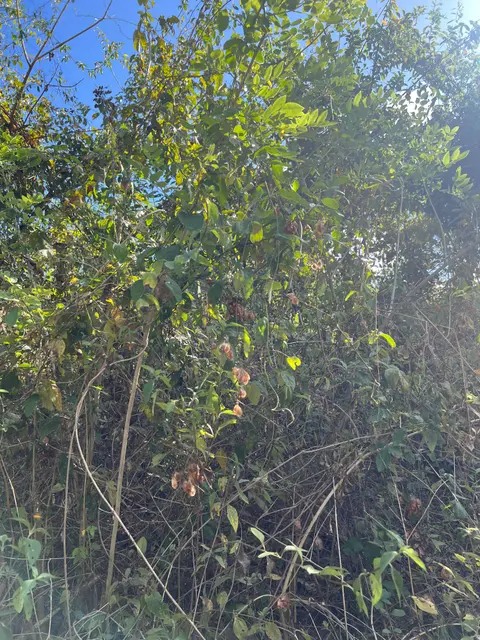
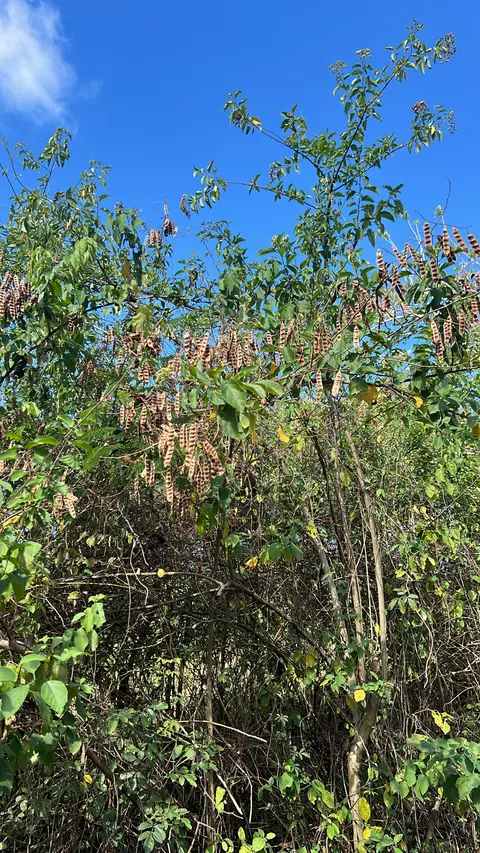
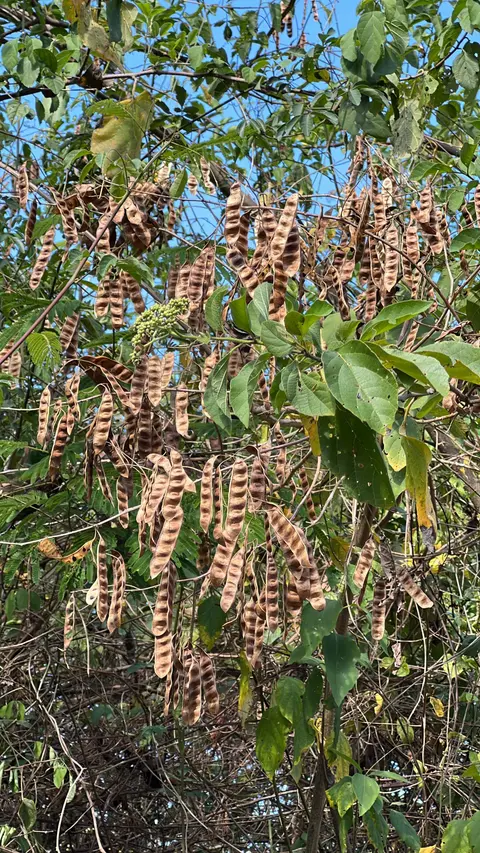
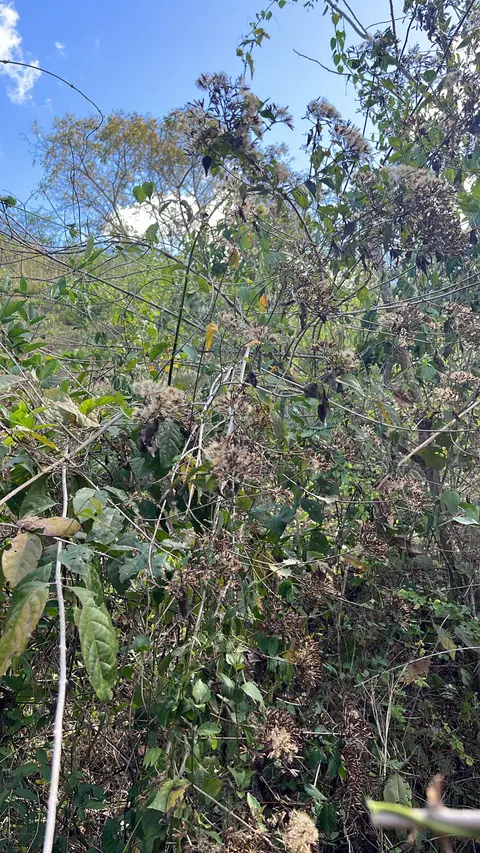
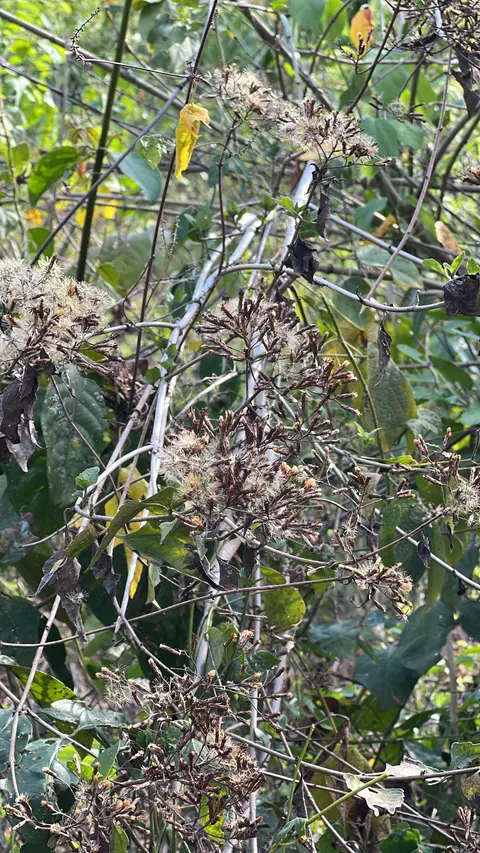
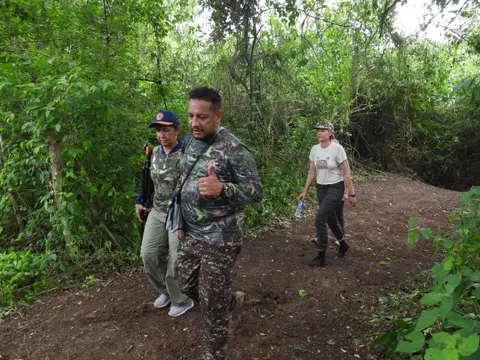
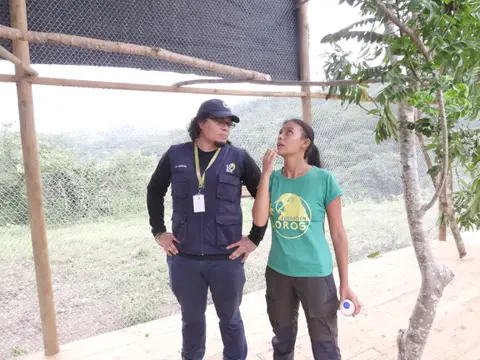
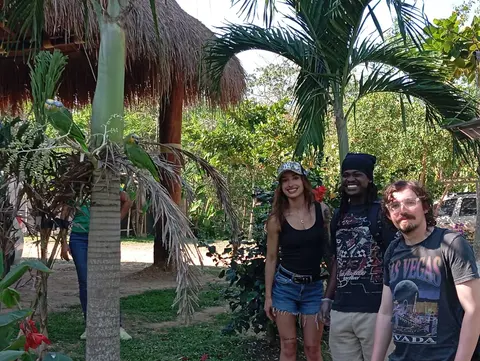
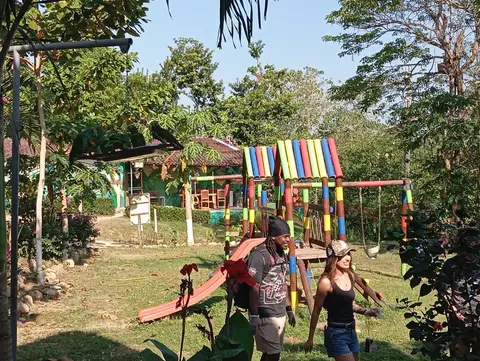
That Sunday, Michel Salas, Jiliam Pomare, and Salomé Piza set out early from the Casa del Paraíso, a botanical field guide tucked under one arm and a quiet determination to name what the sanctuary's dry forest had been offering in silence for years. Their route followed «el camino de la libertad» — the freedom path — a trail that ends precisely where the Ara aviaries stand waiting for the day the guacamayas will be released into the open sky, a detail that lends a particular weight to any walk along that stretch.
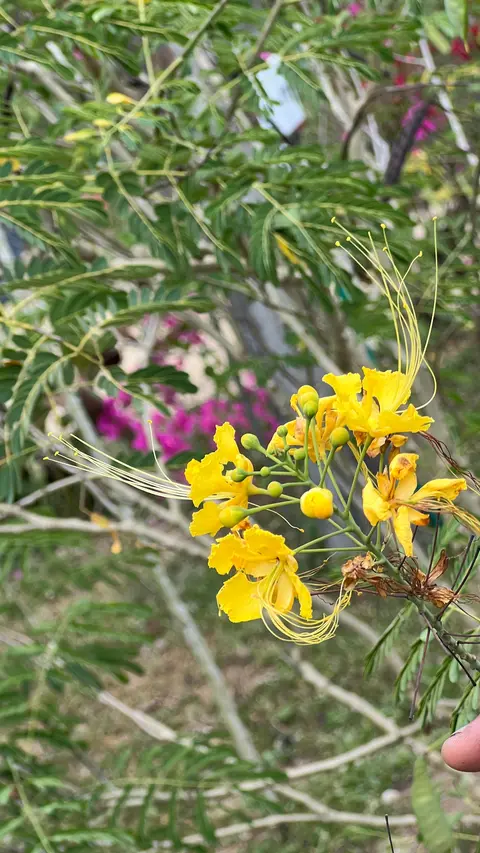
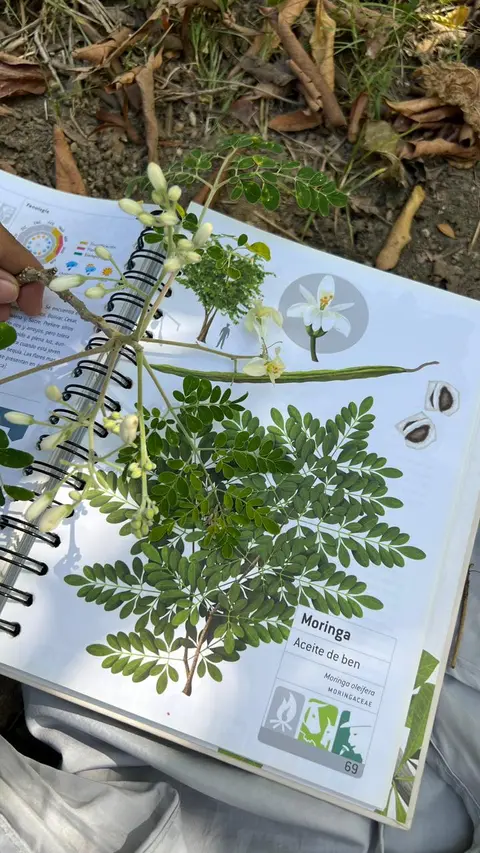
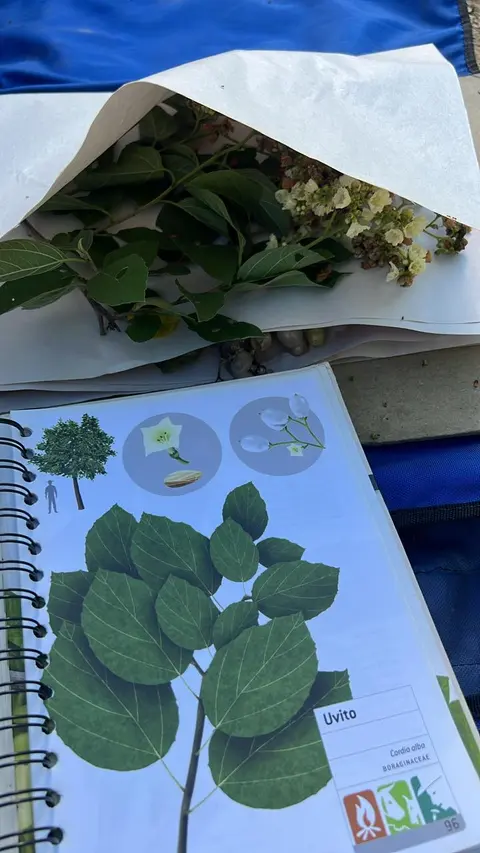
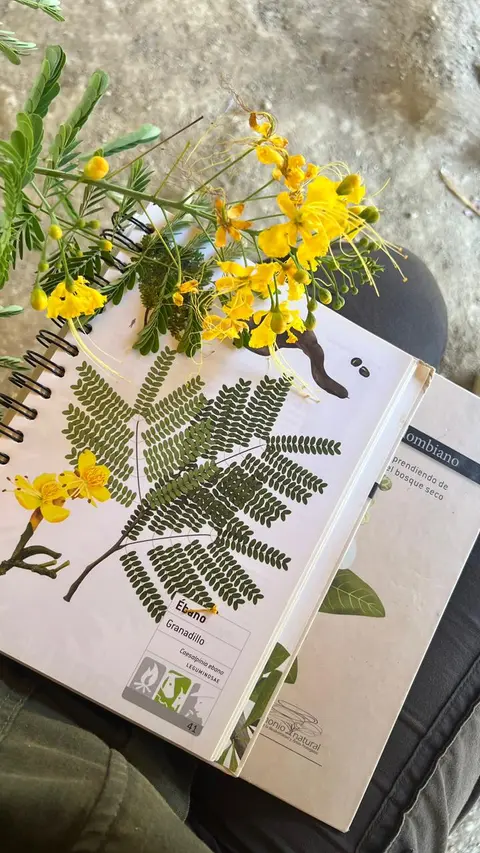
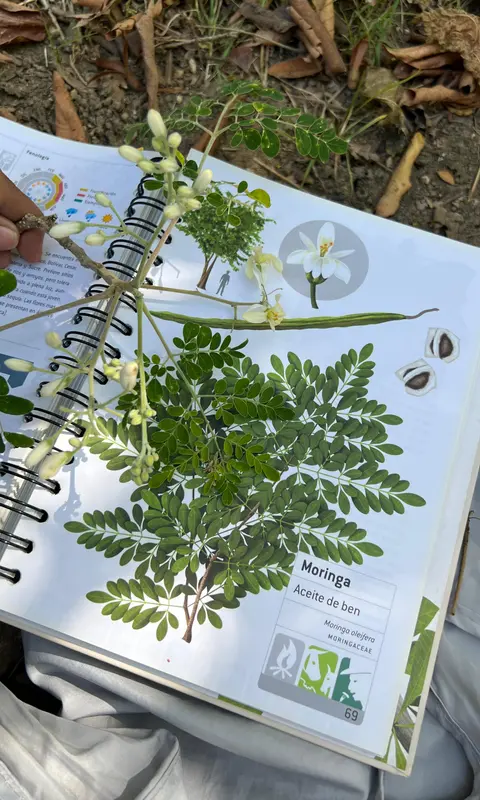
Thirty times or so they stopped along the way: to hold a branch up against its entry in the book, to press a sample between sheets of paper, to photograph flowers before the midday sun could wither them. There was the *Caesalpinia pulcherrima* with its long stamens like threads of yellow fire, the Moringa with its white blooms laid open beside its description in the guide, a freshly-cut sprig of Uvito (*Cordia alba*) still cool and damp to the touch, and the Ébano (*Caesalpinia ebano*) with its dark seed pods swaying among the foliage.
At the end of the path, standing before the aviaries, the three of them smiled for the photograph. Behind them, green hills and bright flowers lined the full length of the trail they had just walked. In their hands, thirty new names — or rather, thirty old names the forest had always carried, and that they had simply taken care to write down.
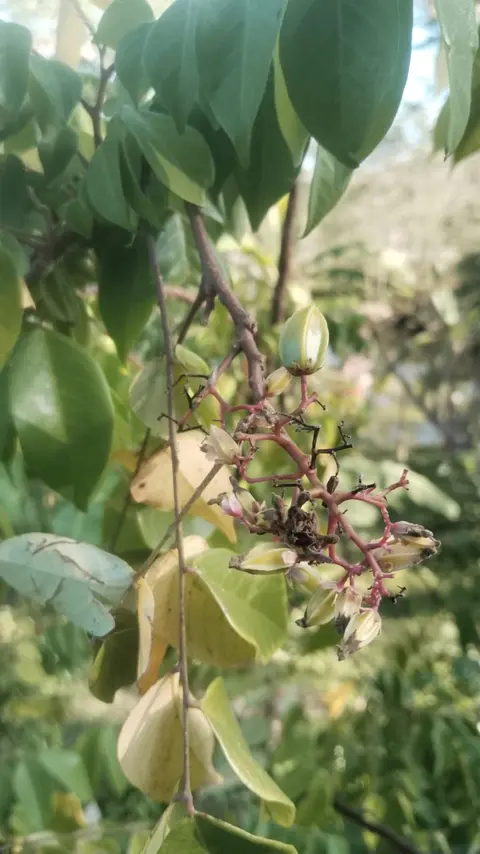
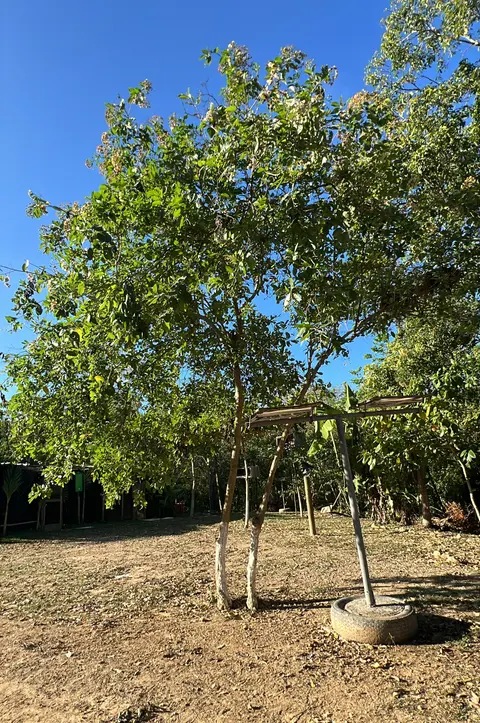
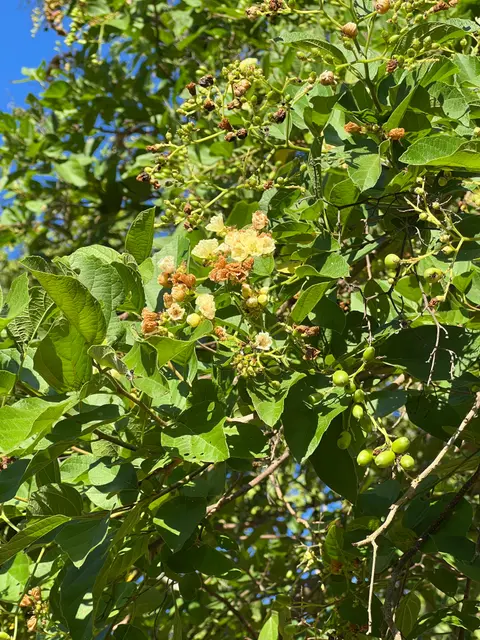
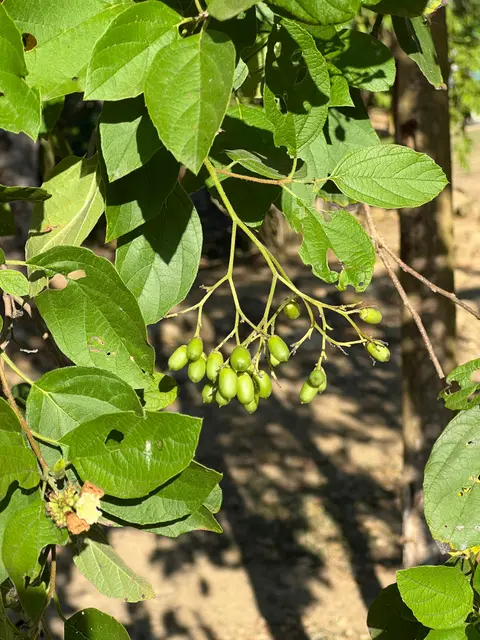
Among the dense vegetation of the reserve, Michel Salas stopped before a tree that stood no taller than four meters — yet carried itself as though it had no need to grow any further: an ebony, Caesalpinia ebano, its yellow flowers blazing under the March sun, its still-tender green pods hanging from the branches like quiet promises. The tree is young yet — the species can reach considerably greater stature — but it is already honoring the cycle with all the gravity that duty deserves.
The ebony is a species native to the Caribbean region, drought-resistant and generous in its uses to a degree that borders on astonishing: its foliage feeds livestock, its flowers call the bees to gather, its timber endures whatever the world throws at it. Here at the Fundación we also record it by the folk name guacamayo — though it should be said that this nickname is not used in Villanueva, Bolívar — for this is a tree with names to spare, much as it has uses to spare. Michel took six photographs capturing the detail of the flowers, the pods, and the full bearing of the individual tree, the tropical vegetation standing as witness in the background. A fine discovery for the reserve's inventory.
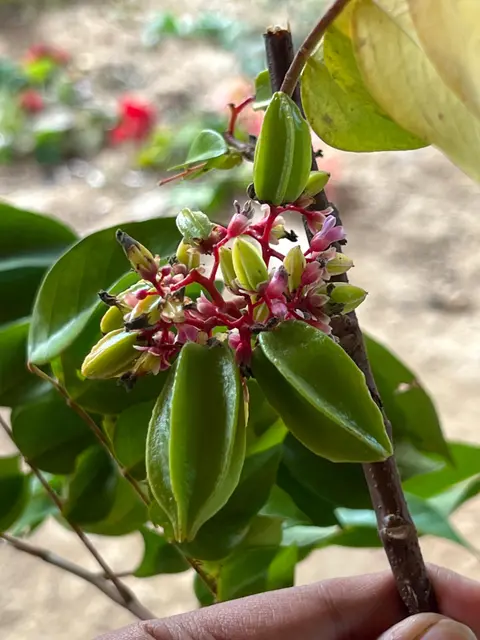
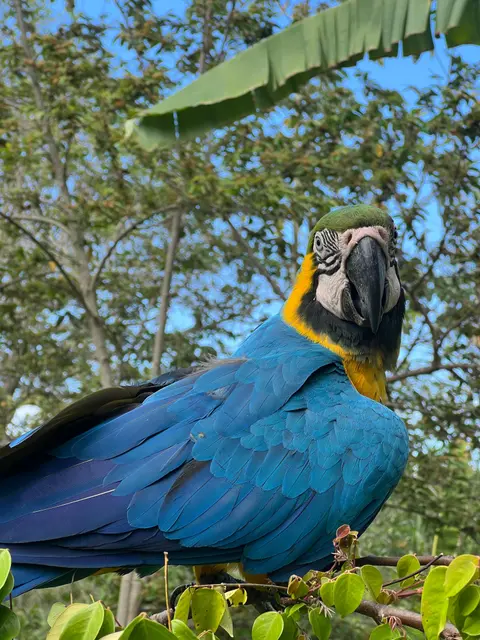
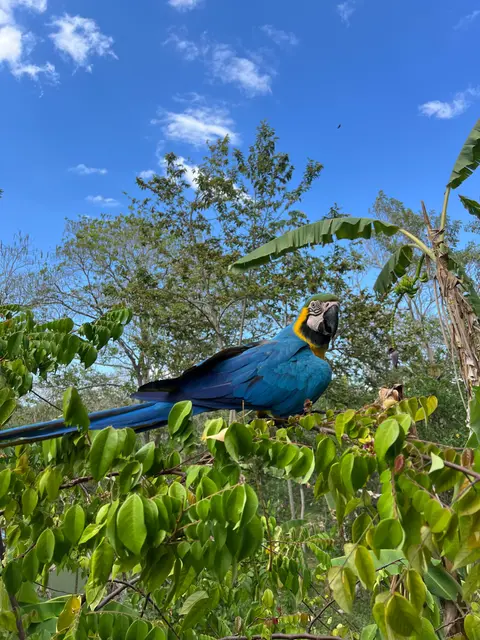
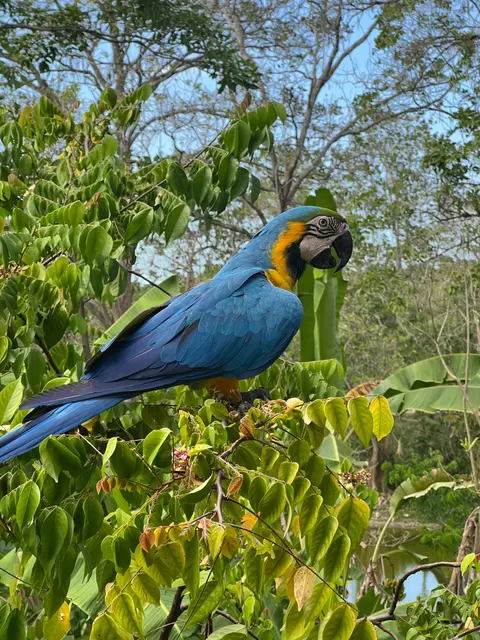
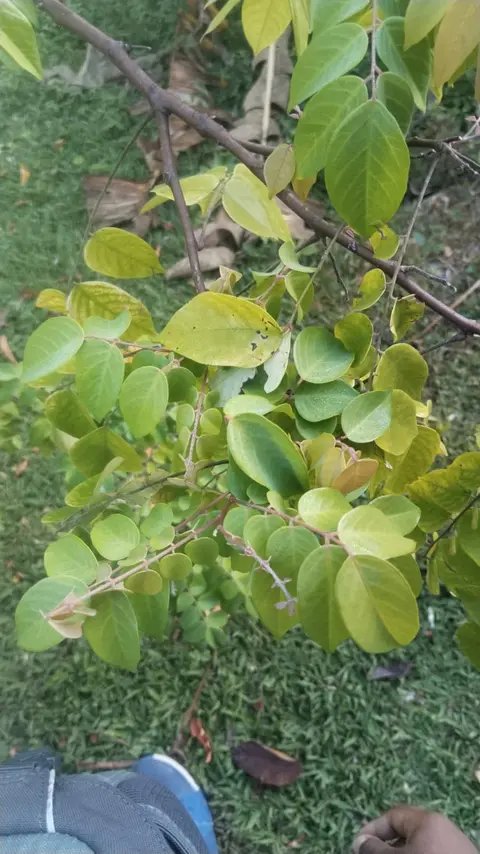
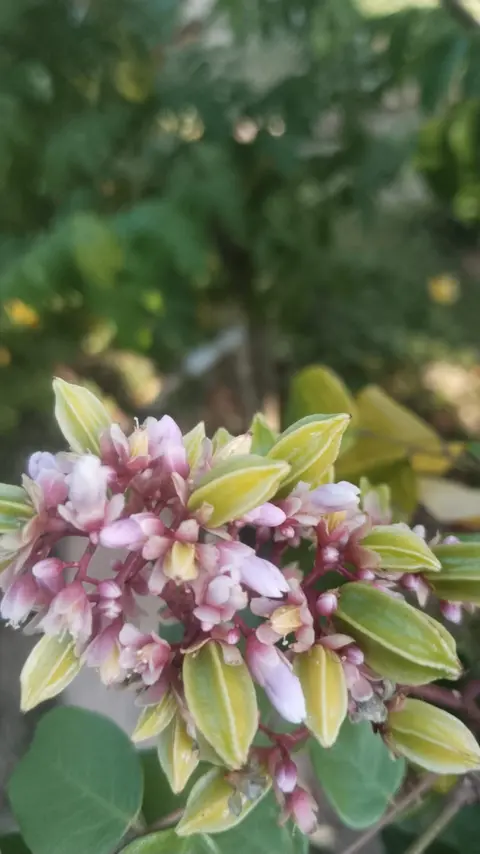
Michel Salas was making his way through the sanctuary when he spotted her: a blue-and-yellow macaw perched in the branches of a carambola tree in full bloom, its small pink and reddish flowers nestled among leaves of deep, vivid green. A single individual — one Ara ararauna — and she paid the observer no mind. There she sat, unhurried and curious, working the foliage with that curved black bill that seems built as much for play as for eating.
The tree was heavy with fruit still forming — small and green — and the macaw explored them without any sense of urgency, the way one might browse a familiar pantry. Behind her, a stand of banana plants and the clear midday blue of the Caribbean sky completed the scene. Michel documented the moment in photos and video from the sanctuary's coordinates, in the northeastern reach of the reserve.
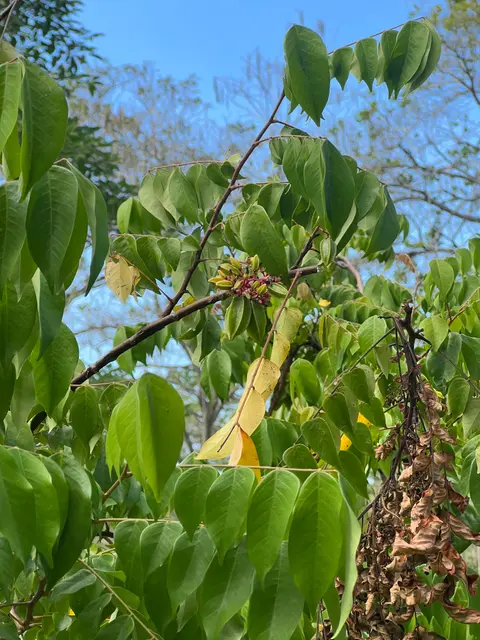
The carambola — known in this region simply as carambolo, though it belongs to the family Oxalidaceae — is one of those trees that has quietly earned its place in the rhythm of the sanctuary. That an Ara ararauna would seek it out in the height of its flowering says something about how these spaces take on a life of their own, one branch at a time.
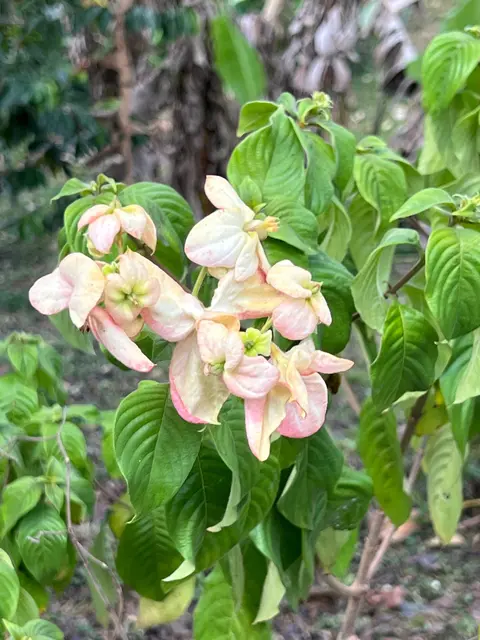
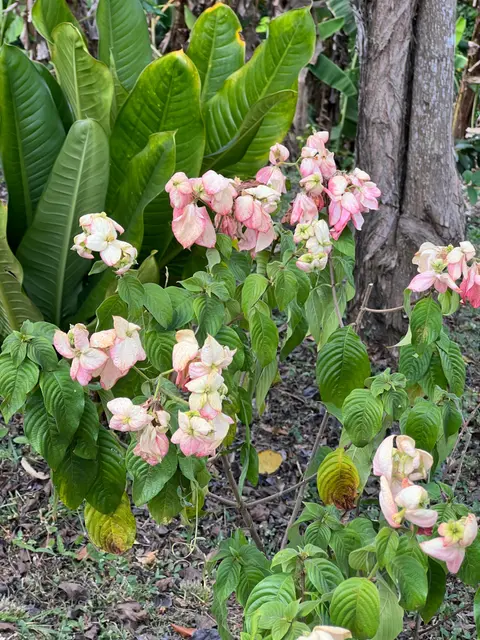
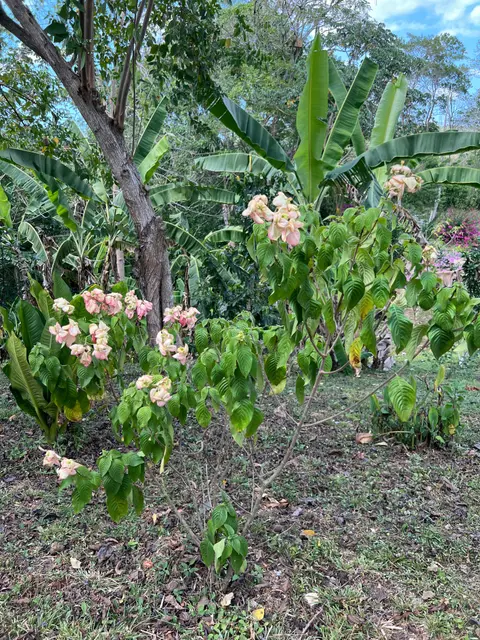
Michel Salas set out that Sunday with a clear purpose: to record what was blooming. In a corner of the sanctuary where the plataneros spread their leaves like canopies and the soil stays dark and damp, he found first a Mussaenda in full celebration — pale pink and cream bracts surrounding small greenish flowers, luminous against the dense vegetation, as if the plant had spent weeks waiting for someone to look at it closely.
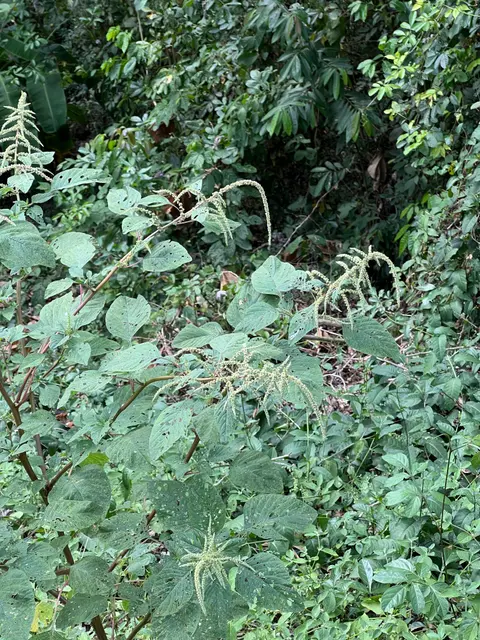
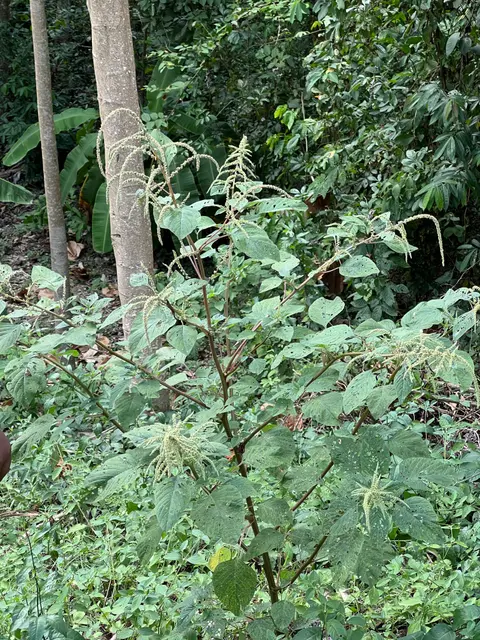
Twenty-four meters further along, at the second point of the route, the discovery was altogether different: a wild plant with reddish stems and drooping spikes of white-green, possibly an Amaranthus, its leaves riddled with holes by insects that had passed through before Michel. That herbivory — those small green perforations — is data too, and it goes into the inventory just the same.
Two georeferenced points, two species, two distinct stories of how life grows within the same stretch of the sanctuary. This is how the botanical record of Fundación Loros moves forward: step by step, plant by plant, with someone willing to stop and pay attention.
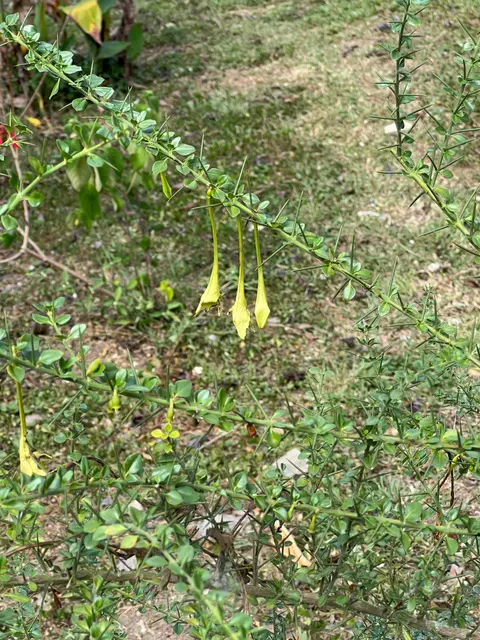
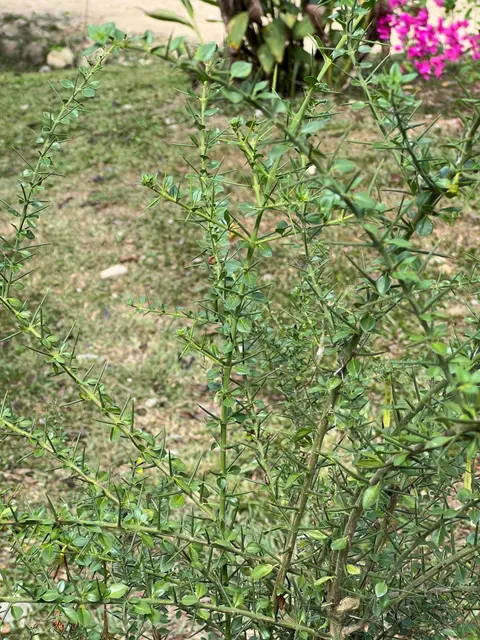
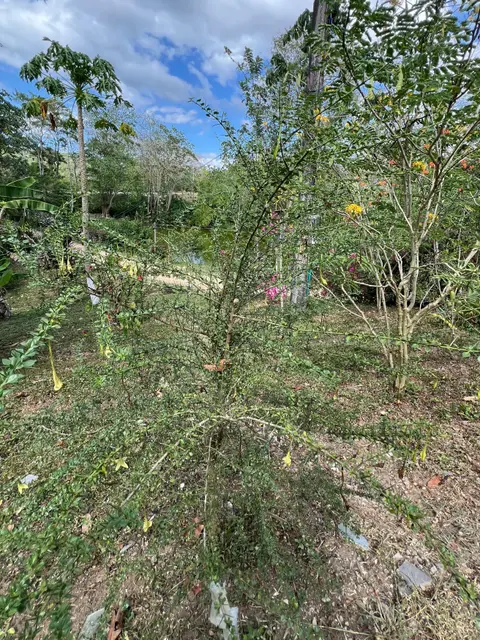
In front of the sanctuary house, between the dry grass and the shade of a fuchsia bougainvillea, Michel Salas paused before a shrub that any hurried eye would have walked right past. It was a crucetillo — Randia aculeata — with its thorned stems and small, deep-green leaves, and that afternoon of March 22nd it was in flower: tubular, pendant blooms of a yellowish-green barely unfurled, as though they were still deciding whether the moment had come to show themselves.
Michel documented the finding with three photographs that capture the shrub's bearing, its tropical garden setting, and those flowers caught in the act of opening. Behind it, a papaya tree and shrubs dressed in pink and orange blossoms completed the scene — a reminder that even the most ordinary corner of the sanctuary holds its own botanical stories.
The crucetillo, of the family Rubiaceae, is a plant native to the Colombian Caribbean, known for its fruits that serve as food for birds. To have it blooming at the very entrance of the house is no small detail: it is a sign that the plant calendar continues its course — punctual and silent — across the 520 square meters of Loros.
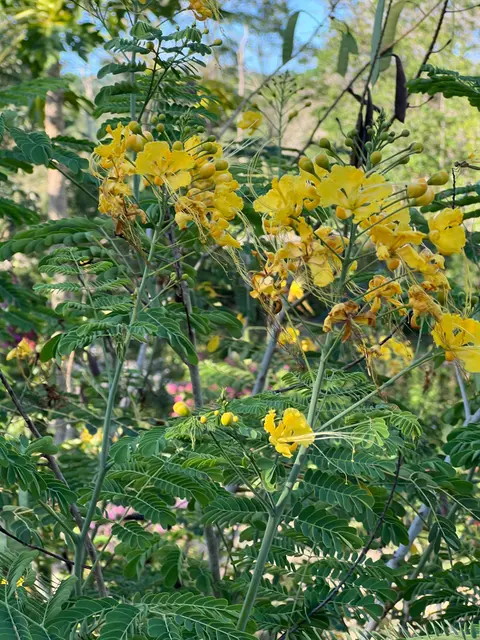
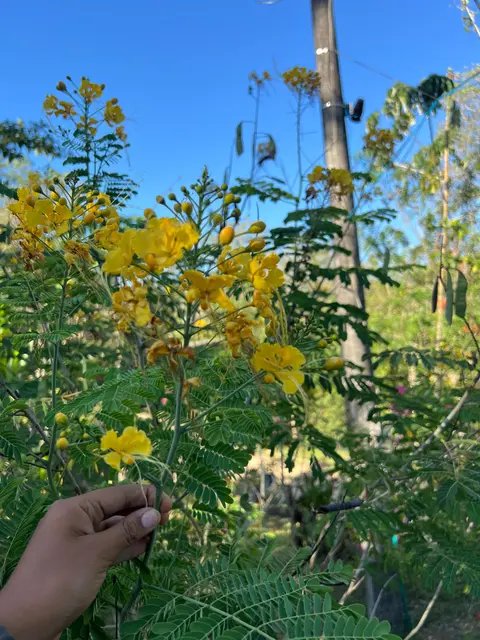
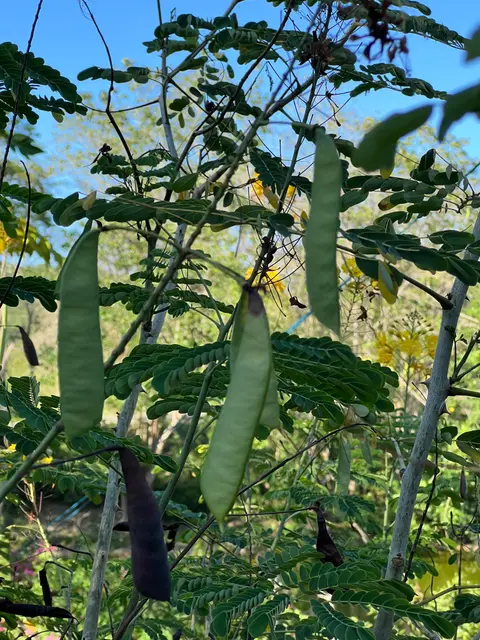
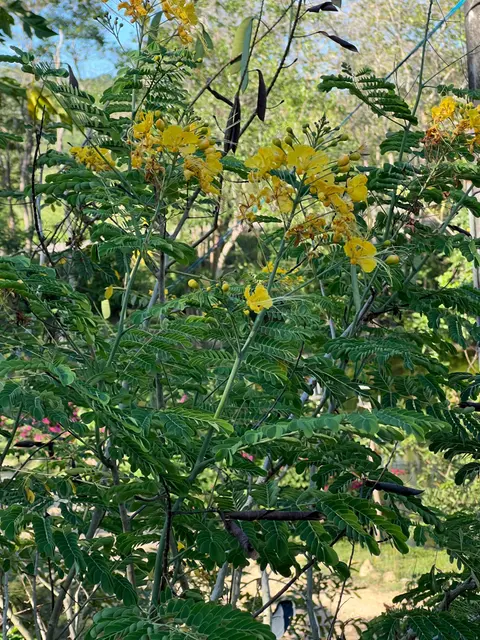
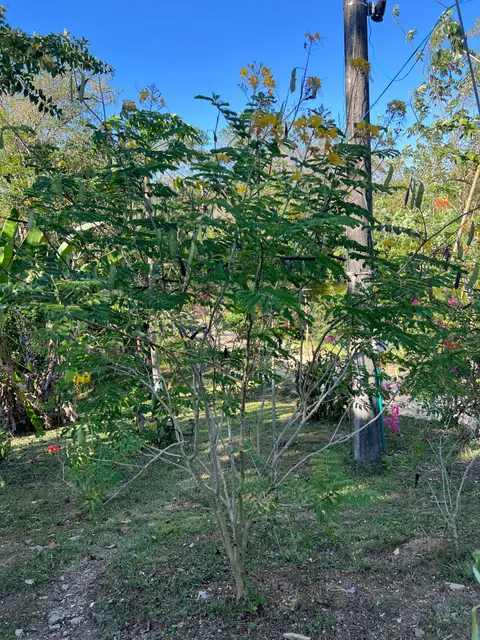
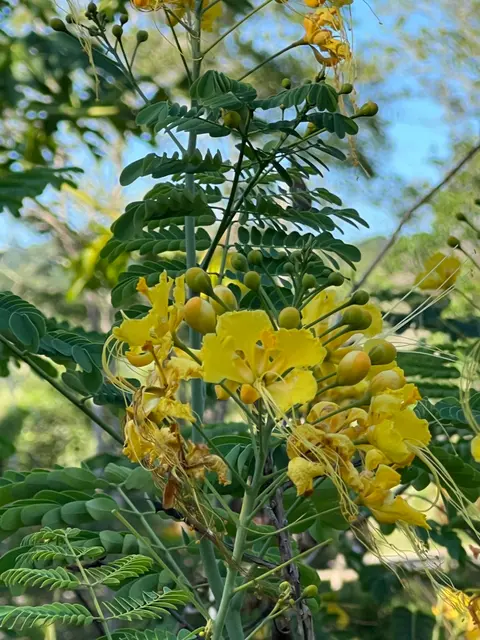
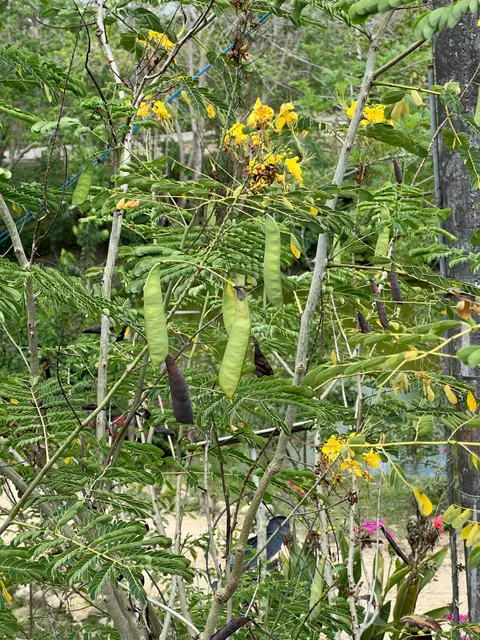
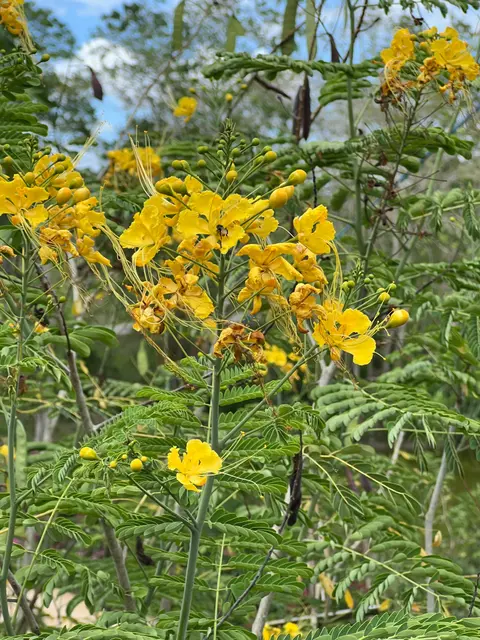
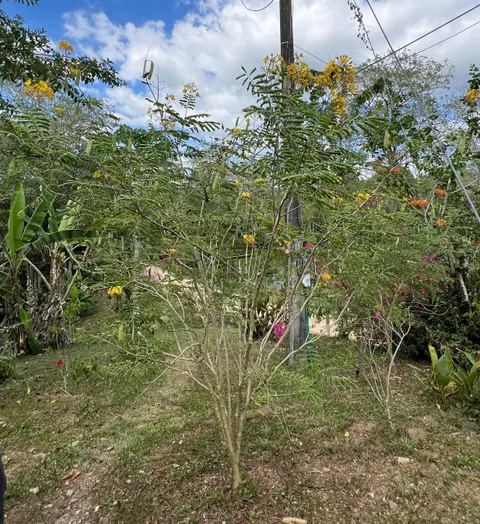
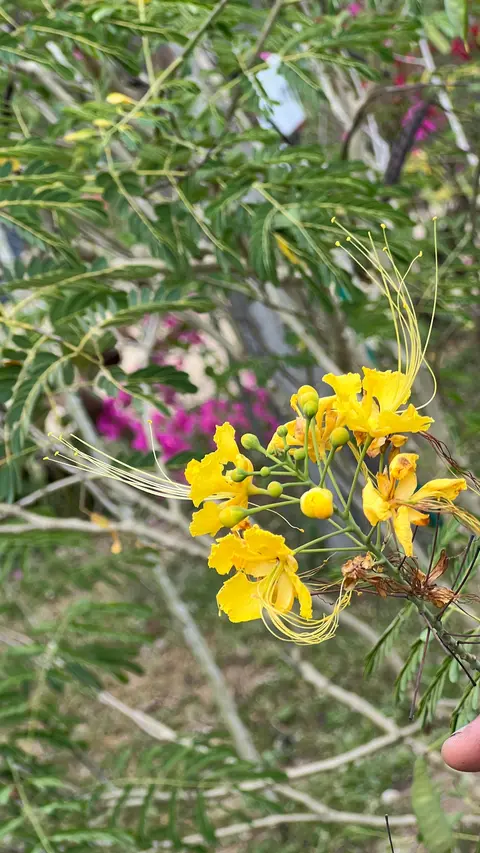
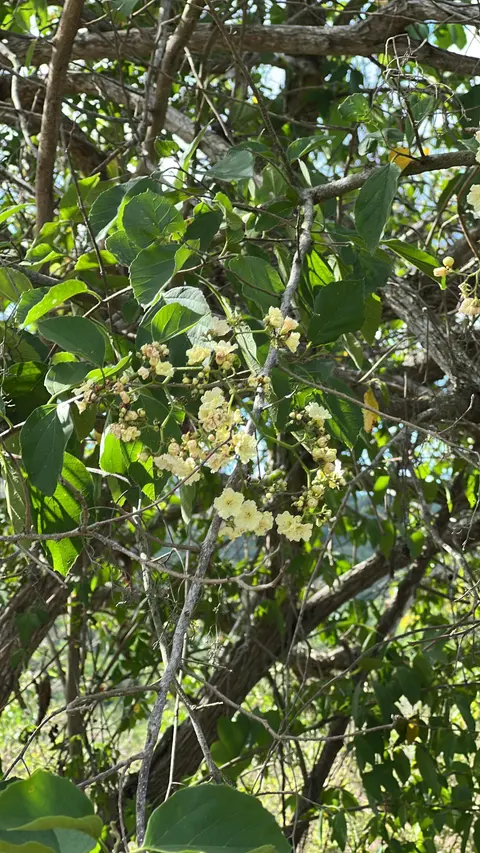
Among the coordinates the sanctuary keeps secret, there is a plant that one Sunday refused to go unnoticed. Michel Salas found it in full bloom — a Caesalpinia of the family Fabaceae — wearing that blazing yellow, the kind that seems stolen from a Caribbean sunrise. The filiform stamens opened like small, silent fireworks, and between the branches hung elongated pods — some green, others dark — a sign that life moves quickly in this plant.
The tree grows surrounded by generous company: banana plants casting it in shade, pink and orange bougainvilleas competing with it for color, and a partly clouded sky that on March 22nd couldn't quite decide between rain and stillness. The four photographs Michel took that day captured open flowers, budding growth, and the full bearing of the individual — a complete portrait of a plant that now has a name, coordinates, and a place in the sanctuary's logbook.
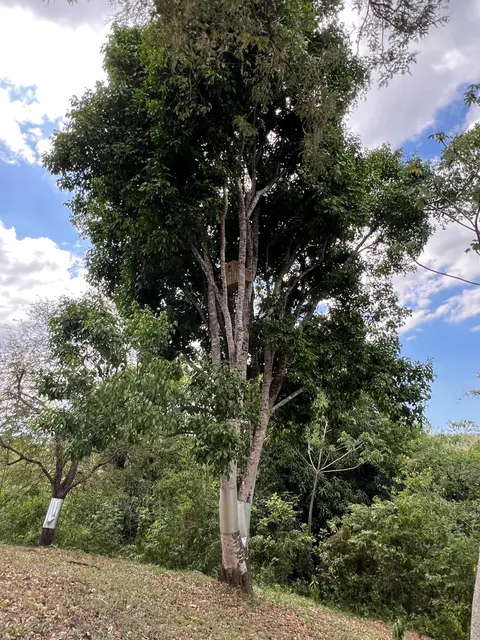
Michel Salas walked a stretch of tropical vegetation at Fundación Loros yesterday with his eyes fixed on the trees, not the ground. The first he came across was a mamón — Melicoccus bijugatus — tall and full-canopied, its trunk wrapped in a white band to keep climbers at bay. The nest box was already in place among its branches, though the tree arrived to the encounter fruitless: its season hasn't come yet.
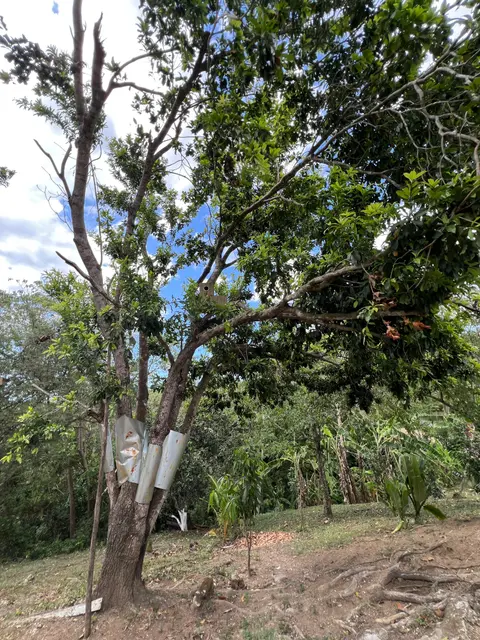
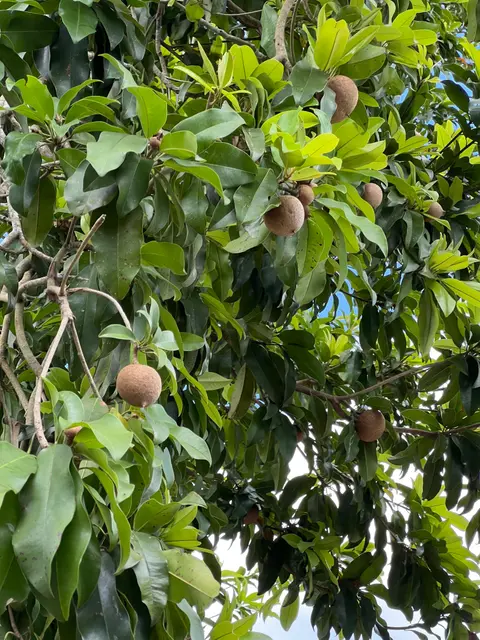
A few meters on, another tree waited with greater generosity. The mamey — Manilkara zapota, of the family Sapotaceae — wore its ripe fruits proudly, their rough, reddish-brown skin hanging heavy within the dense foliage. Metal sheets sheathed the trunk like armor against any creature with thoughts of climbing. It too had its nest box, also installed beforehand, also empty.
Two stations prepared, two doors left open. No one was home that Sunday, but the boxes remain there still, peering out from between the branches beneath a cloudy March sky, waiting for the tenant who has yet to arrive.
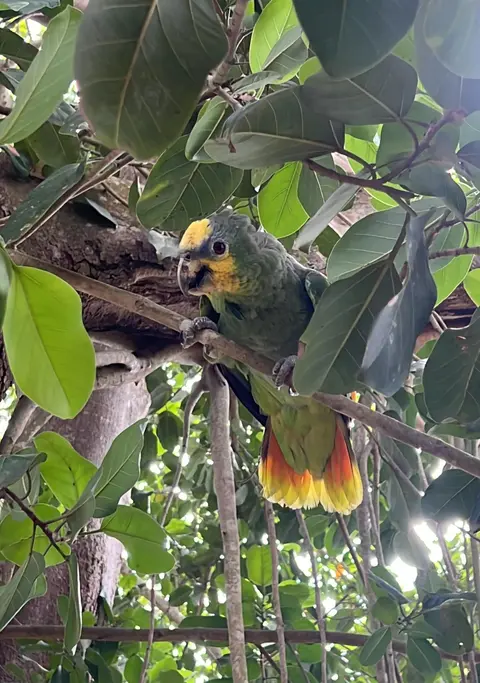
Among the glossy leaf litter of a ficus, where milky sap oozed through the bark as if the tree itself were sweating under the March heat, Michel Salas found an orange-winged parrot perched with the stillness of one who had spent the entire morning in the same spot. The bird was alone. The body an intense green, the head yellow, and that tail ablaze in orange, red, and yellow — as though nature had crafted it expressly to defy the monotony of the jungle.
The Amazona amazonica did not stir. It allowed itself to be photographed among the branches of the Ficus — family Moraceae, one of those generous trees that offers fruit and shade in equal measure — while the milky exudate from the trunk threaded the air with its distinctive scent. No other individuals nearby. Just that parrot, that tree, and Michel with his eye pressed to the lens.
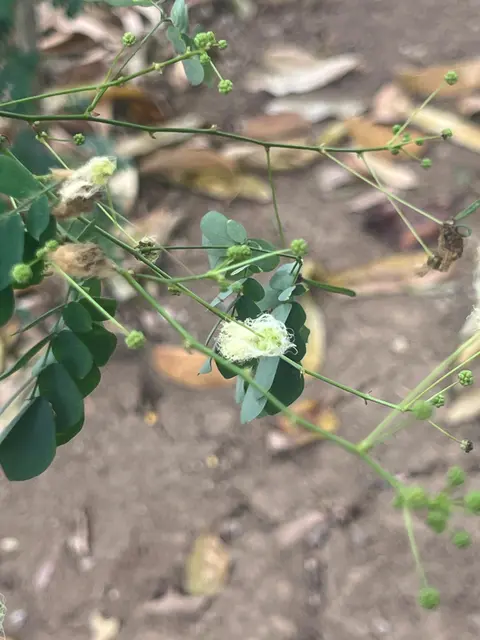
On the afternoon of March 22nd, Michel Salas and Salomé Piza were walking the grounds of Fundación Loros when they came upon something easily overlooked among the leaf litter: a dormilona in flower. The plant, *Mimosa pudica*, grew from dry soil blanketed in fallen leaves, its slender branches heavy with green buds barely beginning to point outward, and one flower already open — its filaments white with a touch of yellow, quiet and precise, the way the most worthwhile things tend to be.
The dormilona is one of those plants nearly everyone has touched as a child, just to watch it shrink away, yet few people ever stop to truly look at it. It belongs to the family Fabaceae, subfamily Mimosoideae, and its flowering in this seasonally transitional environment speaks to something about the condition of the soil and the time of year. Michel and Salomé photographed it carefully and logged the find with exact coordinates: 10.4473°N, 75.2620°W. A small discovery in size, but precise in everything it tells.
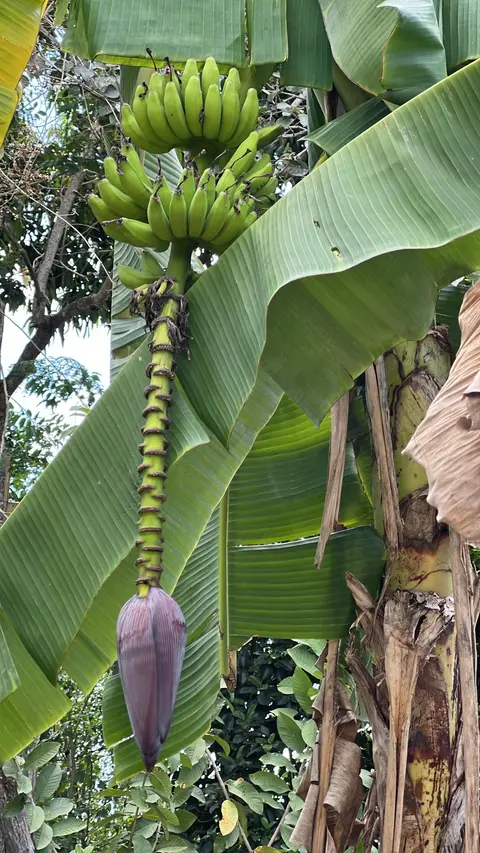
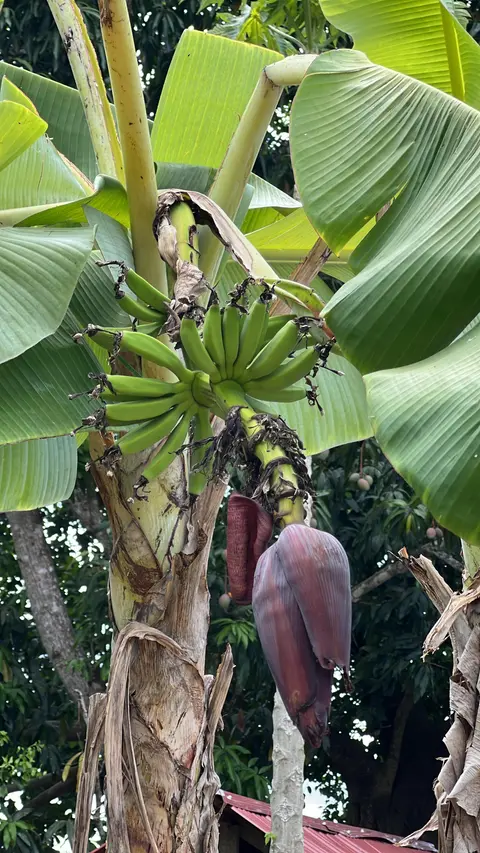
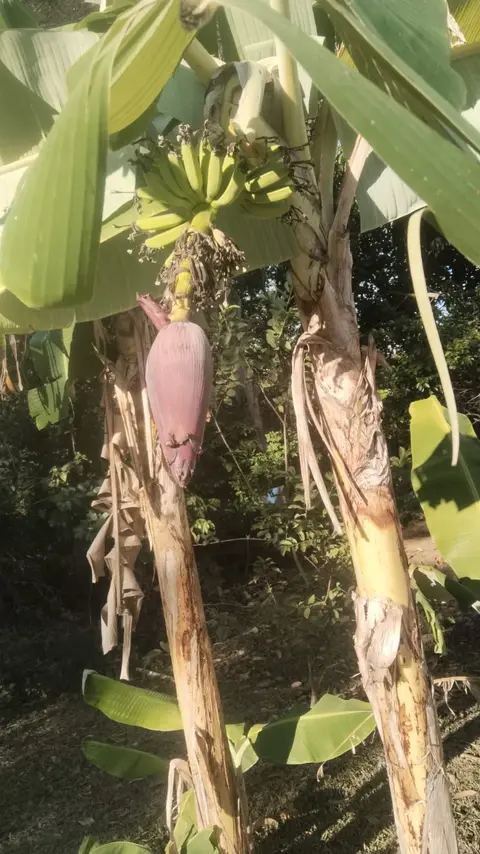
Michel Salas walked through the sanctuary grounds this afternoon with wide-open eyes and camera at the ready. Among the discoveries of his rounds, he came upon a rural plot where several banana plants — Musa sp. — wore their heavy green clusters hanging low, and their deep purple blossoms, those inflorescences that look like a newborn heart. In the background, mango trees with fruit peeking out through the canopy, and a small brick structure with a zinc roof that gives the place the timeless air of a Caribbean farmstead.
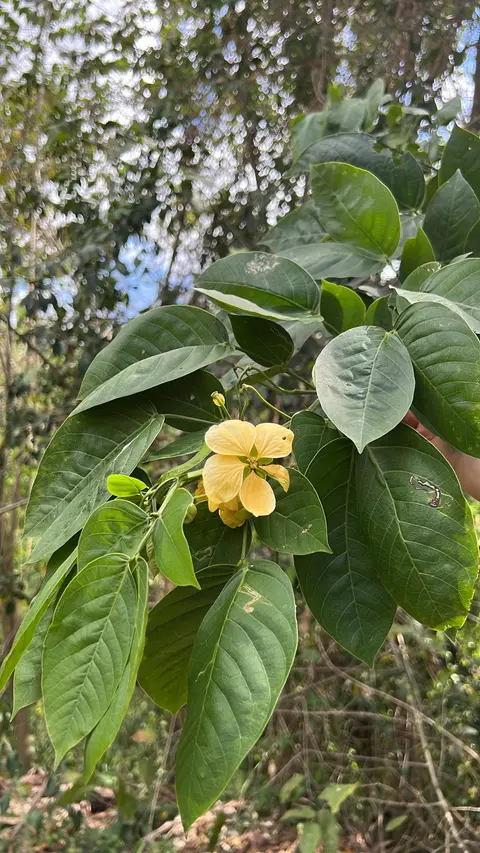
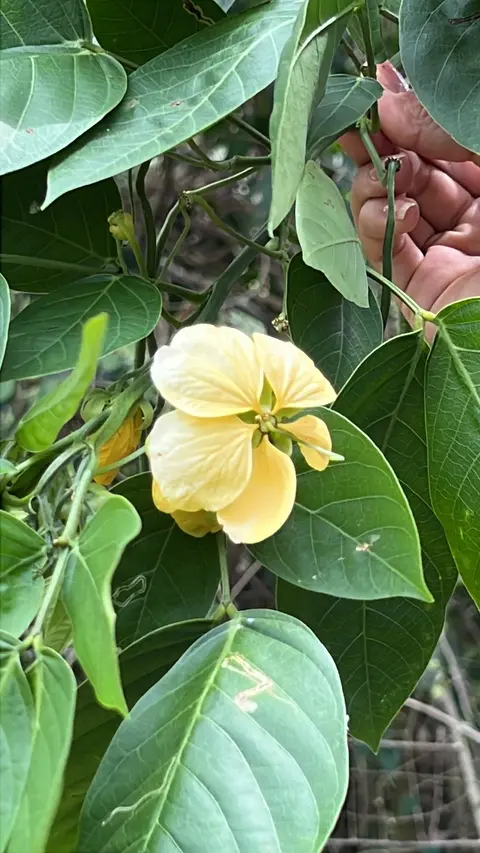
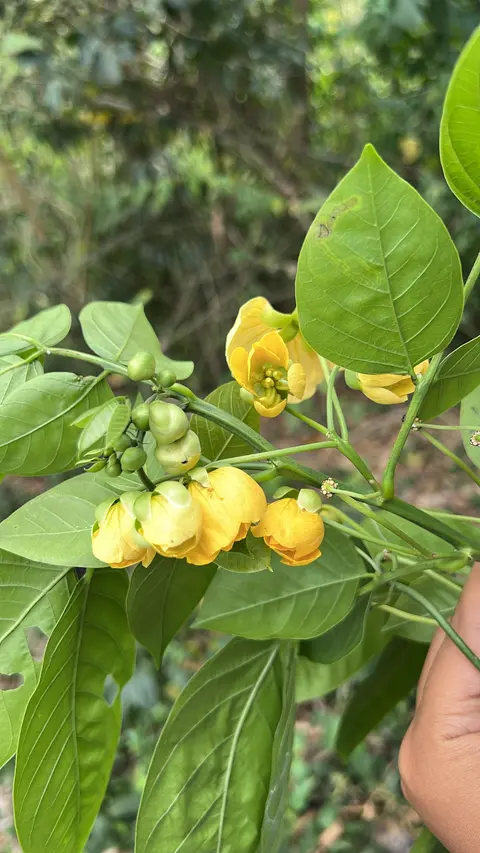
But the other find of the day was more subtle, and perhaps more striking for those who know how to look: a plant of the genus Senna — family Fabaceae, subfamily Caesalpinioideae — flowering in the midst of dense forest vegetation. Michel held it between his fingers to show it more clearly, and in the photograph you can see the open yellow blooms alongside several buds still biding their time. That clean, bright yellow against the dark green of the forest is the kind of gift the sanctuary offers without any warning.
Two Coquillos on Dry Ground
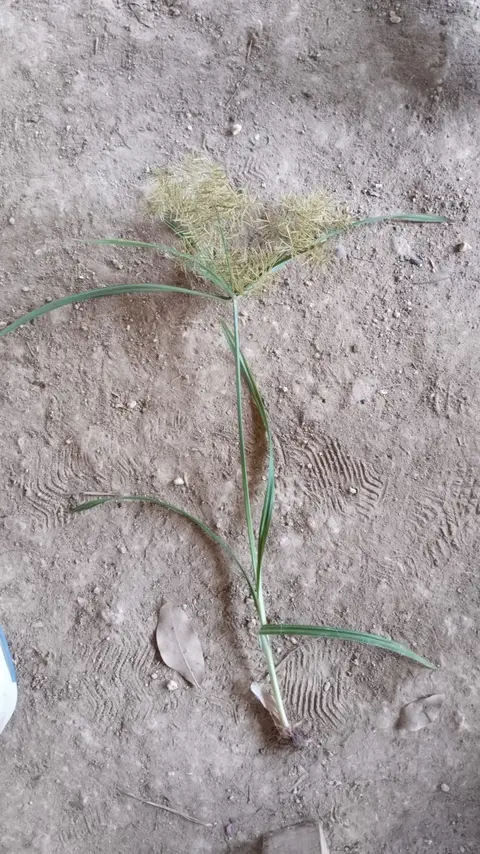
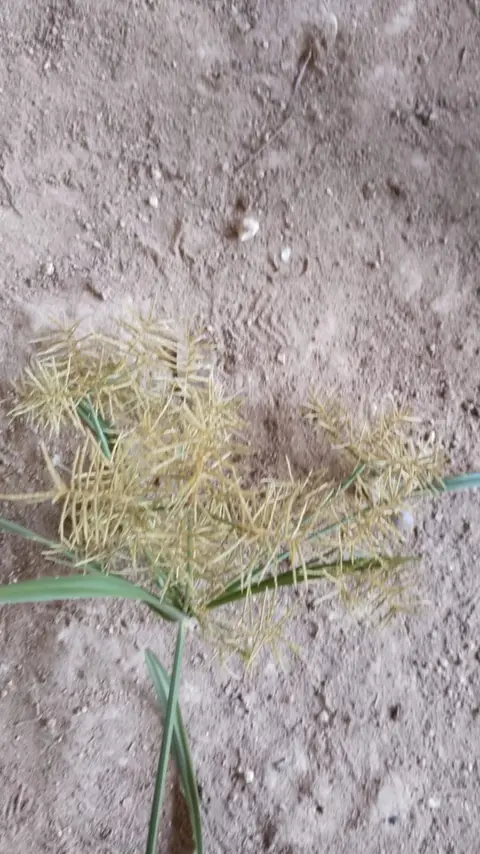
Jillian Pomare arrived that Sunday with two plants in hand, roots and all. She set them down on the compact, sandy soil — the kind of ground where footprints tell the story of fieldwork's comings and goings. They were two specimens of Cyperus sp. — what in these lands we call coquillo or junco — unmistakable with their triangular stems and their open inflorescences like small feather dusters: one still yellow-green, the other already dry and golden, as though the passage of time between the two had occurred within the space of a few centimeters.
The record stands as follows: two plants pulled up by the root, laid out on arid earth, with no company but a single fallen dry leaf at their side. No animals, no visible people. Only that silent gesture of drawing something out of the ground to look at it closely — which is, more often than not, the first step toward understanding what is growing and what is being displaced across the open terrain of the reserve. Coquillo is a tenacious weed in agricultural zones, and its presence here deserves attention.
In the secondary forest of Fundación Loros, where the dry earth holds carpets of fallen leaves and the cut trunks hold memories of older stories, Michel Salas stopped before a tree that had no need to announce itself. It was a mamón — Melicoccus bijugatus, of the family Sapindaceae — its grey, sturdy trunk splitting upward into branches that weave a generous canopy against the overcast sky. Along its bark, almost like discreet tenants, grow epiphytic plants that might be bromeliads or ferns, settled in without asking permission.
That Sunday, Michel recorded no fauna visiting the tree — no loros, no birds, nothing stirring among its branches. But the mamón was there, standing firm at coordinates 10.4473, -75.2618, its shallow roots spreading across the earth like quiet fingers. Sometimes a tree needs no witnesses to matter; it is enough that someone finds it and says: here it is, it exists, we saw it.
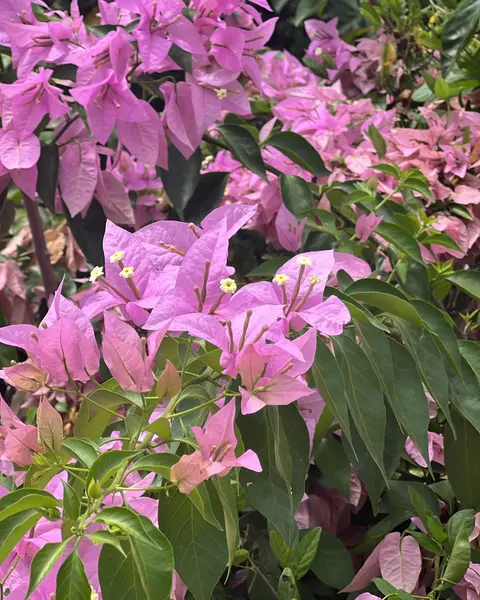
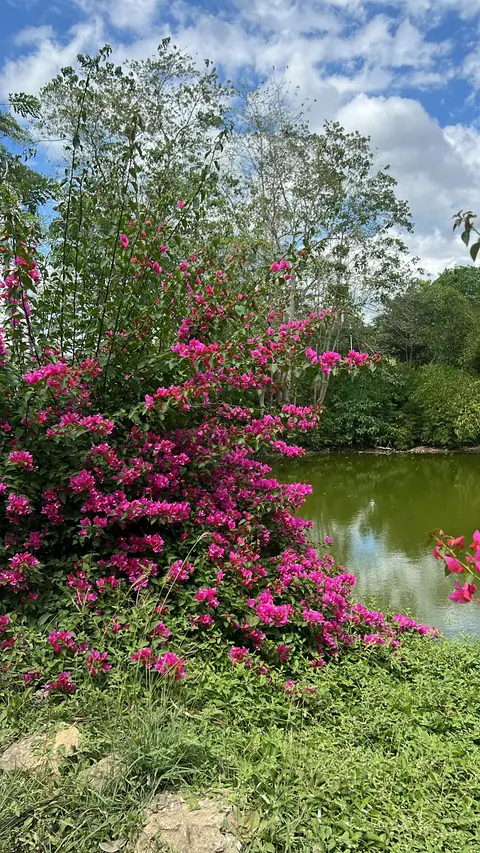
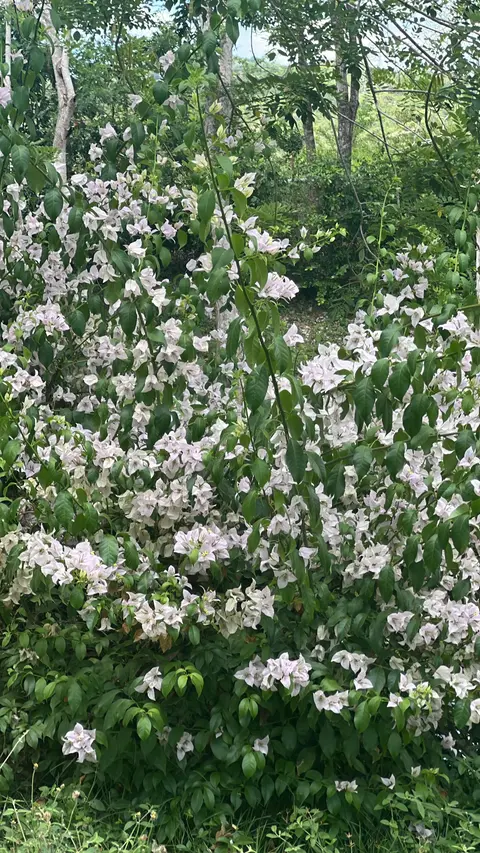
In a corner of the sanctuary where the dirt path dissolves into tropical vegetation, Michel Salas came upon something that was not entirely wild: two bougainvilleas, planted, still and blazing in full bloom. The first, with its fuchsia-pink bracts, grows at the edge of a pond of greenish water — so striking it looks as though it has caught fire against the Caribbean blue sky. The second, creamy white, emerges more quietly among the slender trunks of a shaded path, as if it preferred the silence.
What Michel photographed are not flowers in the strict sense: they are bracts — modified leaves laden with anthocyanins, the same pigments that stain blackberries and eggplants deep and dark. Tucked in the center of each cluster of bracts, almost hidden, small tubular white-yellow flowers do bloom. The color one sees — that fuchsia that stops you mid-step — depends on the light, the pH of the soil, and the health of the plant itself.
Both are species introduced to Colombia, cultivated by human hands from *Bougainvillea glabra* and *Bougainvillea spectabilis*, native to South America yet foreign to these soils of the Colombian Caribbean. Someone brought them, someone planted them, and here they remain — inhabiting the sanctuary with a beauty that never asked permission to stay.
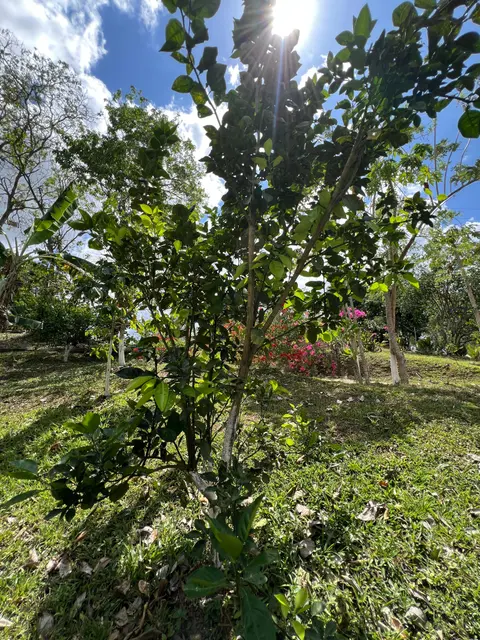
Michel Salas was making his way through the sanctuary when he came across it: a lime tree (*Citrus × aurantiifolia*) that someone, at some point, on some day no one can quite pin down, had planted here. It stands at coordinates 10.4475, -75.2618, within the grounds of the Fundación Loros sanctuary, wrapped in lush tropical vegetation, with pink and red buganvilias drifting across the background as if they had something to whisper to the blue sky of that March afternoon.
There is no planting date. No name of whoever put it there. Only the tree — still and deeply rooted, its glossy leaves sifting the late afternoon light, indifferent to the mystery of its own origins. There is something quietly moving about that: that someone, at some moment, chose to plant a lime tree in this corner of the sanctuary, and that the tree simply kept on growing, never needing anyone to remember.
It is now on record. If anyone knows who planted it, and when, the logbook has room for that story.
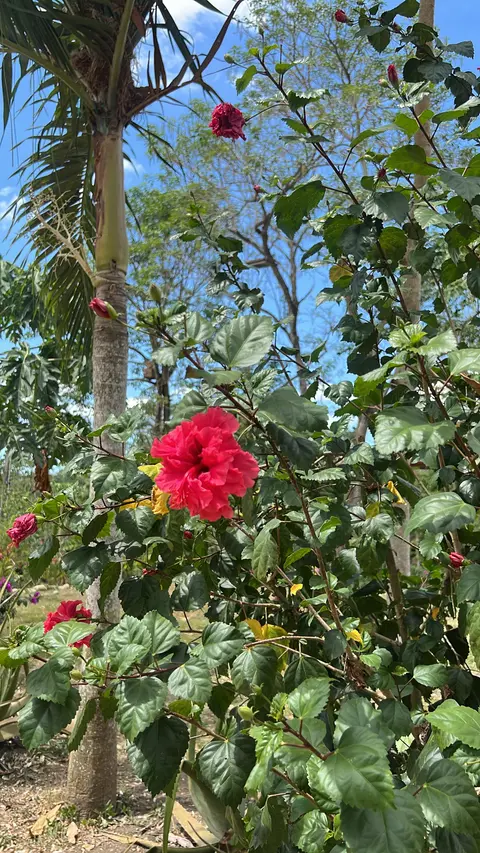
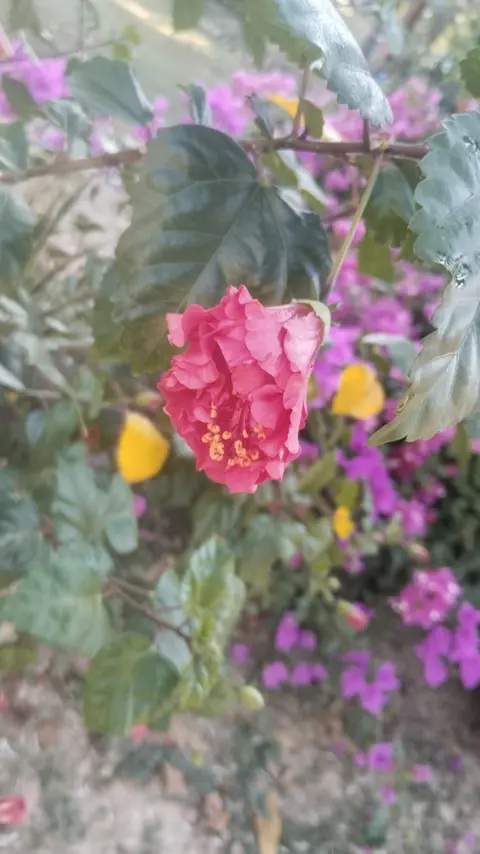
Michel Salas was walking through the property when he came across something that didn't quite fit: a hibiscus shrub in full bloom, its reddish-pink double-petaled flowers opening to the afternoon sun. Striking, without a doubt. But *Hibiscus rosa-sinensis* doesn't belong here — it arrived, like so many ornamental plants, because someone once decided to brighten up a garden.
The palm trees in the background and the clear sky completed a scene that was almost tropical postcard-perfect. Except that at Fundación Loros, that kind of postcard comes with nuance: what dazzles doesn't always belong. The record now lives in the property's inventory at coordinates 10.4474, -75.2618 — a footnote about what grows across these 520 hectares, the native and the arrived.
Number 2 and His Twelve Companions
For years, macaw number 2 carried a verdict that seemed impossible to appeal: he was too tame to live in the wild. He had grown up so close to humans, so accustomed to their presence, that many doubted he could ever find his place among the trees. But animals, sometimes, take it upon themselves to prove us wrong.
On March 21st, Alejandro Rigatuso found him in the sector of the Ara aviaries, near Cerro El Peligro, and what he saw left no room for doubt: number 2 was flying fully integrated into a flock of about twelve macaws, as if it had always been that way.
They have been free for months now. He is no longer the tame macaw of the aviaries — he is one among twelve, part of a flock that moves and makes decisions together. Sometimes tameness is not a sentence, but simply a starting point.
Ceibas in the Dry Season, on the Road to El Peligro
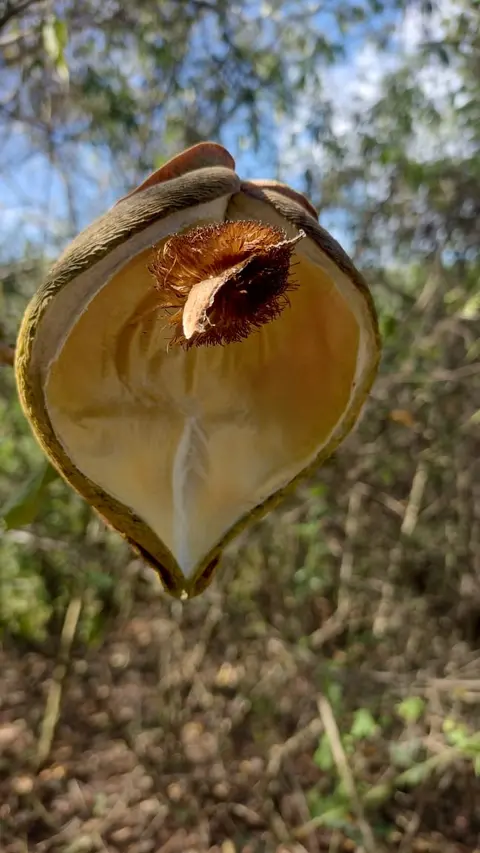
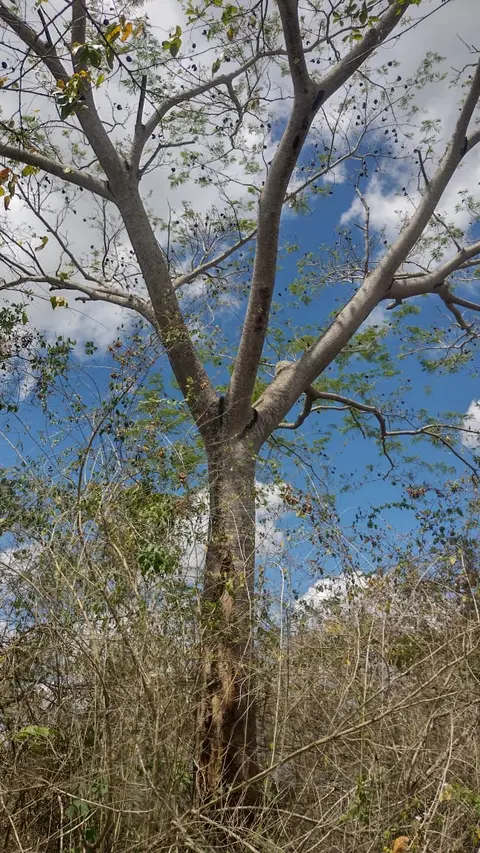
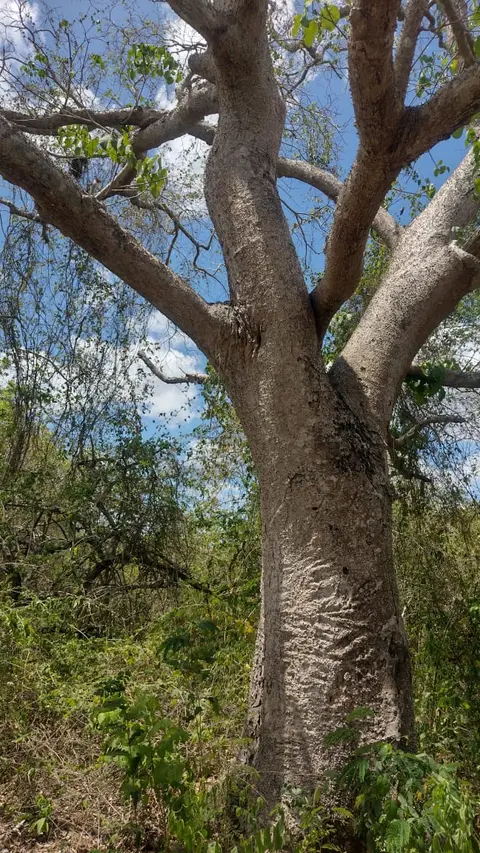
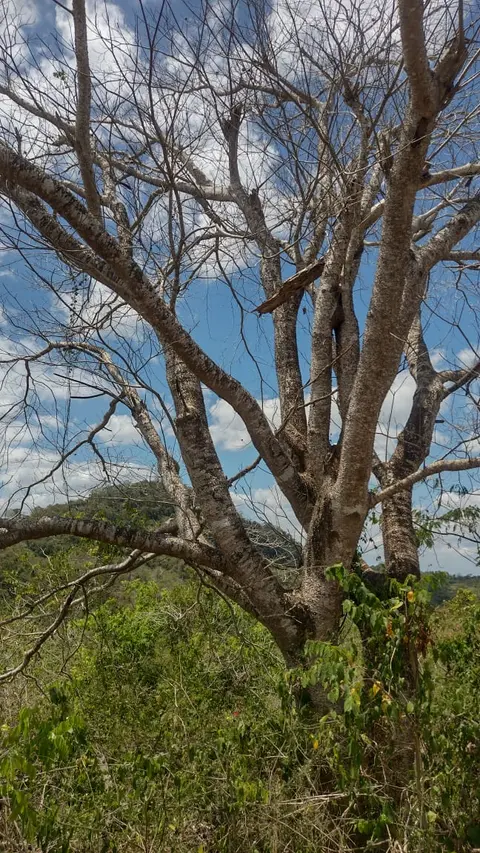
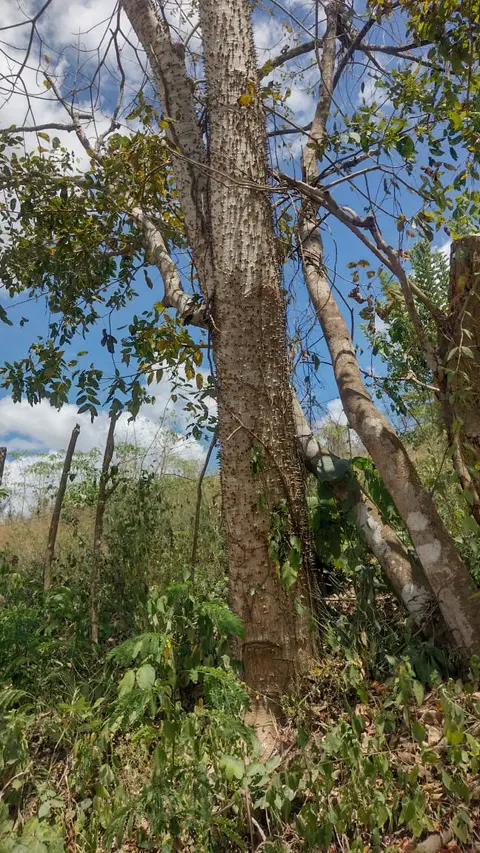
In the height of the dry season, when the forest lays bare its bones, a group of students set out from La Manga toward El Peligro under the guidance of José Marín. The landscape that greeted them was the tropical dry forest without pretense: yellowed grass, dust-coated shrubs, and trees that had shed their leaves the way one shrugs off a coat. Against that backdrop of apparent desolation, they recorded three ceibas — those grey-barked giants whose distant spines command respect — and an orejero (Enterolobium cyclocarpum) standing solemn and unhurried amid the sparse vegetation.
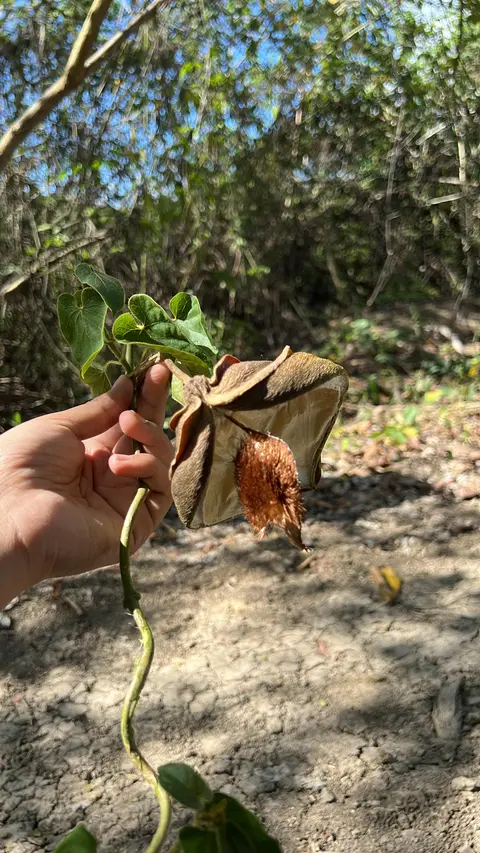
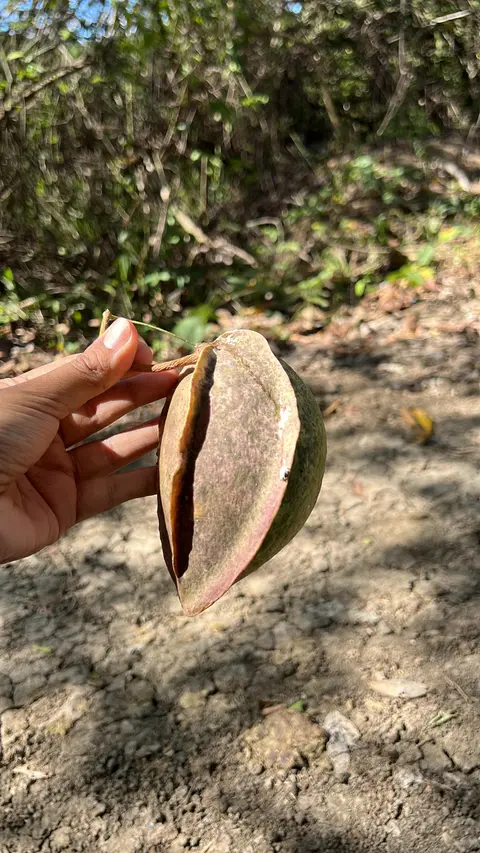
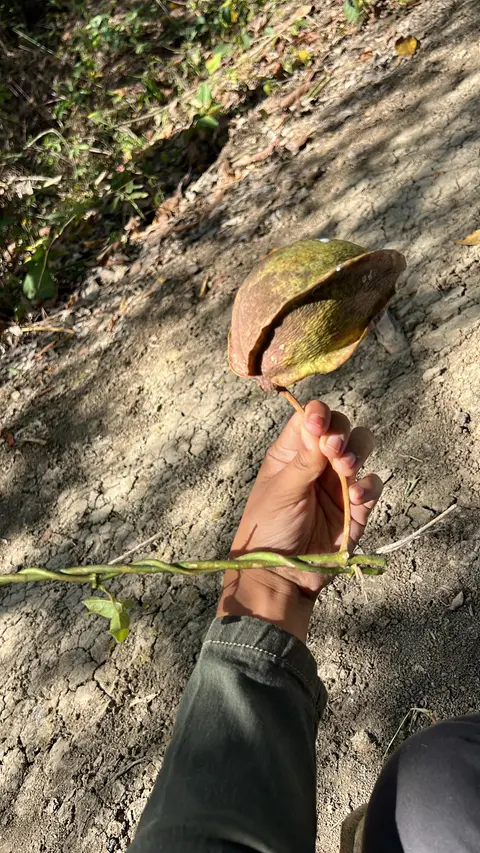
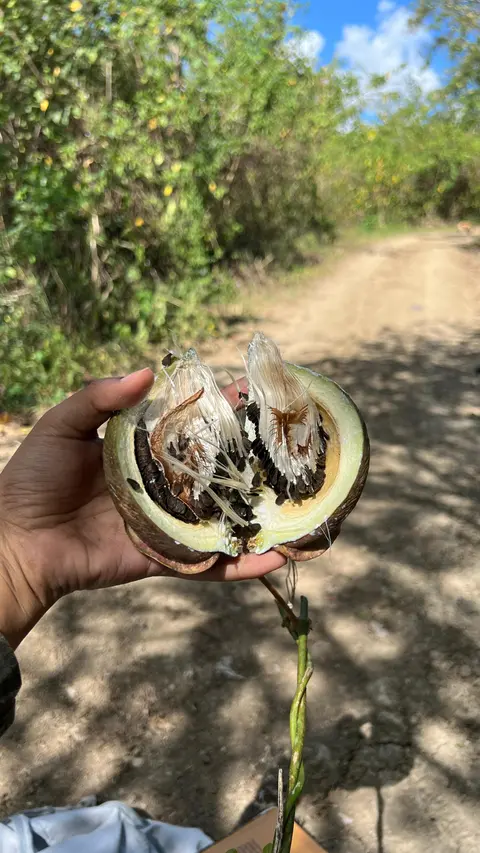
The day's most curious find was a split dry fruit from the Apocynaceae family, discovered at the very start of the trail. Its outer shell was grey-green, but inside it held a quiet surprise: a seed wrapped in reddish, hair-like fibers, as though the tree had tucked something tender into the heart of all that roughness. Someone photographed it against the blue sky, the bare hillside stretching to the horizon behind it, and the image became a small portrait of what the dry forest is capable of keeping — even on its most parched and unforgiving days.
The tronador, the climbing vine, and the fruit no one can name
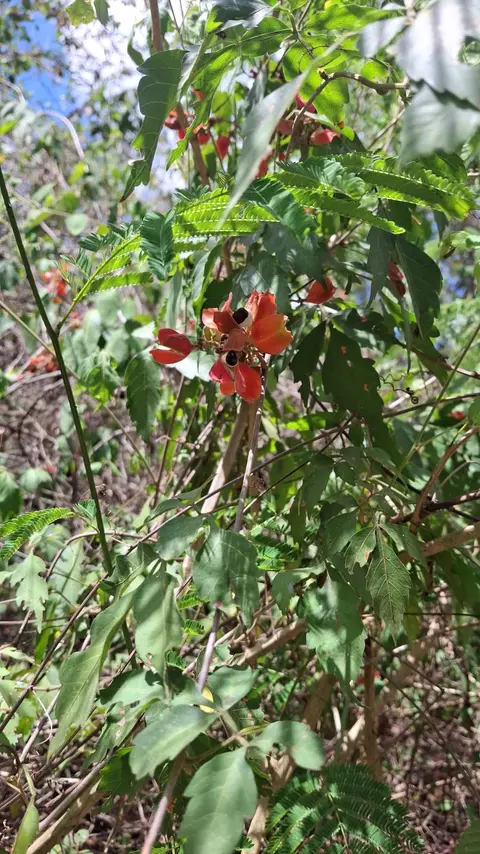
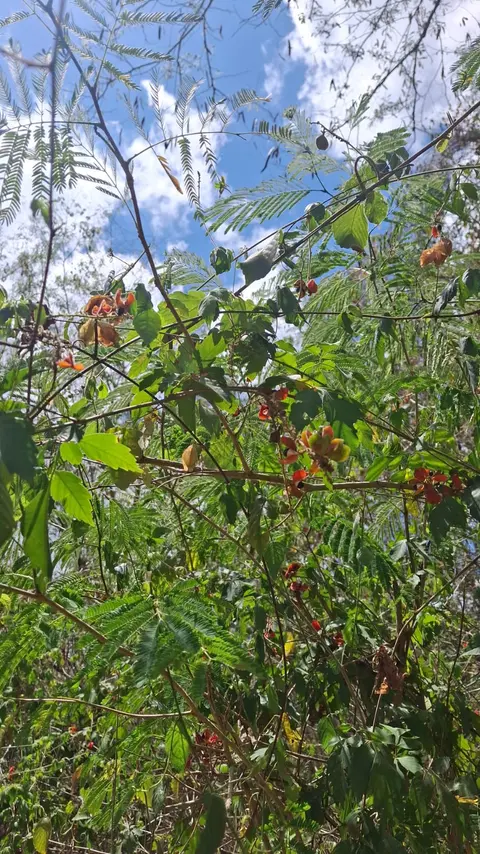
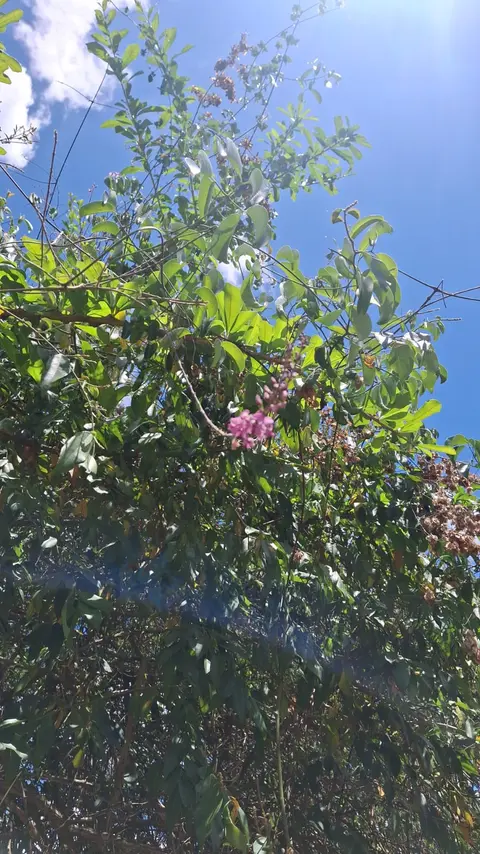
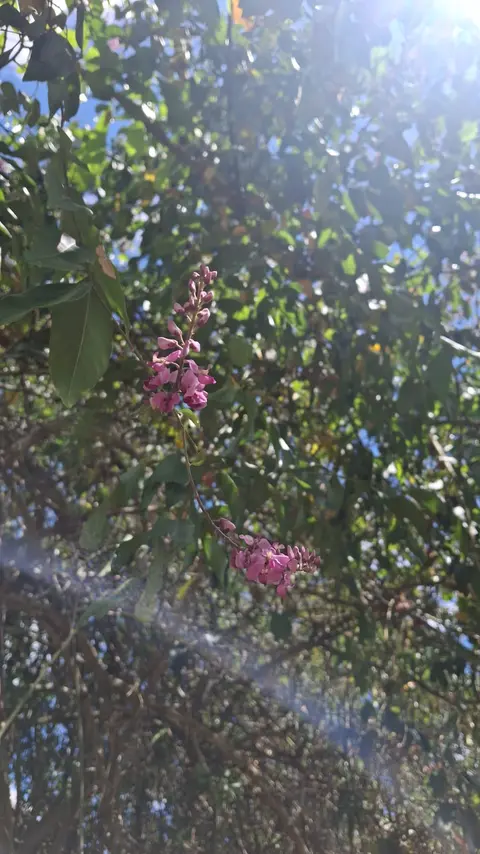
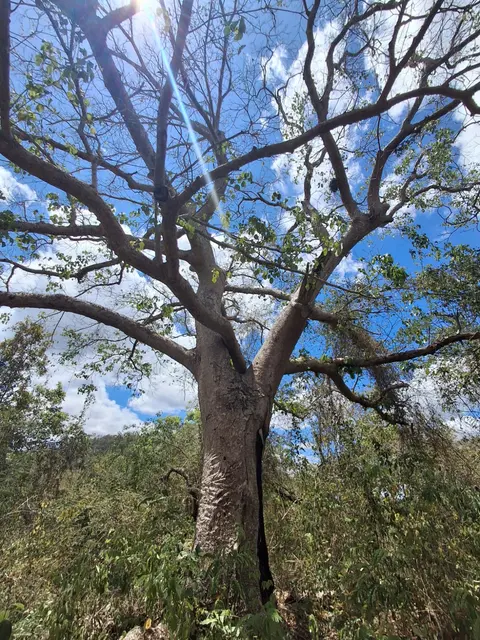
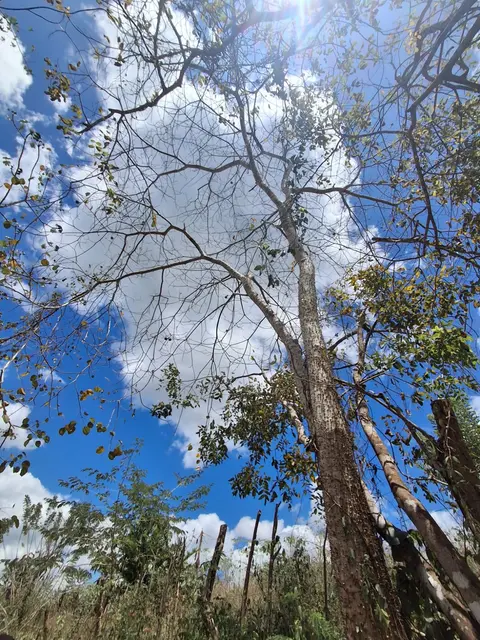
Michel Salas set out that Sunday along the dirt paths of the reserve, camera ready, eyes wide open. At the first spot he logged, the vegetation welcomed him with a quiet abundance: a climbing vine heavy with red-orange fruits split open in two, their black seeds exposed as though posing just for him; higher up, another creeper — altogether different — draped pale pink-lilac blossoms through the green canopy against the noon-blue sky. And presiding over it all, the tronador — that broad-shouldered tree with its thick, commanding trunk, known well by the people around here by that very name, even if science has yet to catch up with them.
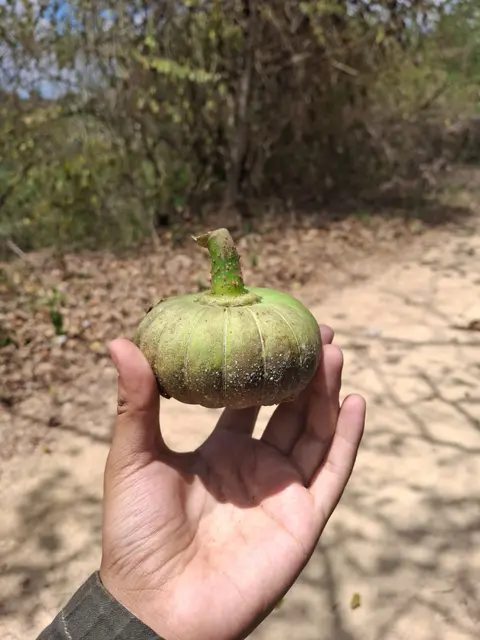
Some five hundred meters to the east, the landscape shifted in mood. The path grew drier, sandier, the shrubs beginning to show the strain of the dry season. It was there that Michel came across the day's most puzzling find: a small, green, ribbed fruit, shaped exactly like a miniature gourd. He cradled it in his palm to photograph it properly. No one on the team could tell him what it was called. Sometimes the forest keeps its secrets like that — unhurried, patient — waiting for someone to come back and ask again.
Michel found it standing upright and solitary in the dry scrubland, its grey trunk splitting toward the sky like open arms: a grand orejero, Enterolobium cyclocarpum, documented in one of the most arid sectors of the sanctuary. What caught the eye most was seeing it in two moments at once — the swollen black mature pods hanging alongside small, spongy white flowers, as though the tree refused to choose between its past and its future.
The orejero carries centuries of use on its back. Its fruits are used to make dulce de carito, a flavor well known to the people of Colombia's Caribbean coast, and they also serve to soothe throat infections. The trunk and branches feed heavy charcoal kilns. But there was one detail Michel mentioned almost in passing: squirrels frequent that tree a great deal, drawn in by its seeds and pods. And so, in silence, the orejero has spent decades being pantry, medicine, and shelter all at once.
It has been recorded at the exact coordinates where Michel found it, within the reserve's tropical dry scrubland. A tree that, it seems, has never needed anyone to explain what it's for.
Under a blue March sky, Michel was walking through the rural landscape when he came upon it: a totumo of middling stature, branches reaching outward in every direction, laden with dark, rounded fruits at different stages of ripening. The tree stood alone — no birds, no mammals had come to contest that abundance. Michel took his photographs, recorded the coordinates, and added it to the Fundación's map of food resources.
The totumo — *Crescentia cujete* — is one of those trees that along the Colombian Caribbean coast one simply takes for granted: its fruit has always appeared in courtyards, pastures, and roadsides, a fixture of the landscape. But for the species the Fundación protects and rehabilitates, a tree in active production is exactly what the map needs: a point of reference, a marked larder, a promise that food will be there when the moment calls for it.
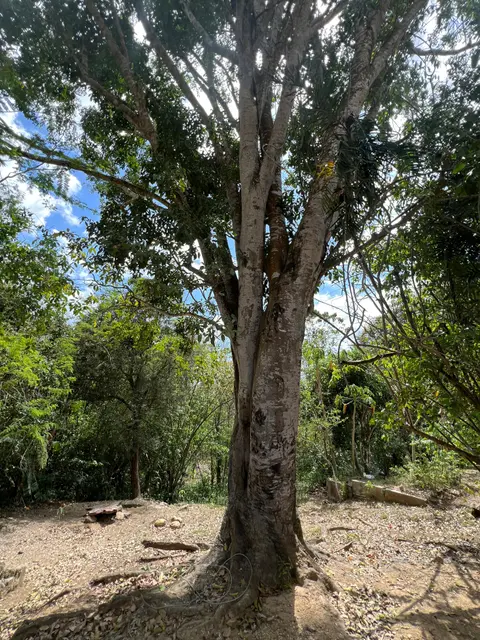
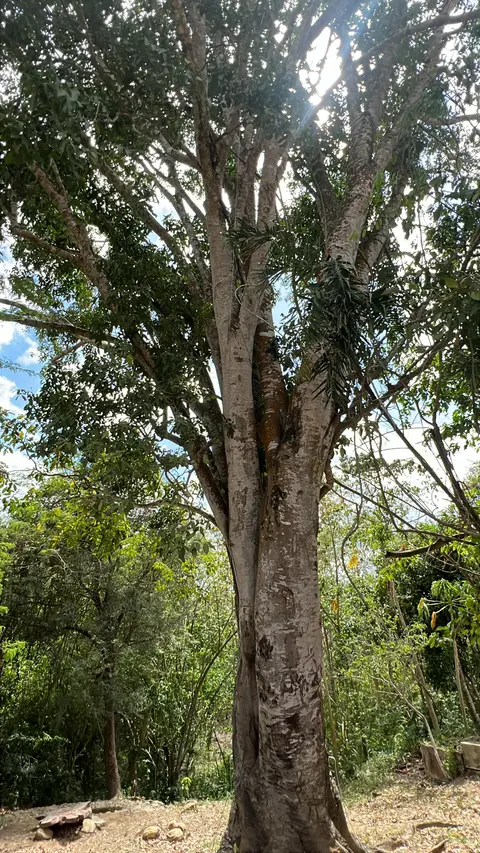
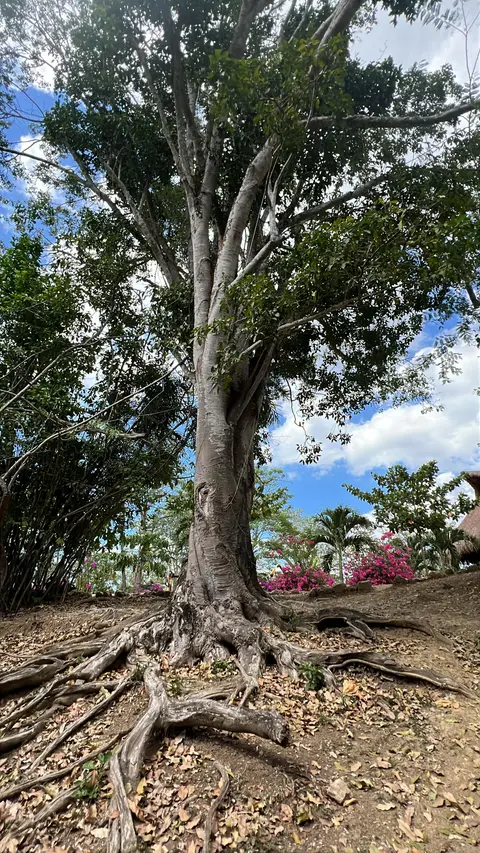
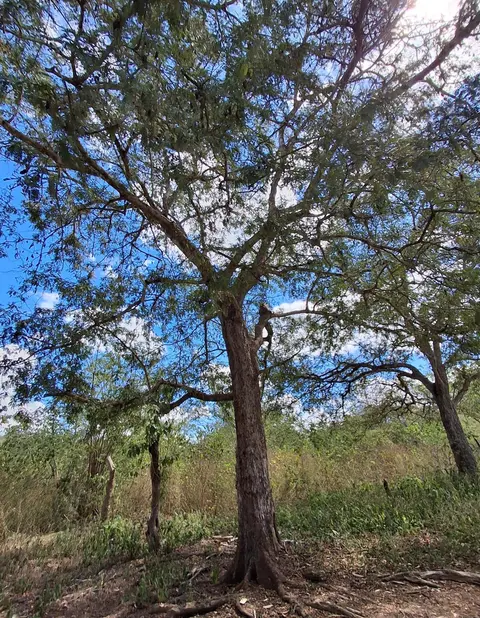
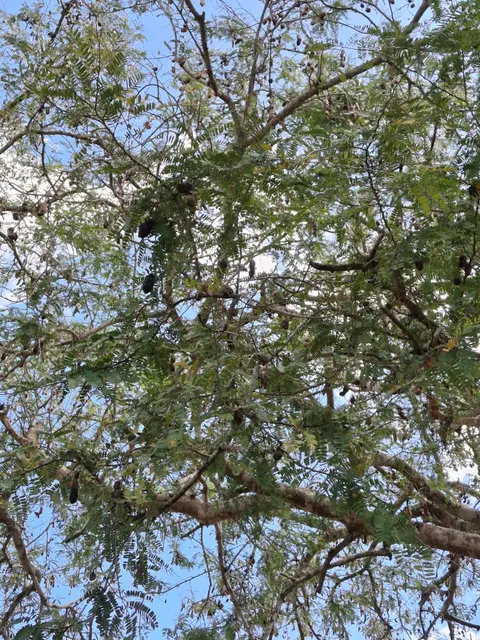
Beneath an unapologetically blue sky, Michel Salas paused before one of the oldest and most recognizable trees in the sanctuary: a tamarind with a thick trunk and a wide, generous canopy that this Sunday, March 22nd, hung heavy with pods. Its branches stretched outward in every direction like arms offering something, and among them dangled the dark, curved fruits of Tamarindus indica, confirming that the tree is moving through a fertile season.
Michel documented the individual with two photographs and a precise location marker. The tree was already plotted on the sanctuary's map, but today's report adds something meaningful: it is bearing fruit, active, in good health. In a zone of dry vegetation like this one — where the grass yellows and the shrubs press themselves close to the ground — that tamarind stands as an open larder for the wildlife of the area.
The chronicle was entered in the field log with coordinates, photographs, and Michel's signature. The tamarind will go on standing there, sharing its pods with those who know how to find it.
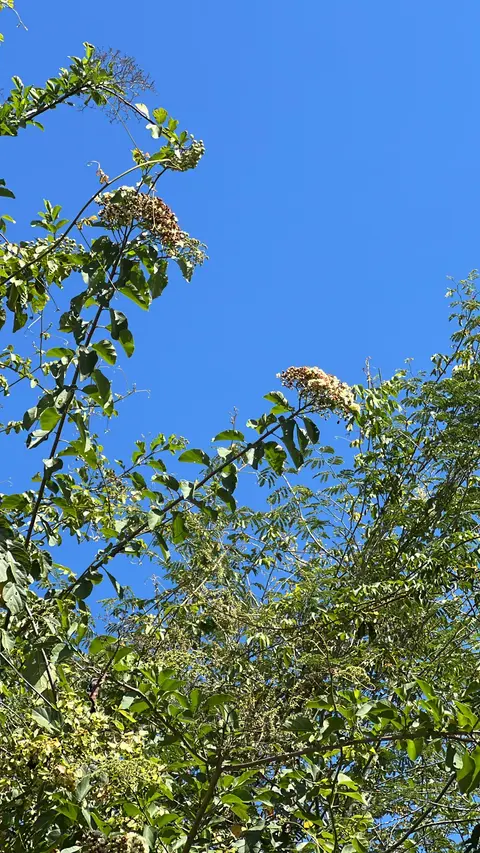
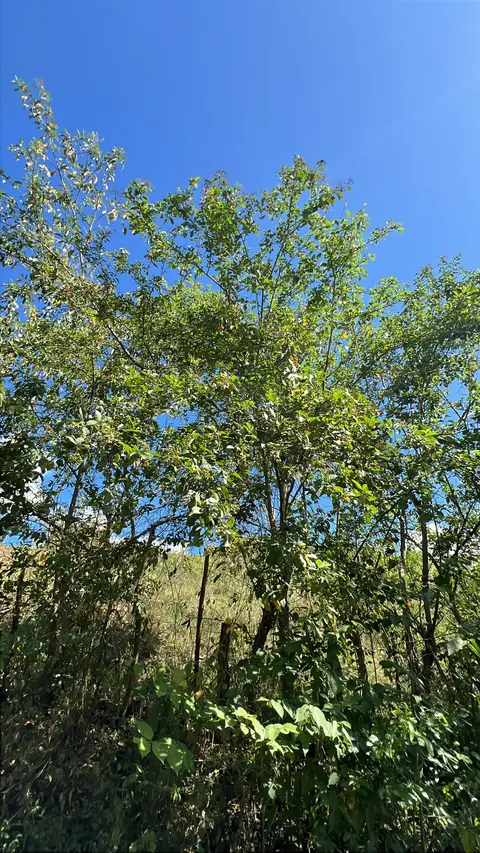
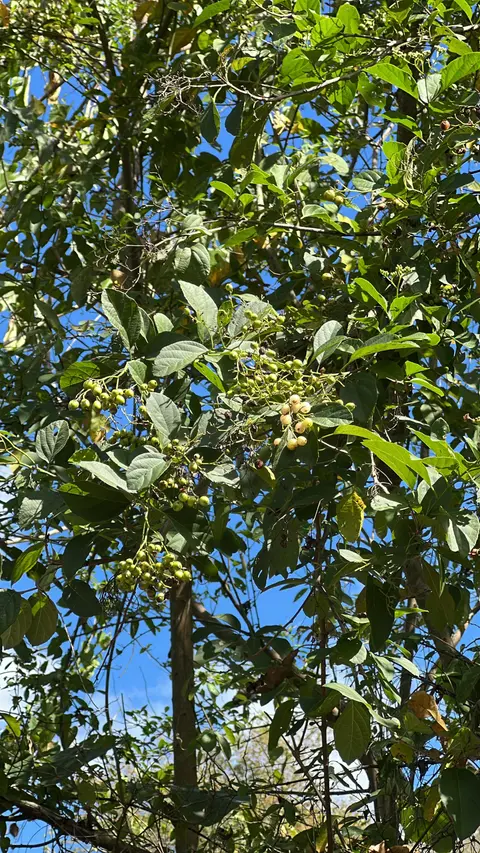
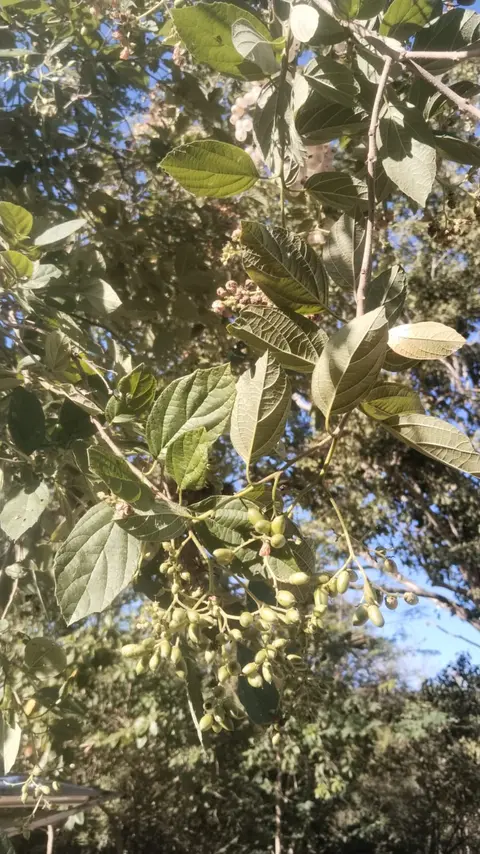
That Sunday in March, Michel Salas was making his way through the sanctuary's scrubland when the uvitos stopped him in his tracks: several trees heavy with clusters of fruit shifting from green to yellow beneath a sky without a single cloud. He photographed them from below, the canopy closing in around the blue, then pressed on.
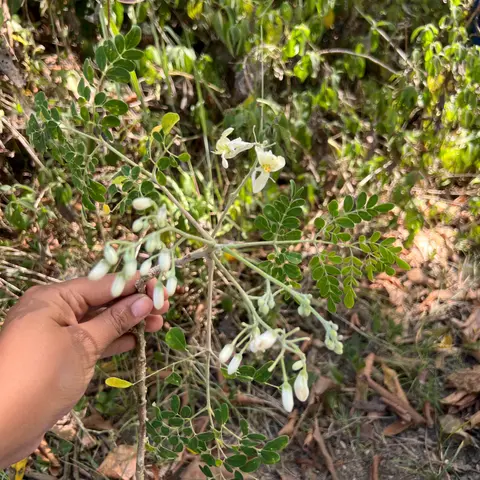
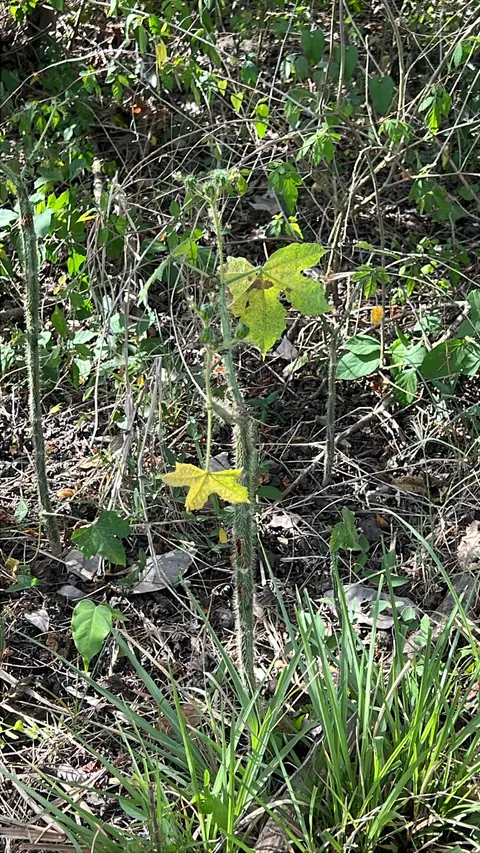
Deeper in, tangled among the branches and creeping vines of the understory, he came upon two more plants. One, known to locals as pica pica — stinging, its dry pods and fruit still clinging on, its precise taxonomic identity yet to be confirmed. The other, cradled in his hands and checked against page 69 of the field guide, turned out to be moringa — Moringa oleifera — growing completely wild, its pinnate leaves and open white flowers rising from the parched floor of a tropical dry forest.
No one had planted it there. It stood alone, blooming without an invitation from anyone.
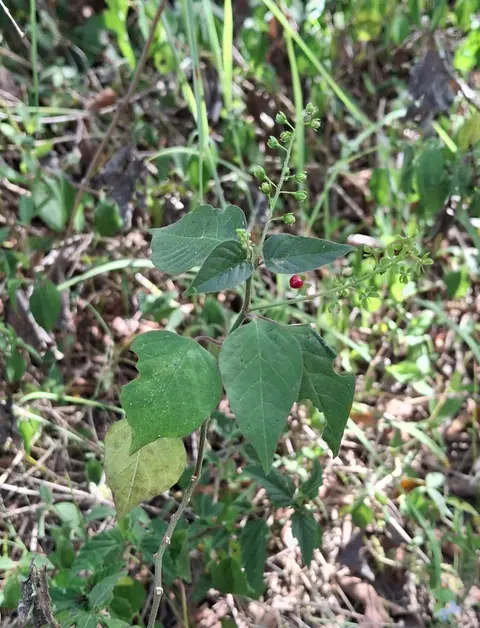
Michel Salas was making his way through the scrubland when he found it: a slender-stemmed little plant with oval leaves and, peeking out from the dry foliage, a row of red berries so vivid they looked freshly painted. It was Rivina humilis, known in these parts as sangresuela, and it didn't take long for him to remember what the local children use it for — they crush those tiny berries against their skin and walk around with their arms stained crimson, faking wounds that alarm their mothers and send their friends into fits of laughter.
The plant was in full bloom, its buds clustered in upward-reaching sprays while the ripe fruits hung below like tiny beads on a string. Michel photographed it at the sanctuary's coordinates, in that corner of low vegetation and tawny grass where Rivina humilis — of the family Petiveriaceae — grows in near silence, drawing no attention from anyone who doesn't know how to look. But once you've seen it, that fierce red burning against so much green and dry earth, you can never quite unsee it.
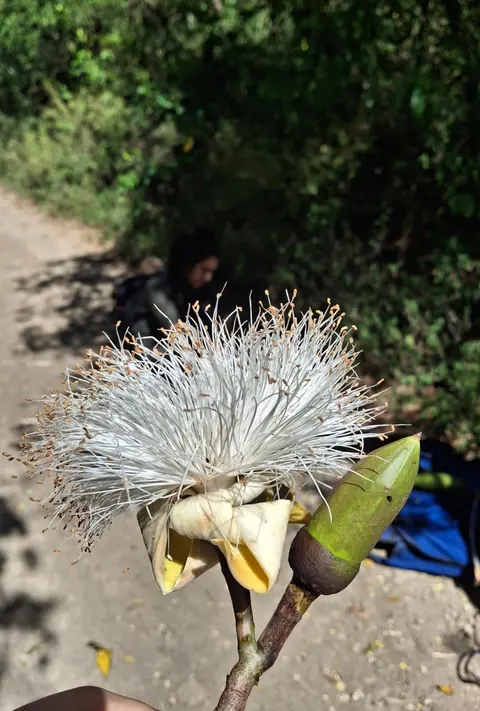
Through the dense vegetation of the sanctuary, Michel Salas moved slowly along one of the interior trails, with the watchful gaze of someone who knows the forest always has something in store. It was March 22nd when, pack slung over one shoulder, he stopped dead in his tracks before a tree that stopped him cold: a Pseudobombax ellipticum in full bloom, its white flowers bursting in clusters of stamens as fine as threads of silk.
The species, commonly known as algodón de seda, belongs to the family Malvaceae and bears a flowering that does not go unnoticed: those flowers without visible petals — pure stamen — look like pompoms suspended among the branches. Michel photographed it and recorded it in the botanical inventory he had been working on that afternoon, at the coordinates along the northern edge of the reserve.
The discovery was duly noted: a single blooming individual, documented, tucked into a corner of the forest where the trails pass through, but where attention does not always follow.
The ground was so cracked it looked like a map torn into a thousand pieces. That is what Michel Salas found when he set out on his flora inventory walk through that corner of the sanctuary where the dry scrubland presses in and the vegetation scatters as if searching for shade. Moving through the shrubs and hanging pods, Michel went on noting, photographing, touching leaves and fruits with the unhurried calm of someone who knows how to read the land.
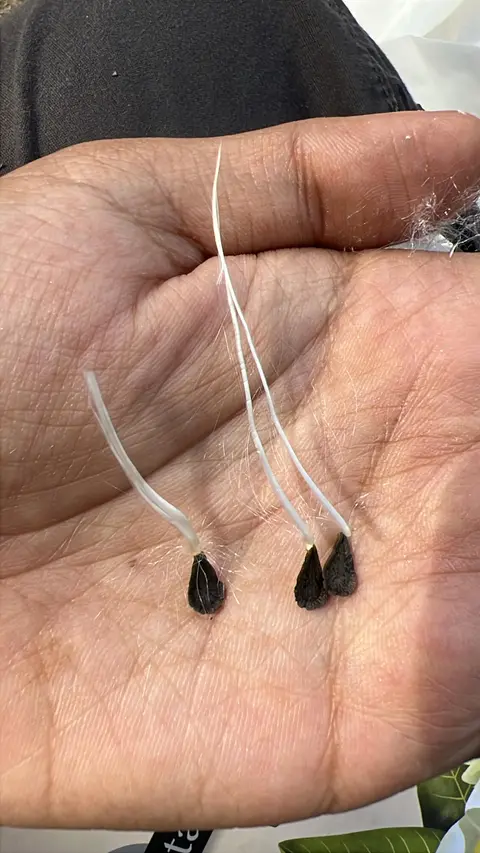
The day's discovery was a liana. When he cut it, it released a generous exudate — that white "milk" that is the unmistakable signature of the family Apocynaceae, subfamily Asclepiadoideae. Further along came another gift: a fruit already split open, its white silky fibers spilling outward as if making an offering. Gathered in the palm of his hand, three black seeds with their radicles already showing — germinating right there in the open air, ready for the wind to carry them to some other corner of the sanctuary.
Six photographic records in all, from a short but richly layered day. The dry scrubland holds far more than it first lets on.
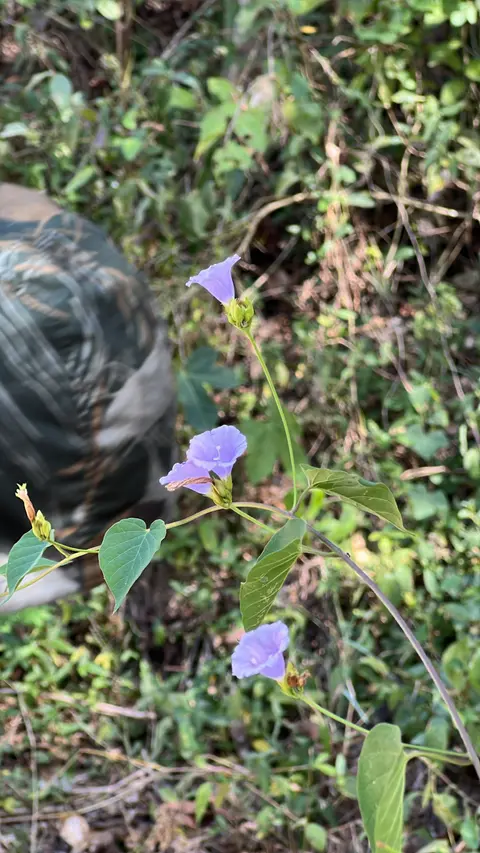
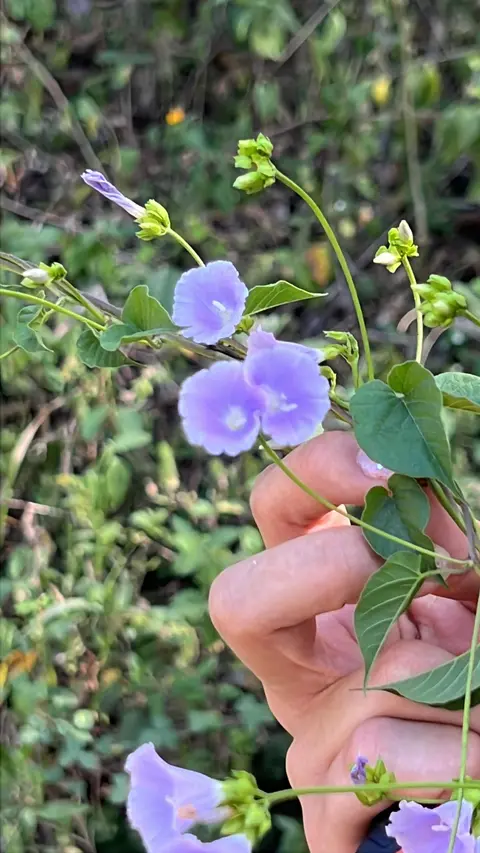
On Sunday, March 22nd, Michel Salas crouched down into the thick vegetation of La Manga and found what the sanctuary had been quietly keeping to itself: a wild morning glory vine bearing trumpet-shaped flowers in shades of blue and violet, its tight green buds waiting their turn to open. It was a Convolvulaceae — likely an Ipomoea — creeping low and unhurried through dry grasses and tangled stems, as though it had always been there, and no one had simply thought to look.
Michel photographed it twice: first from a distance, where the wash of color stands out against so much green; then with his hand gently lifting a branch to reveal the detail of the buds. That second photograph says everything — the plant, the hand, the dense growth behind. The find was geotagged at coordinates 10.444474°N, 75.257507°W, one more point on the living map of the sanctuary.
Ipomoea are masters of disguise — they appear where least expected, climbing, trailing, blooming in blue while the rest of the hillside stays green — and Michel's record is a reminder that La Manga still has things to show, to anyone willing to bend down and look.
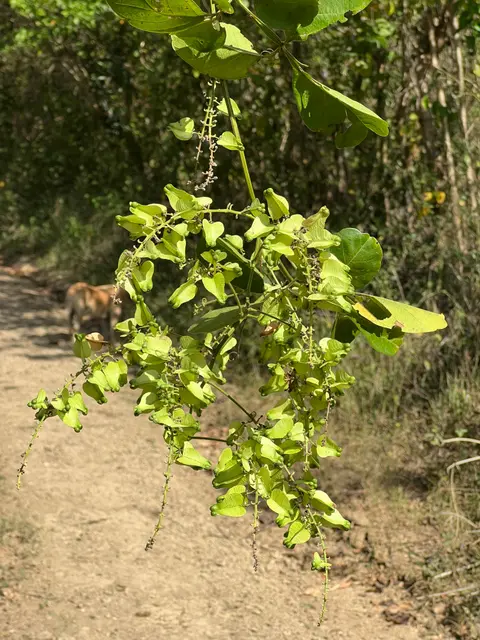
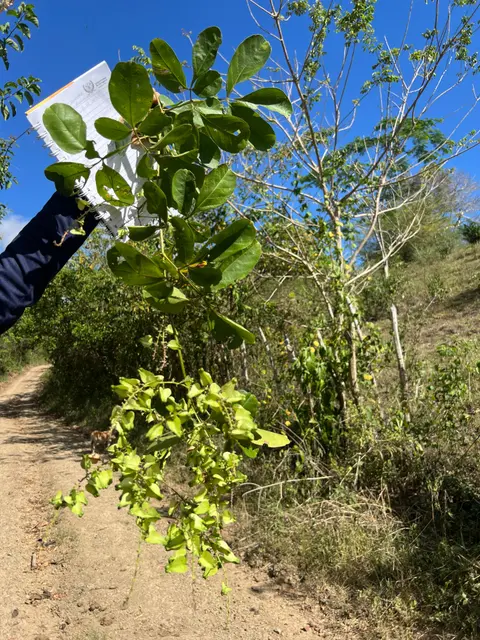
On the dirt path that cuts through the tropical forest of the reserve, Michel Salas stopped before a liana hanging generously from the canopy, its foliage a brilliant green that seemed to drink in all the morning light. Notebook in hand, Michel lifted a branch to examine it more closely: it belongs to the family Sapindaceae, a group that ranges from the mamoncillo to the guaraná, and that in these forests finds its wildest expression as a climbing vine.
The fruits had barely appeared, still green and unripe, holding the quiet promise of turning brown when their time comes. As Michel noted down the details, a brown dog wandered along the path behind him, indifferent to the discovery, as though the forest were the most natural place in the world to spend an afternoon. The coordinates were recorded, the photographs taken, and the liana went on hanging over the trail, as still and patient as ever.
What Blooms Without Anyone Sowing It
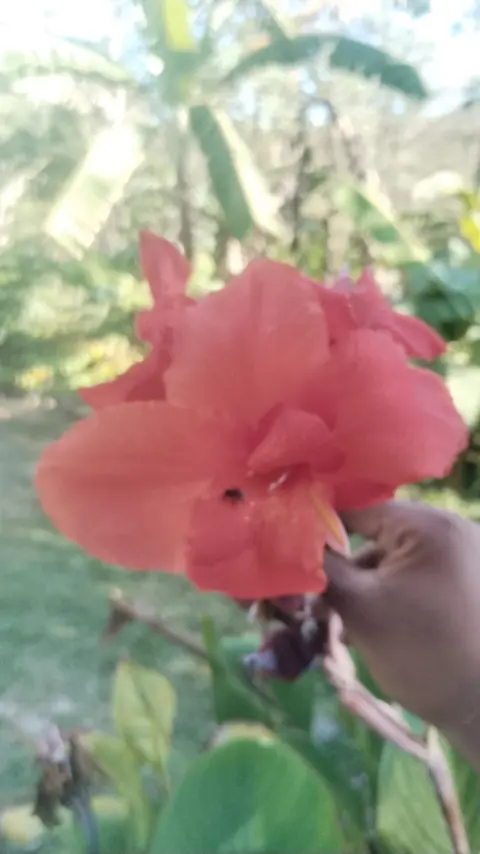
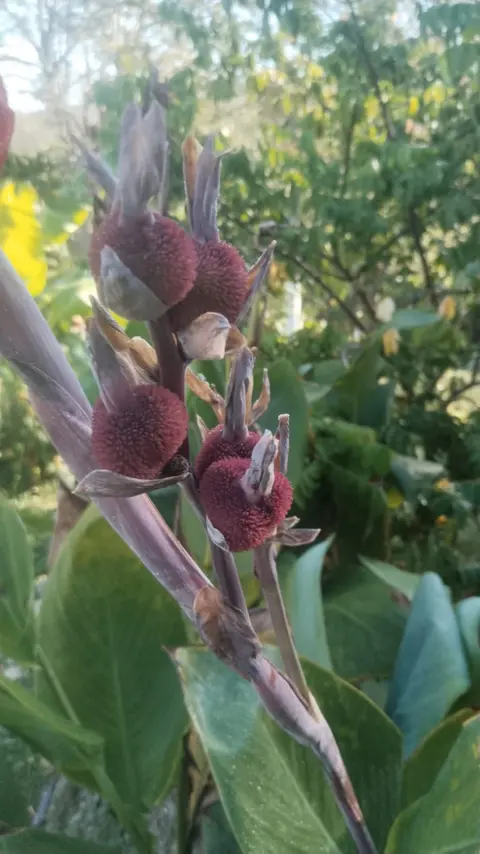
On Sunday, March 22nd, Jillian Pomare wandered through the sanctuary's gardens and wooded areas with the unhurried calm of someone not looking for anything in particular — and ending up finding everything. Among the green grass and the generous shade of the tall trees, a Canna indica flower appeared — coral shading into salmon, its petals open as though it had been waiting days for someone to notice it — and Jillian lifted it toward the sunlight to capture it forever.
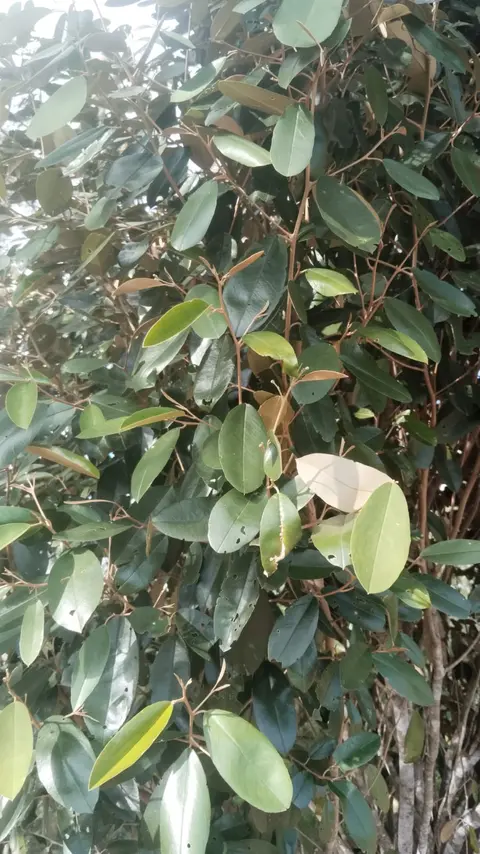
Deeper in, the walk left behind images of the sanctuary in its most ordinary state: the waxy, dark foliage of what appears to be a mature ficus, the outstretched branches of the canopy filtering the blue March sky, and the red roof of the little rural house peeking through the vegetation like a natural part of the landscape. Nothing extraordinary on the surface, yet a quiet confirmation that the place is alive and well.
Sometimes the field log records not events, but presences. This was one of those days.
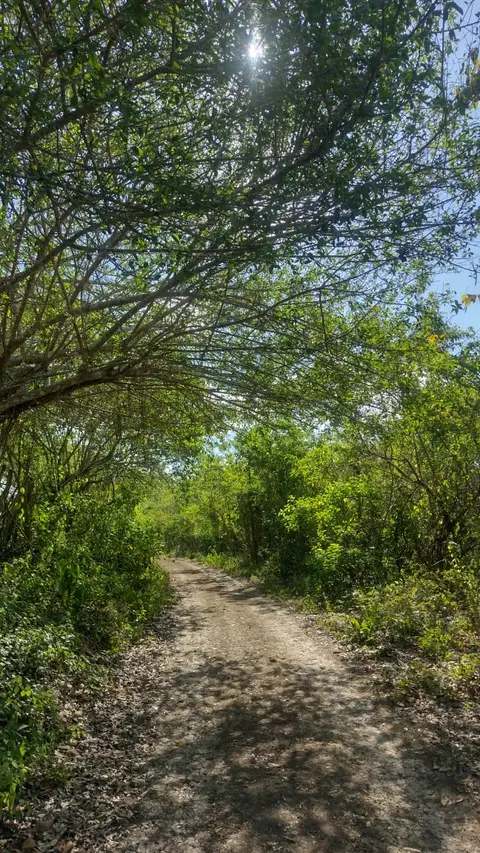
On Sunday, March 22nd, José Marín stepped into the forest of Fundación Loros alongside a group of Botany students from the Universidad de Cartagena. The trail received them gradually, as forests tend to do: first the dense shade of a broad-armed tree, then the green tunnel that the vegetation forms over the dirt path, with sunlight slipping through the canopy and scattering golden patches across the ground. In the distance, the hills held their color — that particular green that asks no one's permission.
As they pressed deeper, the group began naming what the forest placed before them: bramble tangled along the path's edges, lianas hanging with that slow, unhurried patience that climbing plants have always owned. José reported that many more botanically significant species awaited documentation in the area — the inventory had barely begun when the last message came through: they were still inside, still searching.
There is something worth honoring in a field class that runs past its hour because the forest simply has more to offer. That is what happened that Sunday in the reserve: the sanctuary did its work quietly, without announcement, and the students walked out with their hands full.
In the stretch of land that the Foundation's people call La Manga del Peligro, Michel Salas raised his camera toward the midday sky and captured what the tree had to offer: an open, generous canopy, its branches ending in clusters of fruit as white as small pearls. It was one of those days of clean, unfiltered sun, when the blue of the sky above Cartagena looks freshly painted.
The tree is a uvita — Cordia dentata, known in these hills for its small fruits that draw birds and mammals when they ripen — and that Sunday it was heavy with them. Michel didn't spot any animals in that moment, but the fruit doesn't lie: when the uvita is this full, the visitors are only a matter of time.
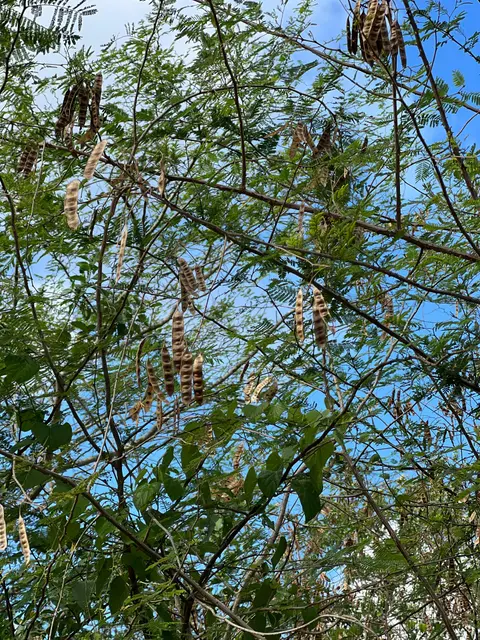
That Sunday, Michel Salas set out alone to walk La Manga del Peligro beneath a sky without a single cloud — that deep, saturated blue that only appears when the dry season truly bears down on the Coast. The scrubland was caught in that particular transition botanists love so well: a patchwork of vivid green and brittle brown, branches woven together and heavy with seed pods that crack and rattle in the wind. Michel carefully logged two GPS coordinates and moved through the brush, recording what the monte chose to reveal: a liana bearing fruit in samara — those light, winged structures that the right breeze will one day carry far from here — and several trees of the family Fabaceae hung with dense clusters of dry, beige legumes, heavy on their branches.
But the sharpest find of the day was a plant Michel recognized without hesitation: Brickellia sp., of the family Asteraceae, its dry, feathery fruits drifting through the undergrowth like tiny cotton rockets. It is a species rarely recorded within the reserve. Six photographs remain as testament to a stretch of land that, judging by what the images show, holds far more than it offers at first glance.
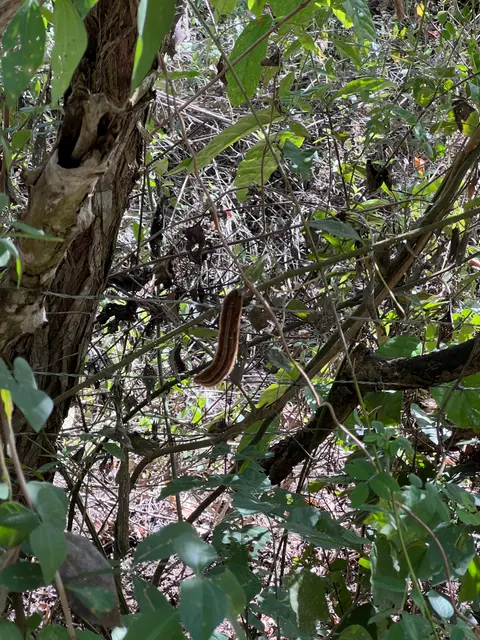
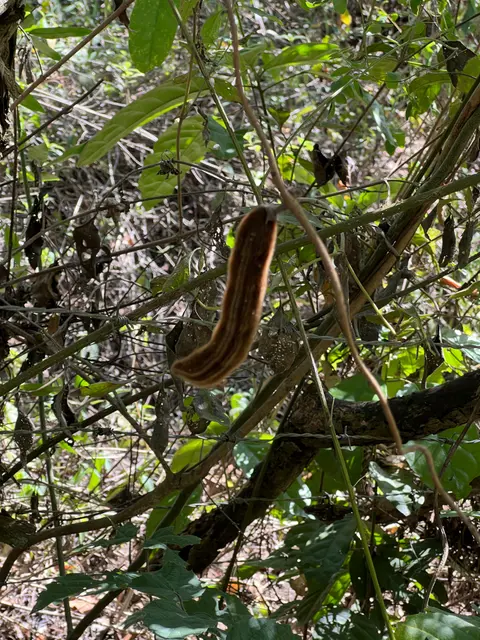
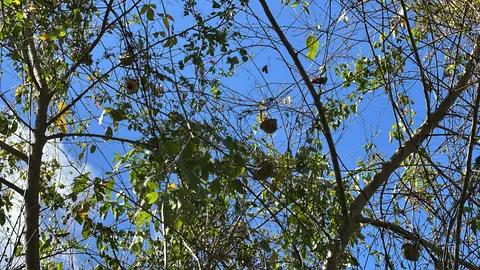
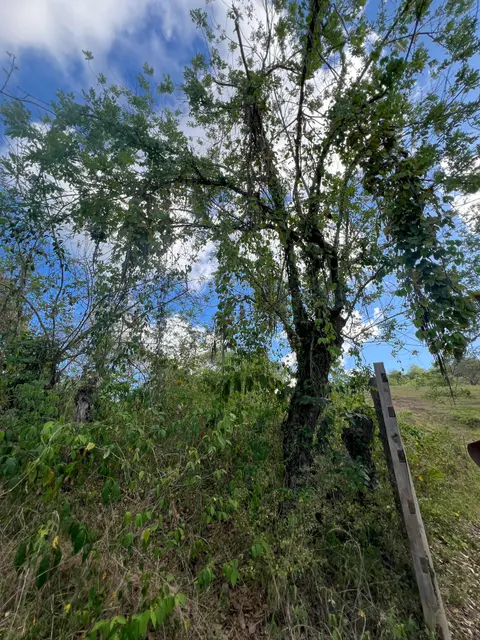
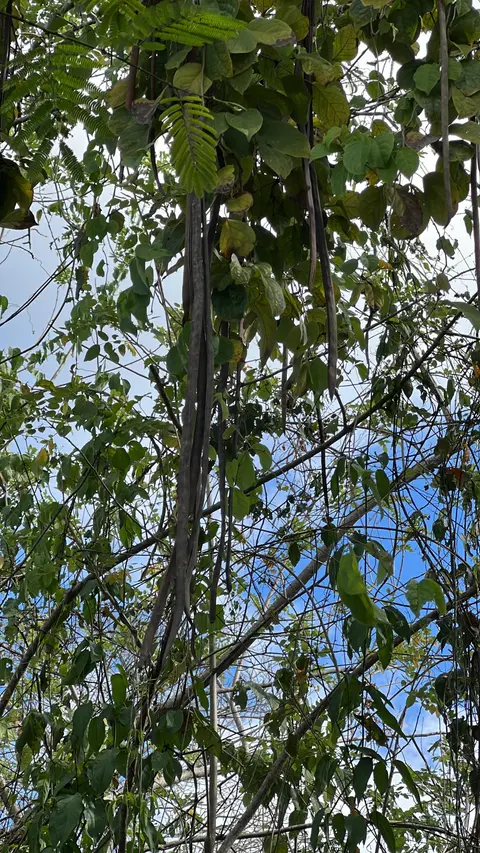
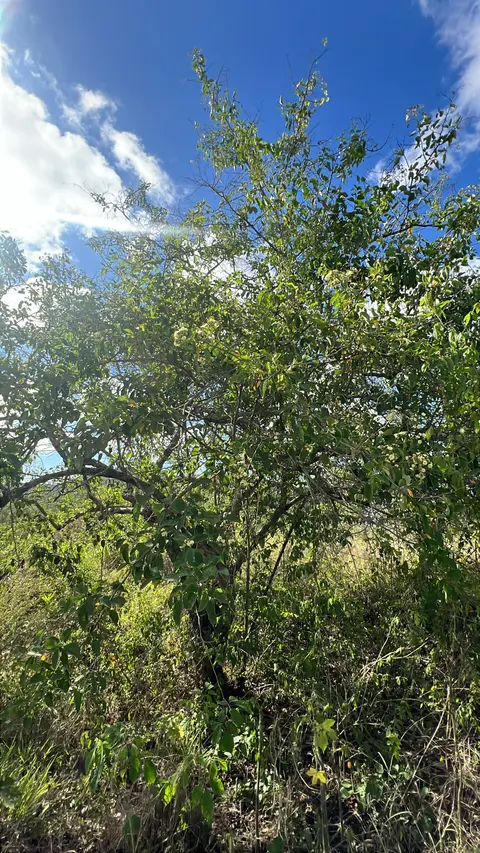
Michel Salas looked up through the foliage and found what the forest had left there for those who knew how to look: a liana from the family Bignoniaceae, climbing through the treetops, its long, dark pods swaying slowly against the blue March sky. From below, the tangle of branches and leaves of every shape seemed like a tight weave, almost impenetrable — but the hanging pods gave it away.
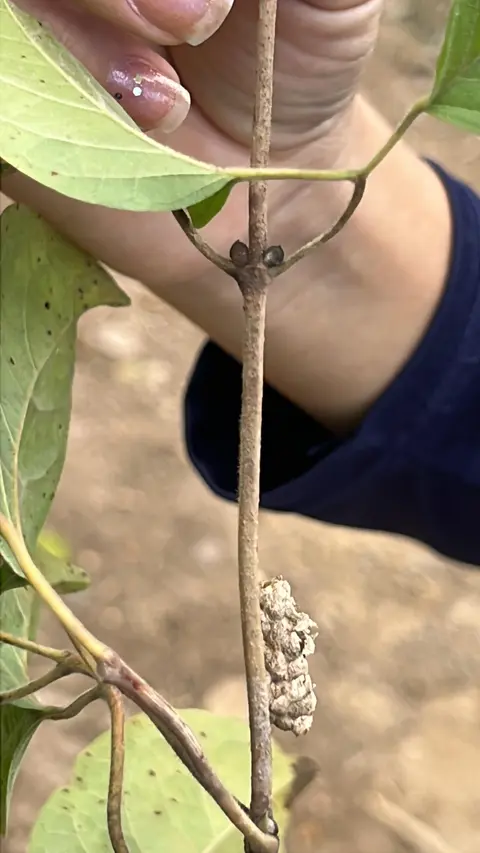
Lower down, on a slender branch within arm's reach, Michel found something more discreet: an ootheca with a rough, grayish texture, fixed to the wood with the conviction of something that knows it carries importance inside. It could belong to a mantis religiosa or another insect entirely — the field does not always surrender all its answers at once. What was clear, however, is that in that corner of the reserve, among intertwined lianas and branches, life was quietly going about its own business.
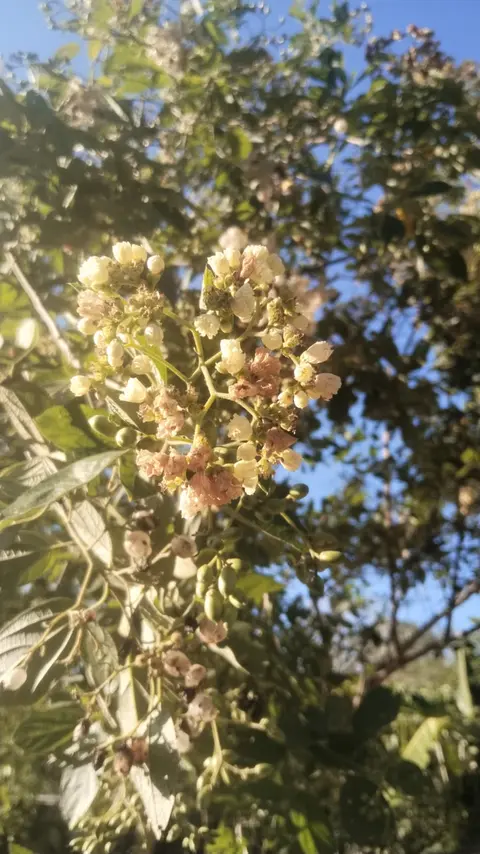
That Sunday, March 22nd, Michel Salas stepped into the forest beneath the deep blue sky that only the dry Caribbean morning can offer. Deep in the reserve's thick scrubland, where branches lace together overhead and leaf litter crunches underfoot, he came upon the uvito blooming once more — the same climbing plant with its pale yellow-white flowers that has already earned its place in earlier pages of this journal — draping itself over the shrubs as though it had never stopped growing since the last visit.
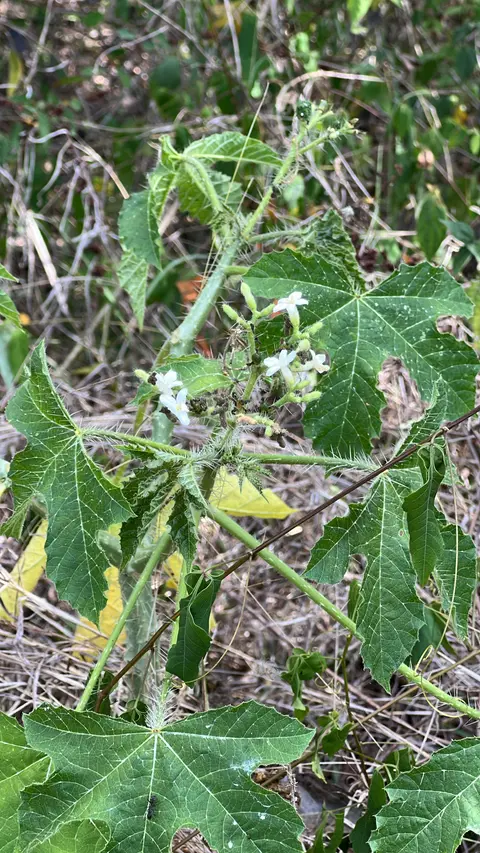
A few meters away, half-hidden within the brushy undergrowth, Michel spotted two individuals of Urera baccifera, the pringamosa that commands an instinctive wariness from anyone who has ever brushed against it by mistake. There it stood, with its yellowish-green lobed leaves, stems bristling with fine spines, and small clusters of white flowers emerging near the top. You don't touch it — but you do look: in that corner of the reserve's 520 hectares, the pringamosa blooms with the same unhurried calm as everything else around it.
Michel logged four photographs and two GPS points for the area — coordinates 10.4456°N, 75.2598°W — before continuing on his way. The tropical forest does what it always does: quietly, and right on time.
On January 25th, Salomé Piza and Michel Salas walked through the reserve's scrubland beneath one of those clear skies that make the green of the banana groves seem to glow from within. At the first stop along the trail, among the broad leaves of Musaceae and the green tufts of bledo — that Amaranthus retroflexus which grows without anyone having planted it — they found what made the whole walk worthwhile: an Ara ararauna, the blue-and-yellow macaw, perched in quiet stillness among the foliage. She is in the process of rehabilitation, and that day she let herself be filmed without hurry, as if she understood there was no need to rush.
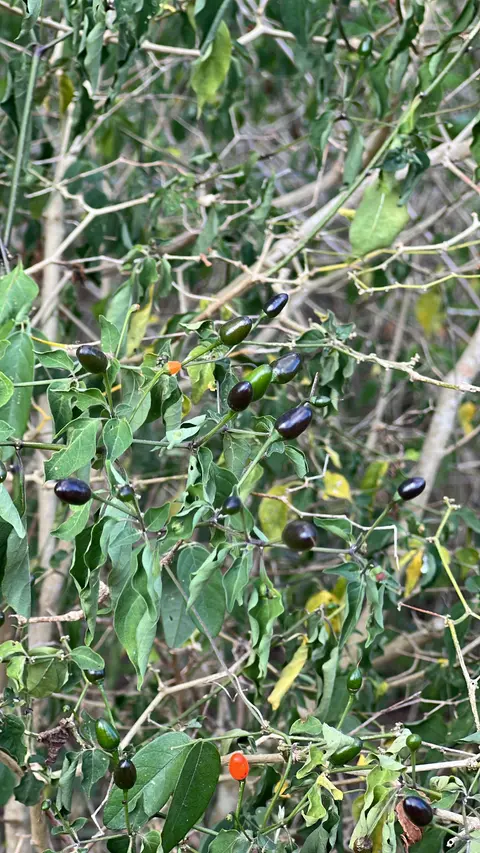
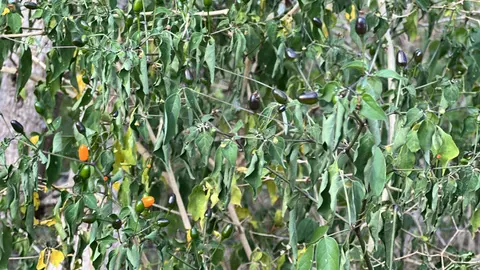
A few meters further north, the forest thickened. Salomé and Michel documented a Fabaceae with dry pods hanging brown from the branches — species still pending confirmation — and a shrub heavy with fruit at every stage of ripeness: green, orange, black. It was Capsicum frutescens, the ají guai guao, as the local campesinos have always called it around here. With that final record, they closed out the day, the reserve revealing, little by little, what it holds in keeping.
La Casa Plantada Awakens in March
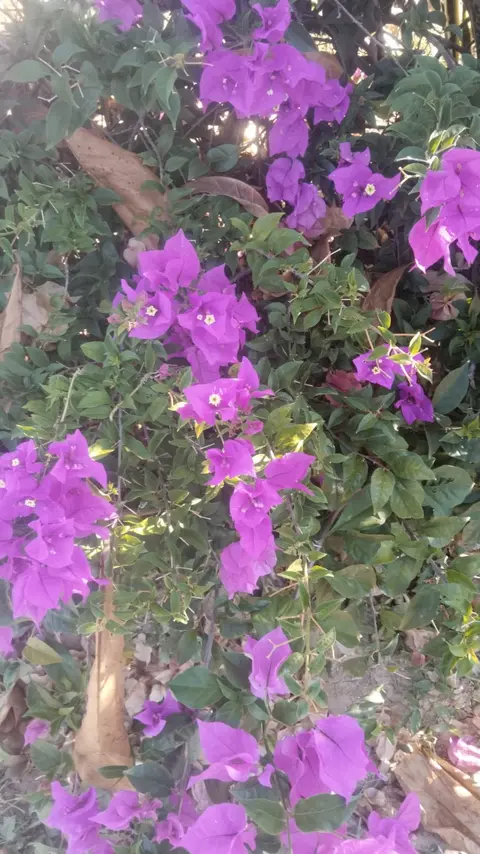
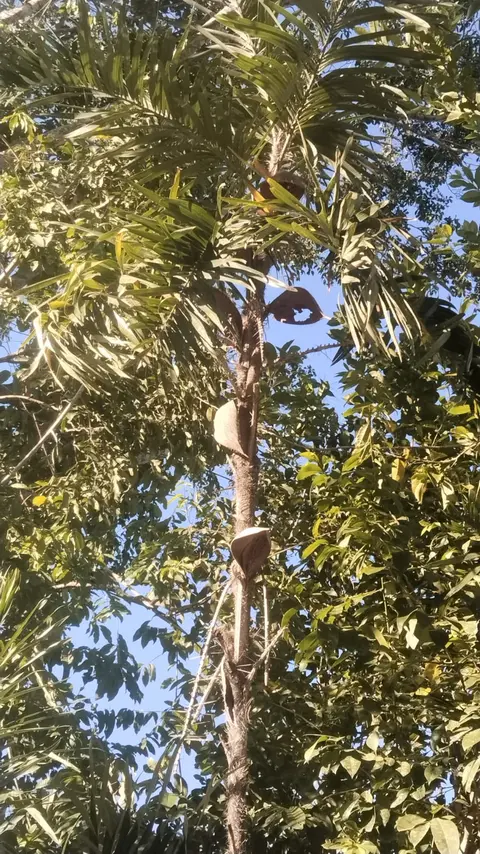
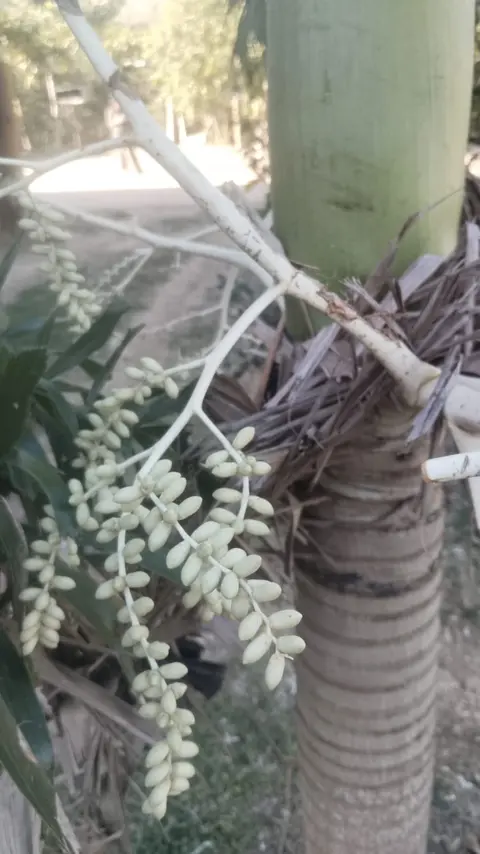
Gerard O'Neill arrived at La Casa Plantada with camera in hand and found a corner that seemed to have burst into bloom all at once. In a single walk, he recorded 14 species: the bougainvillea in its fierce purple — already living there long before anyone thought to name it — the slender corozo palm cut against a blue sky, the banana tree with its tender bunch and pink flower hanging like a lantern, and a Cordia alba — the uvito of the family Boraginaceae — heavy with green fruits clustered along its branches.
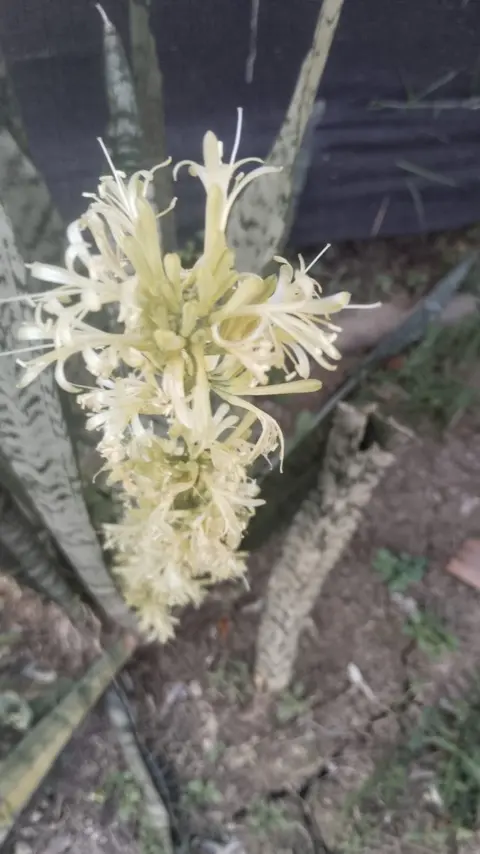
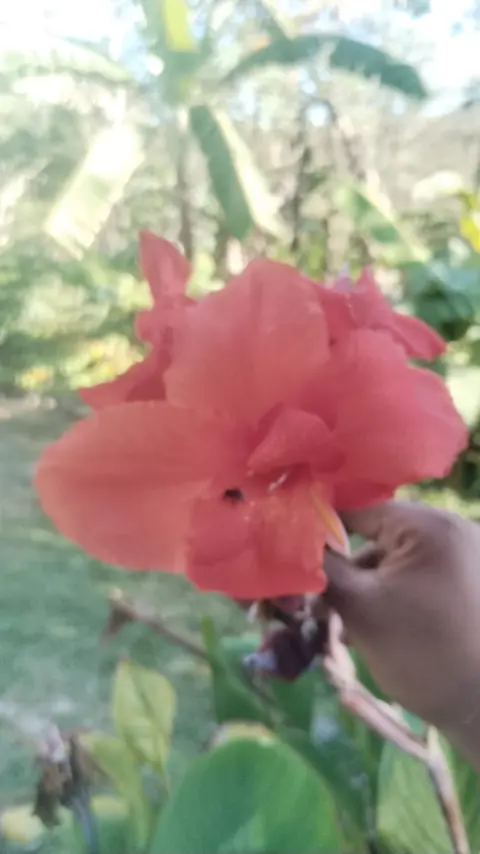
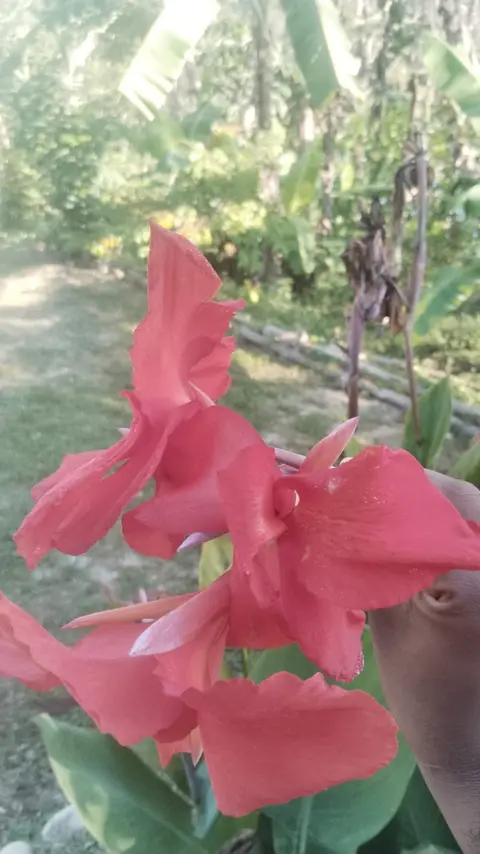
The most unexpected sight was the Sansevieria in flower. This mottled-leaved plant, which can go years without any sign of blooming, appeared with a spray of yellow-green flowers and stamens fine as threads. Nearby, the cannas were showing their colors: one salmon-orange, cradled between Gerard's fingers; another rose-red, its buds still sealed shut. There was also what looked like a carambola with its fruits just beginning to form, and a shrub whose leaves had been riddled by some insect — a small detail that the lens refused to overlook.
La Casa Plantada woke that Sunday, March 22nd, with several species flowering and fruiting at the same time, as though the whole corner of the reserve had agreed, quietly and all at once, to put everything on display.
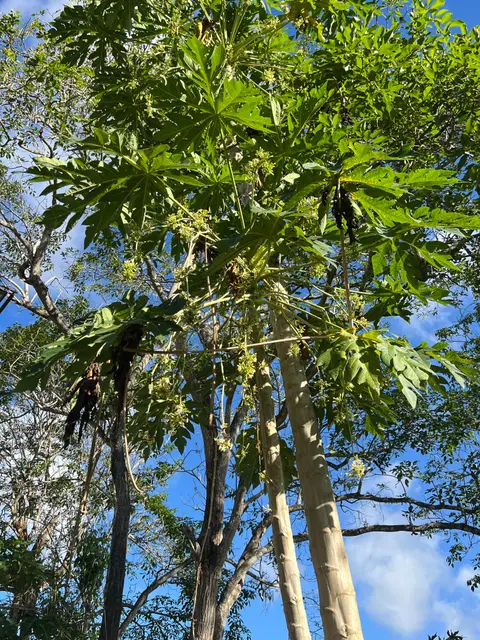
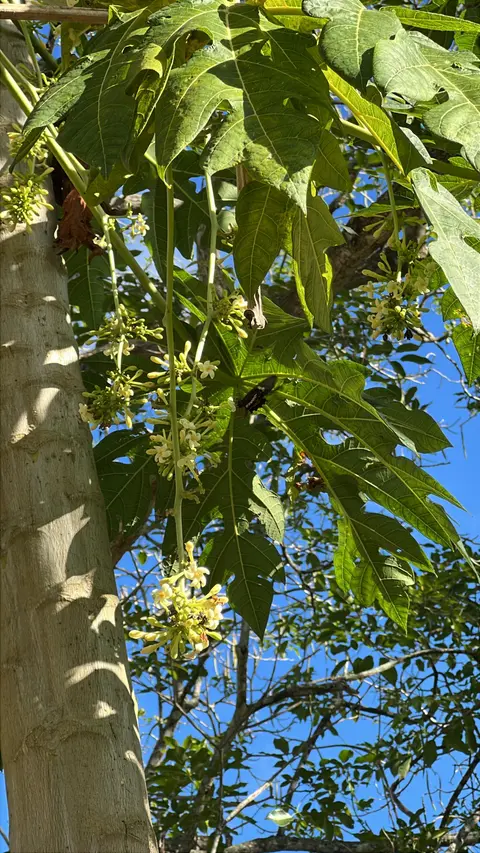
That Sunday in March, Michel Salas was walking through the sanctuary when a papaya flower stopped him in his tracks. The plant — a *Carica papaya* of the family Caricaceae — was in full bloom, its flowers open and fertile beneath the deep blue sky of ten in the morning. Perched among them, a butterfly that Michel identified as *Parides photinus* was carrying out its ancient office: moving from flower to flower laden with pollen, unhurried, with the quiet precision of one who has done the same thing for millions of years.
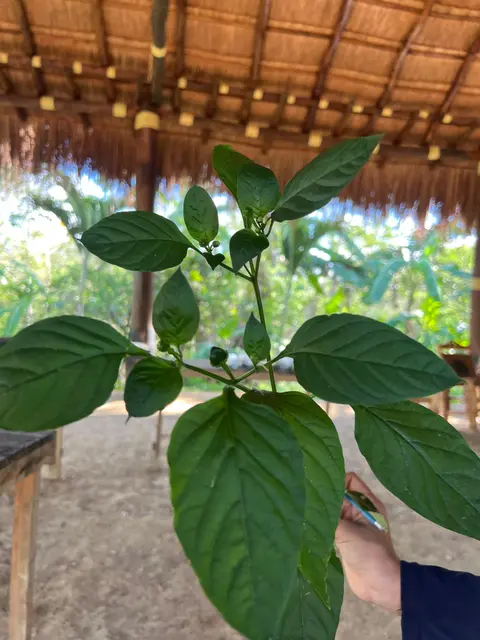
A few steps further, another discovery caught him off guard: a chili plant (*Capsicum sp.*) that no one had sown, growing wild among the tropical vegetation, its small green fruits still firm and tight, peeking out between glossy leaves. Beside a rustic palm structure, the plant had decided on its own that this was its place. At Fundación Loros, nature sometimes doesn't wait to be asked.
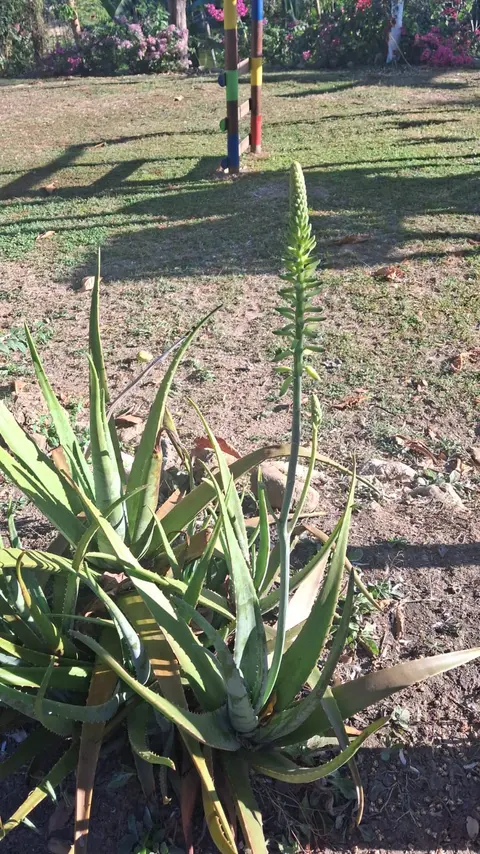
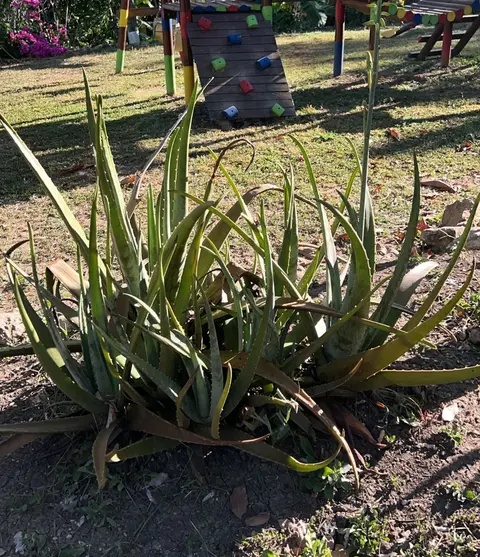
On March 22nd, Salomé Piza noticed something most people overlook, even when it's right in front of them: an aloe vera in full bloom. The plant stood upright in a garden within the Fundación's area of influence, its long, firm stalk reaching skyward the way it does when the moment finally comes — surrounded by thick, spiny leaves that hold water like a kept secret. The sun bore down hard on the dry earth, and in the background, a pink bougainvillea splashed color against a wooden structure painted in vivid hues.
The Aloe vera — the everyday sábila, the one that has lived in planters and patios for generations — is rarely the centerpiece of any wildlife sighting. But this record carries its own quiet value: it documents that within the reserve's surroundings, there are plants with long histories of human use that still bloom, still follow their cycles, still deserve to have someone look at them closely. Salomé looked. She photographed it, and she reported it. Sometimes that's how monitoring begins — with what is near, with what was always there.
Purple Bellflower Among the Stones of the Sanctuary
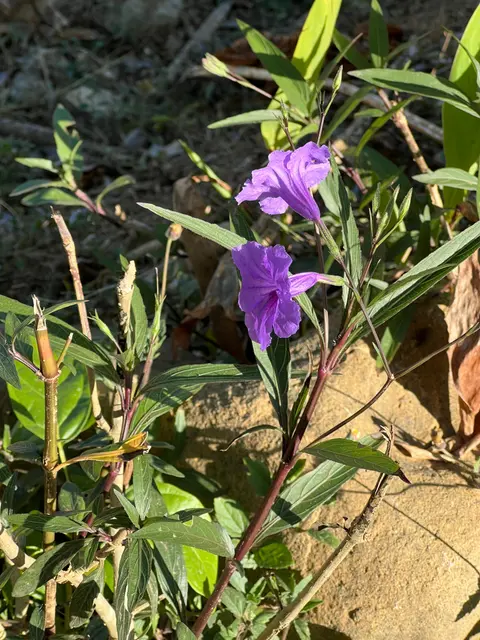
It was Michel Salas who found it first: two flowers of an almost impossible violet, pushing their way up through the stones and sandy earth inside the sanctuary of the Fundación Loros. It was Ruellia simplex, the purple bellflower, its wide and delicate petals contrasting with the reddish stems and the long, dark leaves that hold them up. The midday light fell directly upon them, making the color seem even more intense against the pale ground.
What caught the eye was not only the beauty of the plant, but its setting — growing alone, with no apparent company, on a arid, gravel-strewn patch of earth, as though it had simply decided to take up residence there on its own terms. Michel raised the camera and recorded it for the field log. Genus Ruellia, family Acanthaceae. A small note of color on the living map of the sanctuary.
The Uvito That Flowers and Fruits at the Same Time
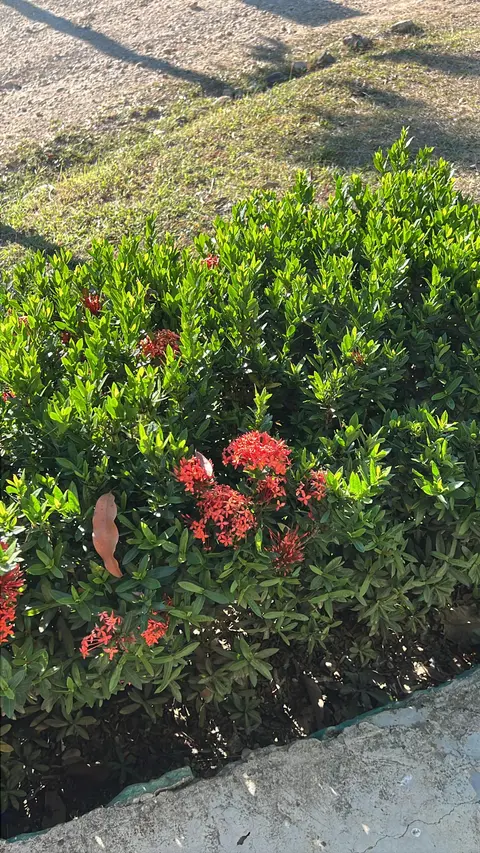
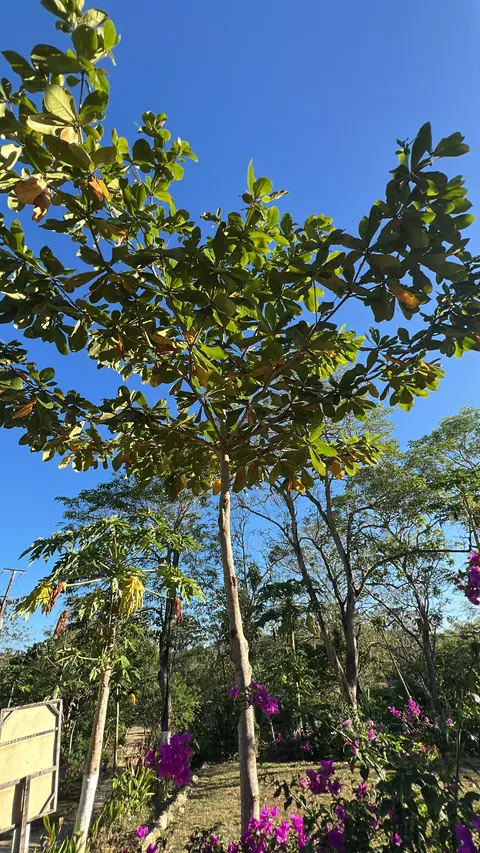
That Sunday in March, Michel Salas wandered through the sanctuary's garden with the unhurried ease of someone who knows how to look slowly. Among the concrete planters and the sandy soil that the sun dries without mercy, he found them one by one — the plants that share that green corner of the Fundación: the Ixora with its clusters of burning red flowers, the bugambilia spilling its purple over the branches of the almendro, and the sábila spreading outward in fleshy rosettes near the play area.
But it was the uvito — a Cordia alba of generous stature and broad canopy — that claimed the afternoon. Michel photographed it bearing yellow-orange blossoms and green fruits at the same time, that rare phenological coincidence that unfolds between February and March along the Colombian Caribbean coast. A native species of Bolívar and nearly the entire coastline, the uvito is a tree of many trades: it yields firewood, forms living fences, feeds livestock and pollinators alike, and offers sweet fruits that humans, too, are welcome to eat. Its flowers have long been used in traditional medicine for stomach ailments and bronchitis.
What the field guides seldom mention is who carries its seeds into the forest: the frugivorous bat Carollia perspicillata, that small nocturnal navigator working in silence while the garden sleeps.
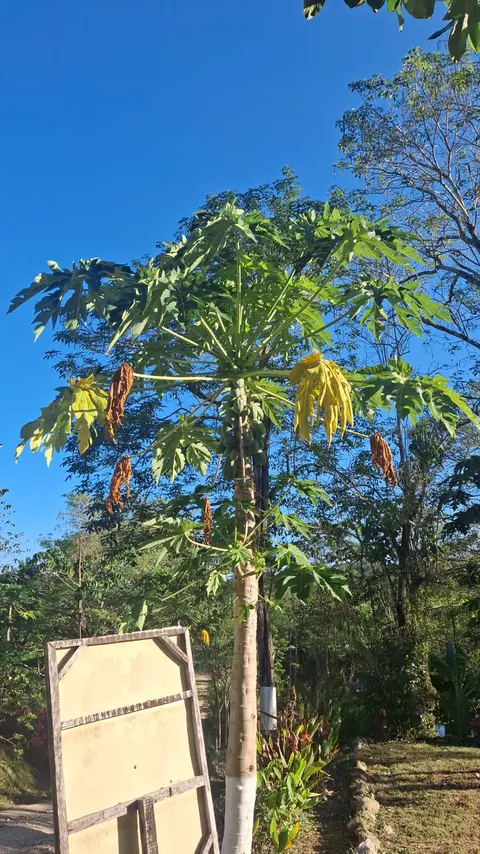
At the entrance of the sanctuary, where the dirt path cuts its way through the tropical vegetation, there stands a papaya tree that greets every arrival. Salomé Piza found it this morning heavy with green fruits pressed against the trunk, yellow flowers peering out between the leaves — as if the tree were trying to show everything it has all at once. Someone planted it here with intention, beside a wooden structure that serves as the gateway to this place.
Carica papaya is not a wild species of the sanctuary, but its cultivated presence at this particular spot carries a simple and generous logic: a fruit tree at the door is a sign that the place is alive and inhabited. With a clear blue sky stretching behind it and the dense green closing in on either side, this papaya seems to have found exactly where it was always meant to be.
B177 Has Wings but Forgot How to Use Them
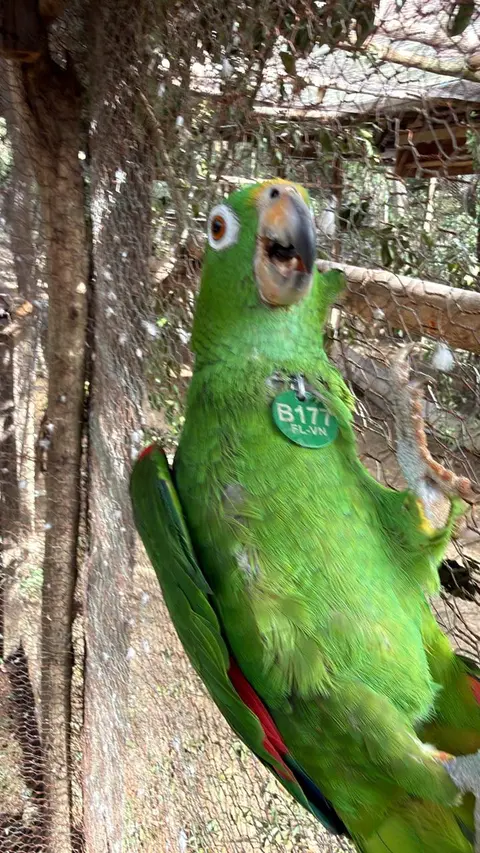
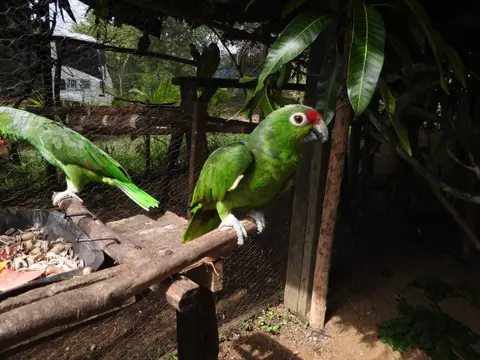
In aviario 1, clinging to the wire mesh with the quiet ease of someone who has been still for far too long, the Amazonian parrot B177 FL-VN watches the world from his perch with no particular urge to take flight. Alejandro found him like this late this afternoon: brilliant green plumage with yellow details on the head and red patches on the wings — everything in order, everything intact. The problem isn't in the wings themselves, which are whole and unharmed, but somewhere far harder to see. This parrot simply doesn't fly, or doesn't want to, or no longer quite remembers how.
Captivity leaves that kind of quiet mark. It isn't always about visible wounds or clipped feathers — sometimes it's about a habit that slowly faded away while the days passed, one identical to the next, inside the enclosure. B177 needs someone to convince him that the air still belongs to him. The rehabilitation team will begin working with him on flight stimulation activities, with patience, without hurry — because in this line of work, rushing never does much good.
The currucutú that never forgot how to hunt
A currucutú owl (Megascops choliba) arrived at Fundación Loros from a school in the region whose name was never recorded. It was an individual in need of care before it could continue on its way, and it was Angélica, a representative of the Fundación, who on February 27, 2026, brought it to the CAV —Centro de Atención a Víctimas de la fauna silvestre— to carry on with its rehabilitation there.
Just a few days after the handover, the CAV captured something worth documenting: the currucutú hunting a live mouse. The video shows the small owl —with its telltale ear tufts and those yellow eyes that seem to know far too much— moving with the silent precision that defines its kind. There was no question about it: the instinct was still very much alive.
That moment caught on video is, in the language of wildlife rehabilitation, good news. It means the road back is open.
The Owlet That Passed Through Three Organizations
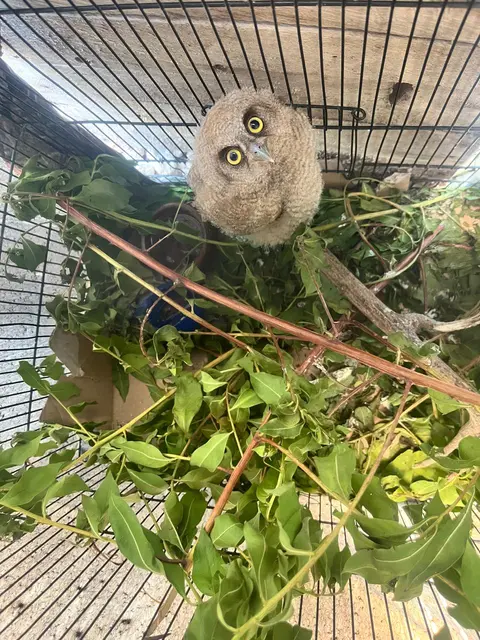
A nearby school brought him in without warning: a fledgling búho currucutú, small and disoriented, whom Carlos received at Fundación Loros and began caring for from the very first moment. On February 27th, Angélica carried him to the Centro de Atención a la Vida Silvestre at EPA Cartagena, where Marcela — a longtime ally of the Fundación — and her technical team welcomed him with gloves and gentle hands, ready for whatever came next.
What came was better than anyone had hoped. At the CAV, the currucutú — gray-brown plumage, yellow eyes carrying that gravity owls wear even in good health — already appears in video eating mouse, which is the clearest sign that the rehabilitation is moving in the right direction. In the most recent photograph, the bird rests all fluffed up on a pile of green branches inside his enclosure, like someone who knows it isn't quite time to leave yet, but who understands that the moment will come.
Marcela V. sent us the report from the CAV on March 19th. The currucutú continues forward.
Some decisions are made on foot. On March 19th, Nicolás walked a stretch of the Fundación Loros property to answer a very specific question: where will the two new aviaries of proyecto Ara take shape? The first two — Aviario #1 and Aviario #2 — are already built and operating in the same area, separated by only a few meters. Nicolás moved between them, measured with his eyes, felt the ground beneath his shoes, and began marking the candidates for the third and fourth.
All four points fell within a compact area, suggesting that the aviary complex of proyecto Ara will take form as a concentrated cluster in that sector of the reserve. The tentative sites for Aviario #3 and Aviario #4 lie just a few steps from the existing structures — a proximity that could make management and movement between buildings considerably easier as the program moves forward.
For now, they are nothing more than coordinates and unresolved terrain. But within those points marked on the map lies the shape that will slowly emerge — the home that proyecto Ara is building, piece by piece, for the macaws of the Caribbean coast.
The Pomarosa That Feeds Those Still Learning to Fly
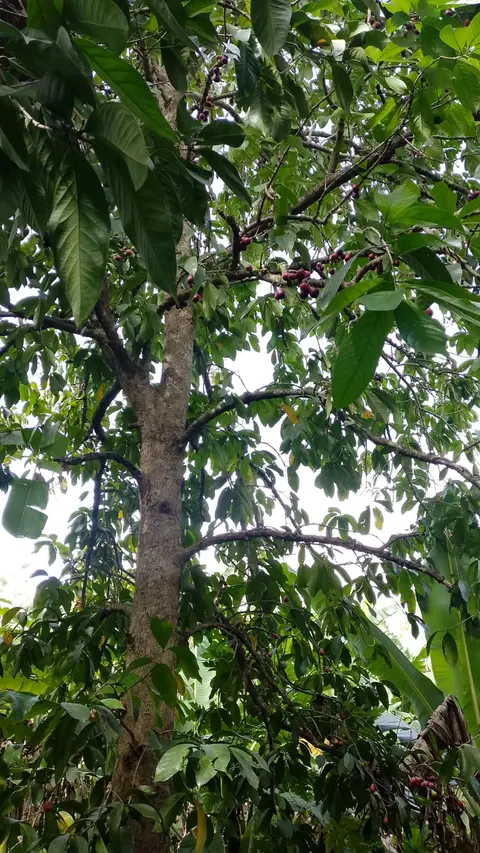
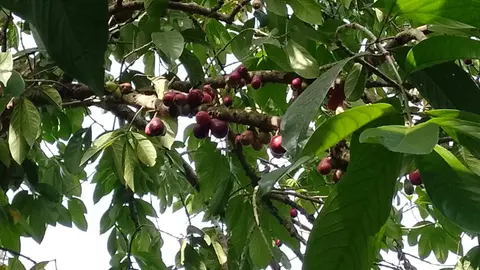
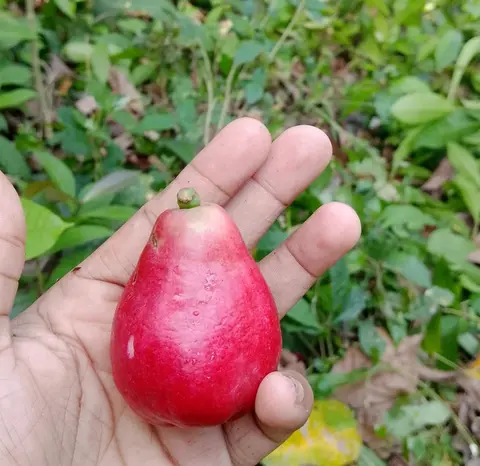
There is a tree in the reserve that never stops working. Nilson found it loaded to the brim: bright red pomarosa fruits — or perita, as the locals call them — pressed tight within a dense canopy that barely lets the sky show through. The trunk, sturdy and grey-barked, holds up a crown so generous it seems to know nothing of scarcity.
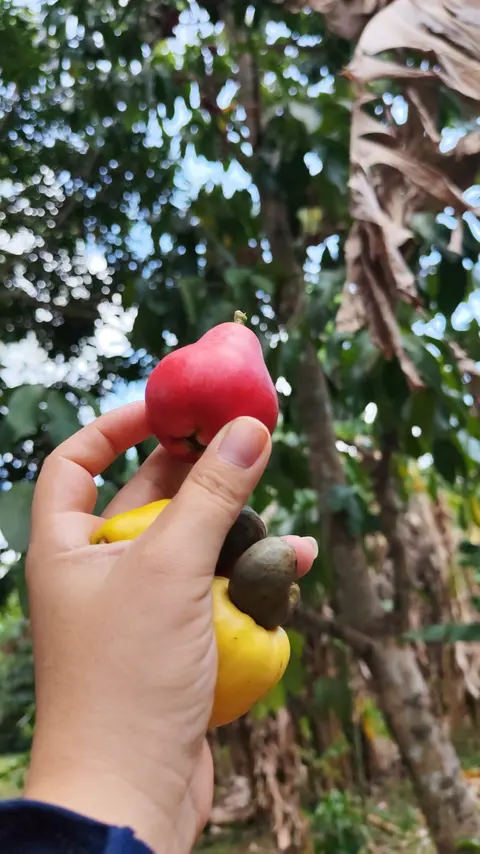
The tree does not go unnoticed. Squirrels are regulars here, and wild loros also gather among its branches. But there is something more: the fruits that fall or are collected from this tree make their way to the Fundación's feeding stations, as food for the loros still in rehabilitation — those who don't yet quite know what to do with the freedom that is coming for them.
It was Nilson who made the formal introduction, a red fruit in hand, the way someone presents something they have every right to be proud of. And he was right.
Eight Plants and a Papaya Pulled by Hand
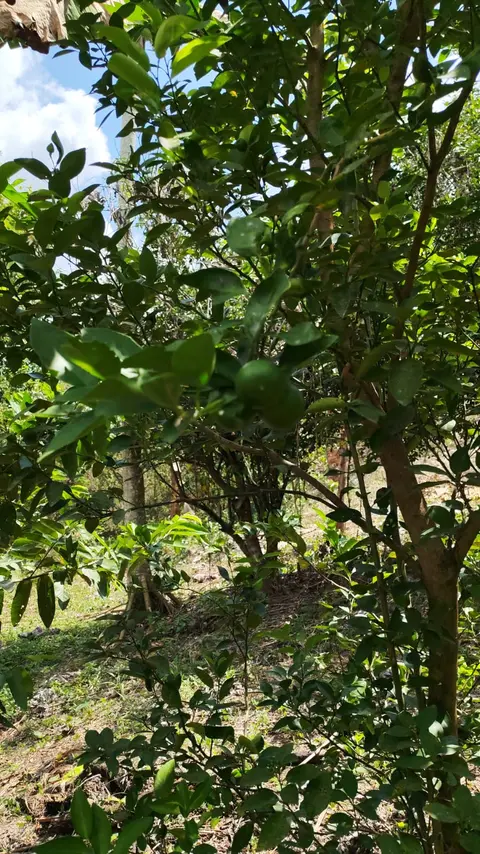
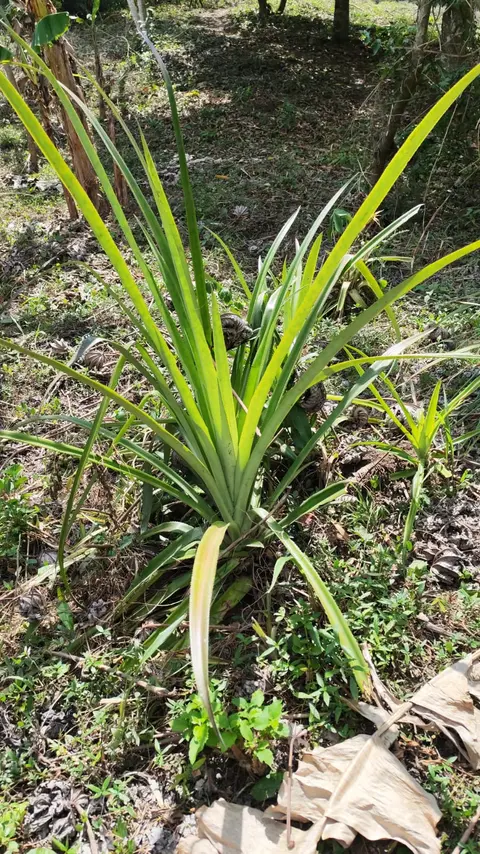
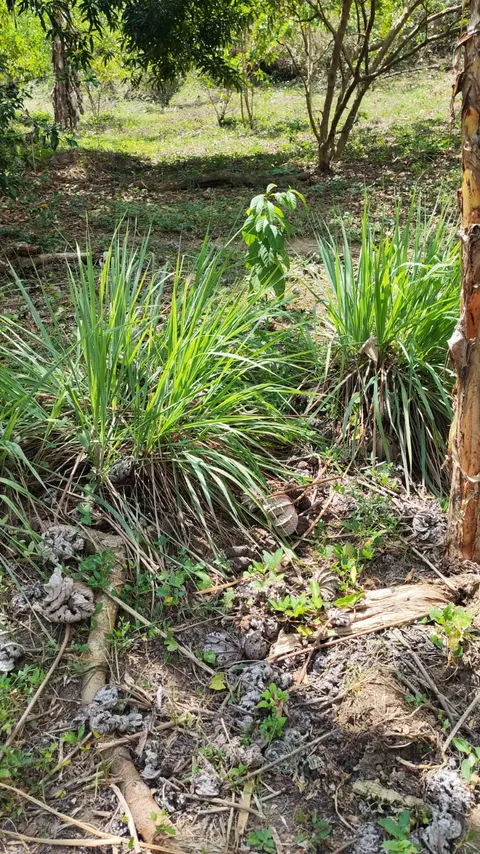
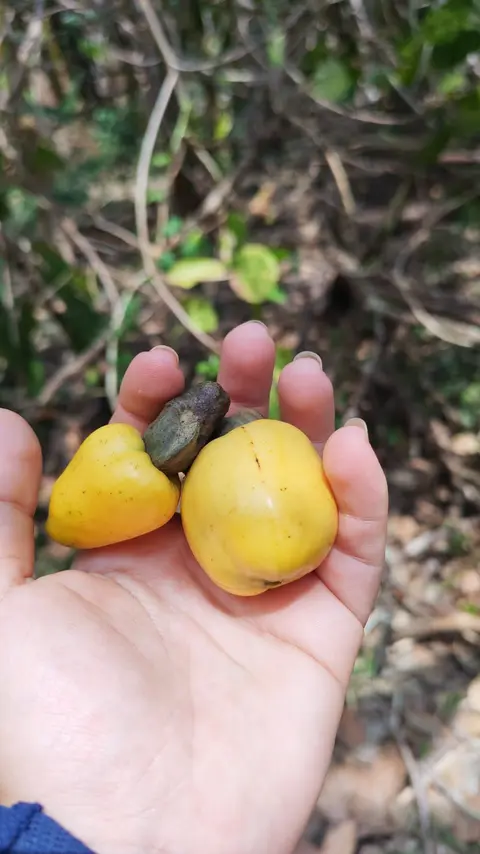
Corina knows the Casa Guardianes sector the way you know your own backyard. This afternoon she arrived with four visitors and led them from plant to plant: first the lemon tree, then the pineapple with its sharp leaves pointing at the sky, then the lemongrass that releases its scent the moment you brush against it. Further along, the marañón with its yellow and red fruits hanging in the sun, the poma rosa, the caimito, the guama, and the cilantro de monte — that small, unassuming plant that smells of everything its name promises.
The visitors didn't just look. They smelled, touched, tasted. And when they reached the papaya, they weren't content to receive it already cut: they pulled it from the tree themselves, with their bare hands. That moment — the weight of the ripe fruit, the white latex on their fingers, the three o'clock sun filtering down through the canopy — is hard to describe from the outside. Corina says, plainly, that they loved it. And in that 'they loved it,' everything is contained.
Field echoes
Event: November 22, 2025
Fifteen Children Beneath the Palm Arbor
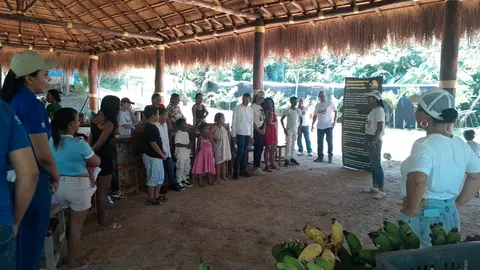
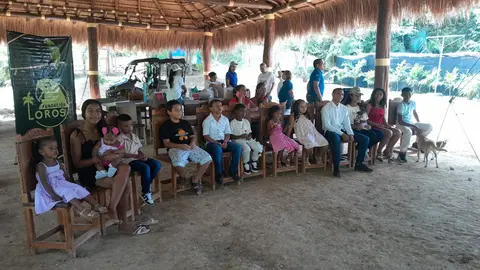
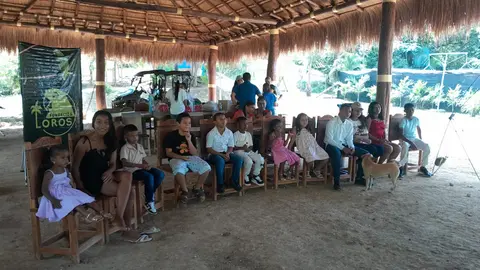
On November 22, 2025, fifteen children from the surrounding region settled into wooden chairs beneath a palm arbor, wrapped on all sides by the tropical vegetation that defines the edges of the sanctuary. Before them, a black poster laid out — step by step — the procedure for returning a wild bird to nature. That detail says everything: this was not a talk of grand words, but a set of concrete instructions for the day when one of those children finds a parrot or an injured bird on their doorstep and doesn't know what to do.
The activity was a partnership between biologists from Fundación Loros and staff from Hotel Decameron, and was reported by Jender Torres, who was present from the very beginning. Among those in attendance was a farm dog, a quiet witness to the afternoon. The children listened, they asked questions, and they left carrying something no pamphlet could hold: the certainty that they know how to act. That is the kind of commitment Fundación Loros brings to the neighboring communities — one built slowly, sitting under the palm, with time and without rush.
Field echoes
⭐ Historic milestone
Event: June 10, 2025
Sixty-Nine Lives Arrived at Fundación Loros
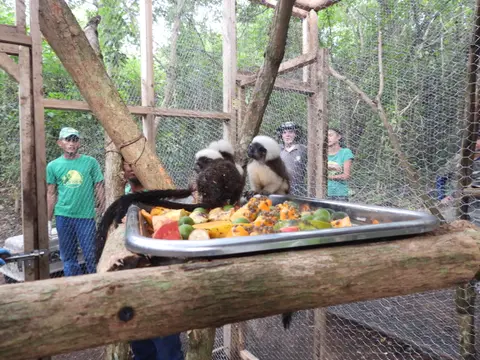
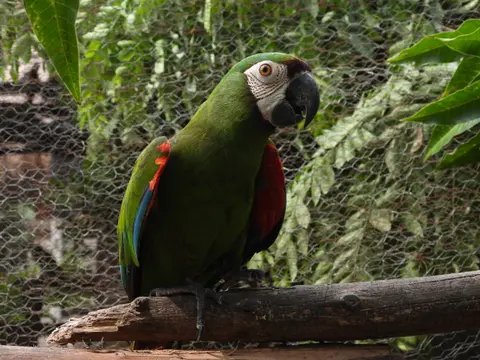
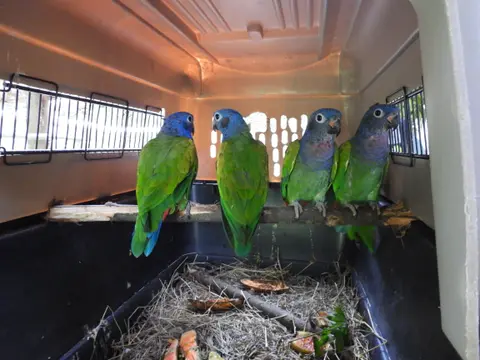
On June 11, 2025, CORANTIOQUIA transferred to Fundación Loros 69 animals: 38 blue-and-yellow macaws (*Ara ararauna*), 5 chestnut-fronted macaws (*Ara severa*), 11 red-lored amazons (*Amazona autumnalis*), 7 blue-headed parrots (*Pionus menstruus*), and 8 cotton-top tamarins (*Saguinus oedipus*).
Those are the numbers recorded in the official transfer document. But the team knows well that the road is long before arrival, and that not everyone survives the journey. What is certain is that from that day forward — the morning of June 11, 2025 — there were more wings, and more life, at Fundación Loros.
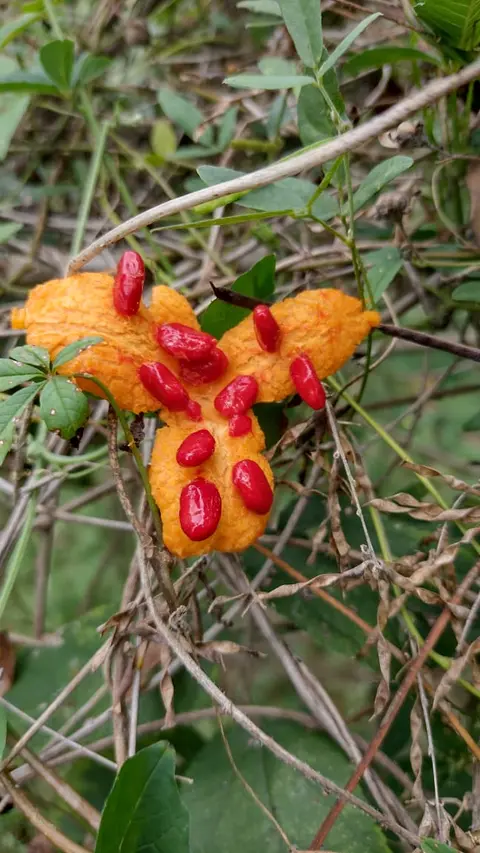
On March 17th, José Marín set out to walk through the reserve, and the forest gave up its secrets to him one by one. The first gift he found hanging from a climbing vine: a balsamina fruit (Momordica charantia) that had already burst open on its own, splitting its skin to reveal the brilliant red aril wrapped around the seeds — glowing like embers among the dry branches. A little further on, a squirrel allowed itself to be caught on video as it leapt between the trees, quick and unbothered by the presence of an observer.
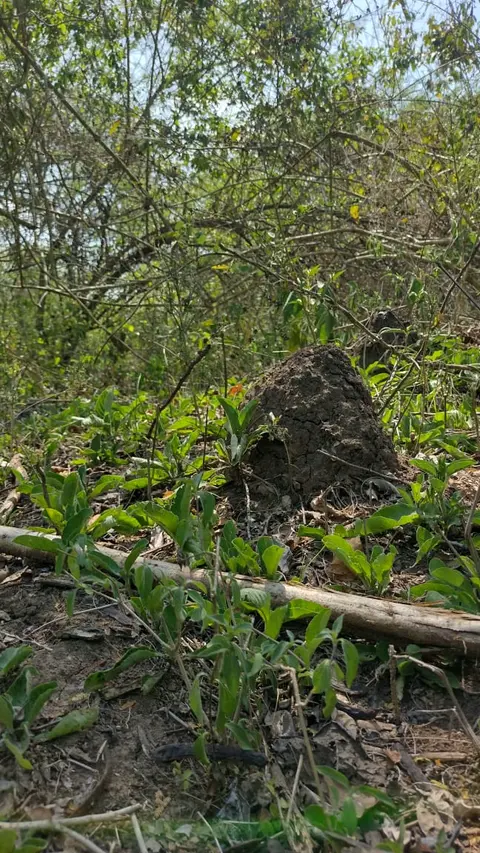
Nearby, in almost the same stretch of trail, a guacharaca announced itself before coming into view — as these loud tropical birds tend to do — and it too was recorded on video. The last discovery of the day was a sizable termite mound, built with patient layers of earth and saliva in the heart of the undergrowth, surrounded by shrubs and tangled branches. Four separate records, four GPS coordinates, a single walker.
José closed out his report with the door left open: if anything else turns up along the way, he'll send it along.
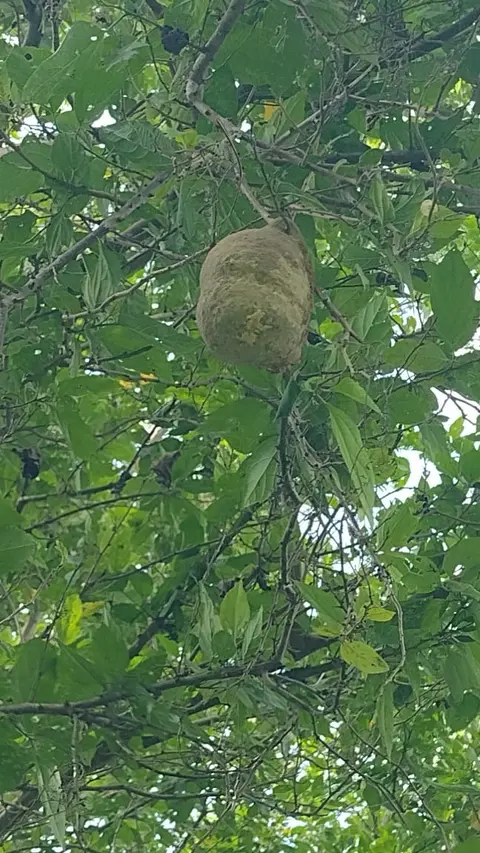
On Tuesday, March 17th, while making his way through a stretch of dense forest growth within the reserve, José Marín stopped before something that was impossible to walk past: a wasp nest hanging from a branch, built from mud, oval in shape, with that beige-yellow coloring that made it look almost like a strange fruit suspended among the dark green of the canopy.
The nest, a considerable size, bore the marks of its builders' quiet labor: layers of mud shaped with precision, clinging to the branch as though they had always belonged there. José took his photographs and filed the report. In the reserve, structures like this one are a sign that the forest is doing what it should: wasps pollinate, keep insect populations in check, and hold their place in the chain without asking anyone's permission.
The coordinates have been recorded. The nest is still there, between the branches, going about its business.
The midday heat was pressing down hard when Omar Enrique Berdugo Cabeza made his way into the reserve, carrying fruit for the tamarin group. When he reached the feeding station, there was no sign of them — so he turned to the sound of the tank, that familiar call the monkeys have learned to recognize — and slowly, three of them appeared, came down to eat, then slipped back the way they came.
Omar followed their trail to the coordinates of the refuge, and there they all were, all six: tucked into the densest stretch of vegetation, seeking the cool that the forest offers when the sun bears down. While the group rested in the shade, two poyonetas drifted through the surrounding canopy — those silent raptors that remind the tamarins, every now and then, that the forest has rules of its own.
The record came to nine videos — a few ended up tangled in the B20 thread, two separate stories that for a moment shared the same feed before Omar sorted them apart. Six individuals, accounted for, resting cool inside their refuge.
B20 Returns to the Cage for a While
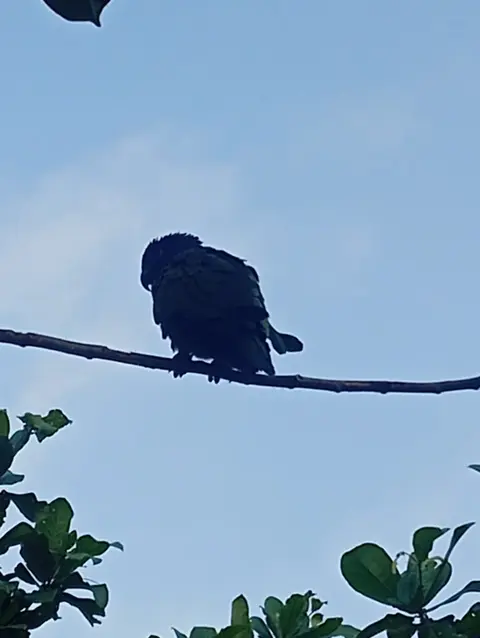
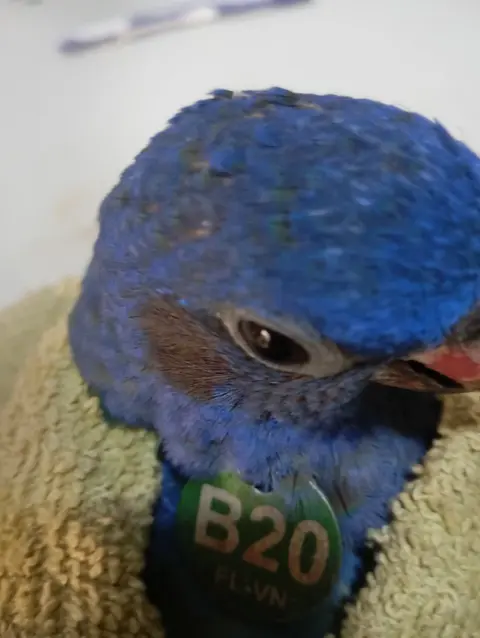
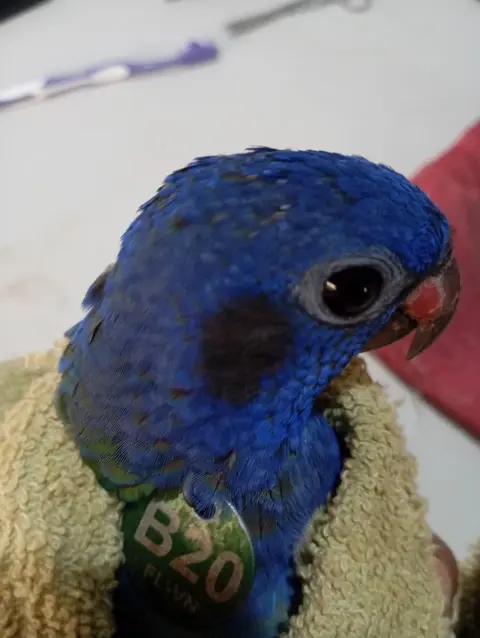
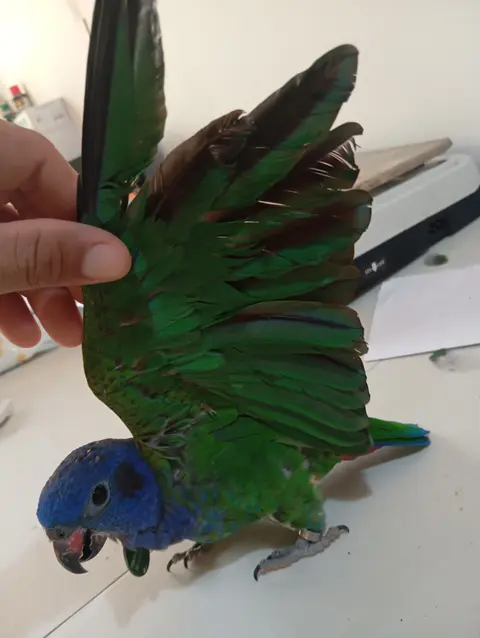
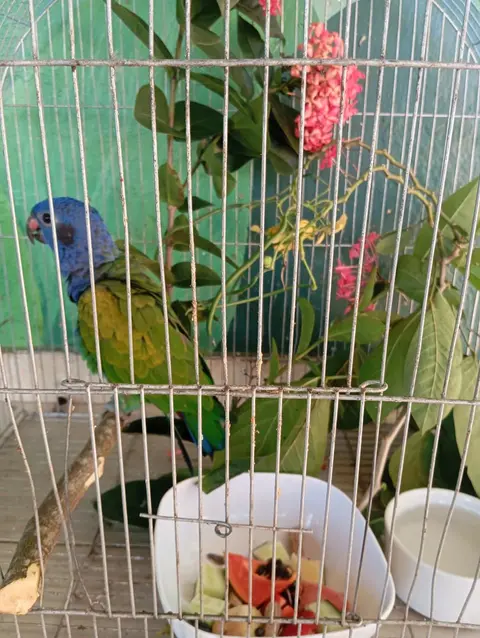
Omar Enrique Berdugo Cabeza arrived at Fundación Loros that afternoon the way he always does: eyes already scanning everything before he'd even begun his feeding rounds. That's how he saw it. The pionus B20 — a blue-headed parrot, one of those skittish ones that never let you near them — was sitting motionless on a branch of matarratón, feathers puffed and ruffled, with a stillness that wasn't his.
Omar moved closer. The bird didn't fly away. That said everything.
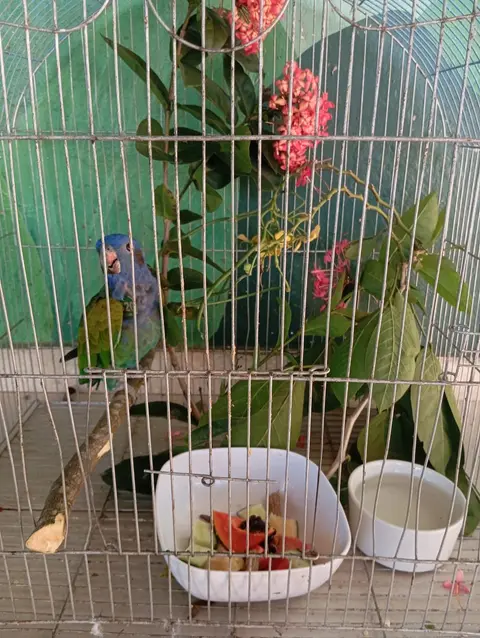
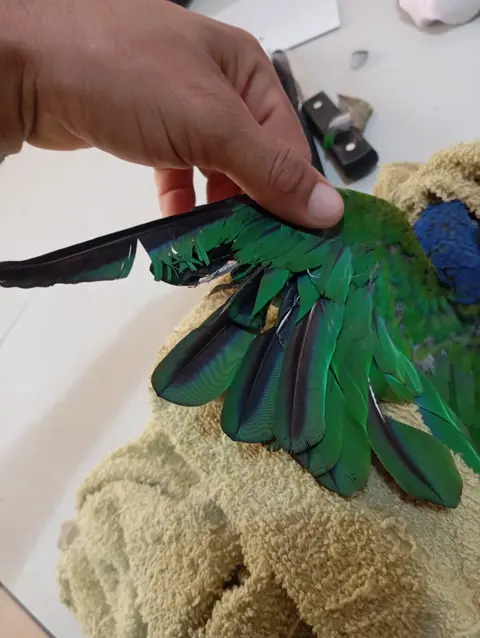
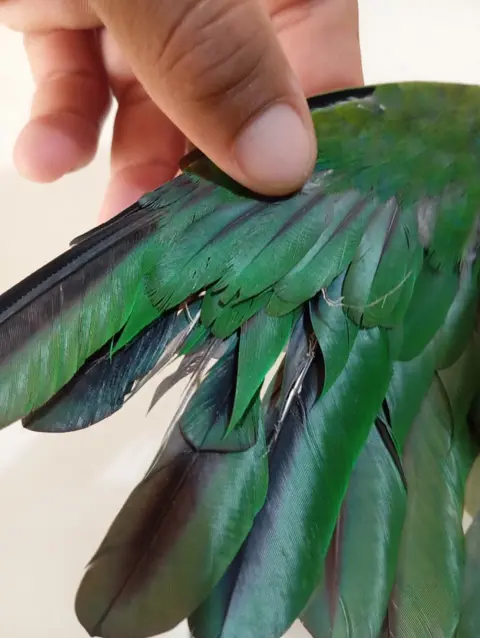
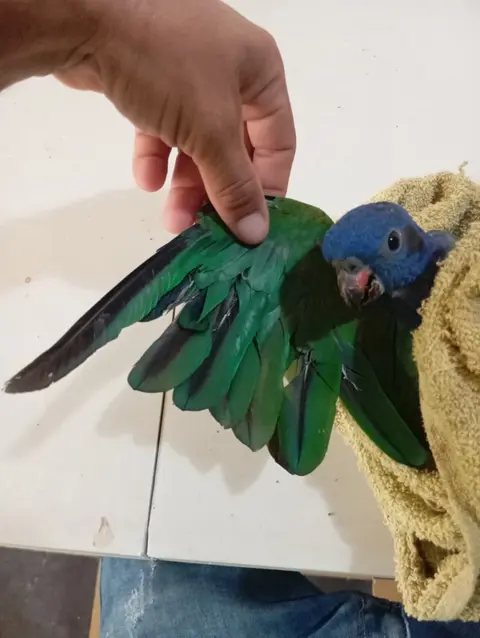
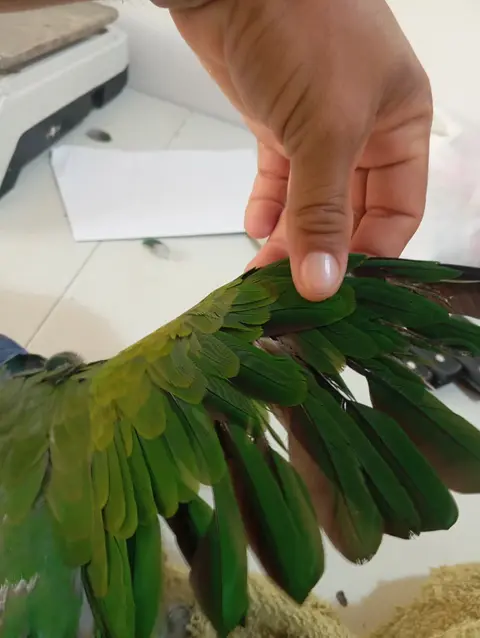
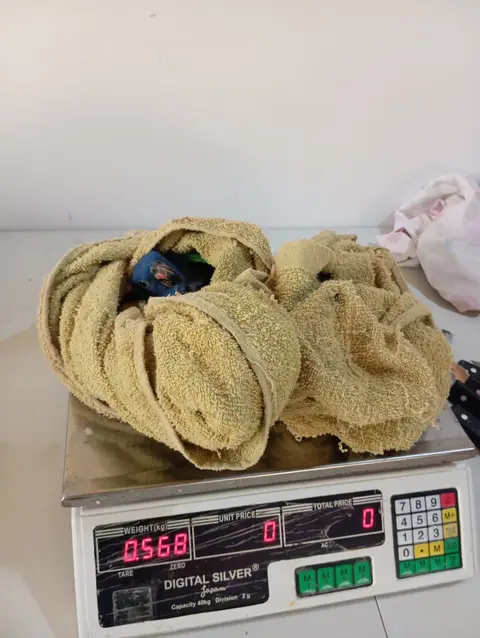
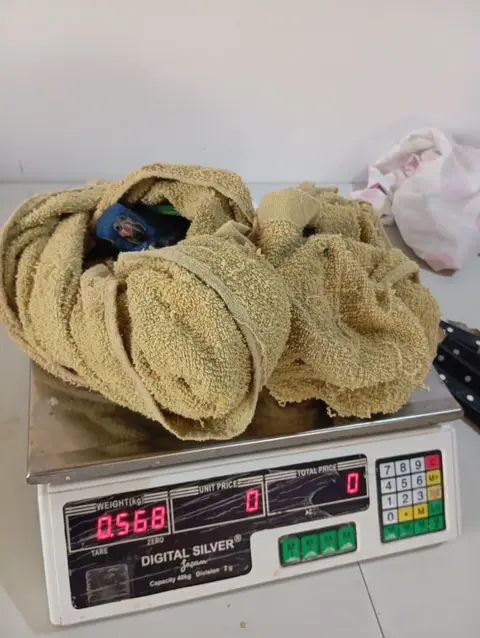
He caught him with a towel, brought him inside, and found the evidence of what had happened: on the right wing, the marks of a predator that had tried to seize him and failed; on the left, two flight feathers missing entirely. With wings like that, B20 couldn't hold himself in the air for more than a couple of meters. Omar weighed him — 378 grams — documented the injuries with photos and videos, and returned him to a cage stocked with fresh fruit, water, and branches. Then he notified the director Alejandro and his colleague Carlos to make sure everything was properly logged.
B20 had already known freedom. He will know it again when the feathers grow back and the wings are truly his once more. For now, the cage is shelter — not a sentence.
Omar Enrique Berdugo Cabeza arrived at the feeding station with a handful of small fruits, and finding no one there, he fell back on the old trick: the sound of the tank — that drum the tití monkeys have long learned to recognize from a distance. There was nothing to do but wait. The sanctuary held still for a moment, the afternoon heat pressing itself against the leaves, until one by one the six individuals of the group began to emerge from the vegetation. They ate, and then slipped back toward their territory, as if the appointment had been kept.
During that same patrol, two poyonetas were roaming nearby, going about their own quiet business among the undergrowth. Omar continued his route and found them all tucked into the cool vegetation, seeking shade from the afternoon heat. There they were — all six, motionless, resting in that corner of the reserve they have already claimed as their own.
Two New Lives in Valle Verde
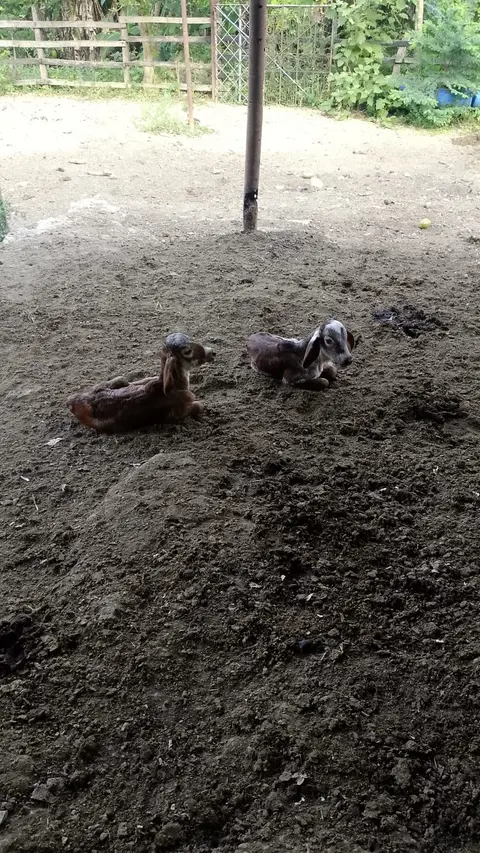
This afternoon, in the sector of Valle Verde, Angélica Cecilia Mármol Venegas found what sometimes arrives without warning: two newborn kids lying on the damp earth of the corral, one female and one male, their brown coats still flecked with white, as though someone had splashed milk across their backs. They rested quietly, with the stillness that belongs to those who have only just arrived in the world and haven't quite figured out where they've landed.
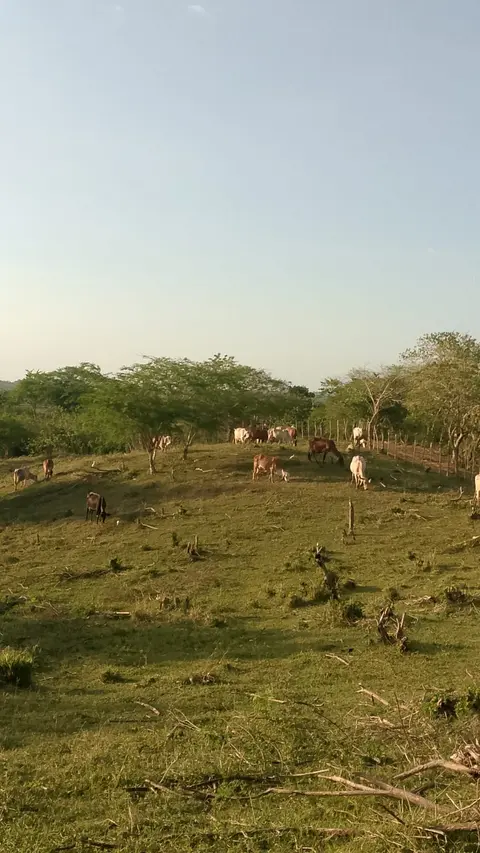
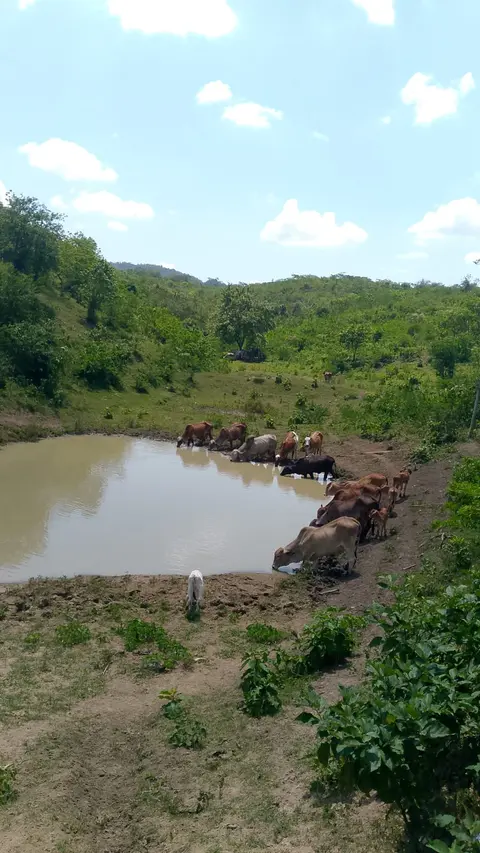
Higher up, across the open meadows that roll toward the hills, the rest of the herd was going about its usual afternoon: cows of every color grazing beneath the warm light of late day, and a large group drinking from the natural watering hole, ringed by tropical vegetation and open blue sky. An unhurried scene, as befits this place.
At Fundación Loros, the birth of these two kids in Valle Verde is one of those moments the field team records with care — quality pasture, clean water, secure fencing — so that whatever comes into the world here has, from its very first day, everything it needs.
No Words from the Field, No Chronicle
Omar sent fourteen videos throughout the day, one after another, without a single word to accompany them. On the chronicler's end, messages accumulated as well — questions about the species, the location, who was there, what had happened. None of them received a reply.
The videos arrived, but without a voice, there is no story. A chronicle needs what the camera does not always capture: the name of the place, the smell of wet earth, the detail of who was there and why what they witnessed matters. Without that, these images remain mute in the logbook.
This entry remains unfinished. As soon as Omar or someone from the team recounts what they filmed on that 16th of March, the story will find its words.
The Squirrel, the Dew, and the Parrot Learning to Be Silent
That morning, Omar Enrique Berdugo Cabeza walked the sanctuary with a group of visitors whose names slipped into forgetting but who carried something more lasting away with them: the image of green parrots sweeping over sectors B12, B11, and B07, settling nearby without fear, as though they had spent their whole lives waiting for company. It was somewhere between that flight and that wonder when she appeared — unhurried, almost secret — a wild squirrel drinking the dew that the early hours had left sleeping on the platano leaves. One of those moments the sanctuary offers without warning.
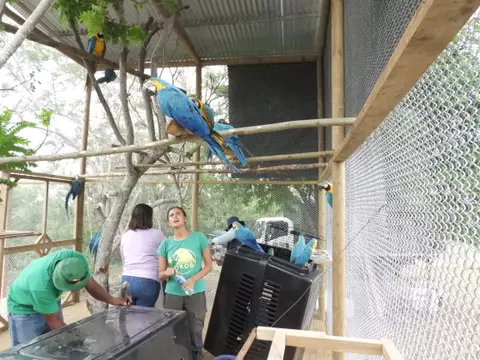
Further along, in aviaries 1 and 4, the guacamayas were already deep in their morning ritual: pimentón, peanut, papaya, banana, and sunflower seed — the usual breakfast, savored with that colorful solemnity only they possess. But it was in aviary 3 where the morning held its quietest moment. The loro real was producing imitative sounds — that habit so deeply human, which in him sounds something like a trap — and the team, true to protocol, answered with silence. Because the goal here is not for the parrot to learn to speak the way we do, but to forget that he ever could, so that the day he crosses the fence into the forest, he flies unburdened by everything we taught him.