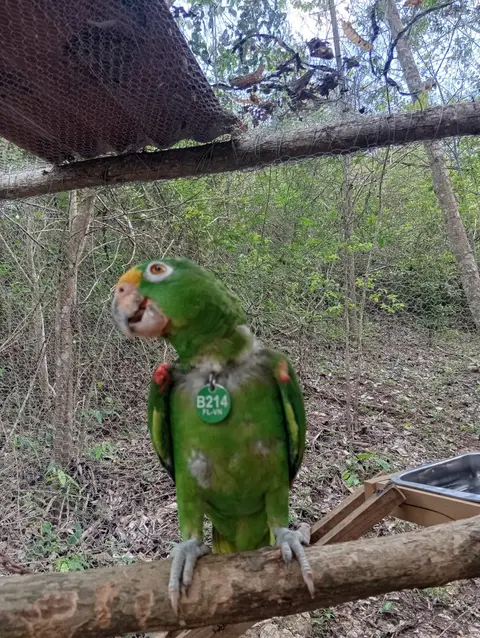
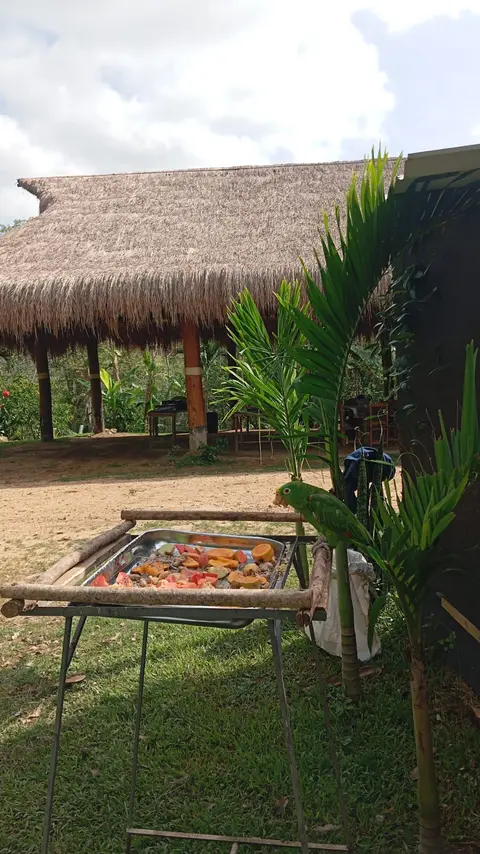
Omar found him without much searching: there was B214, settled at the feeding station in the small woodland near Casa del Paraíso as though he had owned the place for years. The parrot — one of the individuals from the released group being monitored at the reserve — showed no particular urge to venture further. He ate in the morning, ate at midday, and kept on eating through the afternoon.
There is something that brings a smile, and something quietly reassuring, in the image of this animal who simply decided that this shaded corner full of fruit was world enough for the day. Alejandro put it better than anyone: "this one's going to get fat right there at the feeder." The team has video documentation of the sighting — a still postcard of B214 making the most of every visit to the dish, unhurried, at his own pace.
Maicol and the Golden Eye of the militaris
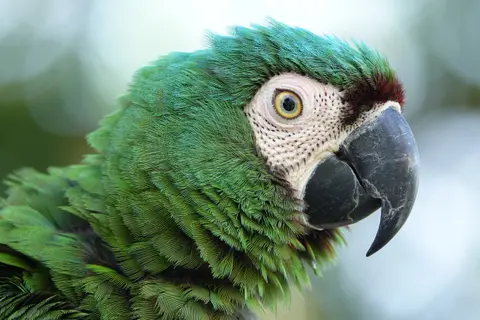
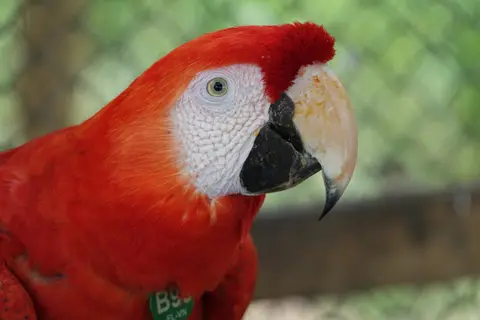
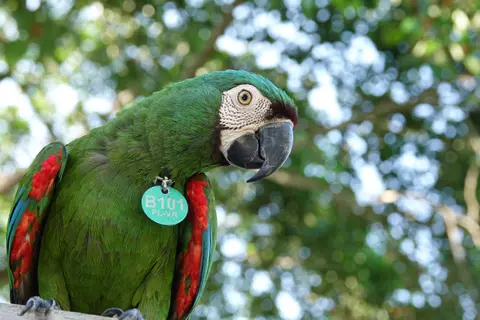
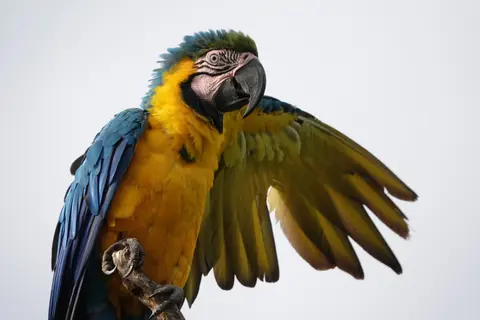
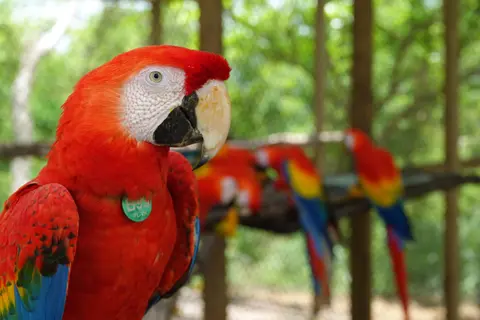
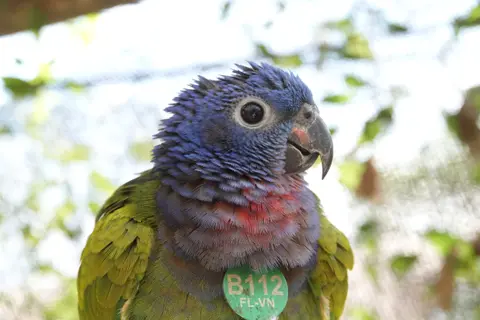
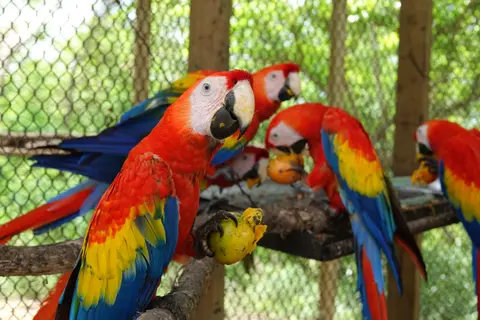
That Friday, Maicol headed out into the sanctuary with the Sony Alpha camera Alejandro had lent him, and what he found was a cast worthy of any stage. The military macaw (Ara militaris), banded B101, perched on a weathered log — that golden eye staring straight into the lens. The scarlet macaw with its blinding red. The blue-and-yellow with one wing stretched wide, as if it knew it was being photographed. And the blue-headed parrot B112, that violet-blue crown that looks hand-painted.
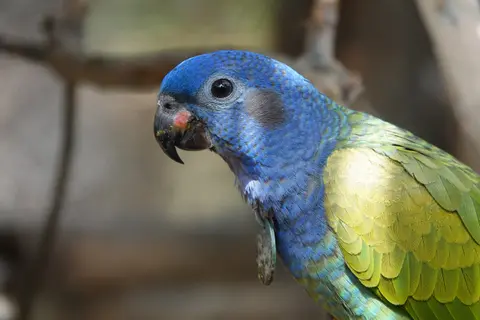
Some were roaming freely through the sanctuary — the camera caught them among the foliage, backgrounds soft and blurred, midday light filtering down through the branches. Others were in the aviary, gripping slices of mango and orange in their talons, curved beaks working without pause. Nine images in total: four species, two FL-VN identification programs, and a collection of photographs that already has the look of a brand-new website.
Four carasucias and a table set outside
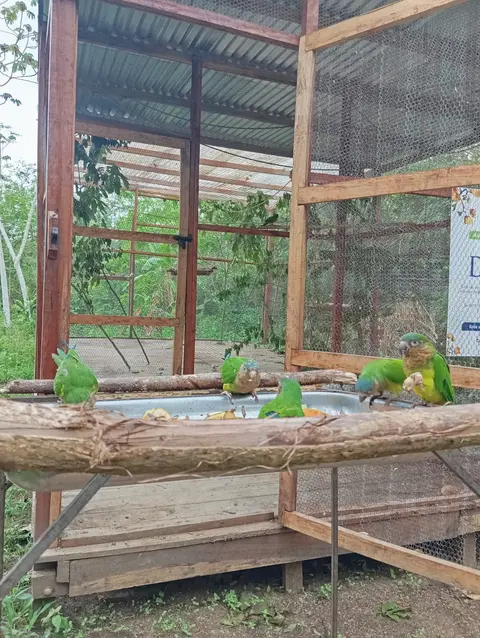
On April 23rd, with the morning still cool over the Decameron aviary, Omar opened the doors and four cotorra carasucia parrots stepped out into the open air. Until that moment, they had known the world only from within: wooden perches, wire mesh, a bowl of fruit, and the dense tropical vegetation pressed against the edges of their enclosure. That corner had been their refuge while they healed; the open sky, their next step.
As part of the site-fidelity protocol, the team had arranged fruit outside the aviary before releasing the birds — a way of telling them, without words, that this place belongs to them too. The idea is simple and effective: that the cotorras return on their own, that they come to recognize the site as their own, that freedom not be a rupture but an extension of the familiar. A table set outside, waiting for them.
A Feast of Mangoes in the Afternoon
Some scenes need very little explaining. Omar knew this when he raised the camera and simply pressed record: parrots among the mango-heavy branches, pecking at the ripe fruit with that precision of theirs, letting rinds and seeds fall to the sanctuary floor.
Four videos arrived from the field, and in every one the same quiet story repeats itself — the green of the feathers, the yellow and red of the mango, the dull sound of beaks at work. No more words were needed than the ones Alejandro sent: "Parrots eating mangoes, there's nothing more beautiful."
He's right.
José Marín Walks the Boundaries of Cerro El Peligro
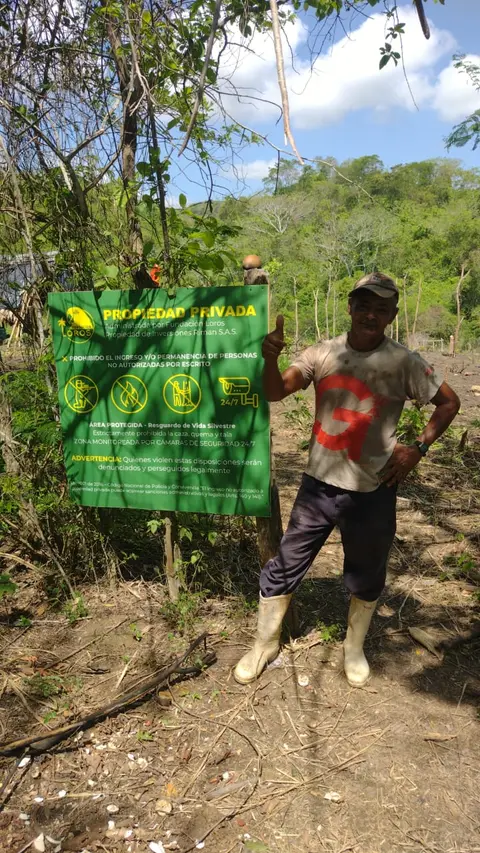
From the foothills of Arenal to the summit of cerro El Peligro, José Marín — head of security for Fundación Loros — walked every stretch of the trail today and confirmed something worth putting on record: the entire route runs within the institution's own lands. Along the way he exchanged greetings with the campesinos linked to the Fundación — Daniel Otero Ríos, Vidal Galindo Ríos, and Efraín Almeida Castillo — and crossed paths with señor Juancito, who paused beside the Área Protegida sign just long enough to pose with a thumbs-up. The only one missing from his usual spot was Luis Emiro Ricardo García, whose rancho sat empty at dawn, as though he simply hadn't made his way out to those parts today.
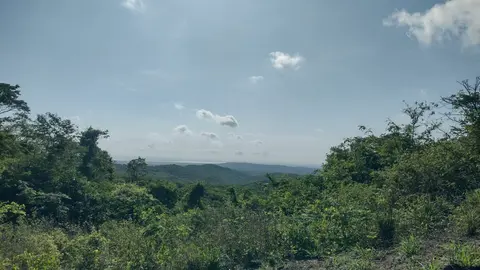
Upon reaching the upper reaches of the cerro, José came upon a lake that holds more promise than water: the liquid seeps in and slips away without staying, and reclaiming it will take some doing. From that vantage point, though, the view is the kind that stops a person cold — a sweeping panorama that draws the eye all the way down to the waters of Arenal threading along the hillside below. Among the stones of cerro El Peligro he also noted a scattering of cacti that the late afternoon sun had turned almost golden, an image one rarely conjures when thinking of this Caribbean reserve.
B173 Crossed the Wire into the Wild
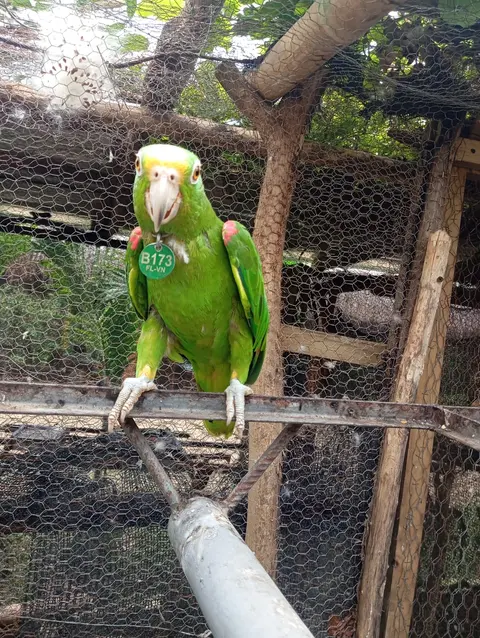
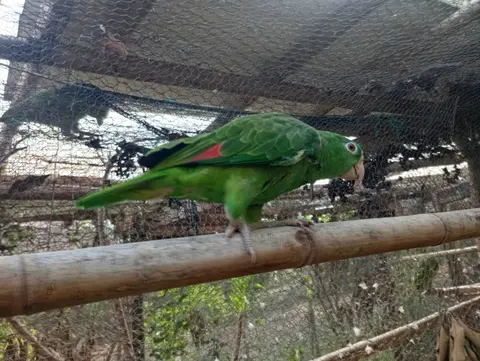
This April 22nd, Alejandro walked the sanctuary's trails with his camera over one shoulder, and the day gave him everything. The most significant moment came at aviario #1: the Amazonian parrot B173 FL-VN was released. Before departing, the bird rested calmly on a metal perch, its green medallion hanging at its throat as if it already knew this was the last photograph inside the mesh. Then — the forest.
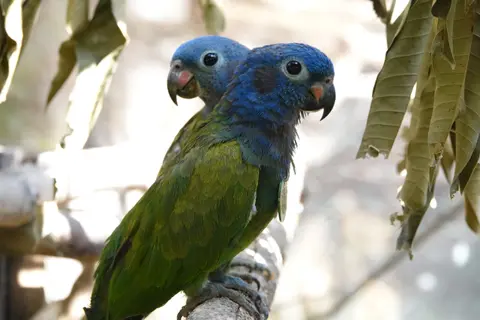
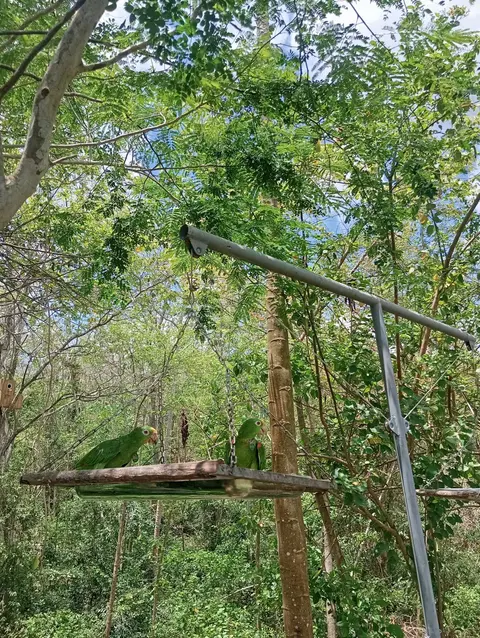
Just a few steps away, B214 FL-VN keeps its own calendar. Green with yellow flecks on the head and red at the wings, this individual watches the world from its enclosure while moving through rehabilitation — the time hasn't come yet, but the plumage says everything it needs to say. Further along the trail, two Amazonian parrots rested on an elevated wooden platform amid the dense growth, indifferent to the bustle around them, as though they had been lords of the place for weeks.
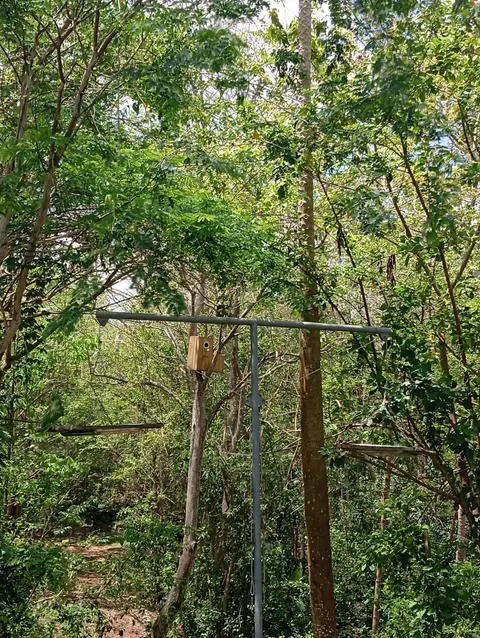
At the far end of one of the paths, a nest box hangs from a metal structure tucked among the foliage, waiting. The afternoon light was filtering through the trees when Alejandro photographed it: quiet, ready, placed there for whenever someone decides that this corner of the world might also become home.
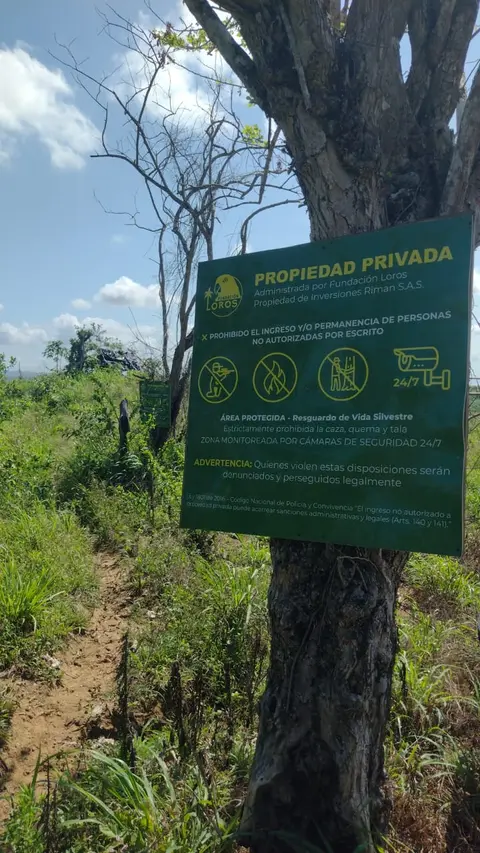
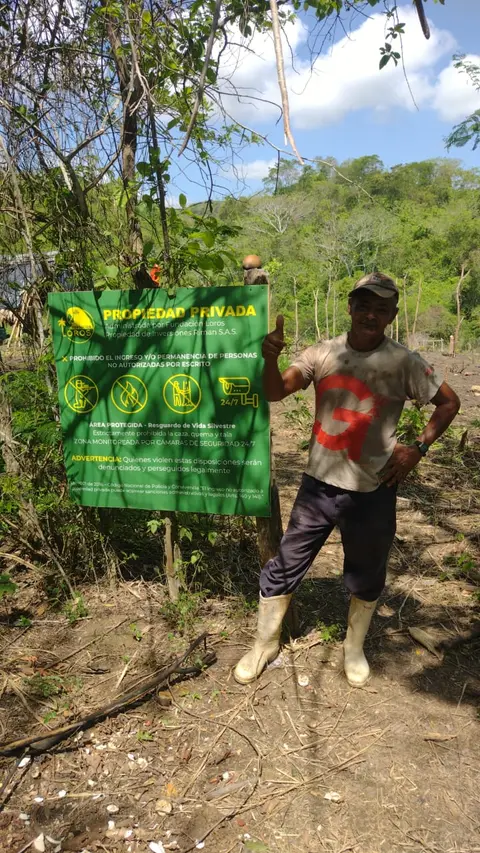
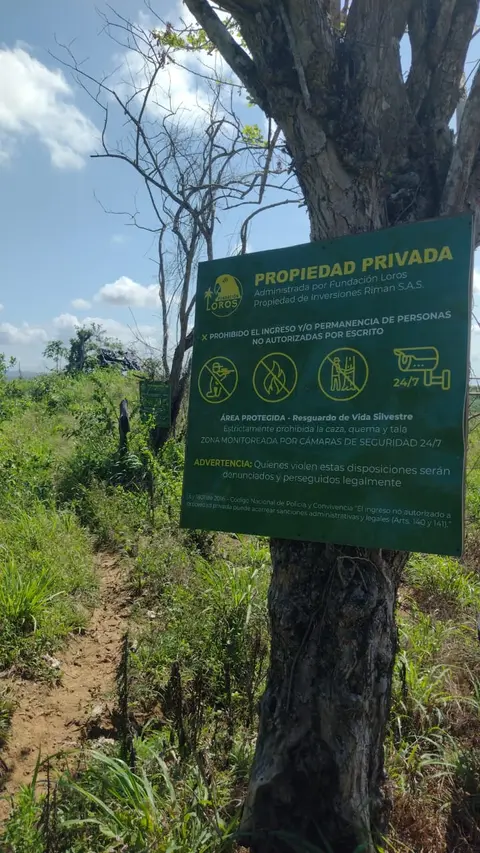
There is a green sign planted at the edge of the property, where the open ground meets the shadow of the forest. It says what cannot be done here: no hunting, no burning, no logging. It is managed by Fundación Loros and Inversiones Riman S.A.S., and cameras watch over it around the clock. That day, José Marín came from the Foundation to carry out an inspection visit to the protected area, near Cartagena.
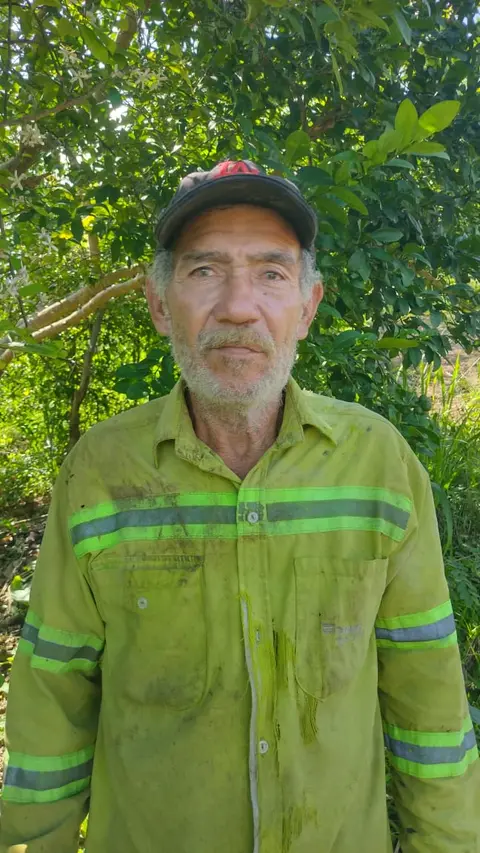
He was accompanied by Juancito, one of the local campesinos. He stood beside the sign with his thumb raised and his rubber boots firmly planted, like a man who knows that patch of land better than anyone. There was no need for many words — the photograph told the whole story. The forest behind him, the sun overhead, and that man posing beside the rules he himself helps to uphold.
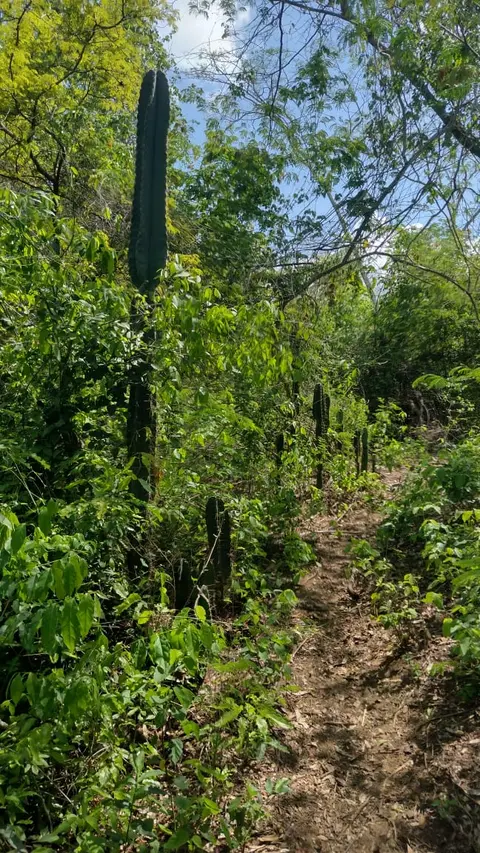
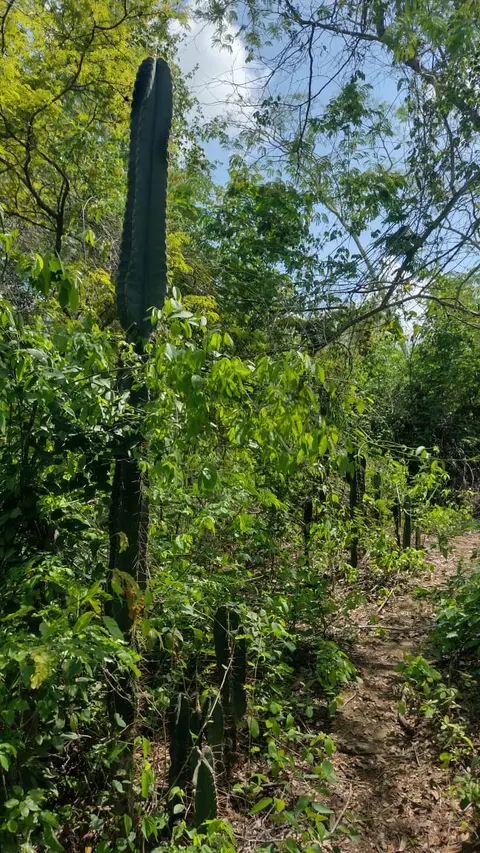
The dirt path of Sector El Peligro concealed, among its dense vegetation and midday shadows, a vertical surprise: seven columnar cacti rising above the shrubs like silent sentinels. José Marín moved among them one by one beneath the sunlight filtering through the canopy, documenting their presence in what became both a census and a formal reconnaissance of the sector. Possibly of the genus Cereus — the same one the campesinos of the Costa call cardón — these specimens grow woven into the thick tropical vegetation that lines the trail, an uncommon combination that blends the arid with the lush.
The photographs José brought back show the cacti as a natural part of the landscape: the earthen floor scattered with fallen leaves, the ribbed trunks climbing up through the green foliage, and that wilderness quiet broken only by the wind. Seven specimens recorded, a sector better understood, and a name that for now carries no menace: El Peligro turned out to be, on this particular afternoon, a peaceful place to count cacti.
There are entrances to the reserve that appear on no map as marked trails — they are paths that time and the passage of people drew without permission. La manga del pueblo is one of those. José knows it well, and that is why he included it in today's monitoring round: come, look, confirm.
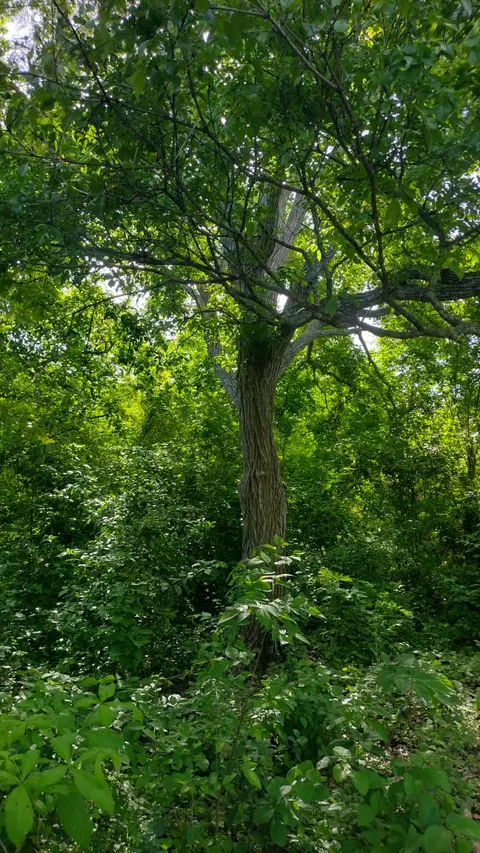
On the thick-trunked tree that marks this access point, the green sign of the Fundación Loros still stood in its place, firm, announcing that this is a protected area and that hunting, burning, and logging have no place here. Nothing out of the ordinary. No trace of anything to raise an alarm. Sometimes that — the calm, the order, the sign untouched — is exactly the news.
José continued on his way. The point was recorded at coordinates 10.426319, -75.245452, like a new pin in the memory of the reserve.
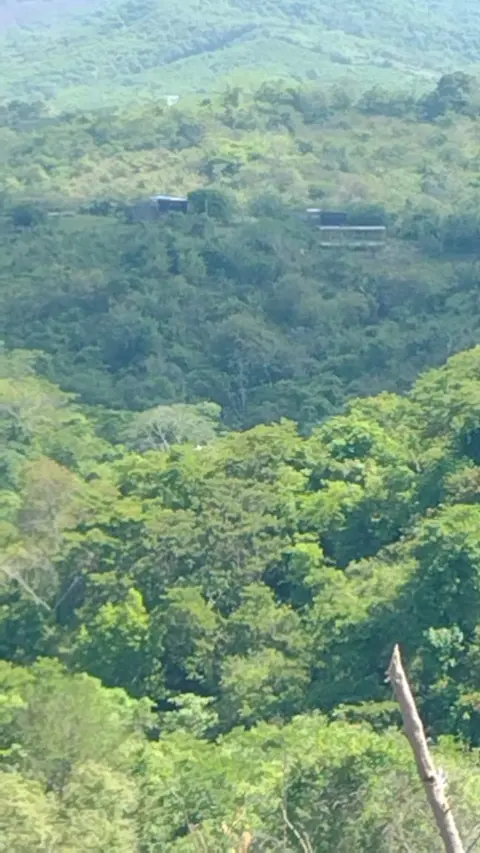
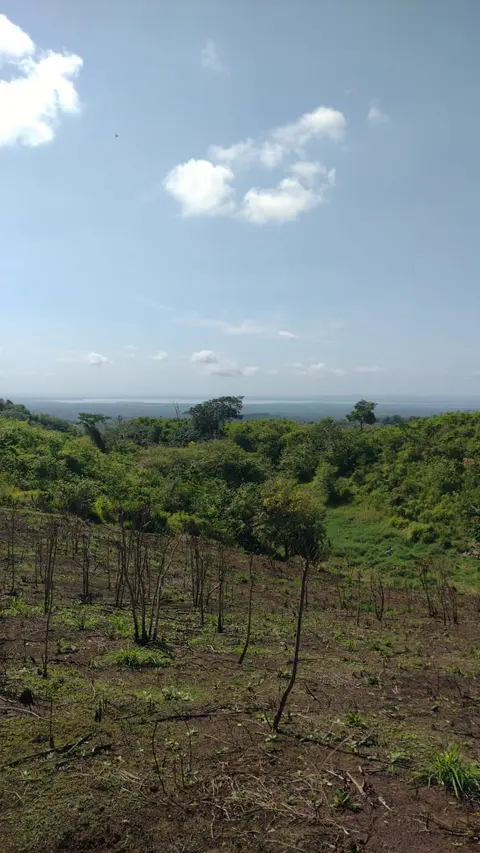
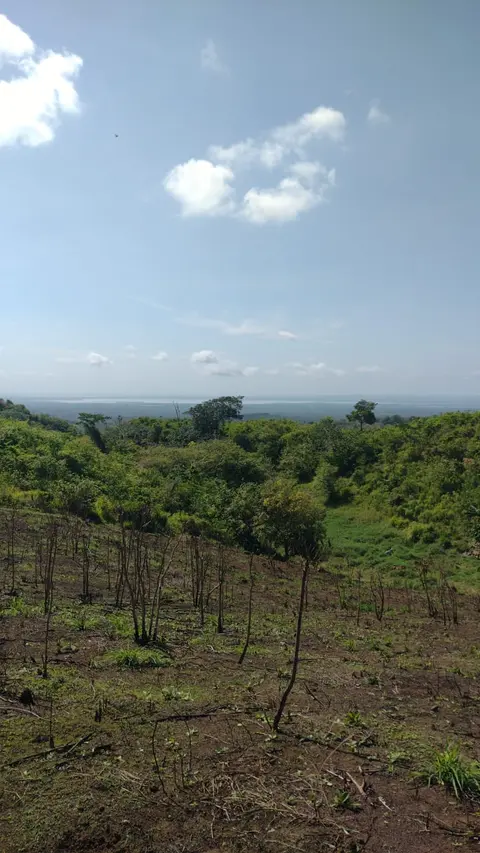
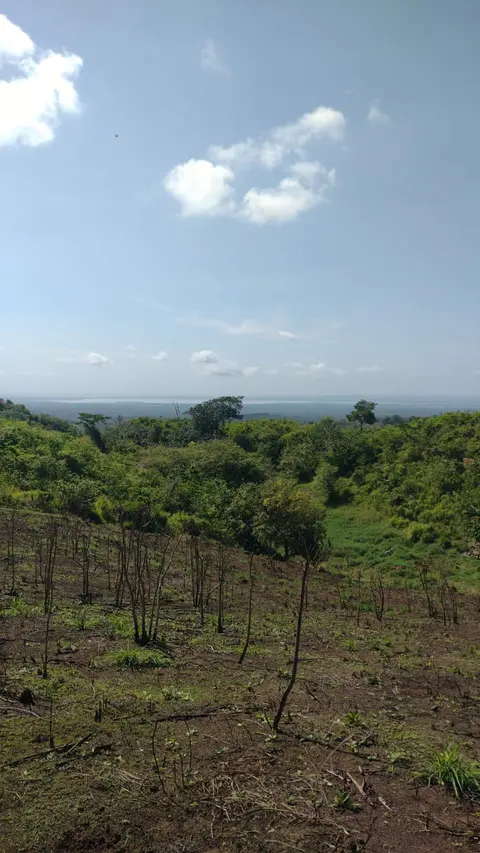
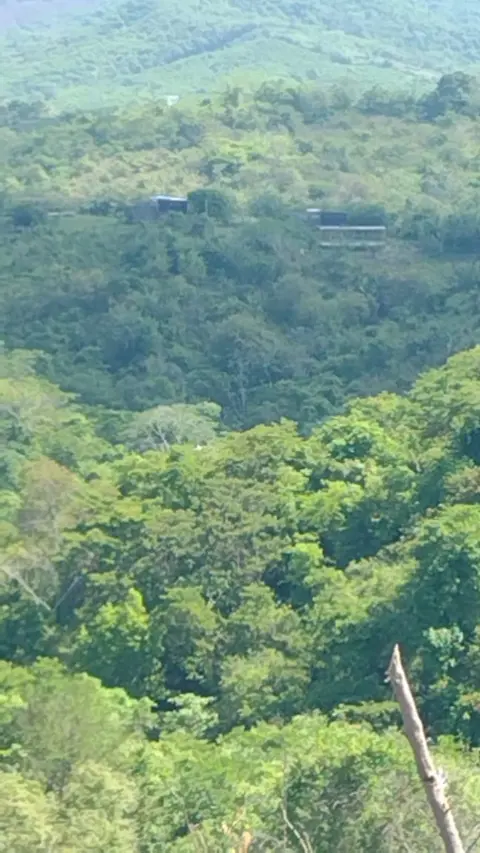
José Marín had been walking the hillside for a while when he found the spot. He wasn't looking for it — it came to him, the way good places tend to do. From that summit at coordinates 10.4281°N, 75.2449°W, the entire sanctuary stretches out below: the dense forest with the Fundación's facilities half-hidden among the vegetation, the release cages peeking through the canopy, and beyond them, still and silver beneath the April sky, the ciénagas.
In the foreground, an open stretch — bare ground, sparse shrubs, the scar of what the forest once was — stands in sharp contrast to the wall of green that begins just meters below. But what José noticed that Wednesday wasn't the wound. It was the breeze, and the view. From up there, you can see at once the place where the animals wait and the place where they're bound: the cages and the wetlands sharing the same horizon, as if the entire journey could fit inside a single glance.
The spot was logged in the sanctuary's field journal as one of the most valuable vantage points in the area. José continued his expedition.
Thirty-Seven Returns Between El Paraíso and Los Guardianes
Along the green corridor that bridges the farms El Paraíso and Los Guardianes, on April 22nd, EPA Cartagena opened the cages and released the held breath of 37 animals returning to the wild. Nine canaries shot toward the first tree they could find; a jilguero menor followed close behind. Two boas eased themselves through the leaf litter without any hurry, while eight iguanas vanished into the branches with that ancient elegance particular to reptiles. Alberto, the caretaker at El Paraíso, was there to witness the moment seven morrocoyes patirrojos touched free ground for the first time in who knows how long.
Not all of them left that day. The four titíes cabeciblancos — a species endemic to Colombia's Caribbean coast — entered a pre-release enclosure, where they will spend three weeks learning, or perhaps remembering, what it means to live without bars. Two rositas also found their way into the forest, along with three juvenile zarigüeyas, a tumbayegua, and a dog who, by some turn of fate, shared the day alongside her wild companions.
By the time the sun bore down hard on the boundary between the two farms, the land had already swallowed nearly all of them. What remained was that particular silence animals leave behind when they disappear into the vegetation — the sign that everything went exactly as it should have.
Three Loros Reales into the April Sky
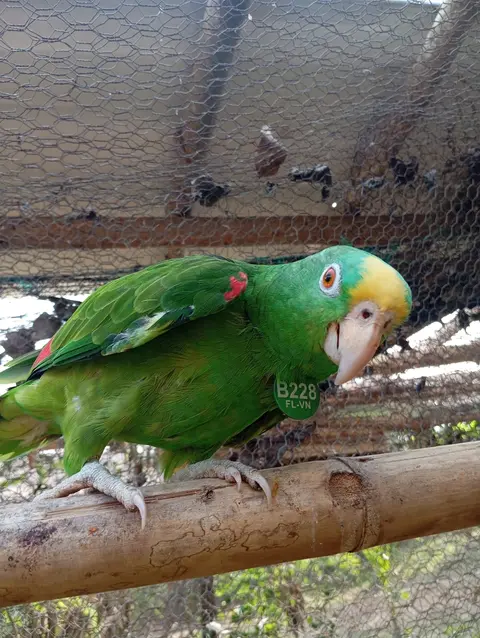
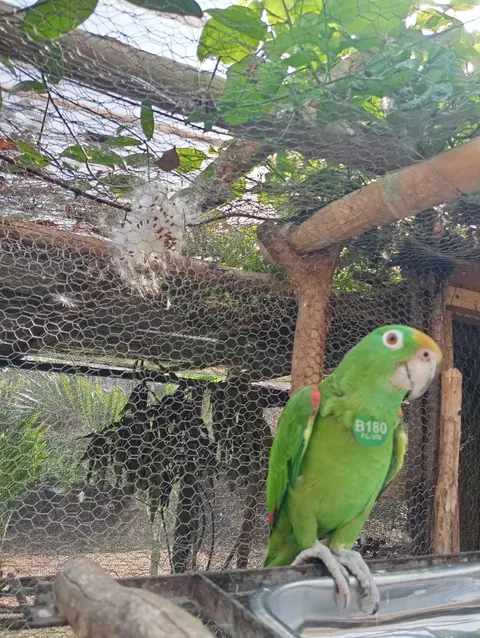
On Tuesday, April 21st, Omar arrived at the sanctuary with a day that few can match: three releases of loros reales in a single dawn. One by one, B180 from aviary one, B228 from aviary two, and B60 from aviary three spread their wings over the 520 hectares of Fundación Loros and found, at last, air with no wire between them and the world.
B180 wasted no time choosing his first perch: a guácimo tree, unhurried, as if he had always belonged there. B228 appeared shortly after near a fruit station — papaya, watermelon sliced across a metal tray — exploring with that careful curiosity animals carry when the world suddenly becomes immense. B60, for his part, took the path toward the bosquesito, the reserve's most tangled corner, and disappeared into the green.
All three still carry on their legs the mark of what they once were: numbers on a tag, brilliant green plumage with yellow crowning the head and red blazing through the wings — the full portrait of Amazona ochrocephala at its finest. Today, through the quiet work of Omar and his team, those numbers have learned to fly.
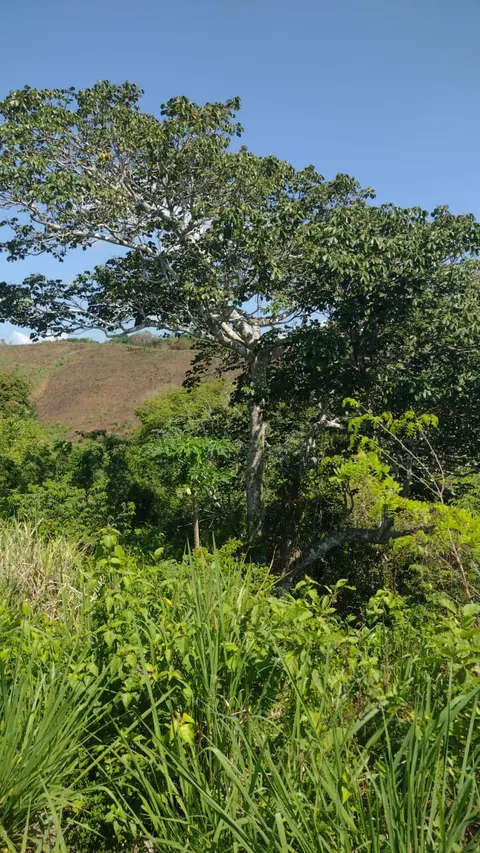
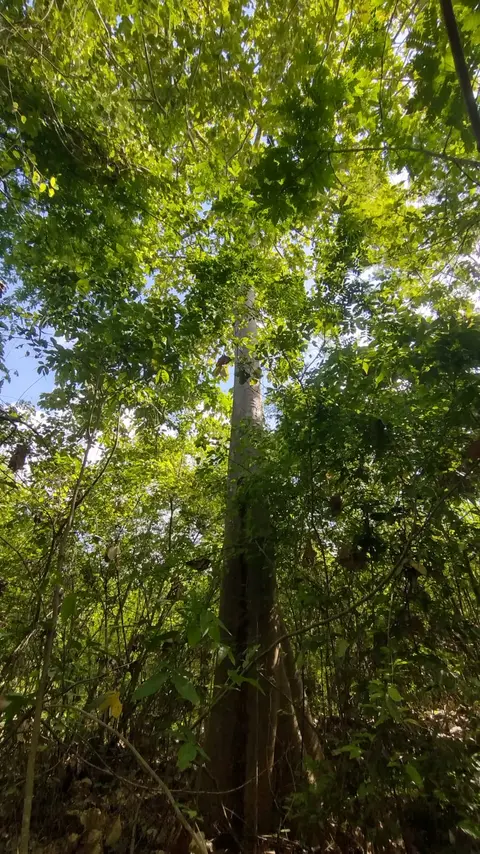
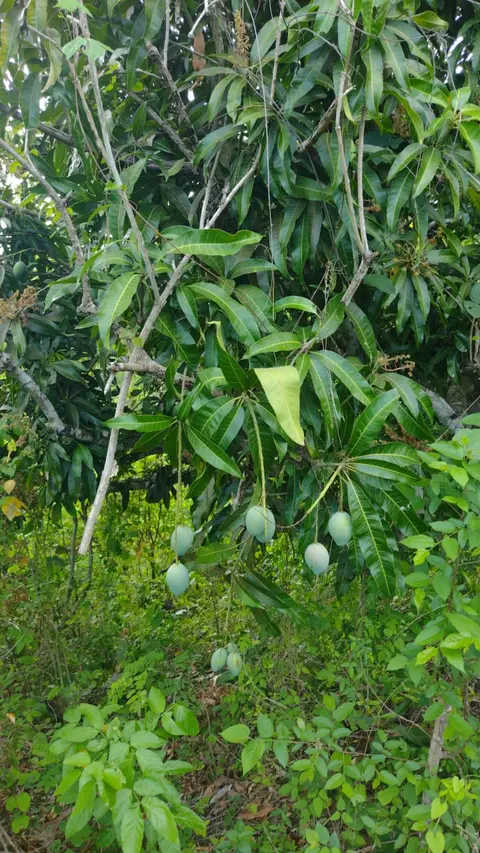
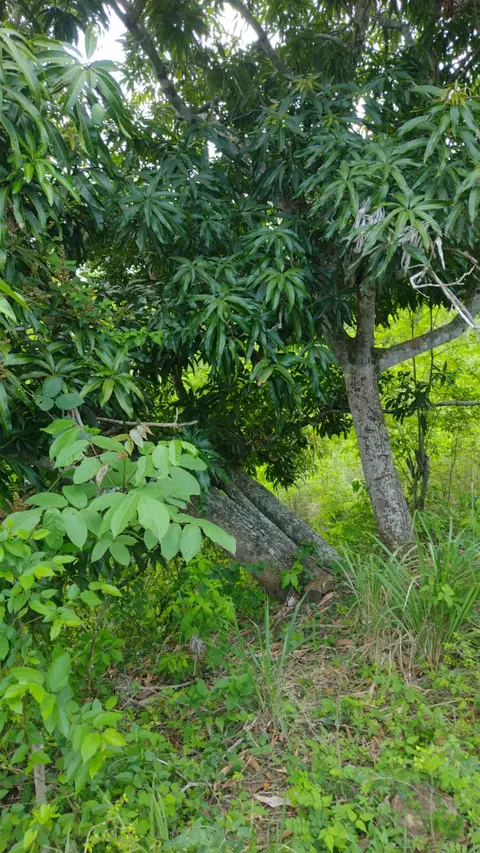
José Marín headed out alone into the piedemonte sector, his signal barely strong enough to send a GPS location every now and then. Along the way, he came across two trees worth adding to the record: a camajorú standing twenty-five meters tall, its pale trunk rising through the deep green canopy of the forest, and farther on — well apart from the first — a mango tree heavy with fruit, still green and unripe, surrounded by shrubs and dense undergrowth.
It was near the mango tree that the day's surprise revealed itself: a troop of titíes, somewhere between five and six individuals, moving through the branches. The tití gris, or tití cabeciblanco (Saguinus leucopus), is a species endemic to Colombia, its range limited to the Caribbean region and the Magdalena Medio, and its presence in the reserve is always a welcome sign. José managed to capture them in photos and video before they vanished into the thicket. The piedemonte, on that day, held far more life than the eye could first see.
Four Cotton-top Tamarins on the Piedmont
Not long ago, José Marín had spotted just one among the trees of the piedmont sector — a single tití cabeciblanco, still, with no apparent company. It was the kind of sighting that leaves more questions than answers. But on the morning of April 21st, that same trail offered him something different: movement in the branches, small voices, and at least four individuals moving together. A male, a female, and a restlessness in the canopy that hinted at the rest of the group.
The tití cabeciblanco (Saguinus oedipus) is a critically endangered species, endemic to northern Colombia. To see them as a family, on the piedmont of the reserve, is a sign that something is working well in this corner of forest. José managed to capture the moment on video — those small white-headed, cinnamon-bodied creatures moving through the branches, indifferent to the lens, busy simply being what they are.
Two Baskets of Joy for El Paraíso
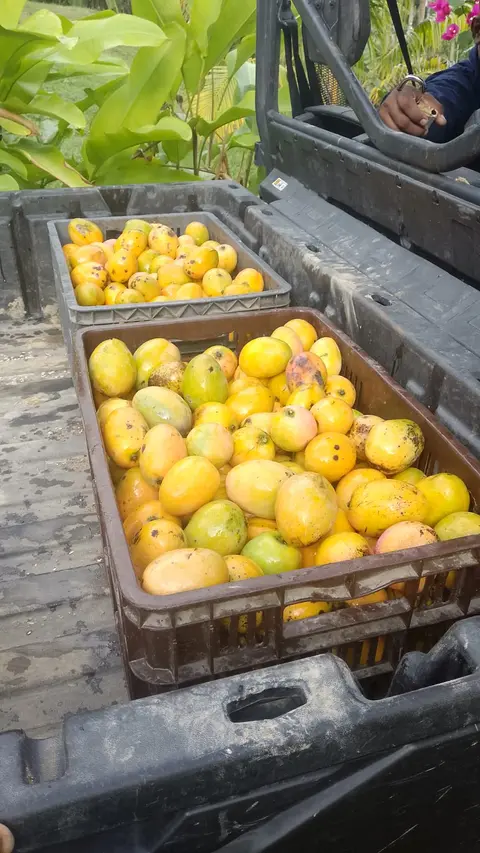
This morning, two baskets brimming with ripe mangoes set out from Vista Hermosa — yellow-orange, heavy with that sweet, dense fragrance that only freshly cut fruit carries under a tropical sun. Some bore the dark spots of perfect ripeness; others, still firm, held the quiet promise of days yet to come.
The cargo rode in the bed of the pickup, bound for El Paraíso. The parrots were waiting — they know that flavor well, and they never need convincing: the moment they catch sight of the mangoes arriving, the uproar of feathers and beaks says everything.