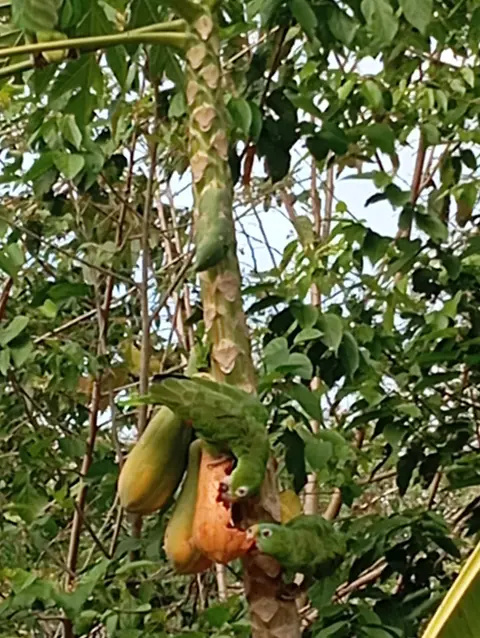
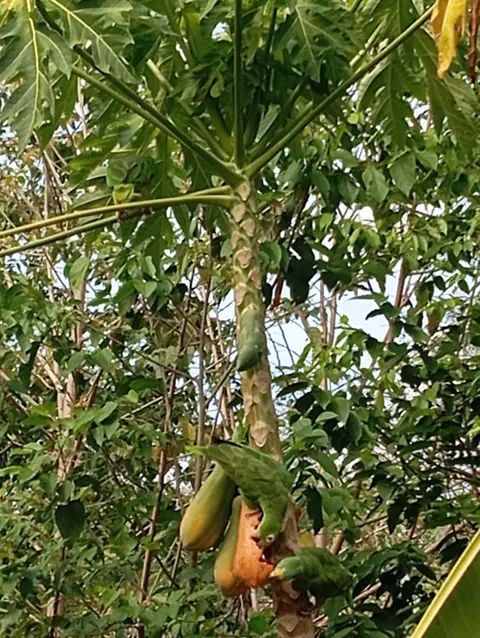
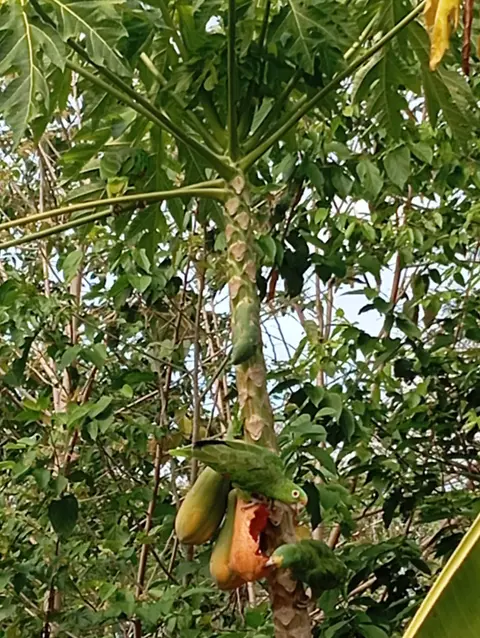
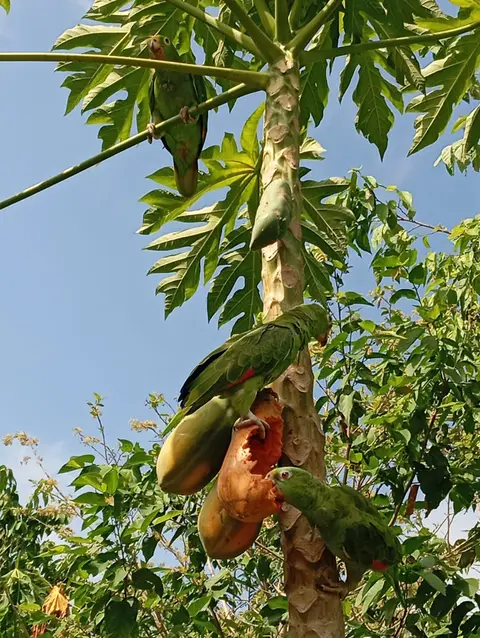
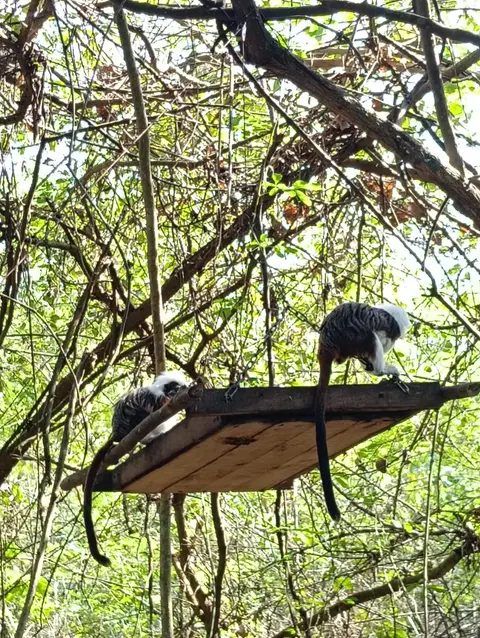
In the mid-afternoon hours, near aviaries #1 and #2 of the Fundación Loros, Omar Enrique Berdugo Cabeza watched the first one arrive: a green parrot that landed in a papaya tree and began pecking into the orange flesh of a ripe fruit. Before Omar could even finish taking it in, there were three parrots quarreling over the feast, and a woodpecker had joined the party as well. The scene was vivid enough to set the whole team talking about the same idea: planting more fruit trees throughout the area.
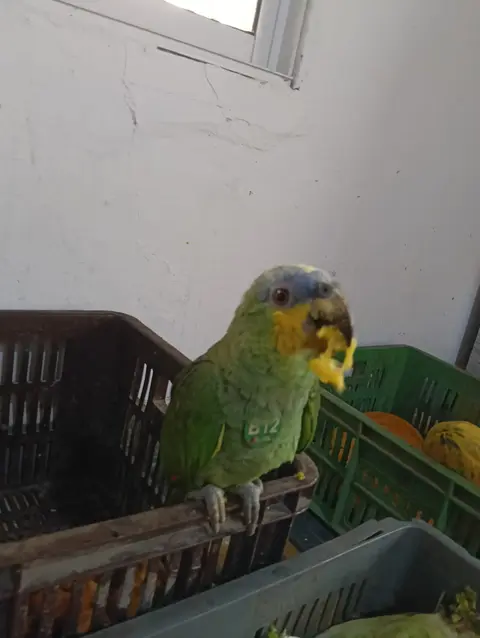
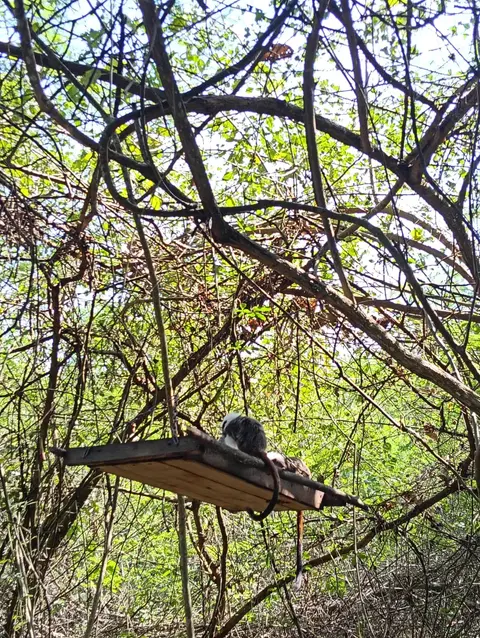
While Omar documented the moment with his camera, the one keeping close company nearby was Sombrerito — the parrot known by medallion B12 — going about his own business, exploring the surroundings at his own unhurried pace. At some point, Omar spotted him stop before a balsamina fruit — that yellow-fleshed curiosity with bright red seeds inside, known among local farmers for its sweet and peculiar taste — and begin eating with the kind of unhurried ease that suggested he had been doing it all his life.
In the end, four photographs and five videos remained as testament to that afternoon: wild parrots perched among the papayas, a woodpecker passing through, and Sombrerito savoring his balsamina beneath the sun of the reserve.
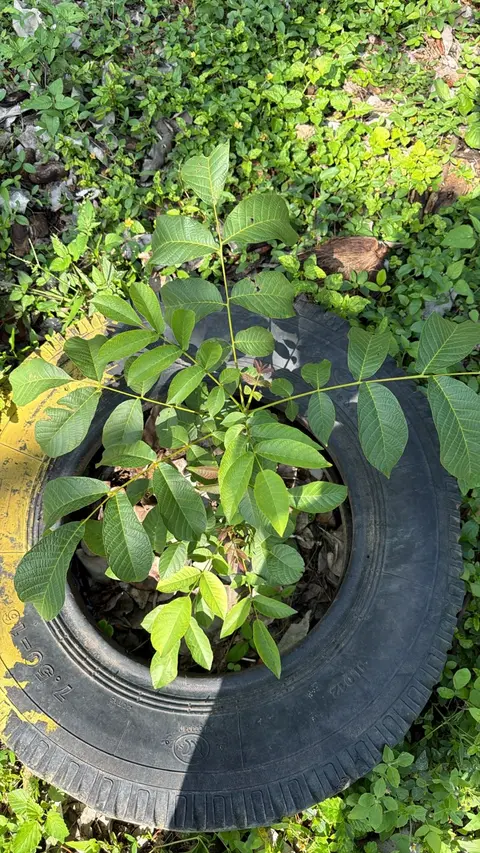
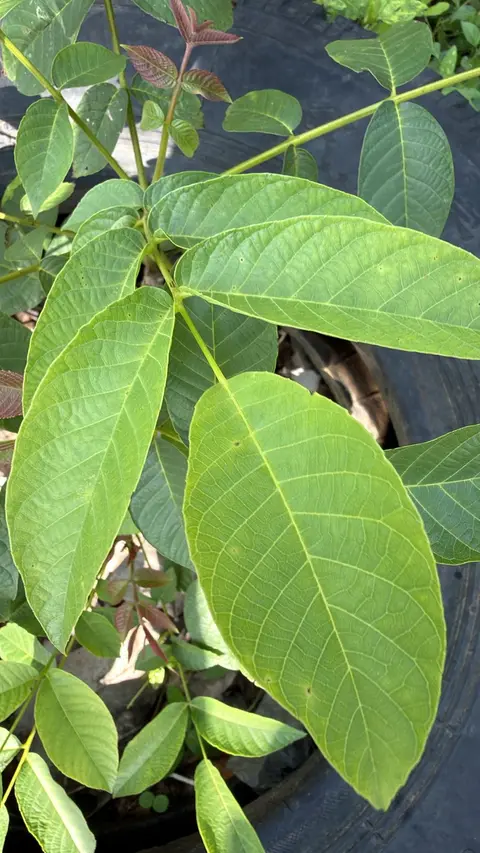
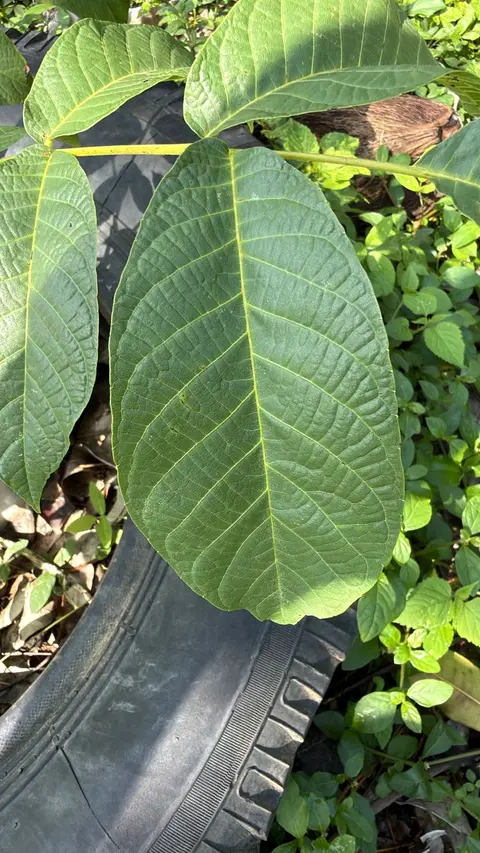
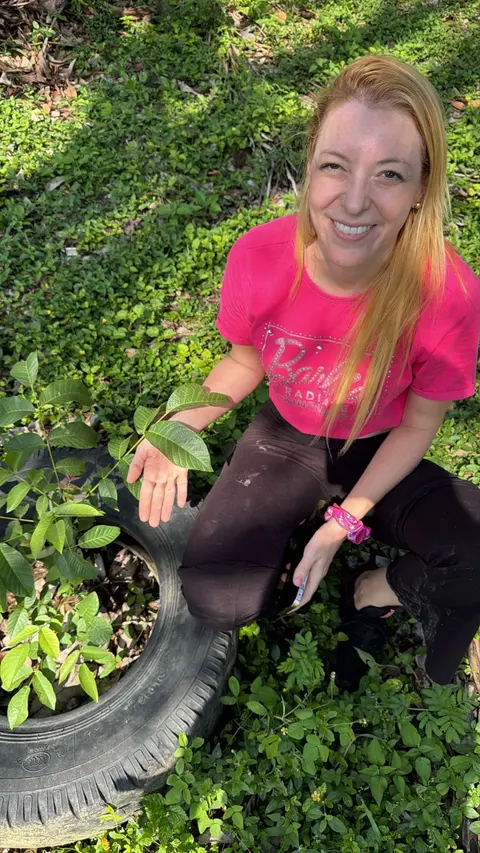
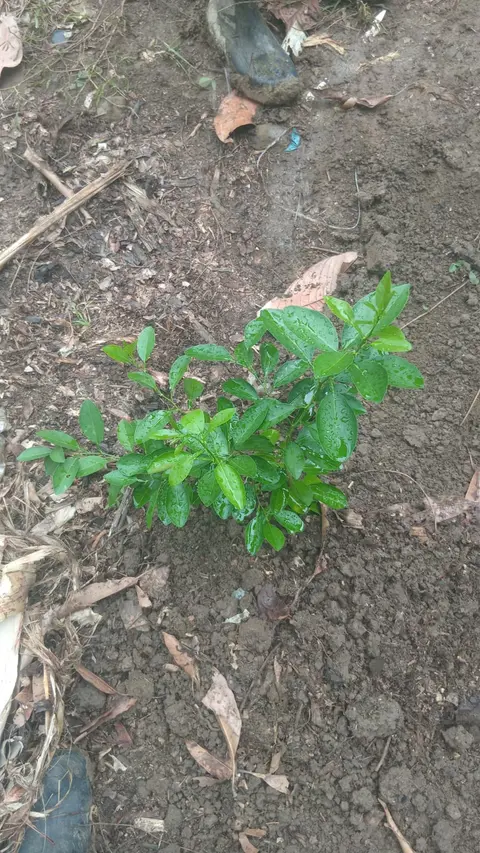
Near the boundary of the Piedemonte farm, where the land of Fundación Loros takes its leave before yielding to another landscape, there stands a walnut tree that carries the story of a long journey. Its seeds arrived from Argentina, crossing borders tucked inside some pocket or suitcase, and ended up here, on the Colombian Caribbean coast, planted inside an old tire that now serves as its pot.
It was Rosangela, Chiarita, and Alejandro who put it in the ground. The tree is still young, almost fragile to an eye that doesn't know how to look. But whoever crouches down to study it closely will see new shoots pushing through at the tips of the branches, flushed with reddish hues — that particular coloring that in plants signals something is working, that life is running its course without asking anyone's permission.
The tire is no decoration: it is pure ingenuity, the practical solution of those who work with what they have. And there stands the walnut, still and quiet among the undergrowth and the tropical light, carrying in its young wood the memory of another soil and the promise of putting down roots in this one.
The Golero That Led the Way Back
On Tuesday, April 7th, Caldique made his way to lago Los Borrachos — within the grounds of los Guardianes — carrying a mission that had already been half-fulfilled since morning. Earlier, beneath the green shade of the forest, several canarios had been released. Omar watched them settle onto the branches with that stillness only animals possess when they recognize that the space around them belongs to them.
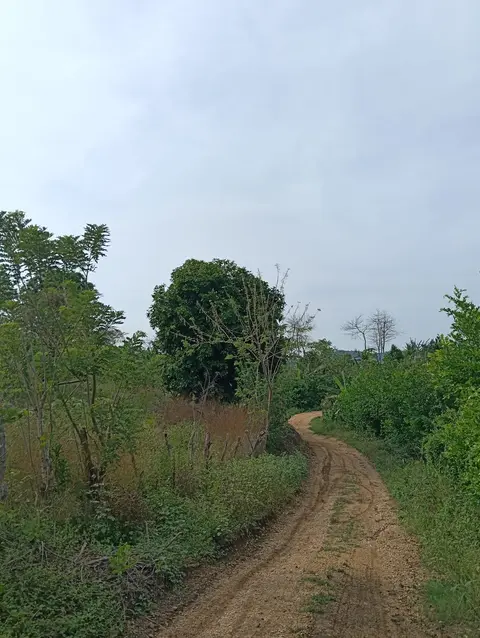
But it was at 11:34 that the day found its finest moment. The golero released at Los Borrachos didn't bolt away as they usually do. Instead, it stood before the team's vehicles and began walking down the path, as if it meant to escort the very people who had brought it there. The cars followed, slowly, without rushing it. When the golero felt it had done what it came to do, it stepped aside and vanished into the brush.
No one knew exactly how many canarios took flight that day — Omar filmed the video but never counted — and perhaps that doesn't matter so much. What was recorded was the image of a large black bird opening the way along a dirt road, and a team of people who, for once, let someone else lead.
Stone by stone, the sanctuary's name
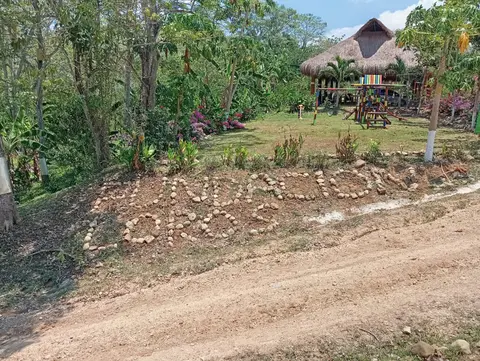
That Sunday, without anyone asking him to, Omar Enrique Berdugo Cabeza gathered stones from the sanctuary garden and began arranging them on the earth, one by one, guided by nothing but imagination. When he finished, the name of the Fundación Loros appeared written on the ground among pink and purple bugambilias, with the thatched palapa as a backdrop. An idea no one had suggested, born on its own in the middle of the afternoon.
Afterward, the day continued on to aviario #2, where the loros did what they do best: spread joy. There is something in their clamor and their colors that breaks through the composure of any visitor, and that day was no exception.
Leaving the aviary, the open grounds offered one last surprise: two morollos — those medium-sized doves with brown plumage that inhabit the edges of the sanctuary — were deep in courtship. A quiet, precise scene, which Omar captured with unhurried calm. Two birds, spring pressing forward, and the cycle continuing its course among the trees of the reserve.
The Swallows Knew First
Before the first drop fell, the forest already knew. Omar Enrique Berdugo Cabeza was making his way around the main house, past the aviaries and along the path that borders lago 2, when the sky had not yet given anything away. It was the swallows that sounded the alarm: a more restless flight, lower than usual, cutting through the air with urgency. Then the loros joined in with their calls, and behind them the other birds of the surrounding forest — all of them moving and vocalizing as if the downpour were already a certainty they carried somewhere deep inside.
That moment — the entire forest anticipating the rain — was captured across eleven videos. There is no alarm in that collective song, but something that feels closer to joy: birds that know this place by heart responding to a signal that we humans are only beginning to learn how to read. Omar Enrique saw it, filmed it, and had the clarity of mind to recognize that he was witnessing something that unfolds every time it rains at the Fundación Loros — though there are not always attentive eyes around to notice it.
Eleven squirrels in the mamón that bears no fruit
There are trees that, though they bear no fruit, give everything. The male mamón growing in front of the Fundación Loros park is one of them: with no seeds to offer, it has spent years as shelter, feeding ground, and silent witness to the life that moves through its branches. This afternoon, in full bloom and full of noise, it gave everything once more.
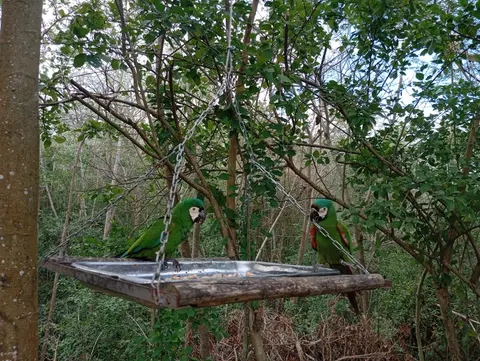
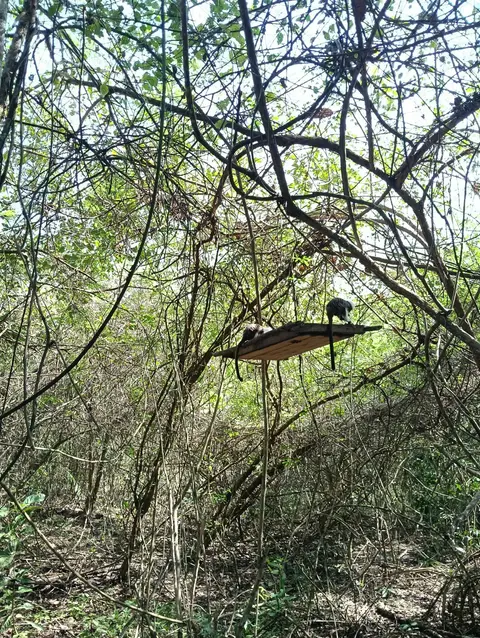
Omar Enrique Berdugo Cabeza could hardly believe what he was seeing. Eleven squirrels at once — scrambling up and down, chasing partners, moving with that restless speed they get when instinct overtakes fear. The whole tree seemed to tremble. His companion Alberto stood watching without a word, the way you do when you know that anything said would be too much. Meanwhile, in the hanging feeders swaying from the same branches, the guacamayas went about their business — calm, indifferent to the commotion — and somewhere in a quiet corner among the leaf litter, a lone squirrel drank water in silence, as if the whole celebration had nothing to do with her.
Omar recorded all of it. But there are things a video cannot quite reach: that moment when you stop, look up, and understand that a single tree can hold entire worlds.
B12 Arrived with One Eye Closed
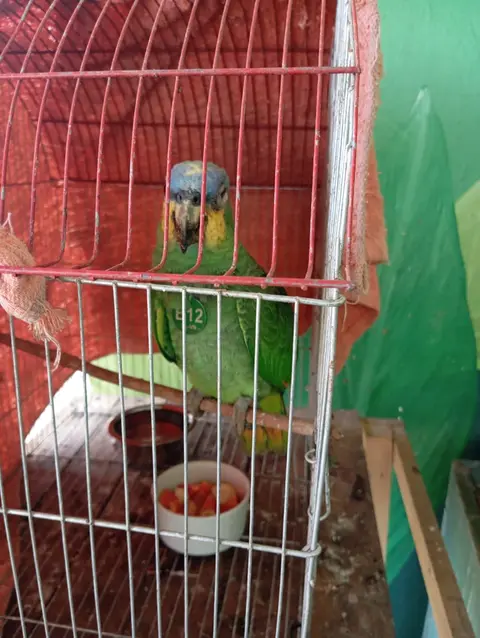
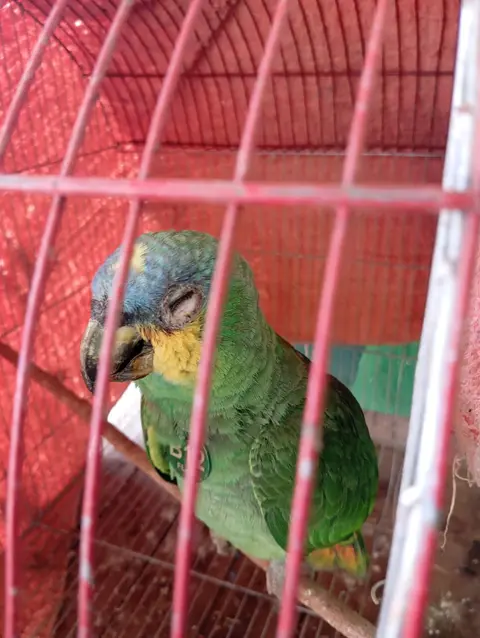
Carlos found him first, near the Foundation's house. He was still, his green plumage intact but his right eye shut, as though carrying the weight of a fight no one had witnessed. That was how B12 appeared — an Amazonian parrot we know well by the green band on his leg — suddenly transformed into an emergency patient.
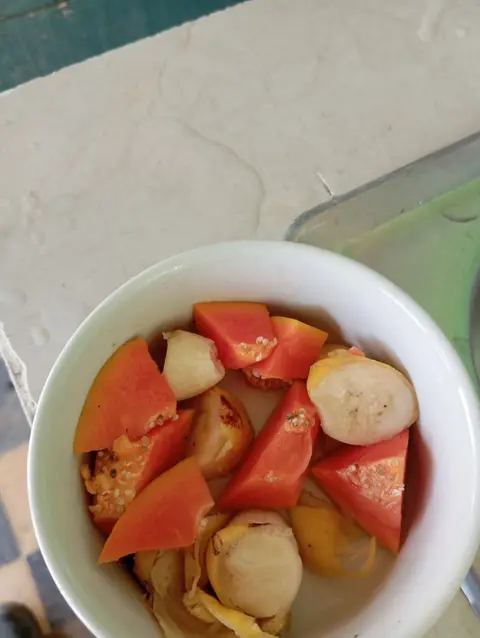
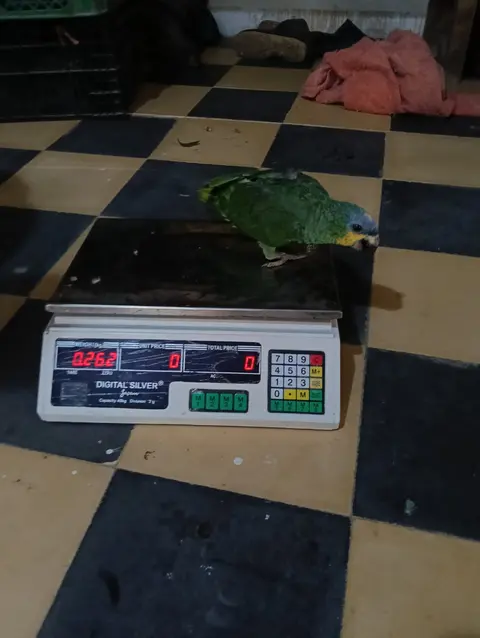
Alejandro gathered him up gently and settled him into a small cage with fresh water, banana, and sliced papaya. No seeds: that was the first thing Carlos told the team, because with a compromised eye, there was no room for risk. The digital scale read 262 grams — a small number that, in moments like these, says everything about the state of an animal. The veterinarian had already been notified.
Now B12 rests in his red cage, eyes closed, fruit within reach of his beak. The afternoon settled over the sanctuary without further incident, and the team watches him closely while waiting for the vet's instructions. Sometimes the nature of this work is exactly this: finding them in time, doing what little you can, and waiting.
The mamón de mico That Never Loses Its Green
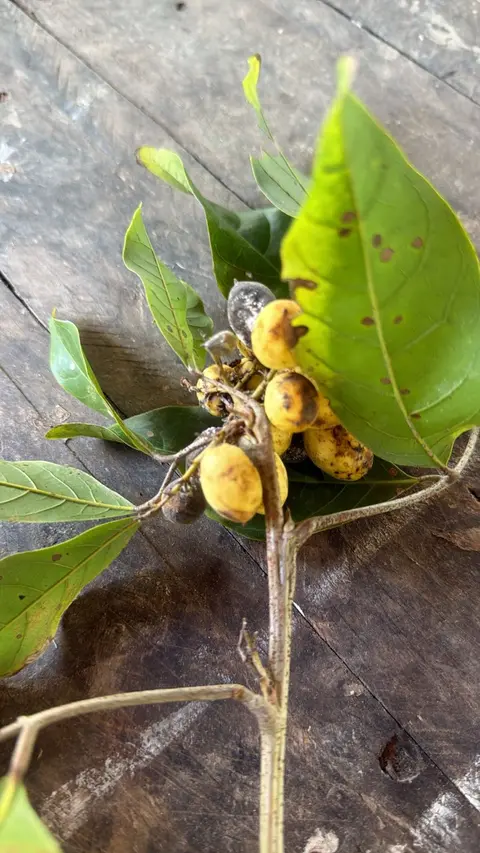
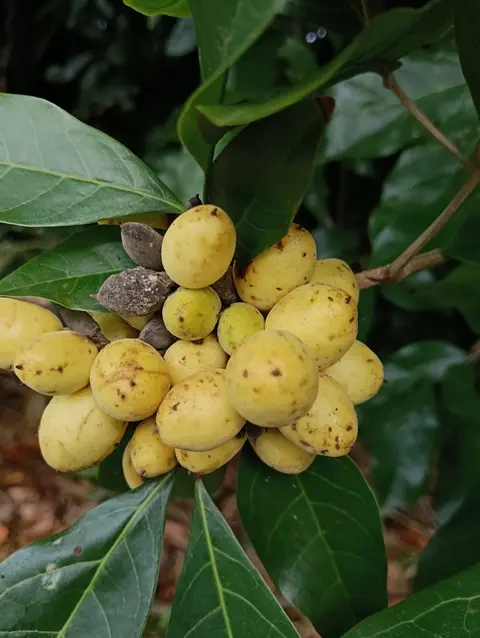
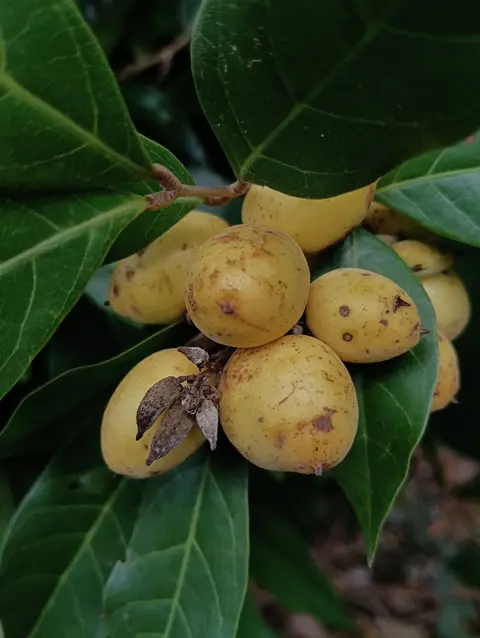
Alejandro arrived at the sanctuary with a branch in hand and a single certainty: the mamón de mico is always green. The tree, known to science as *Melicoccus bijugatus*, stands alive and active somewhere within the 520 hectares of Fundación Loros, offering its small yellow fruits even when the season would ask nothing of it.
And yet, the branch Alejandro photographed against a weathered wooden board told another story between its lines. The round little fruits and glossy leaves were flecked with dark spots — signs that might point to a disease, or to some pest quietly doing its work in the shadows. The fruit's advanced ripeness alongside those marks together form a warning, one the team made careful note of recording.
For now, the tree holds on and keeps its green. But the image rests in the field log as a reminder that in this sanctuary, one must look not only at whether something lives — but at how it lives.
Omar's Pot and the Recovered Nests
In the sector known as la casa de Paraíso, where the trees cast their shade and artificial nests stand waiting for feathered tenants, the bees had arrived first. Entire colonies had moved into the boxes that the Fundación's team built with parrots and macaws in mind, and for a time it seemed those nests were as good as lost. It was Omar who found the answer in the most unassuming of things: an old pot, scraps of wood, and the smoke that rises from them.
The technique has a kind of artisanal elegance that needs no lengthy explanation. The smoke lulls the bees — it gets them drunk, Omar says — without causing them any harm. In that state of unwilling calm, he removes the honeycombs. Once the comb is gone, the colonies do not return. Rain washes away the traces of scent that would have guided them back, and the nest is free again. Alejandro, who received the report firsthand, confirmed that several of those nests have already been reclaimed.
It is the kind of knowledge that passes from hand to hand without a manual: a hand that knows just how much smoke is enough, a patience that no book has ever taught. Thanks to that, in la casa de Paraíso there are empty boxes waiting — waiting for the wingbeats and the glorious racket of a parrot that has finally found its place.
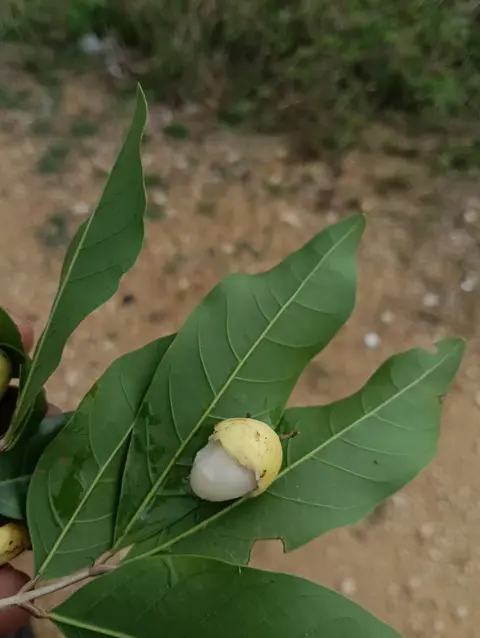
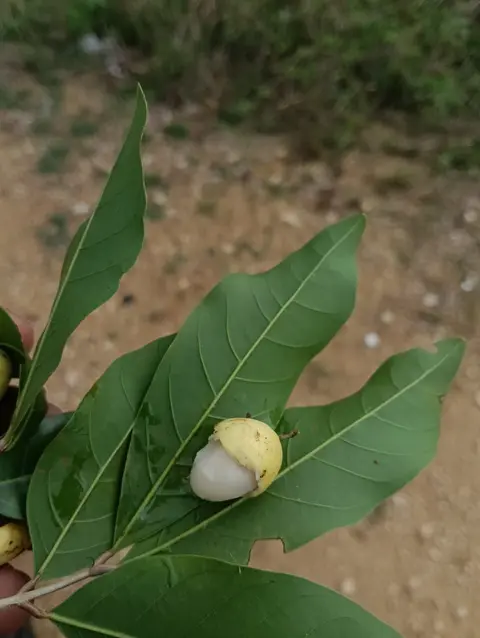
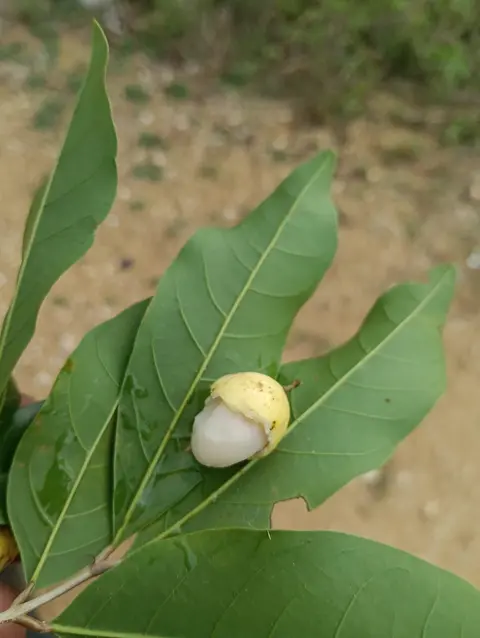
At the coordinates Alberto shared from the reserve, the reddish earth and small stones kept a secret among the branches: a yellow-green fruit, barely open, its white flesh peeking shyly toward the light. It was a cotoperi —known also as cotoprix or mamón de mico—, a Talisia sp. that few would have noticed had it not been for the trained eye of whoever was walking through that stretch on a Wednesday.
This was no isolated find. Omar had already reported several individuals of this same species in the area before, which makes this record a confirmation: the cotoperi has an established presence in that corner of the reserve. Alberto held it in his hand —branch, elongated leaves and fruit— and left a photographic trace of that almost ordinary moment which, added to the earlier reports, begins to draw the map of a plant that already feels at home among the 520 hectares of Loros.
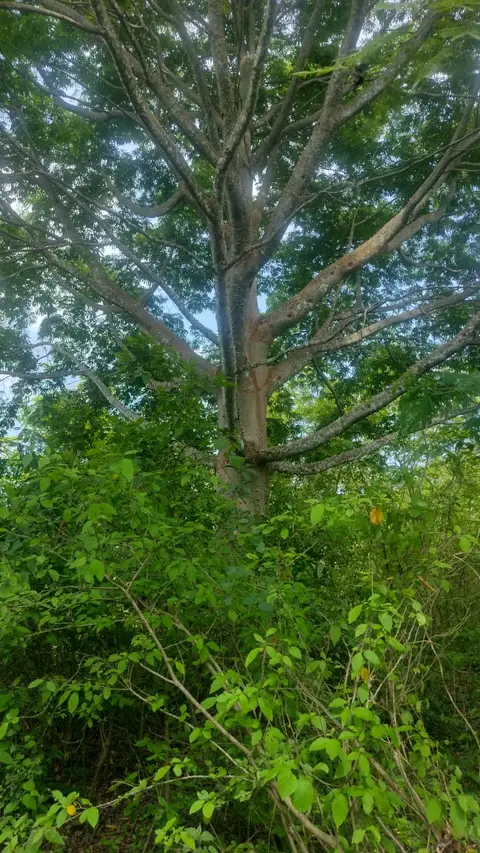
There are trees that need no argument beyond their own presence. In the pie de monte sector of the reserve, José Marín stopped in his tracks before one such specimen: a thick trunk wrapped in grayish bark, branches opening to the overcast sky with the generosity of something that has been doing so for decades, a dense green canopy that turns the spot into a small world of its own. Around it, the shrubby vegetation covers nearly every inch of ground — tight and hushed, like a guardian of something we have yet to find words for.
There was no fauna that Wednesday. No people, beyond José himself. Only the tree, the coordinates, a photograph, and the quiet certainty that this place deserves to be known. Field monitoring for the Fundación works that way sometimes: you arrive to document, and end up — without meaning to — simply stopping to look.
The Squirrel Cuckoo Among the Leaf Litter of Pie de Monte
José Marín was walking through the Pie de Monte sector when a movement in the foliage stopped him in his tracks. It was a squirrel cuckoo —Piaya cayana— moving with the unhurried calm of a creature that knows exactly what it's looking for: insects tucked away among the branches and low vegetation. With its long rufous tail and cinnamon breast, the bird worked its way methodically through the understory, in no particular hurry, as though the afternoon belonged entirely to it.
José managed to capture the moment on video before the bird disappeared once more into the thicket. The squirrel cuckoo is a familiar presence along forest edges and scrubland throughout Colombia's Caribbean region, but seeing one like this —active, hunting— always warrants a pause. Here in the reserve, every sighting adds another brushstroke to the living portrait we are slowly building of what calls these 520 hectares home, nestled between the forest and the Cartagena sky.
B87 Always Comes Home to Casa Paraíso
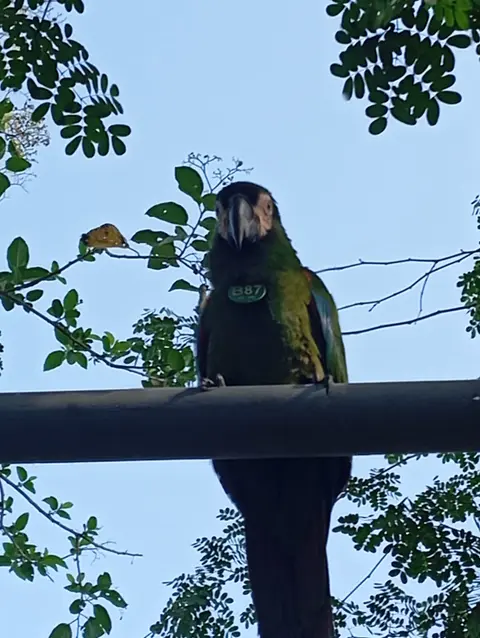
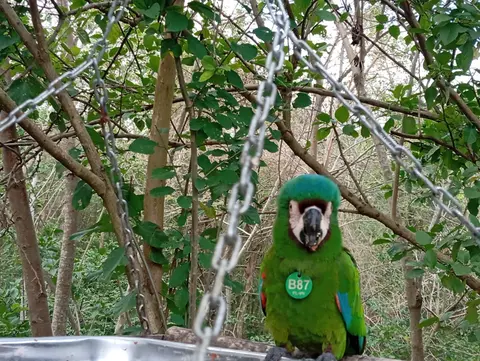
Omar saw her arrive this afternoon, calm as ever, settling quietly near Casa Paraíso. B87 — a chestnut-fronted macaw, Ara severus, her green tag clearly visible among her feathers — was returning from Reserva La Ciénaga, in Santa Rosa de Lima, where she makes a habit of visiting other macaws and parrots before making her way back to the Fundación's little patch of forest. That coming and going has become part of who she is.
What brings her back, though, is a story weighted with loss. When B87 was first released from aviario 2, her mate was left inside. In his desperation to escape, he threw himself against the wire mesh — and didn't make it. B87 was widowed before she even knew it. For a time afterward, she kept company with B90, the two of them together in this same stretch of forest, until each found her own way: B90 headed toward the mountain, and B87 stayed behind.
And here she remains. She travels, explores, visits — but she always comes back to the corner where she once lived with her mate and with B90. Today, at three in the afternoon, Omar watched her land and knew, without needing binoculars, that it was her.
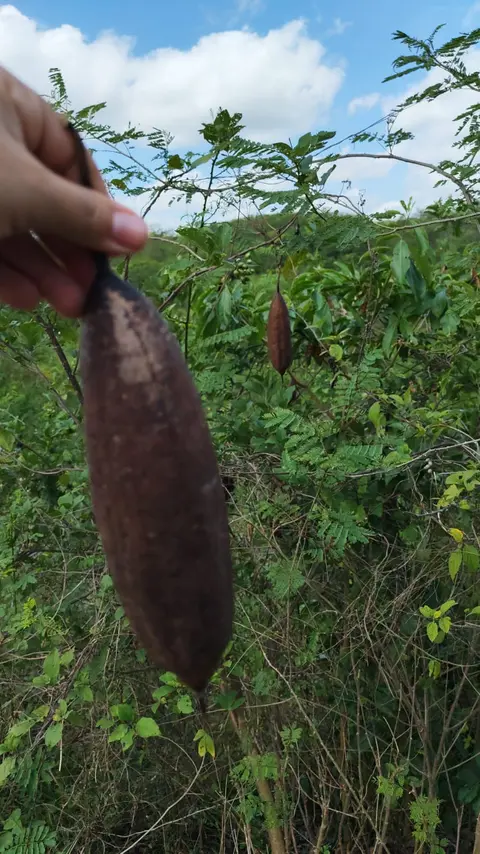
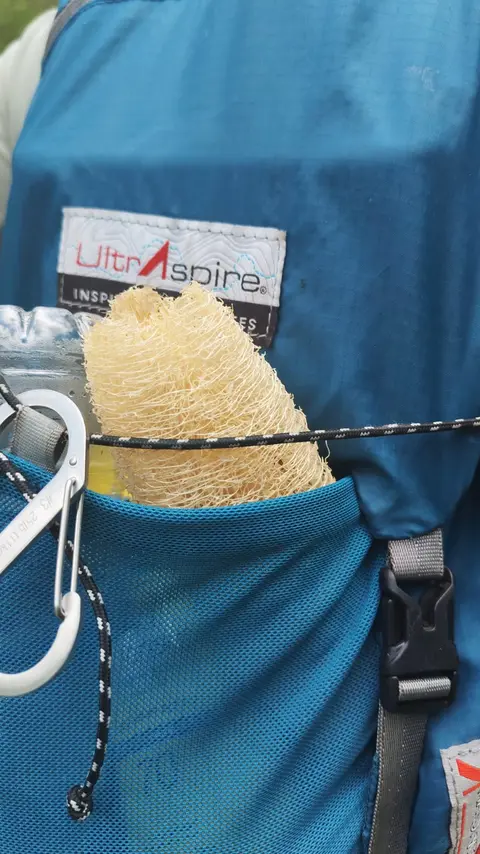
Corina Leonor was walking with a group of tourists through the scrubland when someone lifted a dry pod from the ground — dark, weightless, spent. It was a loofah pod — possibly from *Leucaena* or *Enterolobium* — discovered among the dense shrubby vegetation of la Posa de los Borrachos, that corner of the sanctuary that already carries history in its name.
La Posa was, years ago, a place of washerwomen. The women would come down with their bundles of clothes, find the water, and — who knows — perhaps also find these fibrous pods that the land itself offered them for scrubbing and cleaning. Today tourists walk the same path without knowing any of this, and suddenly nature places in their hands an object that reaches back to that everyday past.
The discovery was captured in a photograph: a hand holding the pod against the blue April sky, white clouds and green hillside filling the background. A small detail, almost without consequence. But in la Posa de los Borrachos, even the things that dry out and fall to the ground have their own story to tell.
The mamón de mico blooms at the Y de Broche
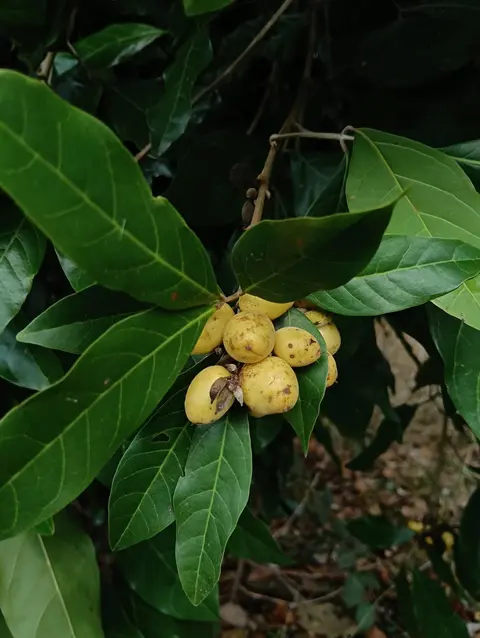
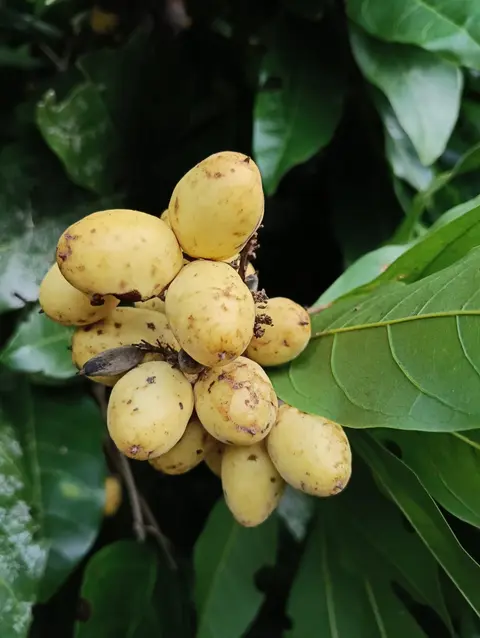
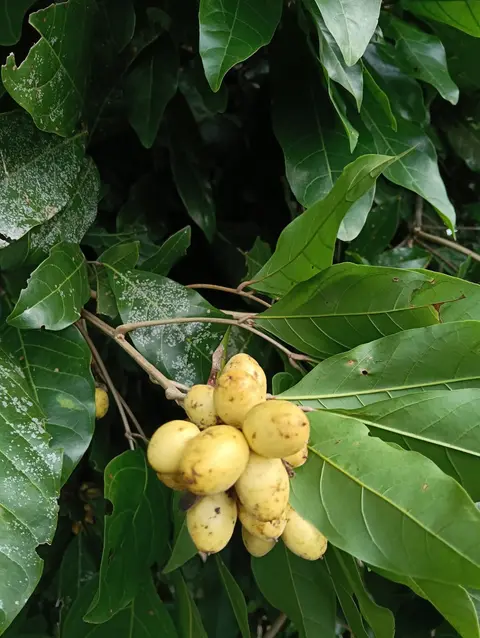
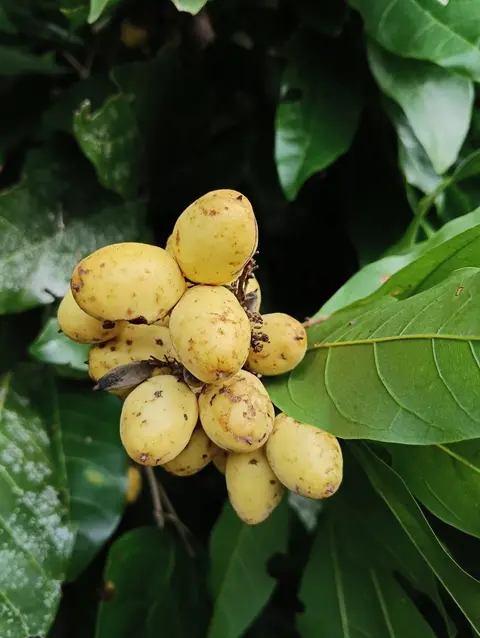
On the trail that climbs from the Y de Broche toward the cerro peligro, there is a tree that gives no warning: it simply appears, laden. Alejandro found it that way, without ceremony, its clusters of yellow-gold fruit pressed tight against the branches, some already showing the brown blotches that betray full ripeness. This is the mamón de mico, and April belongs to it.
The fruits hang in compact bunches among large, glossy leaves, and whoever splits one open finds inside a creamy white flesh — understated, but sweet. It is not a spectacular find at first glance, but in the sanctuary these fruitings are compasses: they mark what is ripening in the forest, which sectors will see wildlife moving through in the coming days, what is worth watching.
Alejandro documented it carefully, splitting one of the fruits open to reveal what lay inside. The tree remains there, heavy with fruit, at that point where the trail forks and the cerro peligro peers through the canopy.
The Ceiba Releases Its Snow Where the Titis Sleep
Near the pre-release enclosure, where the titis make their final pauses before returning to the wild, a ceiba decided this Tuesday that it was time to let go of what it had been holding. Corina Leonor found it like this — laden with white fluff, poised to scatter — and managed to film it before the wind carried off the first seeds. It was one of those images the field offers without warning: the tree open like a silent cotton field, releasing life in every direction.
There is something particular about it being that exact corner of the reserve. The pre-release enclosure is a place of transition, where animals slowly reclaim the instincts of the wild. The ceiba, indifferent to all of that, was simply completing its own cycle with the same unhurried naturalness it has always known. The rest of the day passed quietly, with visitors wandering the reserve without incident. But the video of that snow-covered ceiba remained the defining record of the day.
María José and the Thirst of B87
On a Tuesday in April, at the farm La Ciénaga, María José — wife of one of the workers — came across an unexpected visitor: lora B87, alone, perched, and visibly parched. She was no biologist, no ranger, but something in the animal's behavior was enough for her to understand what it needed. She offered it water.
The record reached the Fundación through Luis, from the organization Horses Cartagena, who received the video firsthand and shared it with the team. It isn't always the experts who make the most valuable discoveries — sometimes it is the attentive gaze of someone who lives close to the forest, who knows its silences and its signals.
B87 appeared alone on this occasion, with no other company than that of a kind-hearted woman on a farm along the Caribbean coast. That ordinary encounter — water offered, water received — is also part of the map we are drawing, little by little, of how our individuals move through the territory.
Jender Plants His Garden in Los Guardianes
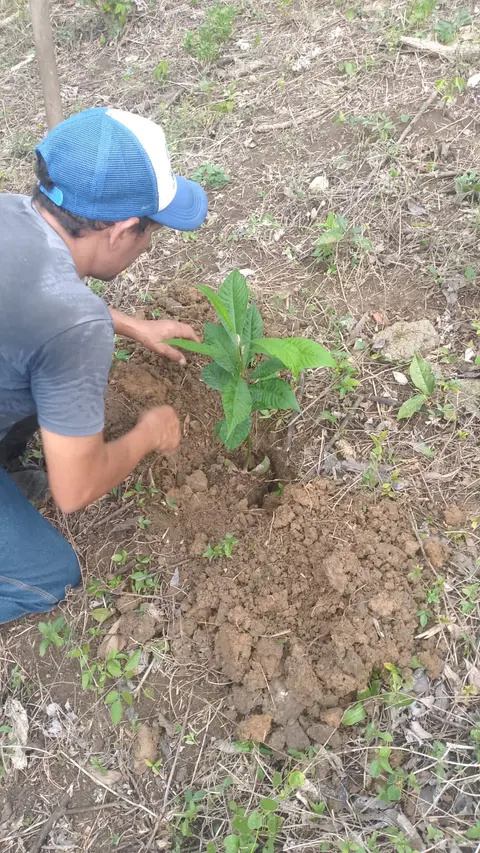
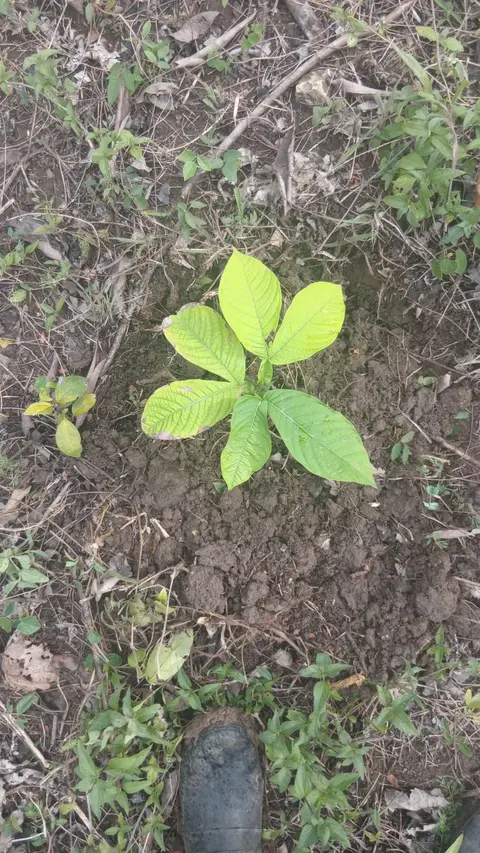
Bent over the dry, clay-heavy earth of Los Guardianes, Jender — caretaker of this corner of the reserve — opened holes one by one to receive the seedlings that had arrived that day: sapote, papaya, anón, limón, and guama. With his hands buried in the soil, unhurried, he transplanted each plant around his own home, like someone who is not only tending a territory but putting down roots in it.
The ground at Los Guardianes is hard and dry, as good tropical soil tends to be — one that holds drought close to the surface. But there were the seedlings, their leaves green and bright, some still damp from the journey, waiting for the earth to take them in. No one counted how many there were in total — those things are sometimes better measured with time, once they are already bearing fruit.
There is something particular about planting fruit trees around your own house: it is a gesture that thinks in years to come, in the shade and the harvests that you don't always live to see grow. Jender knows this, even if he never says so.
Carlos and Alberto, the Fruit, and the Forest Calendar
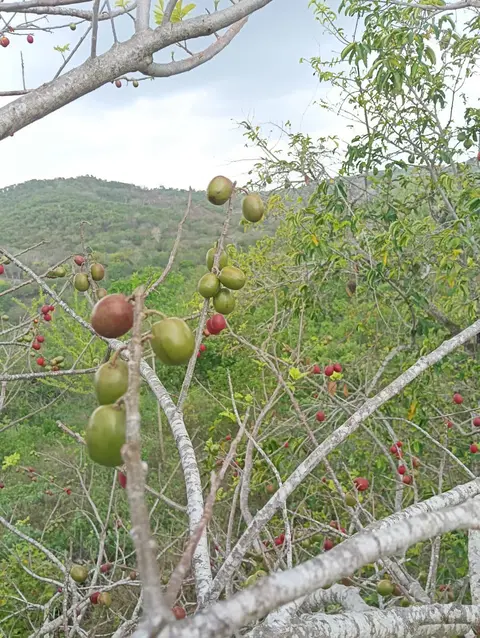
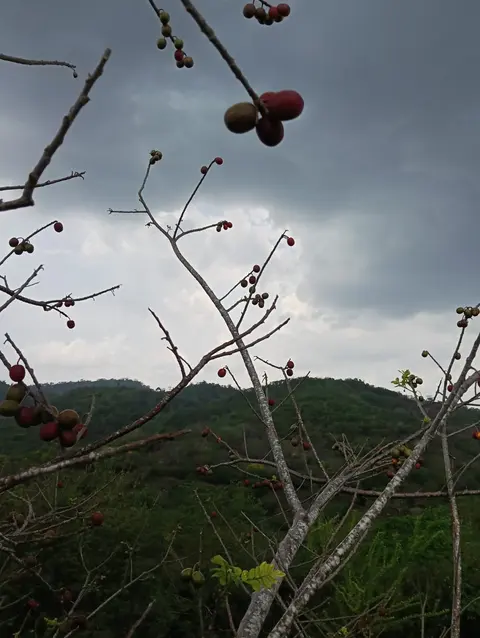
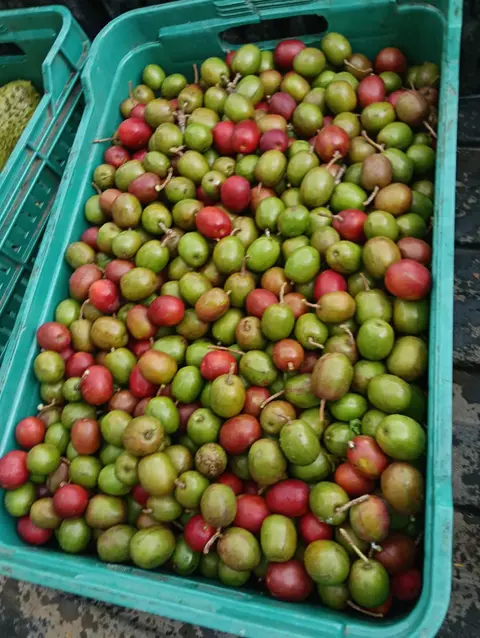
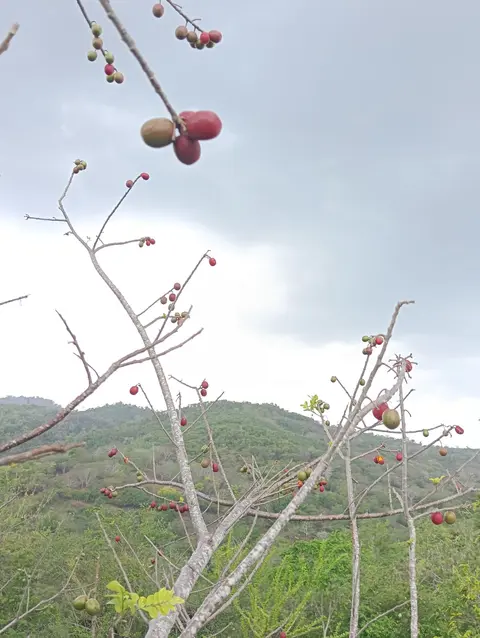
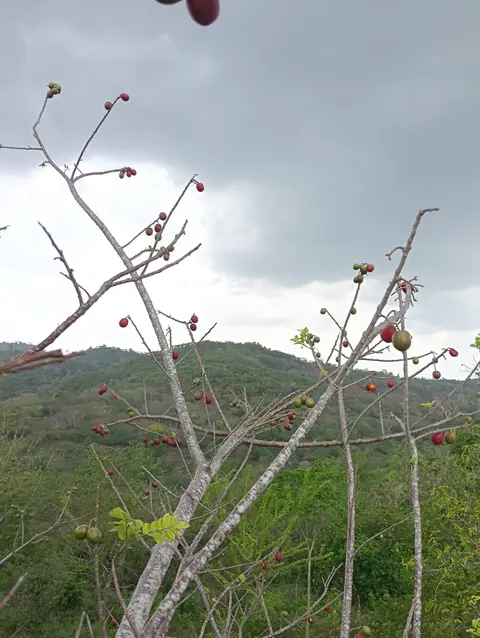
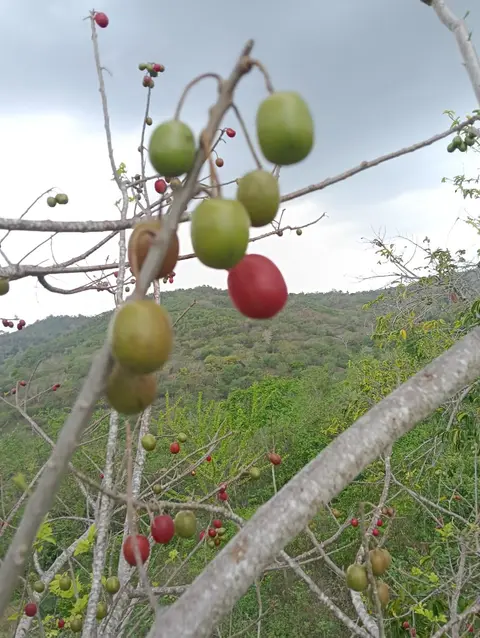
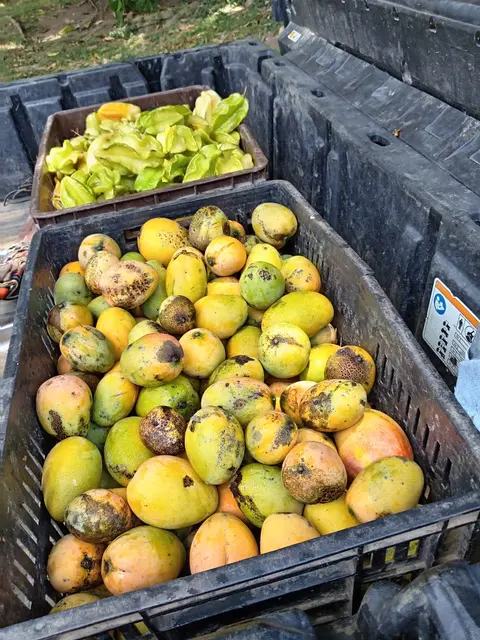
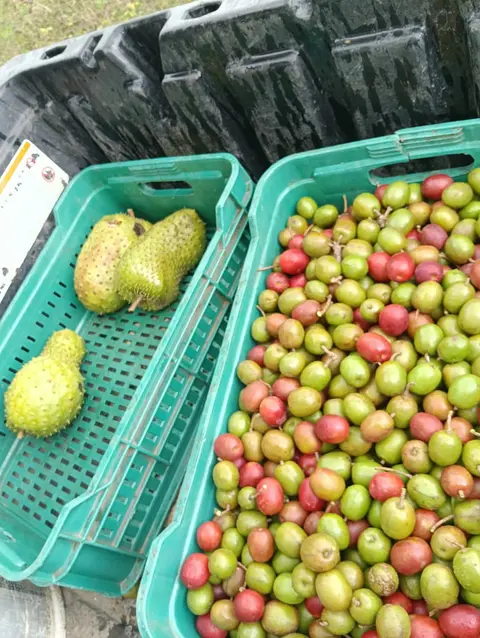
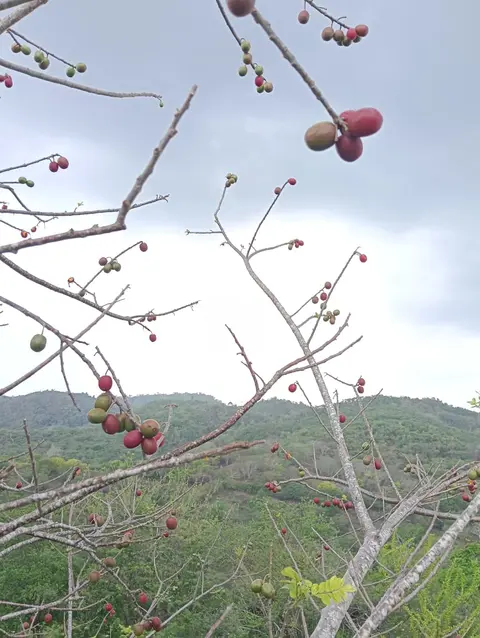
That Monday in April, Carlos and Alberto set out into the sanctuary with empty baskets and returned with three distinct flavors of the season: mangoes with green and yellow skins, ciruelas costeñas — that Spondias purpurea that shifts from fierce green to blazing red in a matter of days — and carambolas, known around these parts as torombolo or fruta estrella. The trees were heavy with fruit, their branches loaded with every stage of ripeness all at once, as if the forest couldn't quite decide whether to hold on or let go.
The harvest goes directly into the diet of the Fundación's parrots, but there is something more than fruit inside those plastic crates: there is information. Every photograph taken that day is a phenological data point, a notation in the invisible calendar that the sanctuary keeps on its own trees — when they flower, when they bear fruit, when there is abundance and when there is scarcity. To know that is, in the long run, to know when the parrots eat well.