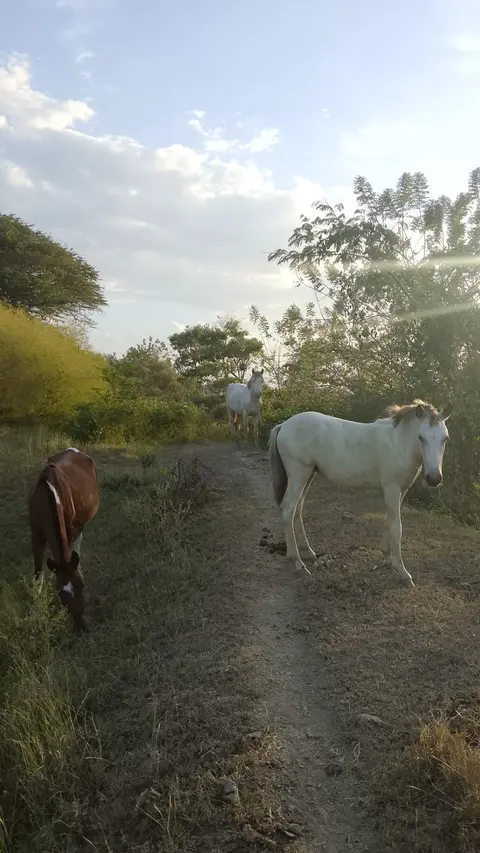
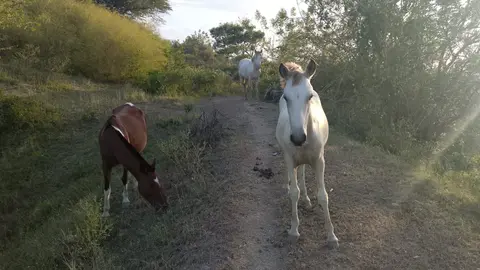
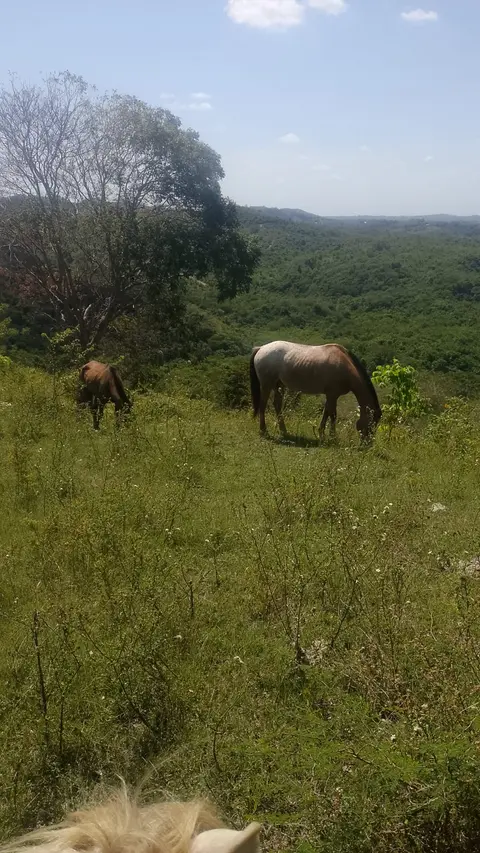
Along the trails and hillsides of Fundación Loros, seventeen horses live without a stable to confine them. At dusk you can watch them moving on their own through the vegetation — two white ones along the dirt track, a chestnut grazing at the edge of the field — as though the entire property were theirs, because in some quiet way, it is. Their names are Lucero, Mariposa, Rosita, Estrella, Bohu, Pony, Blanquito, Coroso, Zipacoa, Rambo, Albino, Don Quijote, Indio, Sombra, Canario, Palomo, and Luna, and each name carries a different story.
Among them, three are spoken of by the team with particular pride. Indio arrived from the polo fields and is now considered one of the finest horses on the grounds. Albino is the foundation's registered breeding stallion, with three of his offspring already wandering the pastures, indistinguishable from the rest. And Bohu, the eldest of them all, has been walking these hills for six years — longer than many of the volunteers who have come and gone.
During the cattle work, these horses earn their keep, and when visitors arrive from every corner of the world, it is they who carry them along the trails of the reserve. But most of the time they simply graze free on the green hillsides, beneath a sky that sometimes turns heavy with cloud and sometimes offers that golden afternoon light that makes everything look like it belongs in a painting.
Carlos Andrés Matas Contreras was making his way through the grounds of Los Guardianes when a slow movement among the branches stopped him in his tracks: a sloth was climbing unhurried through the trees, indifferent to the world and to the camera that Carlos Andrés raised with his own hands. There was only one. It took its time, as is its nature, and Carlos Andrés captured every movement with the same patience the animal itself seems to teach.
At that very spot, two motmots completed the scene. With their blazing orange chests and long, trailing tails, these birds are a familiar presence in the reserve — but to see them alongside a sloth in the same frame feels like an unexpected gift. The three of them shared the territory of Los Guardianes as though it had always been this way: unhurried, undisturbed.
Starting Over at the Top of the Oak
Omar Enrique Berdugo Cabeza was making his usual rounds at Fundación Loros when he glanced up toward the oak and noticed something that didn't quite fit: the nest of the chejas pair was empty. African bees had gotten there first, colonizing the interior with their eggs and forcing the pair to withdraw. But the story didn't end there. Days passed, the invasion was cleared, and the chejas came back. Without fanfare, without hesitation, they returned to their oak and began again from scratch — as if the lost time were simply part of what it means to build a nest.
Further down the reserve, another pair was writing its own chapter. Guacamaya B29 had set out early in search of food while her companion, B127, waited framed in the opening of the nest, taking in the stillness of the morning air. This was not the nest they had originally been assigned — that one had been lowered for restoration, and when it was returned to the oak, the pair simply refused it. They found another and made it their own, every bit as resolute as the chejas, proving that at Fundación Loros, stubbornness and life are very often the same thing.
B127 catches the breeze in the lakeside oak
From beneath the archway, Omar Enrique Berdugo Cabeza watches them in silence: there is B127, perched at the cavity of the oak beside lago 1, preening herself with unhurried calm, taking in the cool of the late afternoon. Inside, in the warm darkness of the wood, the eggs wait. Outside, the male B29 circles the surrounding trees, foraging, searching for the food he will carry back to his mate.
Reaching that oak was no simple thing. This pair lost an egg when African birds invaded their previous nest — that small egg, gone and never returned. After the intruders left, B29 and B127 came back to try to reclaim what had once been theirs, but something about that place no longer felt right to them, and they walked away from it. The wooden nest box installed for them did not work either: they excavate downward with the full force of their bills, and the wood was not thick enough to hold — they drilled clean through it, it had to be taken down and repaired, and still they refused it.
In the end, they chose the oak. A true tree, with the density and the character that these guacamayas demand. And there is B127 this afternoon, resting easily at the entrance to her nest, like someone who knows exactly where she belongs.
The Watering Hole That Holds Memory and Nests
Omar Enrique Berdugo Cabeza had set out that morning toward his work when he decided to take the long way around, following the Arroyo de los Guardianes. Before he saw anything, there was the sound: birdsong opening through the trees as if the sanctuary were waking at its own unhurried pace. Farther along, wildflowers scattered color across the path, and Omar kept walking until the trail led him where it eventually leads everyone — to the Poza de los Borrachos, that lake still carrying in its name the stories of the campesinos who used to come and cool off after a night of revelry, and of the women who arrived with their bateas balanced on their heads, worked a ball of jabón de perro into lather, and beat the clothes against the manduco until the dirt surrendered, then spread everything out to dry along the bank.
As the sun began to find the water that morning, Omar moved slowly toward some nests he had spotted among the lake's shoreline vegetation. A bird faced him at once — not attacking, but not yielding either — speaking in that language that needs no words: this nest is mine. Omar recognized in her a likeness to a tiamaría and stepped back with quiet respect. On his way back to his work, the morning's closing note was sounded by a pair of pollonetas, singing bright and easy, as if they meant to finish the day's story with music.
Springtime Overflowing in Aviary 4
That Saturday in February, the little forest of aviary 4 woke to a different kind of energy. Omar Enrique Berdugo Cabeza felt it from the very first walkthrough: the air smelled of mating season. The chejas B222 and B104 were grooming each other slowly, feather by feather, with the quiet ease that only exists between those who know each other well. A few meters away, at the feeding stations, the loros amazona B03 and B01 were mating with complete indifference to the world, and near the classroom area, three pairs of loritos were doing the same — though with considerably less tranquility: three males competing all at once for a single female, tangled in that joyful chaos the season always brings.
In the middle of all that commotion, lorito B73 decided that Omar looked suspicious. It came flying straight at him — territorial, jealous, ruffled with indignation — and pulled up just before making contact. No attack. Just a close-range warning, close enough for Omar to see, mere centimeters away, what it means to be a free bird living fully. Three species, one small forest, and a morning the keeper described without hesitation: magnificent.
B07 Came to Fill the Void
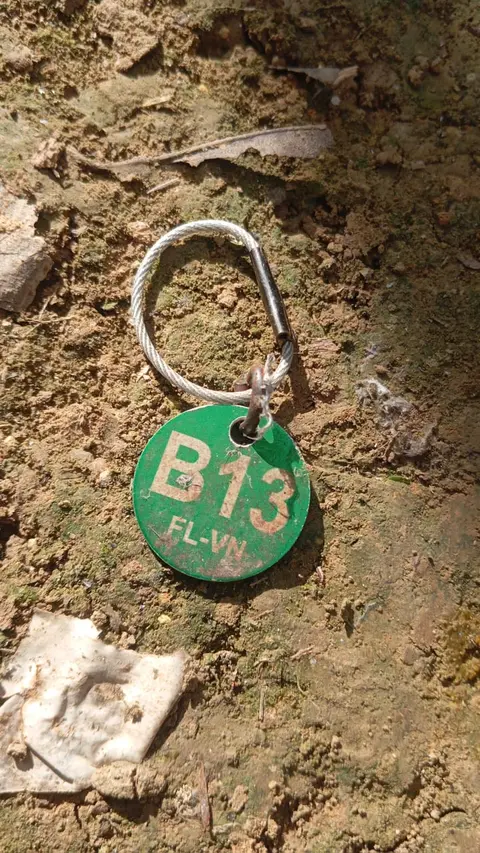
Omar Enrique Berdugo Cabeza was cleaning aviary 1 when he looked up and spotted a beak pressing against the mesh from outside. There on the ground, gleaming in solitude, lay the identification tag of B13. For weeks he had sensed something missing from the group, the parrot simply nowhere to be found, and that day he understood why. An unidentified predator had taken its life, leaving behind nothing but that small metal tag and the marks of its own pecking. He carried the weight of the discovery alone for a moment before sharing the news.
B13 had been B12's companion, and its absence left the aviary holding a different kind of silence. B11 and B12 remained together, but incomplete. Weeks later, B07 arrived — and without anyone arranging it, the three began moving through the world as a pair of three.
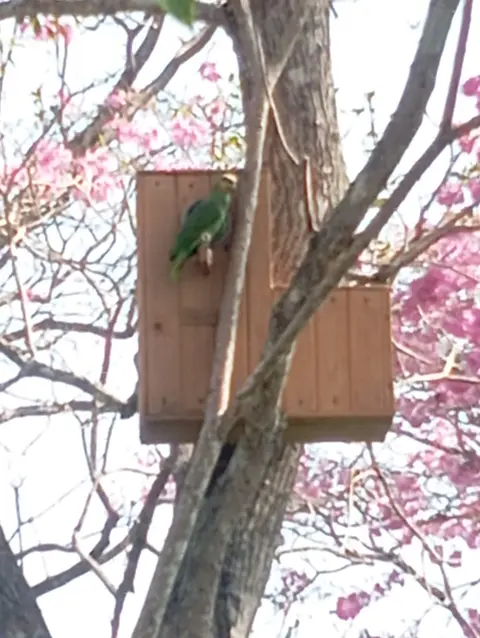
On the day of the photographic survey, B07 was perched at the entrance of a nest box mounted in a tree dressed in pink blossoms, still and upright as a sentinel. Inside, B11 and B12 rested. What Omar described so simply says everything: B07 came to fill that void.
Cold Water on Warm Feathers
The afternoon of February 28th was settling heavily over Fundación Loros when Omar Enrique Berdugo Cabeza finished his feeding rounds and noticed that the parrots in aviario 2 could no longer bear the heat. He went to fetch the hose, opened the tap, and let the cold water fall over their feathers. What followed was pure joy: the birds opened themselves to the water, sought it out, celebrated it with that unmistakable uproar that parrots reserve for the things they truly love.
Later, in aviario 4 — the one the team calls el bosquecito — a macaw had plans of her own. She swung from branch to branch, back and forth, with a rhythm so calm and unhurried that Omar couldn't help but draw the comparison: she was like a child on a swing, in no rush, with no purpose beyond the simple pleasure of movement. Sometimes the field offers up scenes like this — without warning, and without any need for explanation.
The Macaw That Waits for Omar on the Path
That morning, Omar Enrique Berdugo Cabeza was making his usual feeding rounds when he noticed he wasn't alone. Macaw B29 was trailing him from tree to tree — uvita, almendro, mango — as though his presence were simply part of the route. While the bird calmly pecked at ripe almonds, a swarm of African bees cut through the air and settled into one of the nests that parrots B11 and B12 had been exploring. Those two have never committed to a single nest: they make the rounds between three, visiting each in turn, never quite settling in any of them. That day, the nest sat empty and open, and the bees claimed it without warning.
But what stayed with Omar most was something else entirely. When he heads into town, B29 is already waiting for him — perched in a tree at the edge of the path, as if she knows he'll pass by. And when Omar returns to the Fundación, she is there again. It isn't coincidence, and it isn't hunger: it is recognition. Throughout the whole day, she followed him from enclosure to enclosure as he made his way through the feeding rounds. Omar says it plainly: when you treat birds with love, they learn who you are.
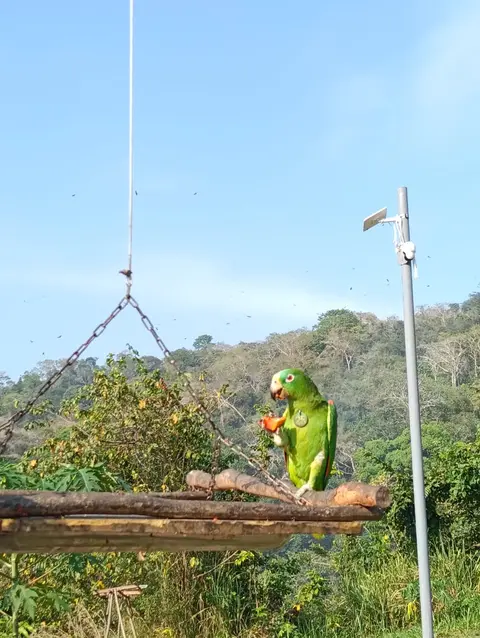
This morning, Alberto arrived early at the release site on Cerro El Peligro and found more than he had expected. Against the dense green of the hills and a blue sky already heavy with the promise of heat, he counted 17 guacamayas moving between the perches and the fruit-laden feeders, a lone cheja keeping quietly to herself among the group, and two loros reales with that plumage that catches the tropical light differently than anything else. Alejandro received the report and passed it along without delay — 14 photographs and a video holding the full record of all that activity.
But the detail that closed out the sighting came at the end, almost in passing: there was parrot number 25. In the photographs he can be seen perched on a wooden platform, his tag around his neck and a piece of fruit held in his beak, with the sanctuary's hills rolling out behind him. Twenty-five is doing well.
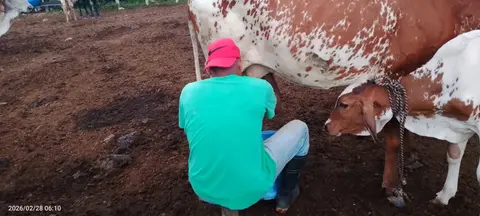
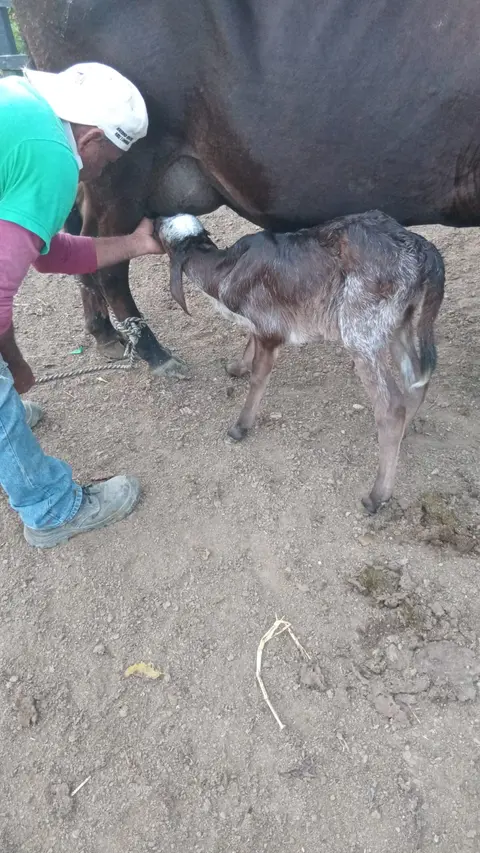
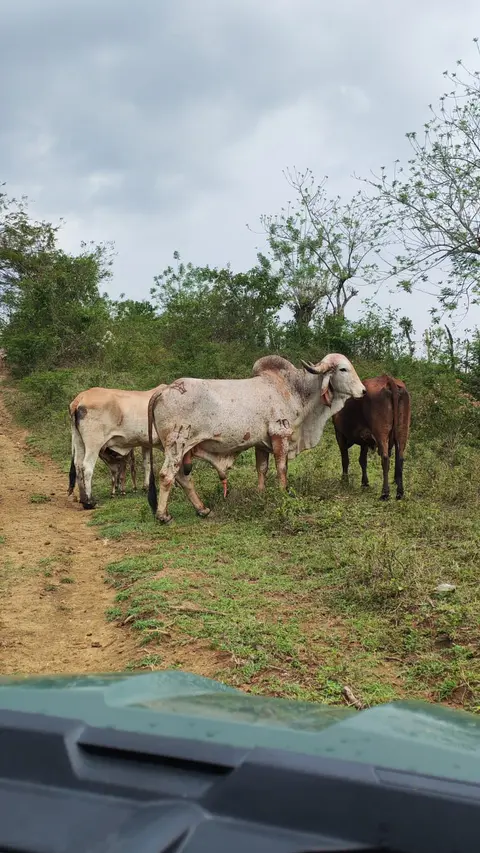
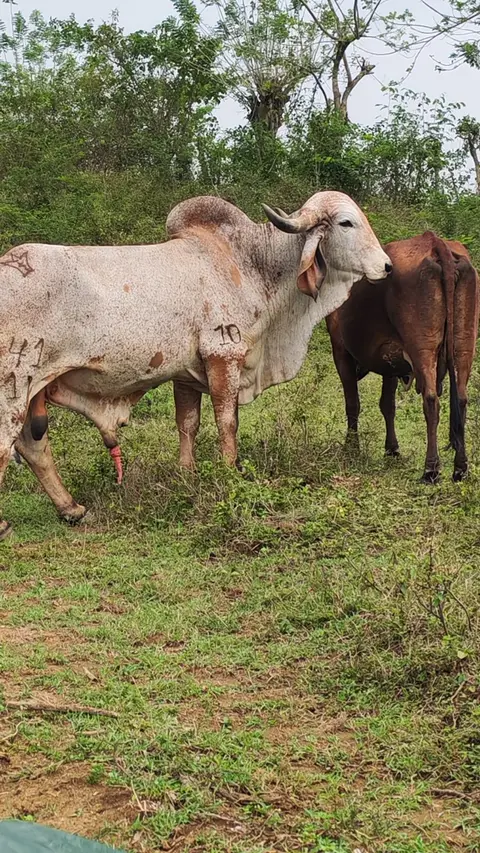
Before the day has properly broken, while mist still clings to the pastures of Fundación Loros, Eder, Jender, and Nilson are already at work. By 5:00 a.m., the three of them have begun the morning milking — a quiet, unhurried ritual repeated across all 22 cows, day after day, by hand.
The morning routine, which takes them roughly two and a half hours from first pull to last, encompasses not only the milking itself but the subsequent work of moving the herd out to the paddocks. It unfolds the way it always has, in the earthen corrals, with each calf tied close to its mother during the milking — a traditional practice that coaxes the cows to let down their milk and keeps the young ones near. It was in this setting, at 6:10 in the morning on February 28th, 2026, that the scene was captured in photographs: the soft light, the calves at their mothers' sides, the steady rhythm of hands and buckets.
The milk that leaves Fundación Loros each morning travels to a local merchant, where it is transformed into the everyday staples of the region — fresh cheese, suero — modest products that nonetheless carry within them something of the land and the early-morning labor that made them possible.
B29 in the Almond Tree by the Corner Store
In a neighborhood just a few kilometers from the Fundación Loros, amid the everyday noise of a corner store and the still green of an almond tree, the macaw B29 took the morning at her own pace. No one called her, no one invited her — she simply came down to eat, unhurried and quiet, while the familiar faces of the neighborhood watched her the way you watch someone you've always known from around the block. They don't know her name is B29, but they know who she is: the colorful bird that shows up every now and then, the one worth calling the Fundación about.
B29 does not travel alone through her story. Her companion, B127, is these days nesting back at the reserve, and while one tends the nest, the other roams the territory — turning up in other birds' almond trees, making herself seen without any fuss. By the time Omar arrived to record the sighting, B29 had already wrapped up her visit: she lifted off unhurried, heading back toward the Fundación, like someone finishing a quick errand at the market and finding their way home.
Raaa raaa raaa at Cerro Peligro
There was something in the air above Cerro Peligro that morning. Omar Enrique Berdugo Cabeza sensed it before he saw anything: a chorus of alarm calls — raaa raaa raaa — that shattered the hillside's silence with the clarity of someone who has spent years learning to read that language. Eighteen guacamayas, two chejas, and two loros were staring upward, tense, their eyes tracking something circling high above the ridge.
It was a gavilán. It moved in wide, unhurried loops, but it was not alone. Several goleros wheeled alongside it — those dark, patient birds that, as Omar has come to understand through years in the field, will drift alongside predators in the air to confuse potential prey, sowing uncertainty before the real danger arrives. An ancient, wordless strategy, and one the loros of the reserve know all too well.
The gavilán never struck. It kept circling, then drifted away. But the flock did not stand down immediately — the alarm calls said everything: at Cerro Peligro, the birds let nothing pass without giving it a name.
Betove and the Macaws That Alert the Sky
Omar Enrique Berdugo Cabeza climbed the hill early, the way those do who know that the mountain keeps its own hours. At the release point, the blue-and-yellow macaws — Ara ararauna — received him like someone familiar. But it was on the way back that the hill showed him something more: the birds were sending alert calls skyward, that ancient and urgent code that parrots use when a predator circles from above. Omar stopped to listen.
Further down, along the trail, a juvenile iguana occupied the center of the path with a gravity that felt like a message. It held still for just the right amount of time — long enough to be seen — and then vanished into the vegetation with all the speed of wild things.
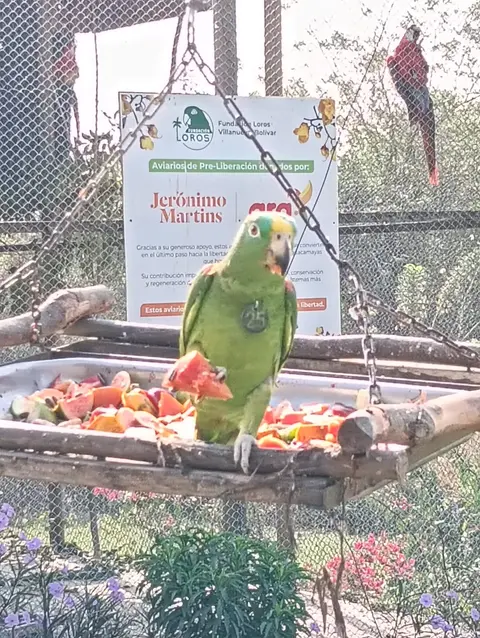
Back at the aviaries, Omar distributed the day's diet: banana, guava, papaya, bell pepper, sunflower seeds and peanuts, shared among macaws, Amazonian parrots, and real parrots alike. It was there that he found himself reunited with Betove, a loro real who lives in the aviary and who is one of the figures that made milestone number 15 of Fundación Loros possible. A parrot that already carries history.
A Brown Calf at Dusk in Don Rafa
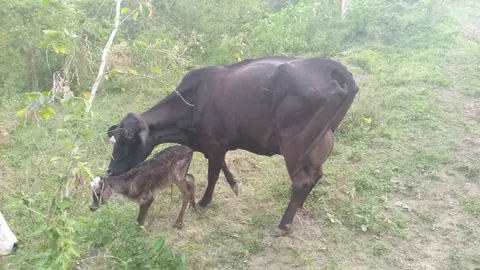
At the end of a long day in the Don Rafa sector, when Jender and Eder went out to bring the cattle in from the pasture, the late afternoon had a surprise waiting for them: a brown cow resting among the bushes, licking the back of a newborn heifer. The calf was still damp, the placenta visible on the reddish earth of the trail, while the white herd drifted calmly away down the path as though nothing extraordinary had taken place.
Since the calf couldn't stand on her own, they had to improvise: they lifted her onto a horse and carried her that way, swaying gently between their arms, all the way to the stable. Getting her to nurse was urgent — the first hours are what determine whether a newborn finds her footing or not. Nilson and his companions knew this well, and wasted no time.
Hours later, the report came back brief but enough: the calf had nursed, she had come into the world well, and she was in good shape. The brown cow, calm in the stable, was still licking her. A complete story, told without words, that Jender and Eder stumbled upon almost without looking — right at the close of the day.
Omar was running an errand at a neighbor's corner store when, glancing up, he found himself with an unexpected visitor: the macaw B29, perched in the almond tree just beside him, eating slowly and without a care in the world — as though this little corner of the neighborhood belonged to her just as much as the reserve does. Around her, the community watched with the easy familiarity of people recognizing a lifelong neighbor.
The shopkeeper doesn't know the bird by the name B29, nor does she know that her companion, B127, is at this very moment nesting at Fundación Loros. But she does know that whenever she sees the macaw fly past, it's worth picking up the phone and letting the team know. That invisible thread between the neighbors and the Fundación is what makes it possible to track these birds well beyond the boundaries of the reserve's 520 hectares.
By the time Omar finished writing up his report, B29 had spread her wings and taken flight back the way she came. Perhaps she was returning to B127, who waits for her, nestled and still. Or perhaps there were simply more almond trees left to explore.
The Ducks and the Danger Beneath the Water
There is a quiet routine that repeats itself every day beside the reserve's lake: Omar Enrique Berdugo Cabeza approaches the bank and calls out the same way he always has. The ducks recognize him instantly — they move together in that particular blend of trust and urgency that belongs to animals who already know what's coming — and draw close to feed beneath the sweltering Cartagena afternoon.
What follows is at once the most beautiful and the most tense part of it all. Once the feeding is done, the ducks wade into the lake for a drink of cool water, and something in the air shifts without any announcement. In those same dark waters live the babillas, still and patient, nearly invisible against the sky's reflection. The ducks know this, or at least they sense it: they keep close to the shallows, alert, never venturing too far from shore.
It is among the most ordinary scenes the reserve has to offer, and yet it carries that quiet tension that wild life holds when it shows itself without pretense — the beauty of the lake, the ducks unhurried and full, and beneath the surface, the reminder that out here, nature keeps its own rules.
With the first warmth of the morning and the sound of bells, eighteen macaws arrived at the feeding station. They arrived the way they always do: with commotion and color, with that green and red that seems invented. Some bathed beneath the stream of water, shaking their feathers with obvious pleasure. Others drank slowly, as though water were a serious matter. Those who had already finished their bath stretched their wings toward the sun, while the most watchful stood tall, eyes fixed on the sky, alert to any shadow that crossed too quickly.
At one point, the alarm passed among all of them without a single word spoken: some predator moved across the horizon, and the flock closed ranks, compact and silent, with that instinct that cannot be learned but must be carried within. It lasted as long as a fright lasts. Then the clamor returned.
It all unfolded in the sector where Omar, guardian of this 520-hectare reserve, dreams of erecting immense letters that would proclaim the name he has already given the place: Santuario de la Libertad. That name does not yet appear on any map, but this morning, with eighteen macaws living entirely on their own terms, it already felt completely true.
Seven Eggs Waiting in the Straw
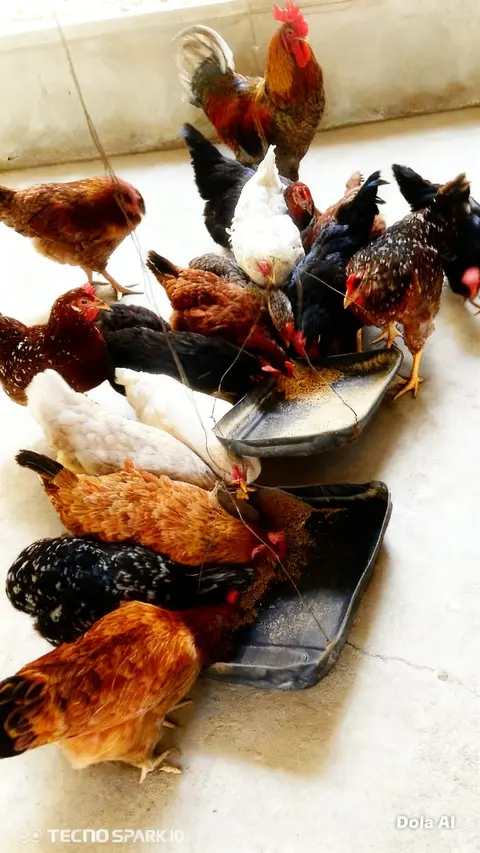
When the sun had barely grazed the roof of the corral, Lorena was already inside for the day's first round. The hens waited for her with restless energy — brown ones, white ones, black ones, and a few speckled birds that caught the earliest light as though it belonged to them. The feeders were filled and they all descended at once into that happy, chaotic pecking that laying hens seem to reserve for mornings. In the back, still and composed, the rooster kept watch without eating.
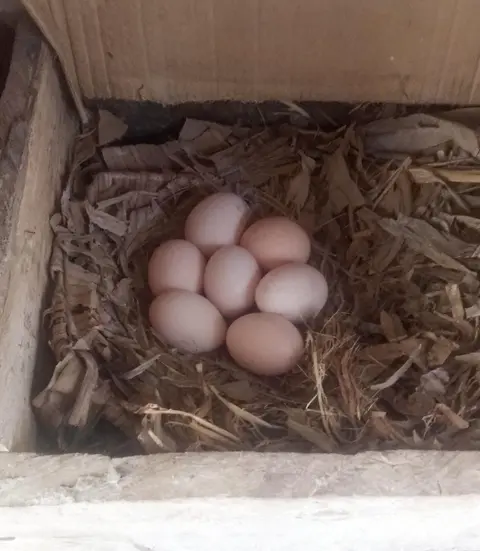
At five in the afternoon, before the heat had fully relented, the second round came. Lorena prepared the ration and leaned over the nest before serving: seven eggs in shades of beige and pale brown, nestled into dry straw inside a wooden box in the rustic henhouse. The mother hen was elsewhere, but the nest looked undisturbed, quietly sheltered. According to the day's records, in about twenty days those eggs will have something to say. For now, they rest in peace — while outside, the hens finish the day around the feeders, just as lively as they were in the morning.
Escorted by Macaws on the Way to Cerro Peligro
Omar Enrique Berdugo Cabeza set out on his ATV toward Cerro Peligro while the dawn was still cool, and the trails received him as they always do: with the rough, festive calls of the guacharacas parting the undergrowth before him. Halfway along the path, beneath a thatched-roof structure beside a tamarind tree, he was stopped by a mural he had never seen before. It had been painted by Isabella (@Isabella_GM22), and on that wall stood two sloths and a tití de cabeza blanca — that small, rare monkey that inhabits these lands — nestled among tropical leaves of a green so intense they looked freshly washed by rain.
Further on, from high in a camajorú on a neighboring farm, two guacamayas heard him pass. Omar slowed the ATV to a stop. They looked at him. They descended a little, settling into a closer bonga tree, and when he resumed his ride and called out to them, they followed. They flew from tree to tree — noisy and unhurried, trusting — as though they had spent years learning the sound of that engine and that voice. And so they accompanied him, never straying far, all the way to the foot of Cerro Peligro. There are bonds that cannot be fully explained. They can only be witnessed.
It was a sweltering afternoon at the Fundación Loros reserve when Omar Enrique Berdugo Cabeza noticed something stirring in the high branches of an oak. Two Loros Reales — that species of blazing green plumage that grows harder to find with each passing year — had emerged from their shelter to breathe the clean air of late afternoon. Unhurried, untroubled, like creatures who know their territory well.
Omar watched them from below, silent. He saw them move between the branches, stretch, draw in that February heat with the quiet ease that belongs only to those who feel truly at home. Then, as calmly as they had appeared, they went back inside. The nest in the oak was waiting.
That moment reminded Omar of why he supports the installation of artificial nests fitted with predator-proof panels: so that there may be more oaks like that one, more peaceful homecomings, more pairs who step out for a breath of air and find their refuge intact upon returning. It is the steady, patient work of field monitoring that makes it possible to know — with certainty — that the Loros Reales still nest here.
Omar Enrique Berdugo Cabeza arrived at the Fundación's grounds that afternoon with a task he knows by heart: raise the feeders and make sure the released birds have their ration. It is a routine that repeats itself, yet it carries within it the conviction that granting a bird its freedom does not mean leaving it to fend for itself alone.
It was as he lifted one of the feeders that he saw it. There stood the roble, planted in the middle of the grounds as if it had always been waiting for precisely that moment to reveal itself — covered in bloom, ablaze, stunning the surrounding green with a color Omar couldn't quite find words for, yet one that stopped him cold. The flowers of the roble — a tree native to these Colombian lands — lit up the entire park.
There are days when fieldwork mingles, without warning, with something that can only be called wonder. This was one of those days for Omar.
The Little Owl That Arrived from a School Courtyard
On February 25th, a schoolteacher found something unexpected in his school's courtyard: a fledgling mochuelo wrapped in grayish down, more skin than feathers, staring out at the world with that exaggerated seriousness owls seem to carry from the moment they are born. Without hesitation, he gathered the small creature and brought it to Fundación Loros, where Carlos Andrés received it with the quiet steadiness of someone who knows the wild well. He read the situation quickly: stepped outside, caught two lizards — lobitos, as they're called here along the coast — and the little owl swallowed them without a second thought. "It's doing fine," Carlos said. It was a good sign.
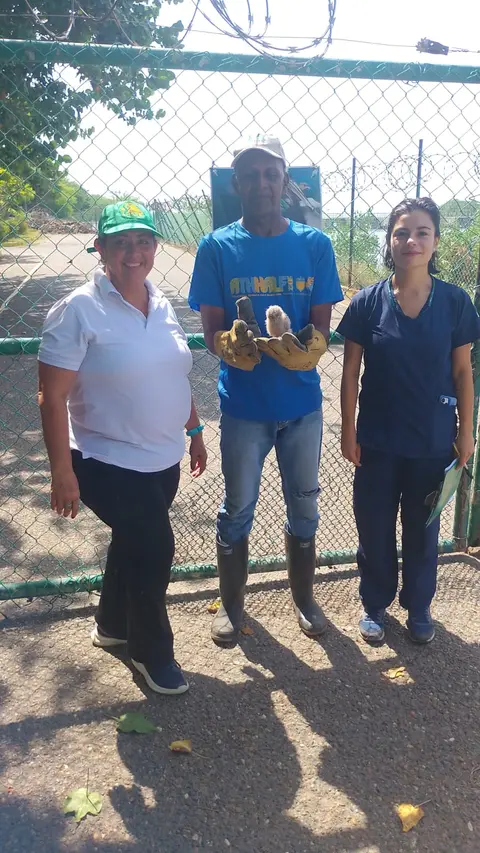
From Fundación Loros, Alejandro coordinated with Marcela Villadiego of EPA Cartagena to arrange the transfer to the Centro de Atención y Valoración, where the mochuelo would receive specialized care. On February 27th, Angélica closed the loop and carried it there herself. In the photograph taken at the handoff, Carlos Andrés holds the bird with gloves, flanked by two others — one of them in a navy blue veterinary uniform — standing before a wire fence. The little owl may belong to the species Megascops choliba, the tropical screech owl, though the identification has yet to be confirmed.
The story began without explanation, as so many things in the field do. But there was a teacher who knew to pick it up.
Six Titis and a Turtle at Lago 2
At nine in the morning, when the dry forest of the Lago 2 sector still held something of the night's coolness, Carlos Andrés Matas Contr raised his eyes and found what few days offer so freely, all at once: six titíes cabeza blanca moving through the canopy — those small, boisterous primates with their white-and-cinnamon fur, among the most endangered on the planet. One of them had settled onto the wooden platform wedged between the branches and was eating banana with the unhurried focus of an animal that knows no one is coming for it.
Lower down, at that same spot, a turtle completed the scene without any rush, indifferent to the commotion above. Carlos Andrés managed to take two photos and two videos before the titis dissolved once more into the gnarled branches of the forest. In one of the images, a second primate is just barely visible in the background, nearly lost in the shadow of the trees.
Lago 2 has been offering good sightings for weeks now, but rarely do two such different species share the frame at the same moment. This morning, they did.
Five in the Morning with Eder, Jender, and Nilson
While darkness still drapes the reserve and the birds have barely begun to stir, Eder, Jender, and Nilson are already on their feet. At five in the morning on February 27th, the three of them set to milking the cattle — that silent, cold ritual that sets the rhythm of the days at Fundación Loros.
Once the milking was done, the milk made its way to the farm gate, waiting for the buyer to come and collect it. Meanwhile, one of the crew took charge of leading the herd out to graze, dividing up the tasks with that quiet precision that can only be learned through time and trust between a team.
This is the routine that sustains the cattle operation on the reserve today: shared labor, a shared dawn, and three men who know every animal and every step of the trade by heart.
The foundation sustains a cattle operation that provides vital financial support for its work — a herd of 22 producing cows, milked by hand each morning beginning at five o'clock, yielding an average of four litres per animal. After the milking, the cattle are led out to pasture. The milk finds its way to market through two channels: a steady buyer who comes regularly, and direct sales to the general public, when people make their way out from town to purchase in small quantities — though this latter trade does not happen every day.
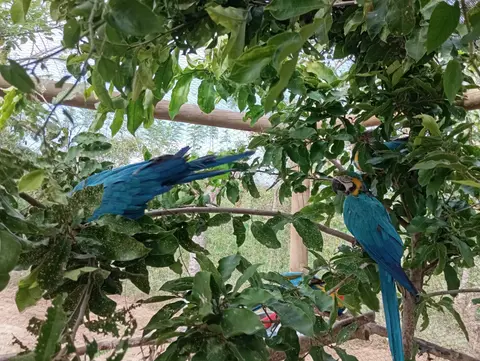
Enrique visited the aviary at Cerro El Peligro, where he documented the behavior of several blue-and-yellow macaws (*Ara ararauna*) in an enclosure enriched with branches, leaves, and fruits such as green mango. As he made his way through, he watched three macaws sharing a meal together — a quiet moment that shifted when two of them drifted apart, and one took center stage in an unhurried courtship display. It was a tender scene: two birds that had once been rivals in the wild, reunited after their release and now finding their way to each other as mates.
The experience stirred something in Enrique. By the time he left, he had made a quiet promise to himself — to plant fruit trees as his own small contribution to the conservation of these birds and the natural world they belong to.
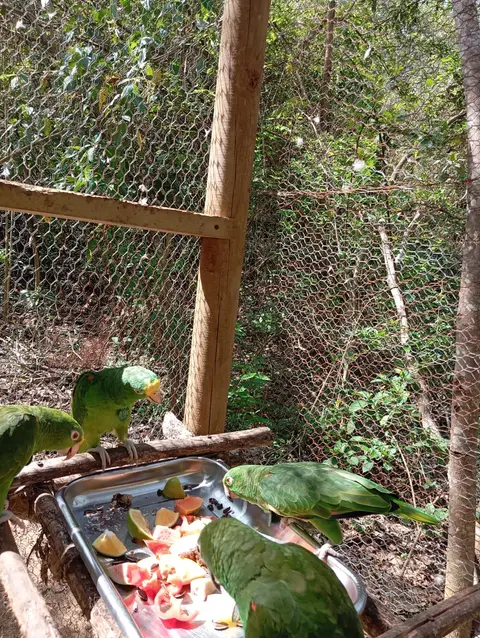
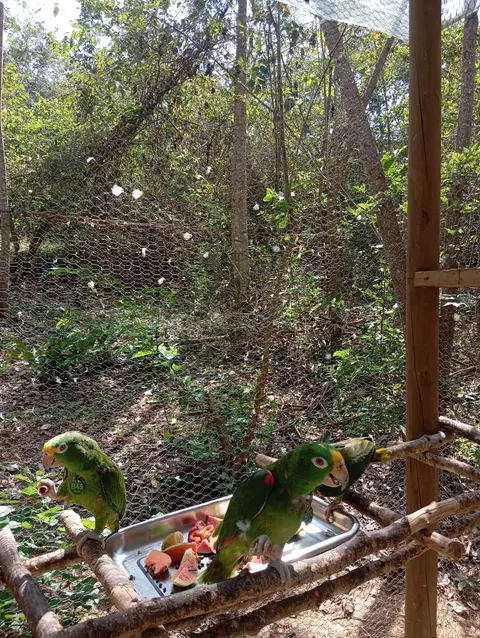
Omar Enrique Berdugo Cabeza arrived from Cerro el Peligro with the weariness of the trail still heavy in his boots, but what awaited him at the foundation left him no time even to catch his breath. Before he had quite made it through the entrance, the air was already alive with wingbeats and voices: guacamayas, chejas, pionus cabeciazul, and loros de frente roja — all at once, all rushing toward him, as though they had been counting the minutes since he'd been gone.
There were no introductions. Each bird recognized him on the spot, and each one wanted to be first: first to come close, first to receive food, first to tell him in its own way that they had missed him. Amid the commotion of colors and feathers, Omar shared attention and nourishment among them all, unable to hide what he was feeling.
From all of it, Omar was left with one certainty — simple and deep: animals always know who has treated them well. It doesn't matter how much time has passed, or how many hills you've crossed in between. They hold onto that. And at just the right moment, they give it back to you, with everything they have.
Field echoes
Event: October 8, 2025
Garfio, the One-Eyed Parrot Who Lost Ruby
In the rehabilitation area of Fundación Loros, where the birds that once shared a roof with humans make their home, there lives a Mealy Amazon — Amazona farinosa — the largest parrot in Colombia — whom everyone calls Garfio. His original name was Scar, but someone decided that nickname didn't do his story justice, and Garfio fit him like a glove: his left eye is damaged, and with the right one he watches the world with a mixture of pride and loneliness that doesn't go unnoticed.
Those who were there tell the story — Garfio wanted what people these days call an open relationship, and he made the mistake of setting his sights on Ruby, Paco's chosen mate. Paco was neither the largest nor the loudest parrot in the group, but he was the most respected: one of those who never needs to raise his voice because his presence alone says everything. The fight was short and decisive. Garfio came out defeated, one eye lighter and with a lesson that no parrot in the group would soon forget.
Since then, Garfio lives alone. Not because the females shun him for his missing eye — as the people around here like to say, love is blind, or at least one-eyed — but because it's hard to trust someone who goes against his own nature just for the sake of ego. Meanwhile, Paco and Ruby remain together, and Garfio calls out "lorito" to them from a distance, waiting perhaps for a rematch that no one is ever going to give him.
In December 2023, renowned free-flight trainer Chris Biro arrived at the sanctuary and was immediately drawn to her: macaw number 2, an Ara who approached humans with an uncommon, almost unsettling ease. Two years later, on December 9th, 2025, that same bird lifted into the air alongside twenty other macaws from the loros.org release site, just a few kilometers from Cartagena, and dissolved into the deep green of the forest.
On February 10th, 2026, the team returned to the site — and there she was: number 2, drinking water alongside three other macaws, an entire flock visible in the surrounding trees. She didn't come closer. She didn't seek out familiar hands or familiar faces. That indifference — so hard-won, so deliberate — was the best news of the day.
The one Biro had once described as exceptionally friendly toward humans had grown, with time and with the jungle, a little wilder, a little freer. Faithful to her territory, companioned and alive: number 2 has found her place.
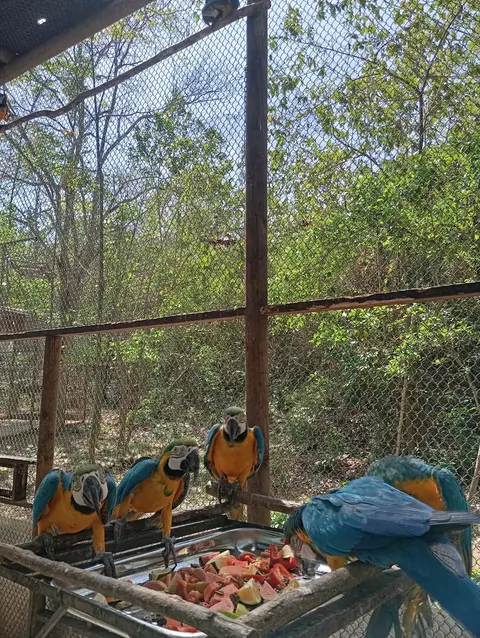
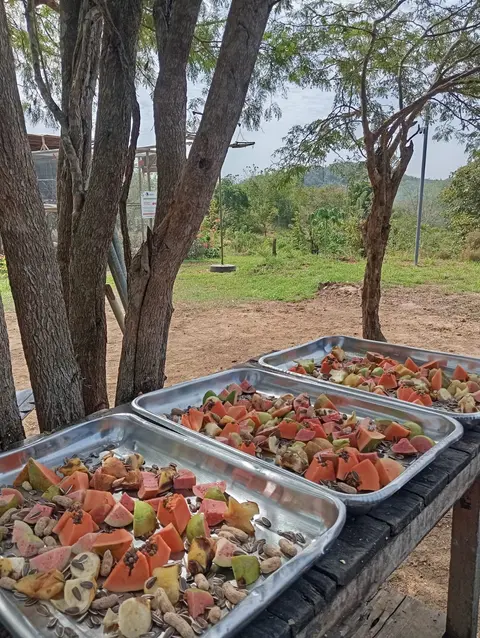
That Thursday, Omar Enrique Berdugo Cabeza arrived at the reserve with his hands full and the whole day ahead of him. He prepared the trays with care: papaya, watermelon, guava, sunflower seeds, and peanuts, all laid out beneath the sticky heat of the Colombian Caribbean. The blue-and-yellow macaws — Ara ararauna — arrived exhausted, as if the midday sun had demanded its toll for every mile of flight. Omar set out fresh water for them, and just like that, the tree found its voice again.
After they ate, something made him stop: five pairs mating among the branches. In this species, that kind of behavior signals that the bonds are serious — that the reserve will need to answer with nesting sites. He filed it away in his mind, then went to gather wild plums from the surrounding area to bring to the birds still working through rehabilitation, so that little by little, they might learn to recognize the flavors the forest has been saving for them.
As the afternoon wound down, four or five macaws rested in the shade of the branches, preening themselves slowly, indifferent to the heat. Omar watched them from below. He had spent the day being a chef, a biologist, and a neighbor to birds that still don't know he thinks about them even when they're gone.
That Thursday, with the sun bearing down hard over Cerro El Peligro, Omar Enrique Berdugo Cabeza was going about his work — cleaning the cages at the macaw release station — when something made him stop. In a damp corner where water dripped onto the earth, a wild turtle had found her refuge from the heat.
Omar watched her slowly. He noticed the animal was still, seeking coolness in that small patch of wet ground. Without much deliberation, he brought her water and a slice of papaya. The turtle accepted, at her own pace, the way they do. Then, when she was ready, she made her way back into the forest, disappearing into the vegetation with that calm that only belongs to those who know their path well.
It was one of those sightings that weren't in the day's plan but make the hours richer for having happened. Omar recorded it on video: proof that at Fundación Loros, even on the hottest of afternoons, the forest always has something to show.
Omar Enrique Berdugo Cabeza had been standing still for a while at the release point on the El Paraíso farm, near the Arroyo area, when he saw them coming. Two titís — the same pair released back in July of 2025 — were returning from the forest, healthy and carrying that calm ease that belongs to animals who already know where home is. Omar turned on his camera just in time to capture everything.
In the months since their release, this pair has navigated tigrillos and other predators that prowl through the riparian vegetation along the Arroyo. No one guides them. No one watches over them up close. They learn on their own — making mistakes, correcting course — the way any creature does when it truly belongs to a place. That they came back that day, whole, is proof that something is working.
Omar says the moment left him with a lesson. He didn't put it into many words, and perhaps he didn't need to: sometimes two small primates walking back on their own terms say more than any report ever could.
For months, we had heard nothing of Loreta. The last time we saw her, she spread her wings toward a tall jobo tree and never looked back. Perhaps she went looking for Lorenzo. Perhaps she was simply ready. Loreta is number 14 — an Amazona amazonica who arrived at Fundación Loros after spending her entire childhood in a cage in Cartagena: she didn't know how to fly, and when she finally learned, she didn't want to. That kind of story makes reintegration slower, more uncertain. So when she left, we were left standing there, hope clenched tight in our hands.
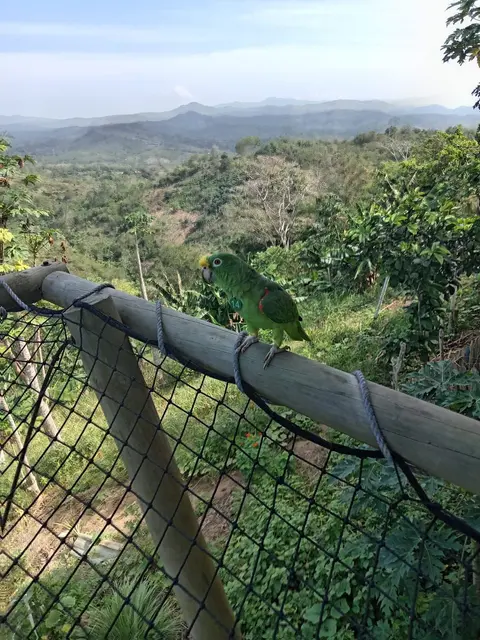
On February 20th, 2026, she appeared perched on the wooden fence — her tag still hanging, and the mountains of Villanueva rising behind her, green upon green. Free and whole. Her feathers carried the same flashes of yellow and red as always, but something about her was different: she was no longer the parrot who hesitated.
This return cannot be understood without the neighbors of Villanueva — those who plant papayas, cerezos, mangos, and jobos, and who share their days comfortably with the loros that pass through their branches. It is they who sustain, without fully knowing it, the world that Loreta chose to belong to.
Field echoes
Event: February 24, 2026
La guacamaya que eligió quedarse
This morning, near casa Paraíso, Corina Leonor came across a blue-and-yellow macaw (*Ara ararauna*) wholly absorbed in one of her favorite pleasures: biting into and savoring green guavas, one by one, with that solemn concentration that parrots reserve only for the things they truly love. She was alone — though "alone" may not be quite the right word for an individual who has chosen this corner of the reserve as her place in the world.
She has no name yet, but the team recognizes her without needing one. She is the macaw who prefers to stay close to the house, the one who doesn't disappear into the forest the way the others do. And there is a concrete reason for that attachment: she and her mate have claimed one of the artificial nest boxes the foundation built beside the main house, settling into it as though it had always been theirs.
For those of us who follow the release program, that detail means more than any data point. A released macaw that chooses a nest box, finds a mate, and stays — that is not chance. That is the process working.
At Cerro el Peligro, Omar began the morning as he always does: with the sound of a bell. That simple toll, repeated each day from the release point, has become a secret code between the humans and the sky. And the sky answered: eighteen *Ara ararauna* macaws descended through the vegetation, their blue and yellow wings set ablaze by the bright morning sun, and settled onto the hanging feeders as if the world were exactly the size it ought to be.
These are not wild birds that happened to pass through. They are macaws released by the Fundación, still learning, little by little, what it means to be wild again — with a safety net still stretched beneath their wings. The metal aviary among the flowering shrubs is not a cage — it is a base of operations, the last mooring line before the forest claims them entirely. Each visit to the feeder is one more step in what the team calls reintegration, and what out in the field simply looks like eighteen pairs of wings arriving for breakfast.
A teacher found it alone in his school's courtyard — a fledgling mochuelo swathed in grayish down, more bare skin than feathers, regarding the world with that exaggerated solemnity owls seem to be born with. Without a moment's hesitation, he scooped it up and carried it to the doors of Fundación Loros, where Carlos Andrés received it with the quiet ease of someone who knows the wild well.
Carlos read the situation quickly. He stepped out, caught two lizards — lobitos, as they call them here on the coast — and the little owl swallowed them without ceremony. "He's doing fine," said Carlos, with the calm certainty that comes from living alongside animals every day. It was a good sign.
From the sanctuary, Alejandro reached out to Marcela Villadiego at EPA Cartagena to coordinate the transfer to the CAV — Centro de Atención y Valoración — where the mochuelo will receive specialized care. This small owl's story began beneath a ceiba tree, alone and without explanation, the way so many things begin out in the countryside. But there was a teacher who knew to pick it up.
Voces entre los cultivadores nuevos
On the afternoon of February 25th, José Marín was making his way through the area of the new cultivadores when the forest handed him back an unexpected reply: bird voices. Among the sounds he recognized were the tangaras azuladas, with that clean, metallic whistle they carry, and the guacharacas, who never stay quiet for long. It wasn't the silence of disturbed land — it was a sector that had already begun to speak.
That the birds should be in that zone carries real weight. The new cultivadores represent a recent shift in the landscape, and the presence of vocal fauna — even when registered only by the ear — signals that something there suits them. The tangaras azuladas seek out fruit and foliage; the guacharacas move where there is cover and calm. José reported nothing extraordinary, no behavior out of the ordinary, but sometimes the simplest piece of data is the most important: the animals are there.
At the Vista Hermosa farm, Nilson doesn't need many words. He knows when the land is speaking and when it's time to listen. This time he approached with the calm of someone who knows every inch of the terrain and delivered his news: the apple bananas were ready to harvest.
Those small, sweet guineos that grow with a particular generosity in Vista Hermosa had reached their perfect moment. Nilson knows them well — he reads the color they take on, feels the weight they leave in his hands when he holds them. No need to wait any longer, he said, and the team trusted him on that.
This is how many days unfold at the reserve: not always with grand gestures, but guided by the accumulated wisdom of those who work the land up close. Nilson's word was enough for the harvest of these small bananos to follow its natural course.
This morning, Omar headed out alone to the release sanctuary to carry out his feeding rounds, as he had done so many times before. But something in the air was different. Unhurried, with no company but the sound of the forest shaking off its sleep, he felt the reserve speaking to him in a different way — that quiet manner in which nature lets itself be seen when you are not chasing it too eagerly.
That was when the goleros appeared. They flew together in that measured dance of theirs, riding the same air currents as if they had reached an agreement without the need for words. Omar watched them for a long while. In that close flight, in that trust between them, he found something that stirred him: a living image of what it means to stay together, of what a family that looks after one another can do.
There was nothing unusual to report, no incident to record. Just a man, some birds, and that still moment when the land reminds you, without saying a word, that there is beauty in the simplest of things.
Field echoes
Event: February 24, 2026
El amor interrumpe el tour
On the 25th of February, right in the middle of a guided walk with Corina Leonor, the reserve decided to put on its own show without any warning: a pair of animals caught in the middle of a courtship — or something beyond courtship — before the wide-eyed astonishment of the group. The visitors had come to see the reserve, and they ended up seeing rather more than they'd bargained for.
Corina says that none of them had ever witnessed anything quite like it before. There was laughter — how could there not be — but also that blend of genuine wonder that only the field can offer when it behaves like the field: no script, no schedule, no sense of shame. The chronicle remains incomplete without the names of the four-legged protagonists, but the scene, she says, spoke entirely for itself.
These are the visits that people remember. Not the ones that go perfectly according to plan, but the ones that suddenly veer off toward something alive, unexpected, a little awkward, and completely real. Fundación Loros, 520 hectares where nature doesn't wait for the tour to be over.
Jamaica fría y coco bajado del árbol
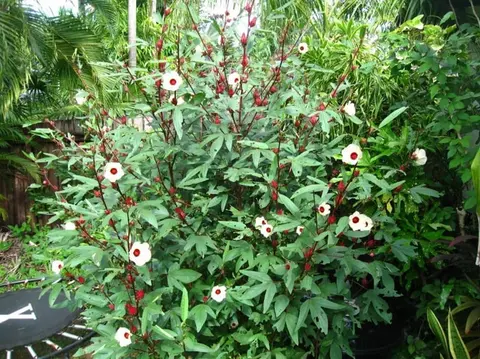
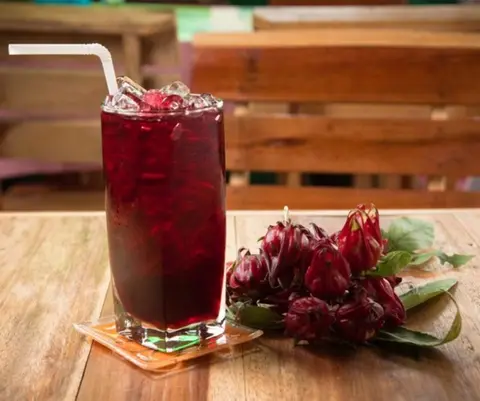
On the afternoon of February 25th, with the heat bearing down the way it always does in these lands near Cartagena, Angélica Cecilia Mármol arrived at the sanctuary with her hands full of freshly cut Jamaica flowers. Those deep crimson blossoms — almost incandescent — that grow quietly in the Fundación's gardens, and that on this particular day were transformed into a cold drink, slightly tart, the color of a summer sunset.
There were no intermediaries between the earth and the glass: the harvesting, the preparation, and the serving all came from the same hands that know every corner of the sanctuary. And as if that weren't enough, at the end of the walk through the 520 hectares, visitors found the reward that no one turns down under this sun — fresh cold coconut water, brought straight down from the farm's own cocoteros, with no further processing than thirst and a machete.
There is something in that gesture — offering what the land itself produces, without embellishment — that says more about what Fundación Loros truly is than any brochure ever could. The sanctuary is not only something you walk through. Every now and then, it is also something you drink.
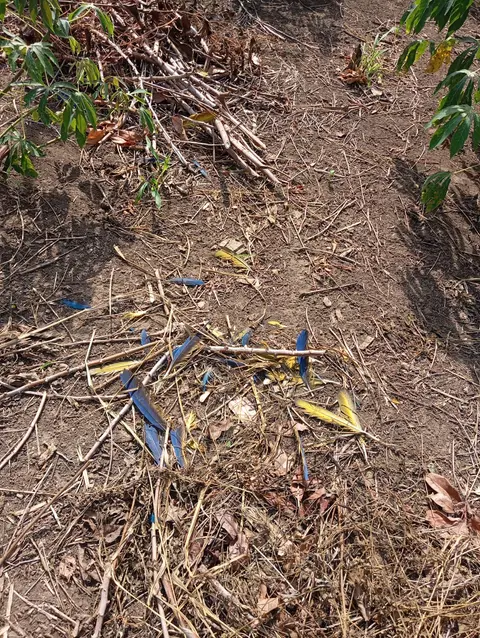
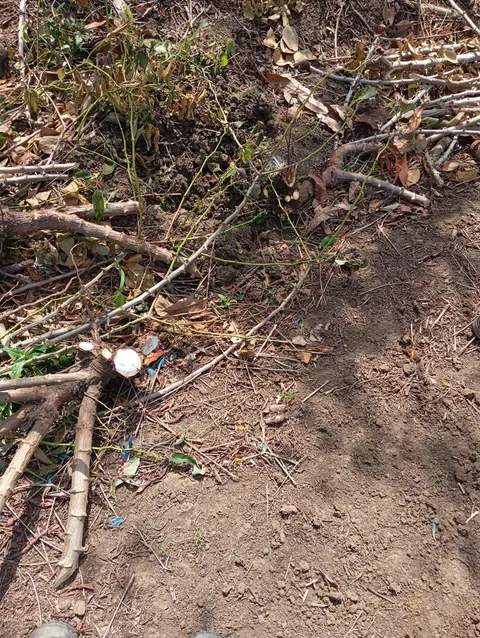
It was Omar who first noticed it: yuca stalks cut down across several sectors of the reserve, and what appeared to be viscera left scattered among the vegetation. Alejandro received the report and headed out to investigate. In the field, a neighboring farmer — Yego — approached in good faith to explain that he himself had been moving through the area, and wanted them to know, so no suspicion would fall on him. His warning arrived just in time to begin piecing the puzzle together.
The question that lingered in the air was who — or what — was behind the damage. The clues point in several directions: it could be a tigrillo, a hawk, or one of the owls that frequent those sectors. Nothing ruled out just yet.
The survey yielded two concrete conclusions: a small caretaker's shelter is needed in that area, along with a guard dog to deter predators. And metal sheeting must be fitted to the trees and enclosures, to make access more difficult. The reserve now has new eyes thanks to neighbors like Yego — but it also needs defenses of its own.