Two Colors Planted at the Water's Edge
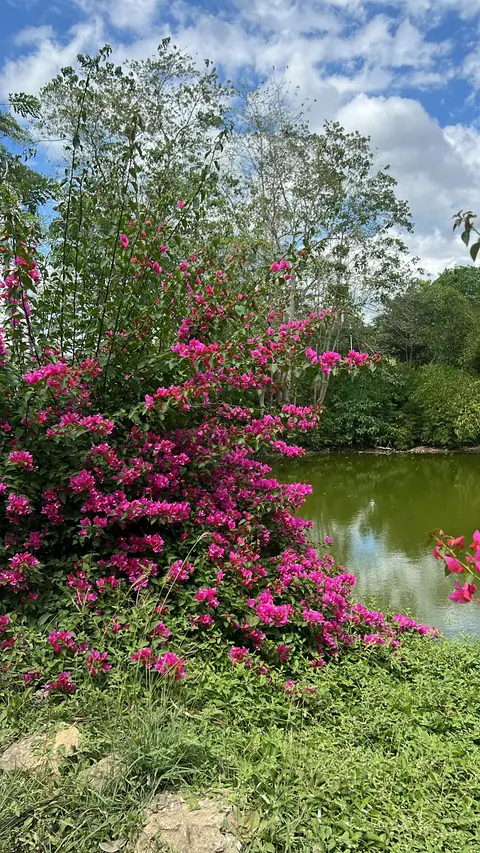
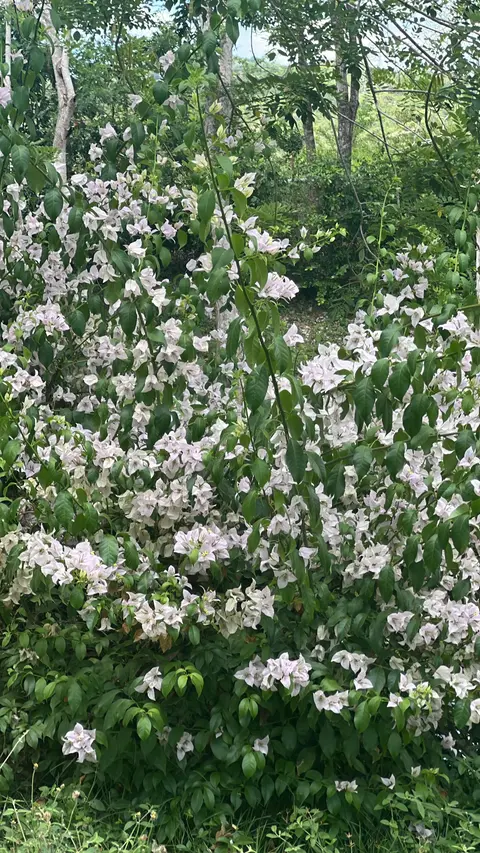
In a corner of the sanctuary where the dirt path dissolves into tropical vegetation, Michel Salas came upon something that was not entirely wild: two bougainvilleas, planted, still and blazing in full bloom. The first, with its fuchsia-pink bracts, grows at the edge of a pond of greenish water — so striking it looks as though it has caught fire against the Caribbean blue sky. The second, creamy white, emerges more quietly among the slender trunks of a shaded path, as if it preferred the silence.
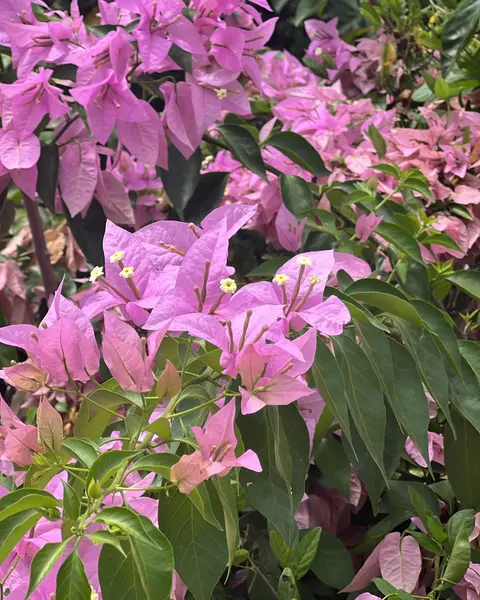
What Michel photographed are not flowers in the strict sense: they are bracts — modified leaves laden with anthocyanins, the same pigments that stain blackberries and eggplants deep and dark. Tucked in the center of each cluster of bracts, almost hidden, small tubular white-yellow flowers do bloom. The color one sees — that fuchsia that stops you mid-step — depends on the light, the pH of the soil, and the health of the plant itself.
Both are species introduced to Colombia, cultivated by human hands from *Bougainvillea glabra* and *Bougainvillea spectabilis*, native to South America yet foreign to these soils of the Colombian Caribbean. Someone brought them, someone planted them, and here they remain — inhabiting the sanctuary with a beauty that never asked permission to stay.