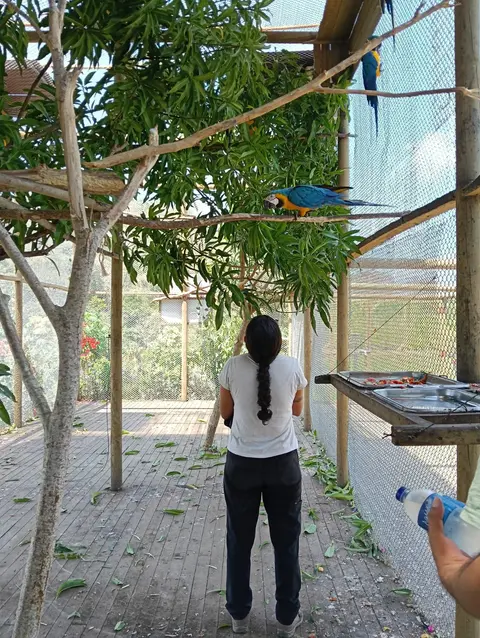
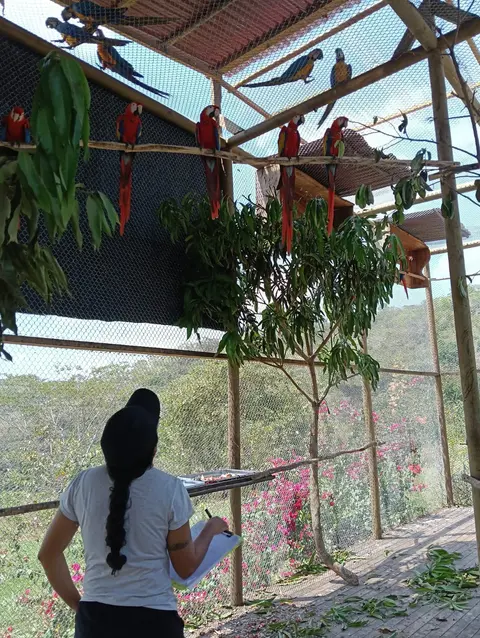
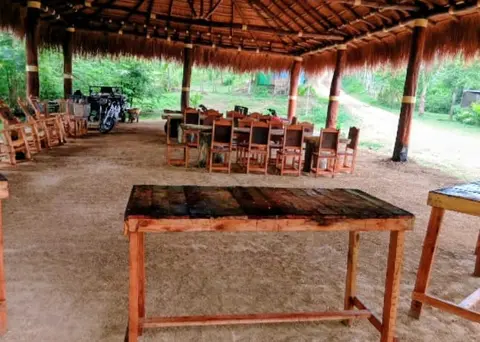
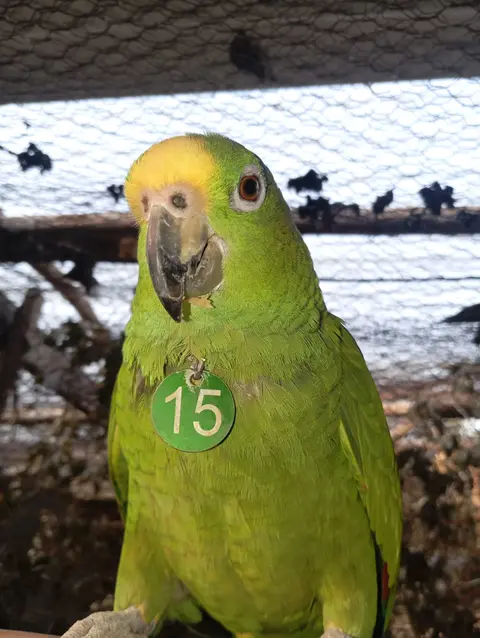
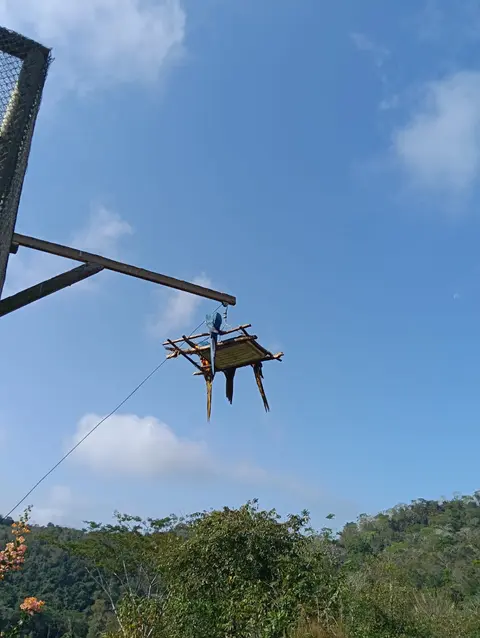
In aviary 2 of the El Paraíso sector, Alejandro switched on the camera at feeding time and found exactly what the team has been searching for these past weeks: four parrots — Beethoven, number 12, number 19, and B92 — sharing the feeder without disputes, without tension, with that quiet ease that only exists between those who already know each other well. Beethoven, number 15, was right there in the center of it all, as though there were nothing more natural in the world.
This is no small detail. At Fundación Loros, documenting who eats with whom is part of the painstaking work that comes before any release: affinity groups — those bonds that the animals build on their own terms, in their own time — are the compass that guides the team when deciding who will fly together into the wild. Beethoven and his three companions have just left a very clear trail.
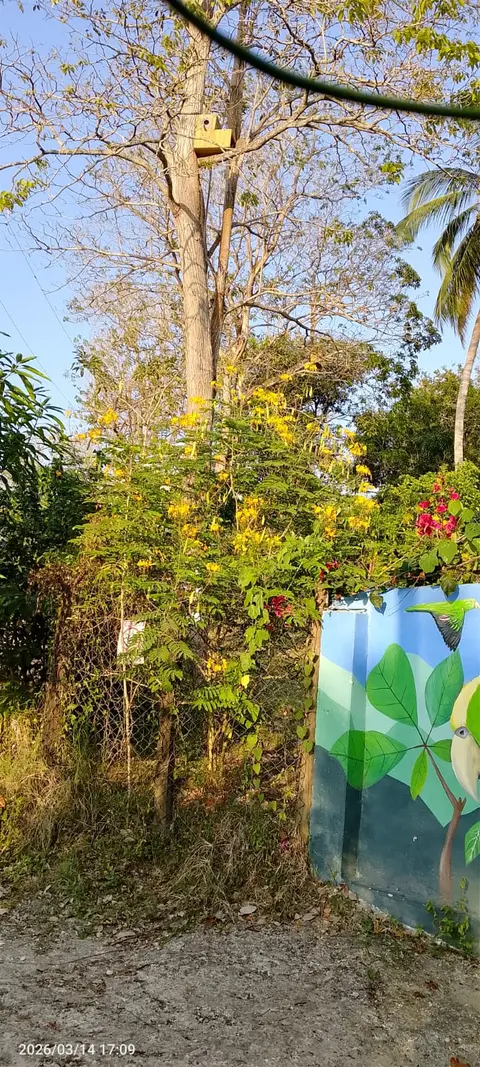
The clavellino that announced the afternoon in Vista Hermosa
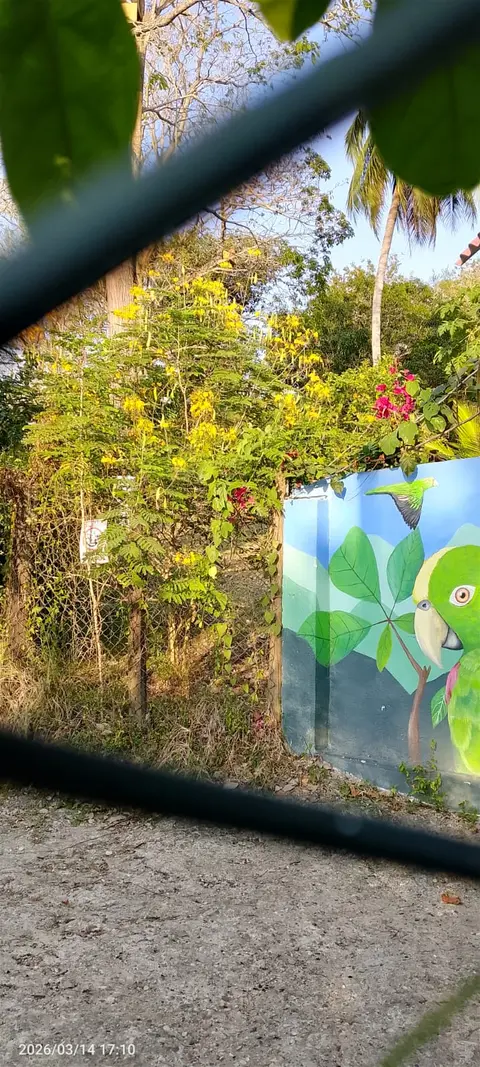
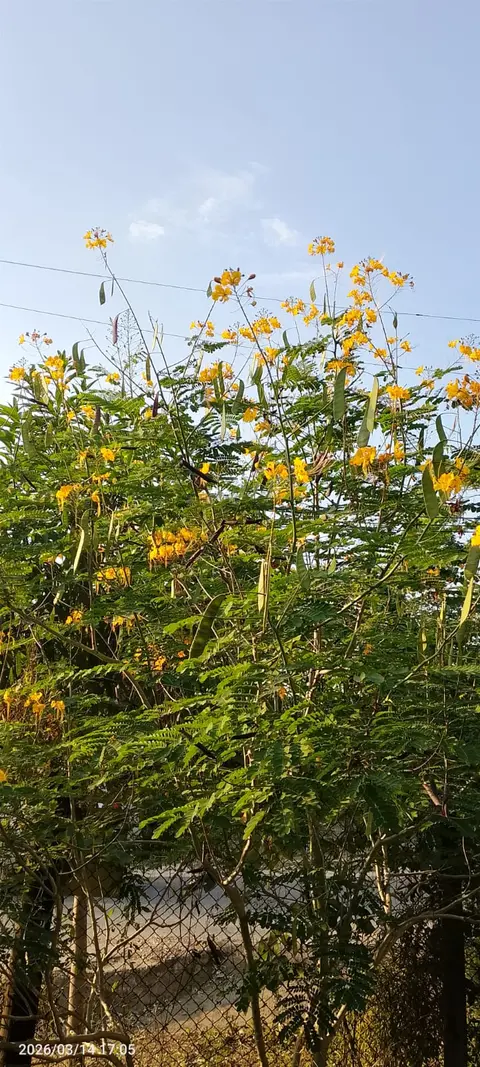
It was Nilson who noticed it first. There, at the main entrance of the Vista Hermosa sector, the clavellino had awakened all at once: entire branches covered in yellow flowers that, at five in the afternoon, shone as though they carried their own light. The tree — possibly a Caesalpinia, with its delicate pinnate foliage and long seed pods hanging among the leaves — had bloomed without warning, one of those gifts the land offers when you least expect it.
The photographs from March 14th tell more than they first let on: behind the clavellino, a wooden nest box mounted high on a post waits in silence for its future tenants, and on the wall to the right, a mural depicts a green parrot among tropical leaves. The entrance to the sector was captured in a single frame: flowers, shelter, and the memory of the birds this place longs to welcome back.
That blazing yellow against the blue Caribbean dusk sky was the image of the day at the reserve. Sometimes a single flowering plant is all it takes to make you stop, look up, and remember why it's worth being here.
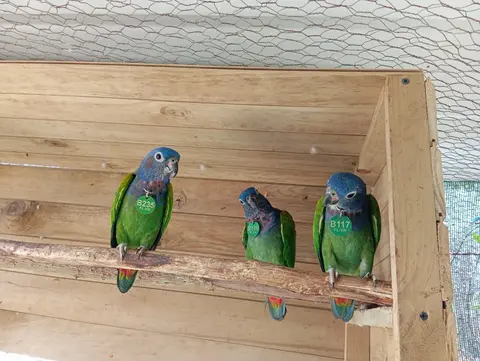
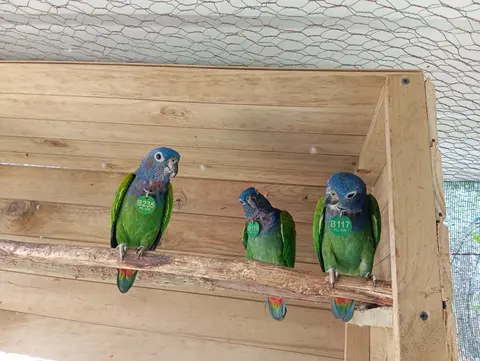
Omar Enrique Berdugo Cabeza arrived at the aviary as he does every morning, with the unhurried step of someone who knows his feathered neighbors well. There they were — the three blue-headed parrots, B235, B117, and B118, all wearing their green FL-VN tags — perched on the wooden bar as though they had been waiting for him for centuries. While some of them cooled off splashing in the water, one of the pionus rendered its verdict without a moment's hesitation: out of the entire tray of guava, papaya, cucumber, orange, and bell pepper, it chose the guava. The others, more reserved, preferred the coolness of the shade boxes beneath the midday heat.
A little further along, in aviary three, a pair of real parrots had plans of their own. They shared a papaya with that unhurried, complicit ease that old couples have — no rush, no quarrel, pressed close to one another as if the fruit simply tasted better that way, in company. Omar watched them for a moment before carrying on with his work, and in that silence of wire mesh and wood, with no other witnesses, an ordinary afternoon at the reserve quietly wrote itself into memory.
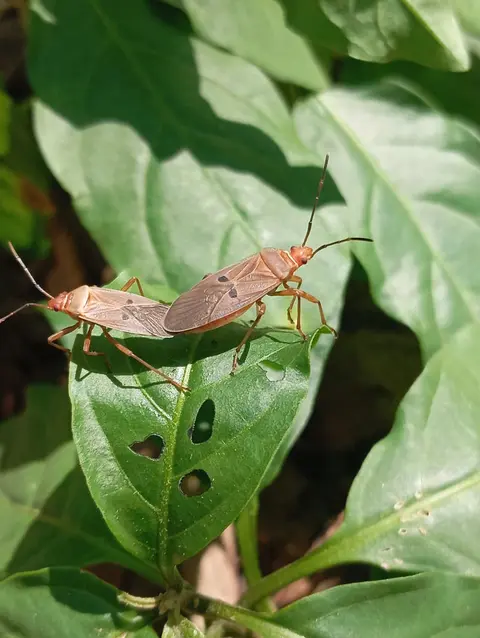
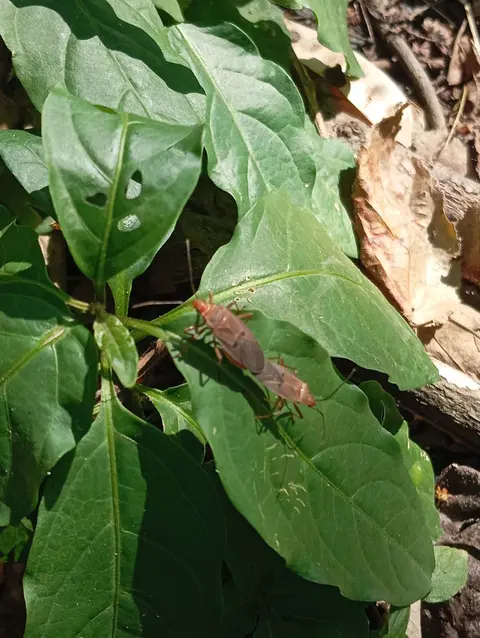
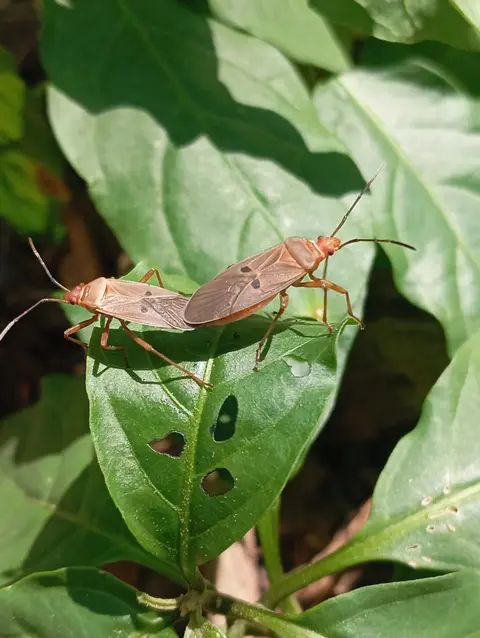
On March 14th, Omar Enrique Berdugo Cabeza set out to walk the sanctuary and found that life was in a hurry. In the vegetation surrounding the bonga trees, brown-reddish bugs — possibly from the family Rhopalidae or Coreidae — were mating on leaves riddled with the very holes they had left behind while feeding. And as if the bonga had called everyone to gather, high up in its crown two porfus were doing the same: mating unhurried, swaying in the mid-afternoon breeze.
Deeper inside, in the aviary, three loritos had found shelter in a wooden box that Omar himself had built to shield them from the cold and the harsh sun. There they were, all three of them, still and settled, like those who know well where to stay when the day bears down.
By the time he reached lago dos, the afternoon still had something to offer: a morocollo and a polloneta moved across the mirror of water with that quiet ease that birds only carry when they feel no one is rushing them. Omar noted them down, closed the logbook, and let the sanctuary keep its own pace.
B84's Twisted Beak Is Now Simply His Own
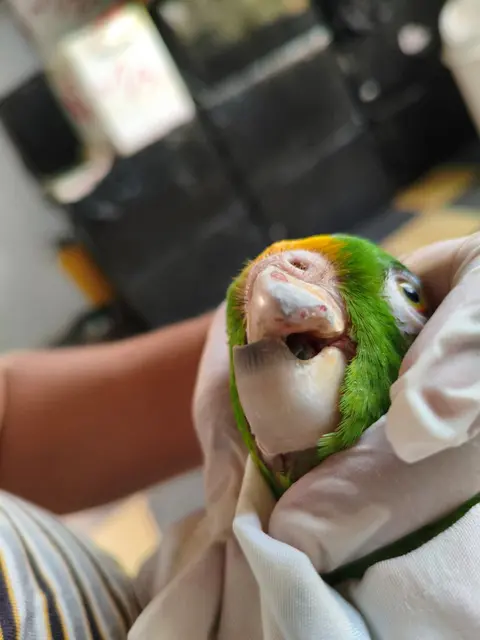
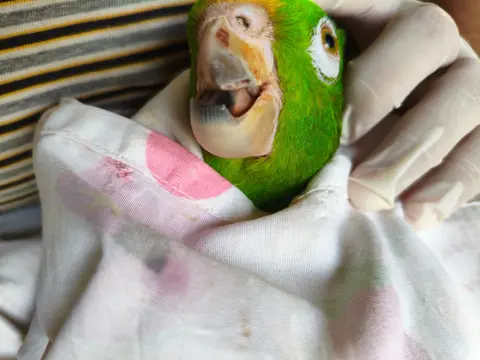
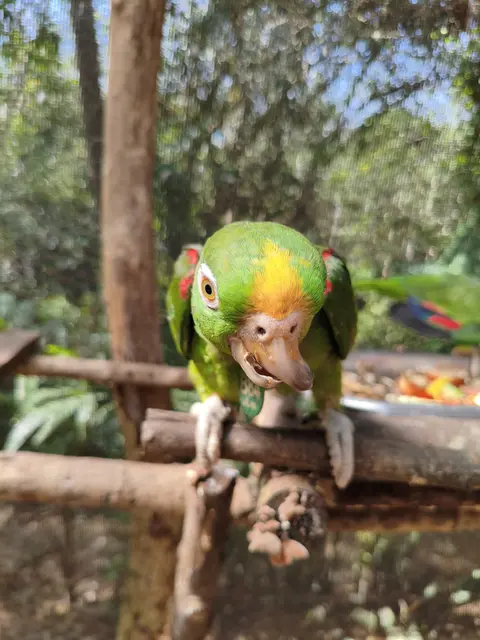
Veterinarian Alessandra lifted him carefully between gloved hands, wrapped him in cloth, and brought the file close to his beak. The parrot B84 — a perico with brilliant green plumage and flashes of yellow across his head — had arrived at the procedure carrying a deformity that had long drawn the team's attention: his beak, flaking and misshapen, twisted to one side as though the bird wore a perpetual question on his face. The intention had been to correct it through filing, but the file confirmed what had already been suspected — the malformation had calcified into bone. There was no bleeding. There was nothing more to be done.
What remained after the attempt was a certainty: the twisted beak is no longer a wound, nor a condition to be corrected — it is simply B84. And B84, with that beak no one will ever straighten, eats well. He defends himself, grasps, chews. The photographs from that day document the before and after of the procedure, but above all they document a parrot who found his way of living with what he has.
Lucerito's Two Gifts on Three Kings' Day
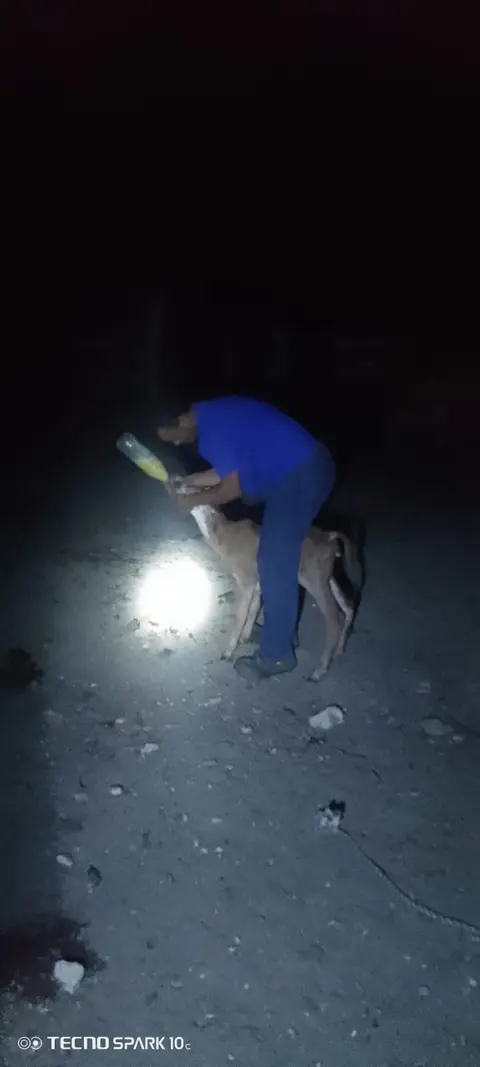
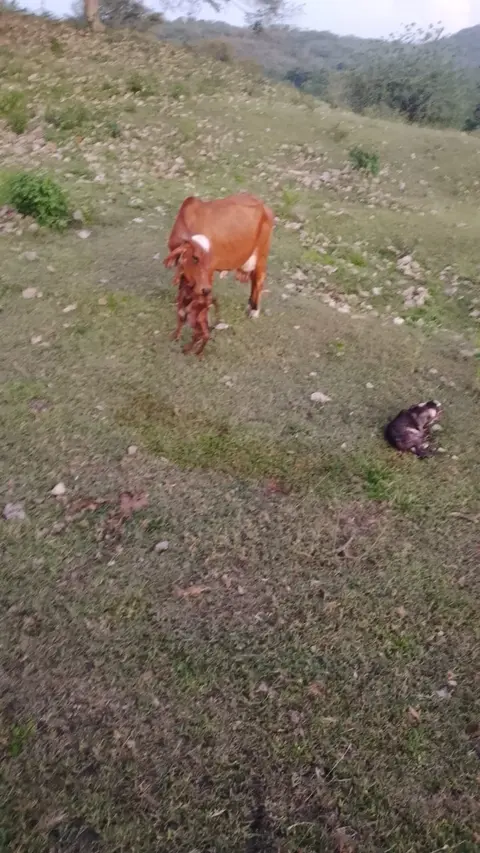
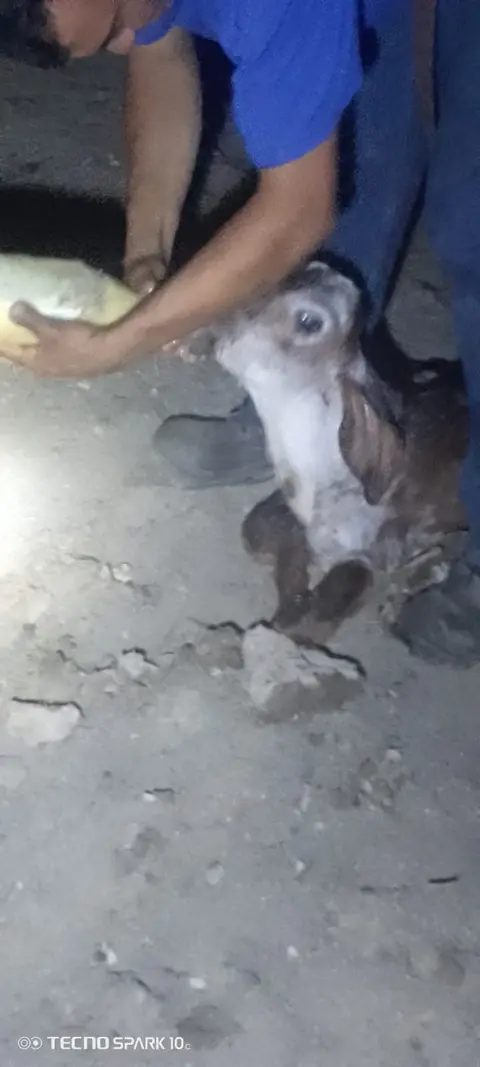
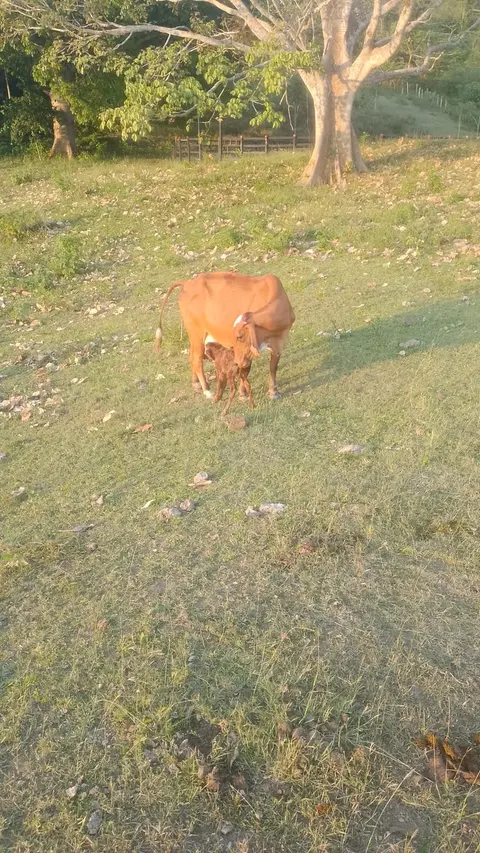
On the afternoon of January sixth, as the sun was already sinking over the sanctuary's pastures, caretaker Nilson set out on his routine rounds among the cattle and the pregnant cows. He wasn't expecting to find anything out of the ordinary. But there was Lucerito — a reddish-brown cow — and at her feet, not one but two newborn calves: the first had arrived, and half an hour later, the second. A female and a male, like a double gift from the Three Kings.
Lucerito licked them with that ancient calm that field mothers carry within them. Even so, both calves needed help feeding, and Nilson didn't hesitate: he pulled out the bottle they keep on hand for moments like these and fed them one by one, in the dark of night, lit only by a flashlight. The female had already gotten to her feet on her own; the male hadn't yet, but he was breathing well and took his bottle without trouble.
A twin birth in the sanctuary's herd is not something that happens often. That night, with the three of them resting in the pasture and the dark hills rising behind them, Nilson finished his rounds knowing the day had been worth every moment.
The Macaws Welcome the Afternoon at the Liberation Point
Ada Yanci didn't come with the intention of documenting anything extraordinary. She came to see macaws, and that is exactly what she found. Her video, recorded at the Liberation point where the Ara aviaries stand, captures one of those moments the sanctuary offers almost without warning: the afternoon settling over the canopy, and the macaws lifting into flight just as the visitors approach with food.
There were no unusual behaviors, no observations to challenge what is already known. It was a routine scene, one that repeats itself at dusk in that corner of the sanctuary's 520 hectares. But routine carries a different weight here: birds learning to fly among people, and people learning to stand still while wings pass close.
Sometimes the field log doesn't need the extraordinary. It needs the testimony of someone who knew how to look.
Omar Enrique Berdugo Cabeza was alone that afternoon in the sanctuary when he saw them arrive. Two guacamayas mayas — the ones from release points B126 and B31 — landed first on a mamón tree, those broad and generous branches they love so much, before making their way toward the shelter the team had built especially for them. There they stayed for a while, settled, with that quiet ease parrots show when a place has already become their own.
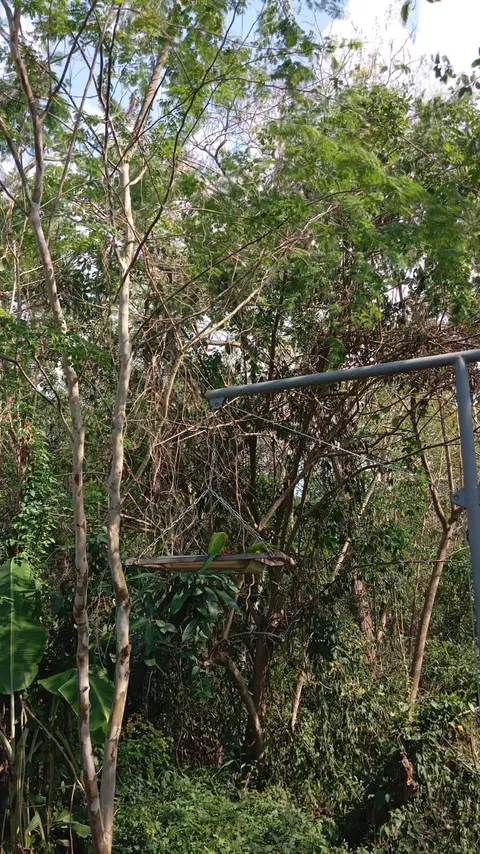
They were not the only ones feeling bold that day. Near the feeding station, two small cotorritas came closer to investigate, indifferent to Omar's presence as he recorded everything on video without so much as shifting his weight. All around him, the tropical vegetation pressed in from every side: tall trees, shrubs, stands of banana plants, and threading through that dense green, the remnants of an old basketball court that the forest has been slowly, patiently reclaiming. That rusted metal hoop, half-swallowed by the undergrowth, speaks more plainly than any statistic could about how far habitat recovery has come in this corner of the reserve.
Jendel's cashew trees bloom and bear fruit all at once
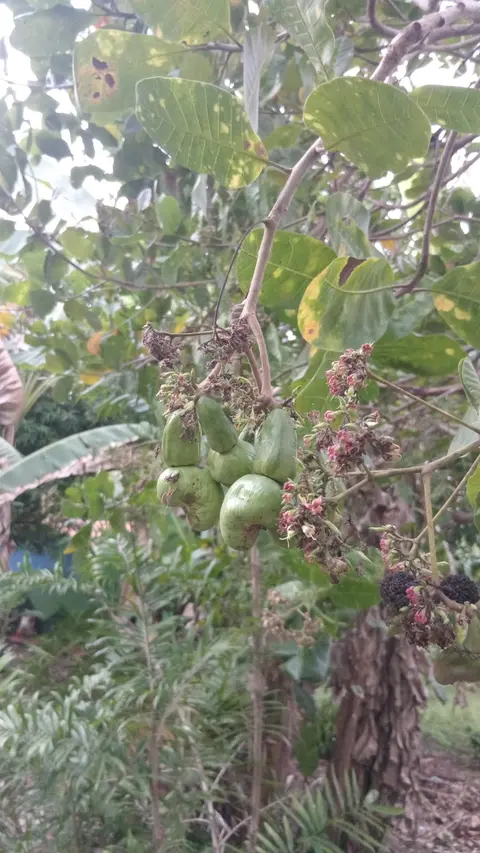
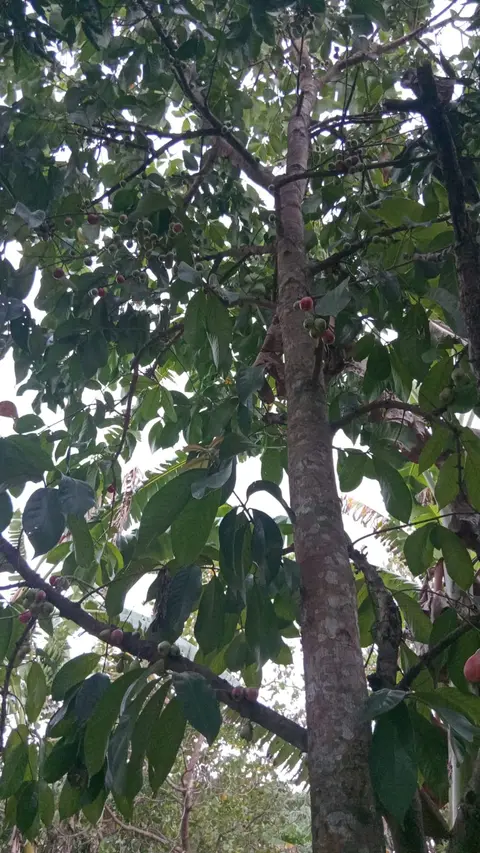
In a quiet corner of the finca Los Guardianes, where the tropical vegetation presses close and the air smells of damp earth and ripened fruit, Jendel moves among his trees the way one visits old friends. Two cashew trees (*Anacardium occidentale*) rise generously on either side of the path: the first displays, all at once, its small pink blossoms and its young fruits in a deep, vivid green — as though time here refuses to choose between one season and the next. The second tree spills its abundance from branch to ground — green fruits, fruits slowly taking on that promising red that whispers of sweetness to come — all of it sheltered beneath a dark, lush canopy that offers shade and quiet refuge.
Jendel has been tending these trees for a long time, and they know it. Here at the Santuario de la Fundación Loros, this corner of Los Guardianes is just one glimpse of the fruit-laden pantry the reserve holds in trust: colors that shift from the freshest green to a blazing, burnished red, flavors waiting patiently for anyone who thinks to stop and look. In this place, every branch has something to say.
Four Horses and a Dog on the Way to the Hilltop
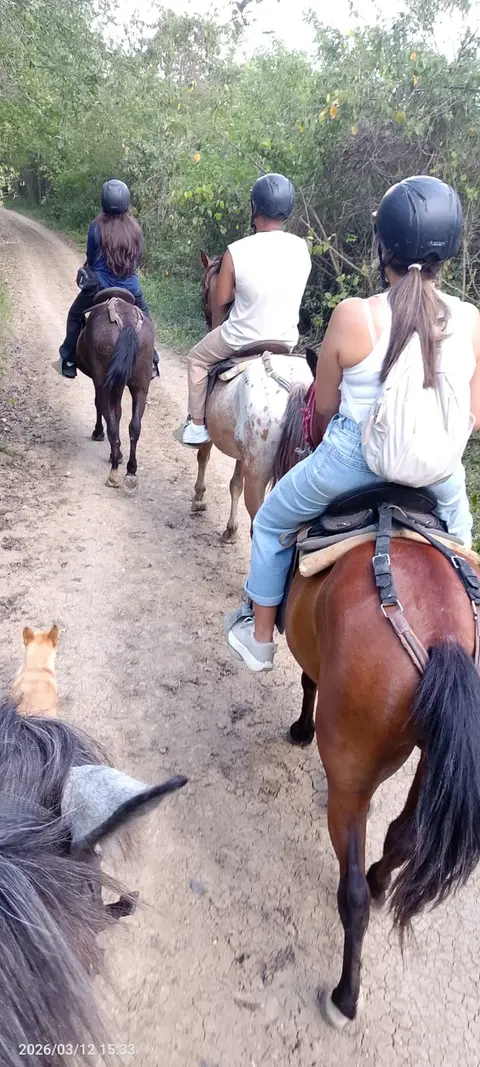
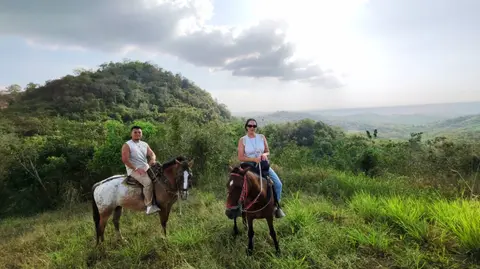
Before the sun had fully warmed the day, Nilson headed out to the Vista Hermosa pasture to round up Indio, Sombra, el Pony, and Corosito. He gathered them one by one from the grass, led each to the corral with a halter, bathed them with water and shampoo, and saddled them without hurry. By the time all four stood gleaming in the morning light, two visitors were already waiting at El Paraíso — the main headquarters of Fundación Loros — eager to take in the reserve from the back of a horse.
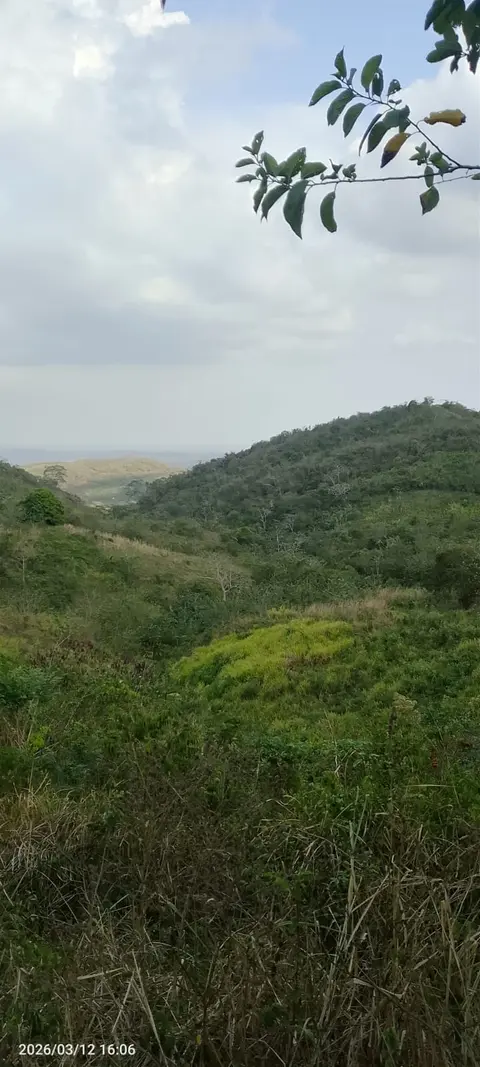
The ride set off along the dirt trails that climb toward Cerro El Peligro. The hills emerged gradually through the thick green vegetation, flanked by full-canopied trees, the sky above heavy with white clouds. Happy, the foundation's dog, needed no invitation: from the very first steps he trotted alongside the group, weaving between hooves and legs as though he'd been doing it for years.
The final destination was the bird release site — that high point on the hilltop where rehabilitated animals take their last step before returning to the wild on their own terms. The visitors saw it for themselves: the open landscape, the quiet between the trees, and the understanding that this same hillside is, for so many birds, the beginning of something entirely new.
The Stick Insect That Joined the Ride
Corina Leonor set out on horseback to explore the sanctuary's hills alongside a companion, the sky heavy with clouds above the dense vegetation, the landscape opening up in every direction from the heights. It was the kind of afternoon one keeps in memory without quite knowing why.
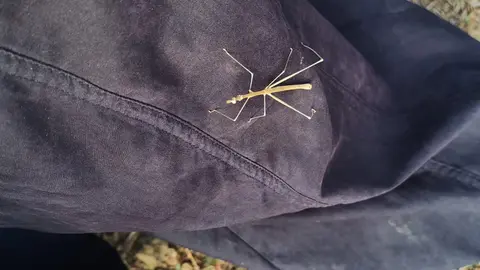
It was during that ride that it appeared, unannounced — a stick insect (Phasmatodea) of golden-yellowish hue that chose to settle, quite unhurried, upon the dark clothing of one of the riders. With its impossibly slender, elongated body mimicking a dry twig, the creature seemed so confident in its camouflage that it didn't mind the contrast against the black fabric at all. Corina documented it before it vanished back into the foliage.
Stick insects are masters of concealment, creatures the forest keeps hidden in plain sight. That this young specimen allowed itself to be seen — and photographed — in the middle of an equestrian outing is the kind of small wonder the sanctuary bestows upon those who move through it with open eyes.
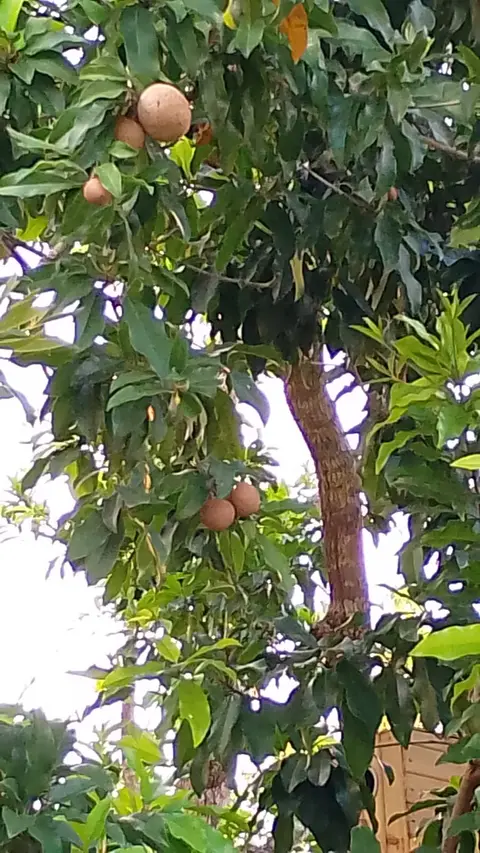
In the sanctuary there is a tree that keeps nothing for itself. These days in March, the níspero — stout-trunked, broad-crowned — hangs heavy with ripe fruit: round, reddish-brown, the color of something that promises sweetness. Angélica Mármol Venegas found it just like this: full and willing.
The níspero is a fruit well known along Colombia's Caribbean coast. It arrives on its own terms, without warning, and when it comes it comes in abundance. At Fundación Loros, that moment has become a shared ritual: the fruits make their way to the table of those who work here and into the hands of those who visit the sanctuary, as though the tree had spent decades practicing hospitality.
There was no need to look far for today's story. It was right there, among the branches, wearing the color of something ready to be received.
Happy Out Front, Macaws Over the Hill
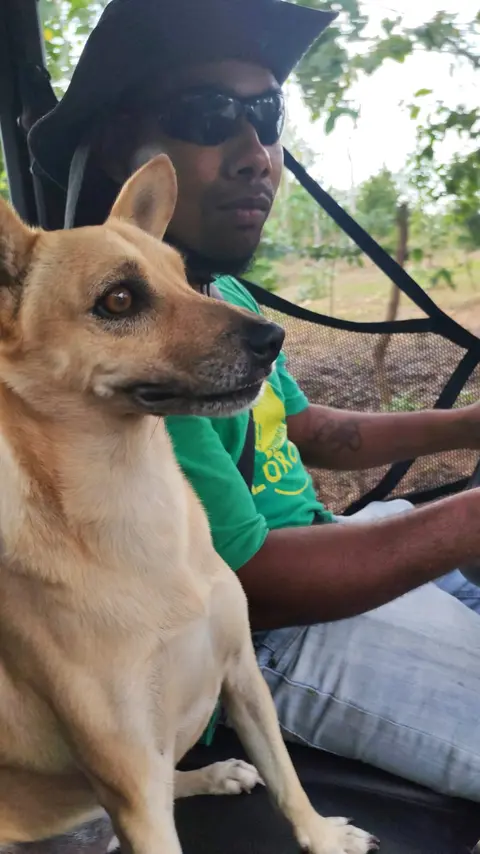
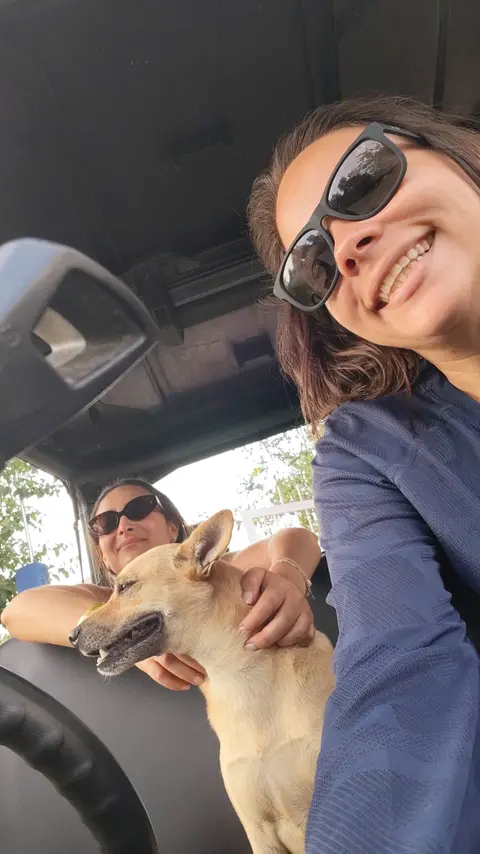
That morning, guide Corina set out for Cerro el Peligro with two tourists and the indispensable company of Happy — the golden-coated mixed-breed dog who has long since earned the unofficial title of the reserve's hostess. Happy did what Happy does: she took the lead from the very first step of the trail, as if she knew the work better than anyone, and so she guided the group through the green heat of the cartagenera savanna.
It didn't take long for the tourists to fall for her completely. The day's photos tell the story without need for words: Happy receiving hugs, Happy gazing at the horizon from the buggy with the gravity of someone who has important things to attend to. It's the kind of spontaneous affection that no itinerary can plan for.
But the outing had one more surprise in store. Already near the hill, above the tree canopy, the guacamayas bandera appeared — blue and yellow, unmistakable — sweeping over the area with that joyful commotion that gives them away before you ever manage to spot them. Counting the individuals wasn't possible, but their presence in that part of the reserve is now on record, and that alone is enough to make the day worthwhile.
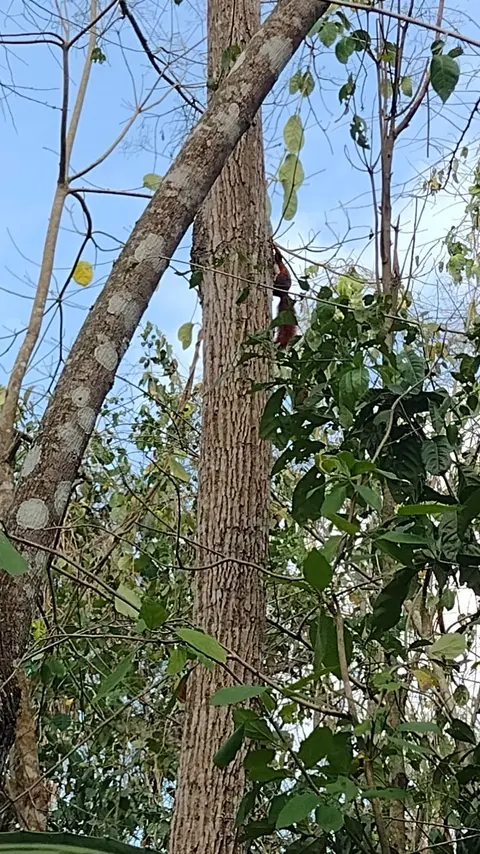
On the morning of March 11th, José Marín set out early to walk the reserve, and it was at the foot of the slope where something stopped him — a movement between the trunks: a squirrel with russet fur, almost orange, climbing alone up the bark of a tree with that silent agility they have when they believe no one is watching. He photographed it right there, nearly camouflaged against the wood and the green foliage, before it vanished into the high branches.
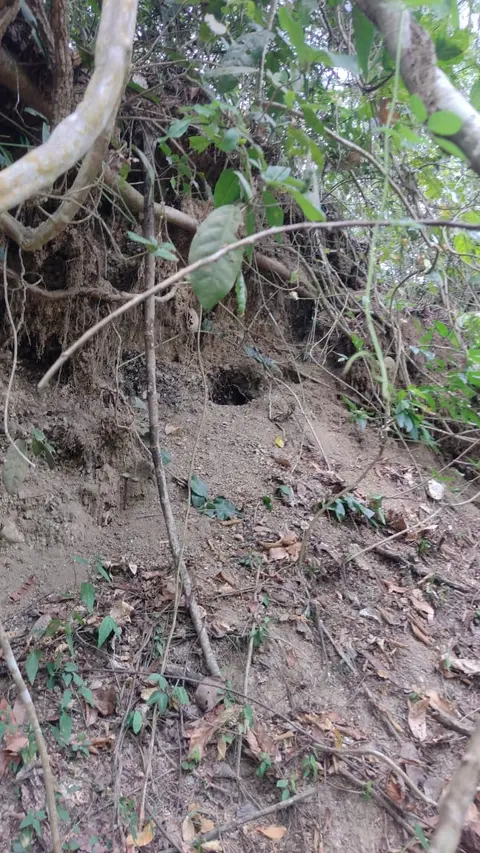
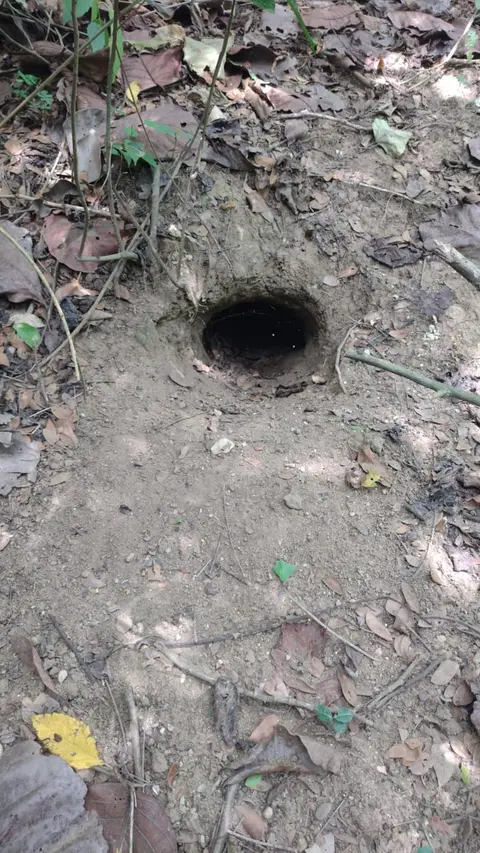
Further along, skirting the arroyo Los Guardianes, José came across two burrows dug into loose earth, surrounded by exposed roots and fallen leaves. The circular, dark entrances — just the right size — told him everything: armadillo dens. He documented them with photos and exact coordinates — two points separated by barely twenty meters, as though the animal had its own well-defined territory stretching along the stream.
From there he continued along the reserve's main arroyo, recording on video what José already knows by heart: that in the mornings, the reserve wakes up with everything at once. Birds moving through the branches, butterflies crossing the pools of light, the occasional mammal that lets itself be seen for just a moment before slipping back into the undergrowth. An ordinary day at Fundación Loros — which, out in the field, is rarely ordinary at all.
Sombra Leads the Way Through the Leaf Litter
On Thursday, Corina rode out with two tourists along the dirt trails of the reserve. Sombra went ahead — a dark-coated horse with pink bridles — setting the pace through the dense vegetation of the sanctuary. A golden-furred dog joined them for the entire route, slipping into the group as though it had always been part of the team.
As the riders made their way along the trails, near the rural road that borders the reserve, Alberto's daughters were busy raking dry leaves with orange-handled tools, keeping the path clear and passable. Alberto is the head of the sanctuary's workers, and that day his daughters put their backs into it without needing to be asked twice.
It was an ordinary day at the reserve — the kind that holds no single extraordinary event worth recounting, yet carries that quiet texture of work done well: the guide, the visitors, the horse, the dog, the girls with their rakes, and the red earth of the trail beneath a sky that threatened rain.
The Entrance of El Paraíso in Bloom
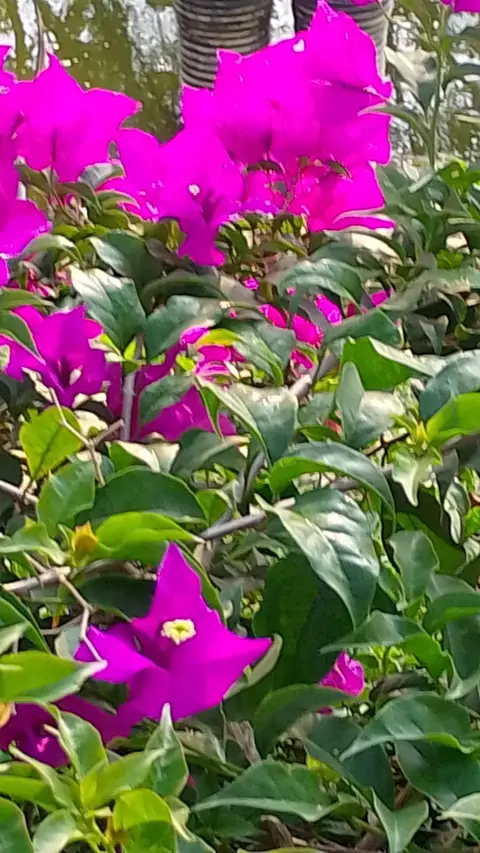
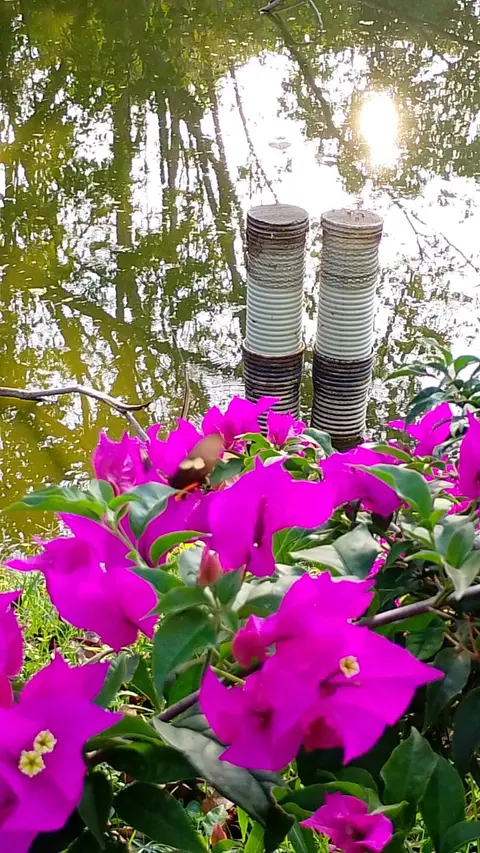
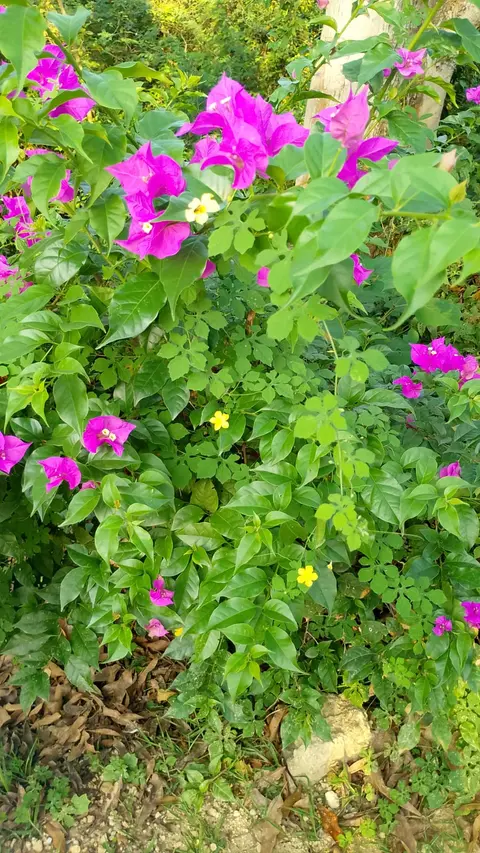
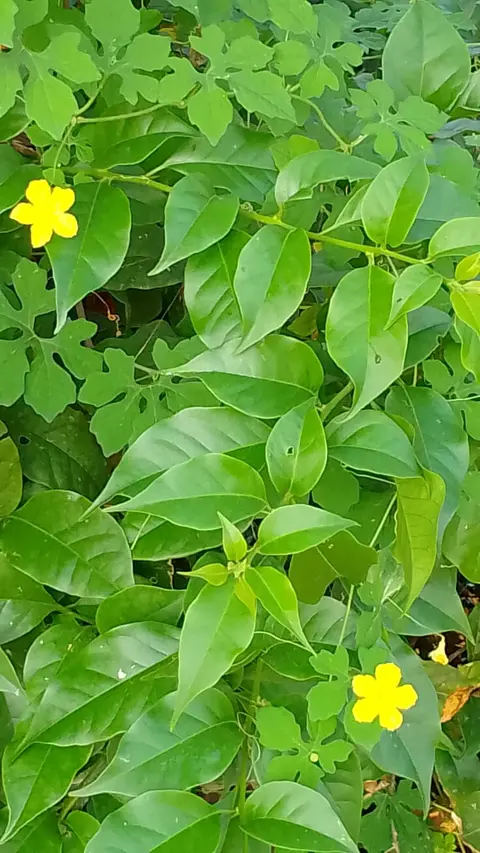
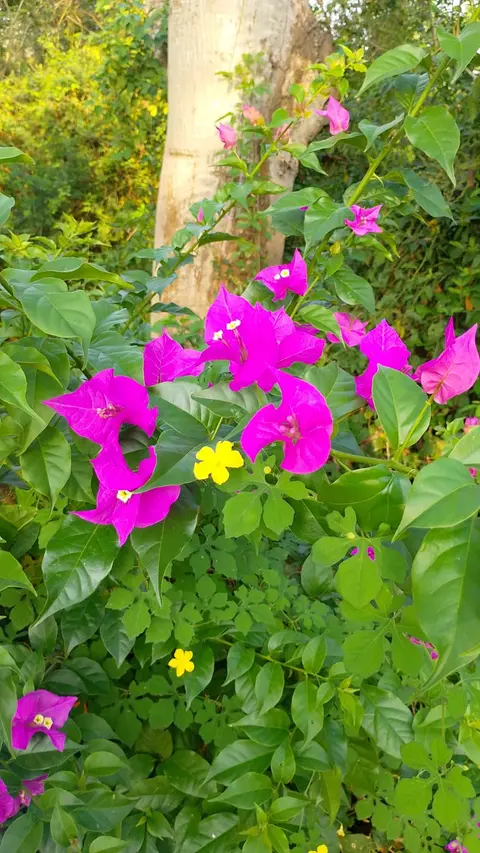
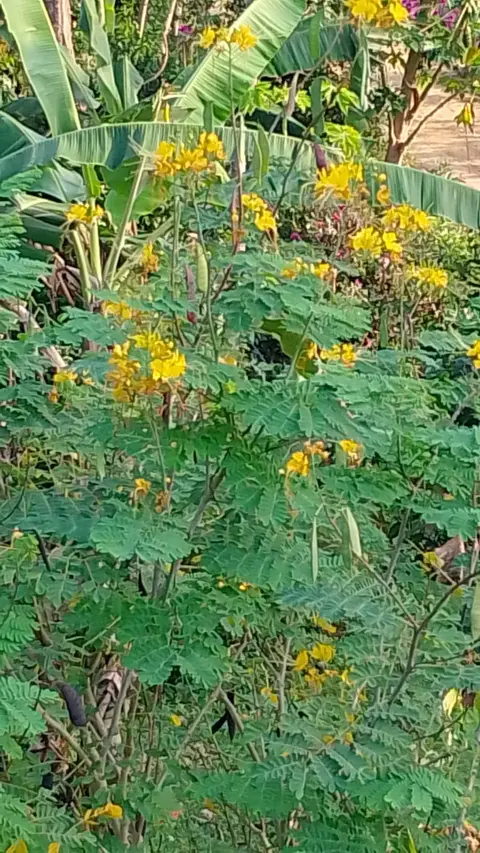
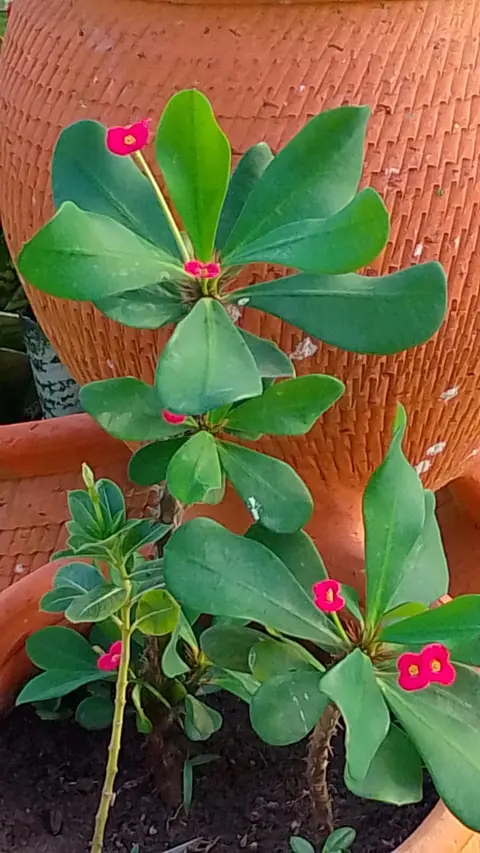
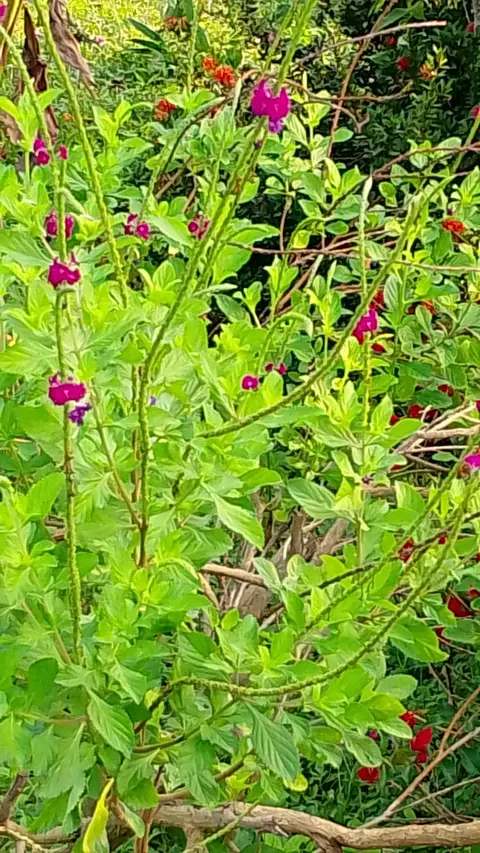
At the entrance of the farm El Paraíso, morning dressed itself for a celebration without telling a soul. The buganvilla burst into magenta early on, and between its branches the cundeamor climbed in silence, scattering yellow across what was already a fiesta. La Senna glowed beside the banana groves, the Corona de Cristo peeked out from its clay pot, and the ixora bloomed with quiet grace even from a cracked planter — because in this corner of the Fundación Loros, life always finds a way.
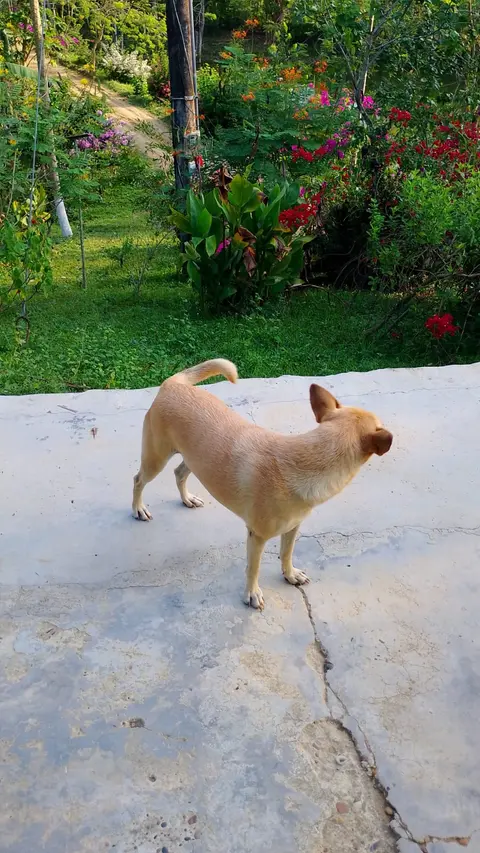
The butterflies wove their path from flower to flower, drunk on nectar beneath the Caribbean sun. The ants marched with their invisible cargo, seeking the coolness of the earth before the heat had its final say. And Happy, the little golden dog of the farm, lay still on the concrete with his calm and steady gaze, taking in that landscape which so few are fortunate enough to call home.
Angélica Mármol Venegas was there to tell us all about it, with her lens and her heart wide open.
Blue ceres and a keel that worries
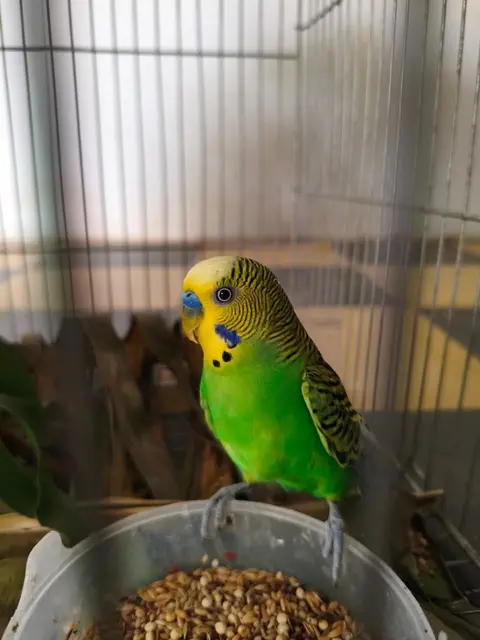
On Thursday, March 12th, veterinarian Alesandra moved through each of the aviaries at Fundación Loros with clipboard in hand, logging data and assessing the flock with the unhurried precision of someone who knows their craft well. Among the day's tasks was the initial intake of three birds that had completed quarantine: a pionus, a yellow-fronted parrot, and a male budgerigar (*Melopsittacus undulatus*) who had until then been waiting his turn in a small cage near the house. This last one arrived in acceptable condition — actively flying, his green and yellow plumage the kind that makes you stop and look twice. Alesandra noted something worth recording: in this species, the ceres of adult males turn a deep, vivid blue, a trait clearly visible on this individual and one that serves as a mark of identity. He will soon be moved to the Decameron aviary.
But the day also brought a concern. A blue-and-yellow macaw — B139, *Ara ararauna* — arrived with a body condition score of just 2 out of 9, her keel bone so prominent it left no room for doubt about the gravity of her state. Alesandra started her on basic treatment and drew a blood sample: Dr. Ana had previously identified two distinct species of hemoparasites circulating in the collection, each requiring a different protocol, and without knowing which one they're dealing with this time, the appropriate treatment remains on hold. Alejandro authorized processing the sample immediately. Now it's a matter of waiting for what the blood has to say.
At the welcome kiosk of the Fundación Loros, the team carried out their daily routine of preparing and chopping food for the birds, working side by side in an atmosphere of easy camaraderie. Later, in aviario número 2, Betoven — a yellow-headed Amazon parrot bearing green tag number 15 — was observed alongside another individual of the same species engaged in allopreening, a moment that drew the curious attention of everyone present. During the rounds, in a rubber tree standing close to the facilities, a woodpecker was spotted drilling into the bark in search of food, its rhythmic work a textbook display of the foraging behavior so characteristic of its kind.
On the afternoon of the report date, Omar Enrique Berdugo Cabeza observed two yellow-crowned parrots (*Amazona ochrocephala*) flying free at coordinates 10.4475033, -75.2620317 — individuals previously released by the Fundación Loros. The birds were recorded feeding on uvita fruits in the canopy of a tree beneath clear, open skies. The sighting was documented with two videos and a photograph of the fruit-bearing tree where the birds had settled.
Flowers beside the cage, waiting for wings
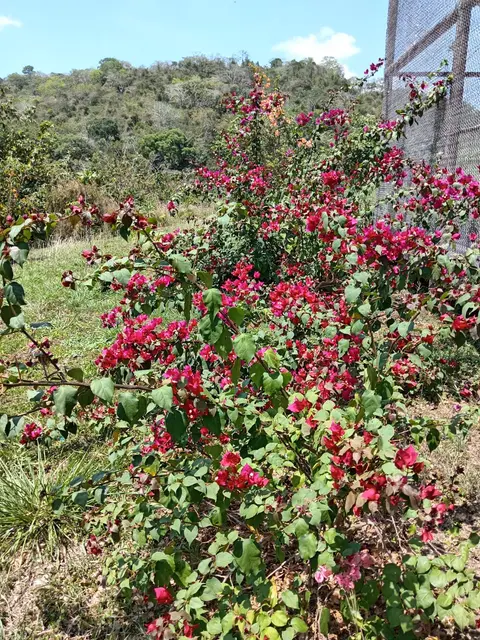
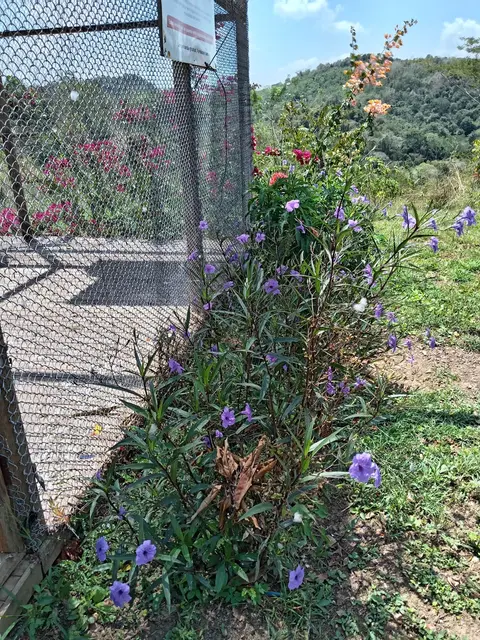
Carlos Andrés Matas Contreras arrived at the release site this morning with his camera ready, and was met with a surprise of color: the buganvilia had burst into red-magenta blooms right along the edge of the wire mesh enclosure, and at its base, wild petunias — Ruellia simplex — were opening their purple corollas as if they had spent weeks rehearsing this welcome.
In the photographs he brought back, the release cage stands framed by that floral outburst, with the green hills of the sanctuary rolling behind it beneath a sky scattered with white clouds. There were no parrots that day, no wingbeats to document. Only the quiet landscape, the fence, and the flowers growing at their own unhurried pace against the mesh — reminding us that the reserve goes on living even when there is no one left to release, and no one yet to receive.
Seventeen Blues on Cerro El Peli
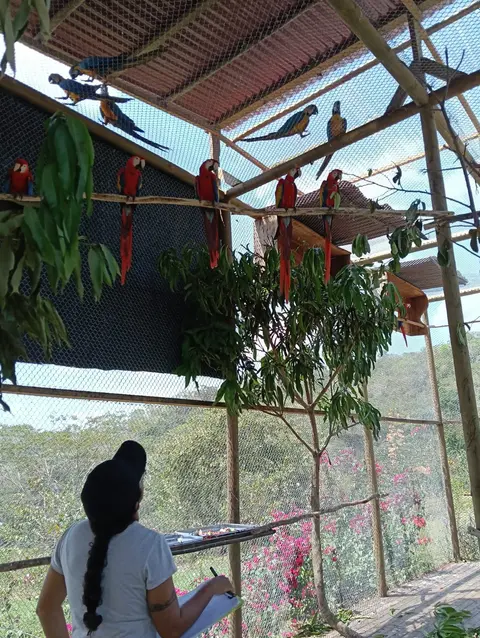
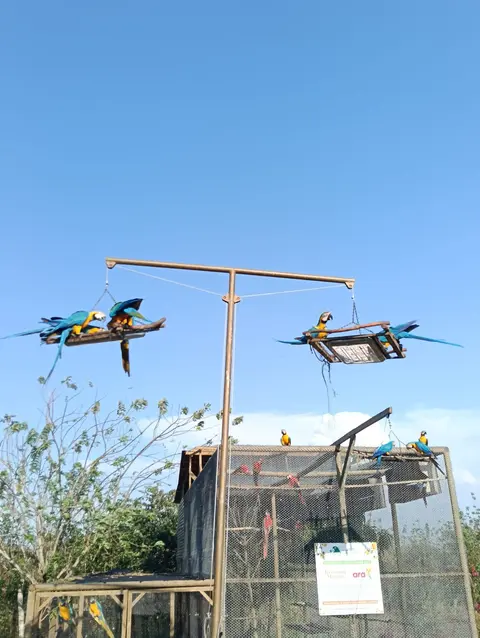
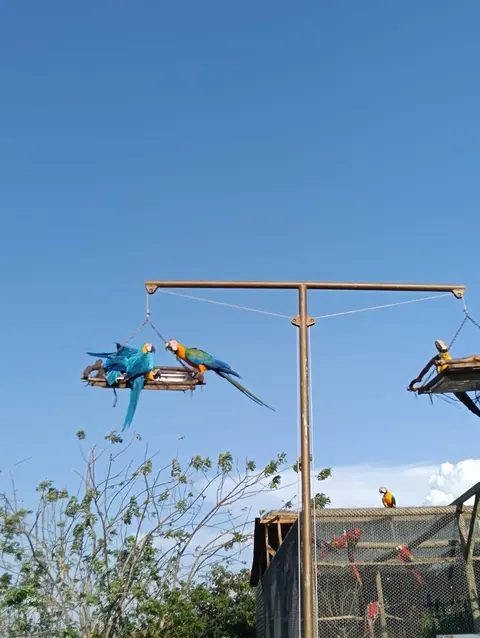
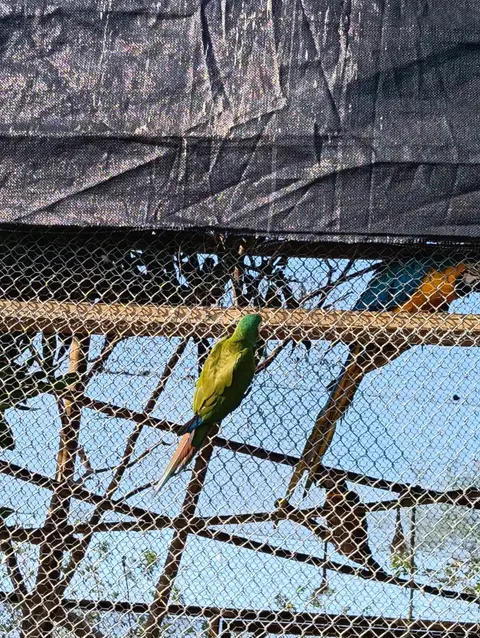
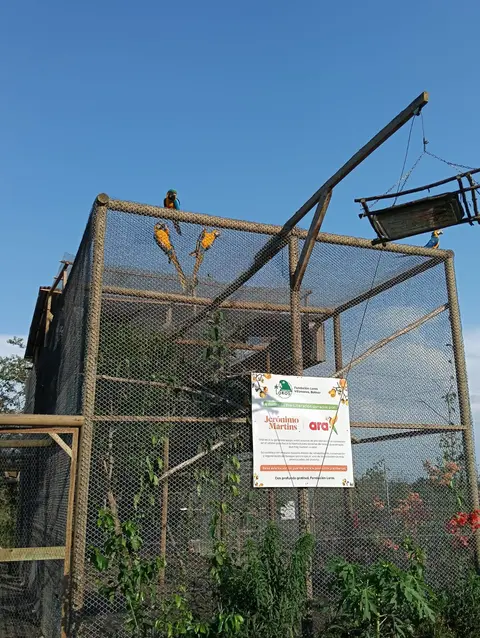
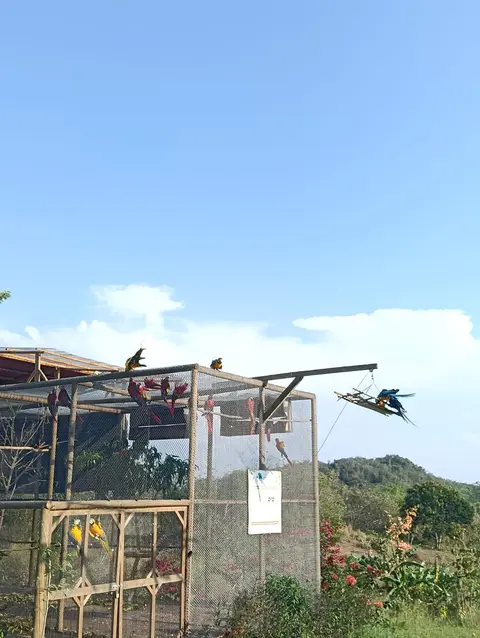
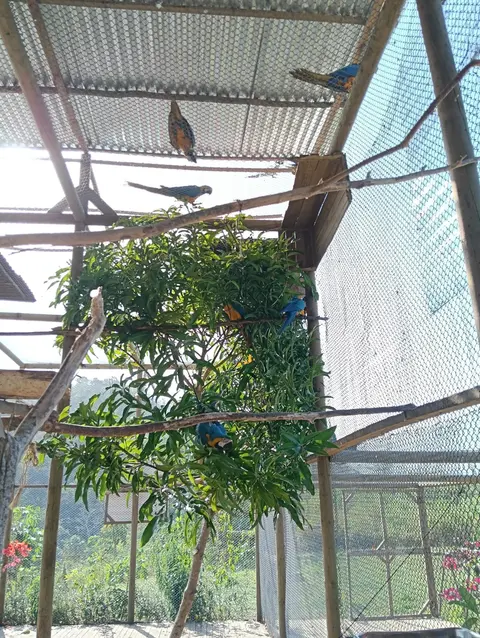
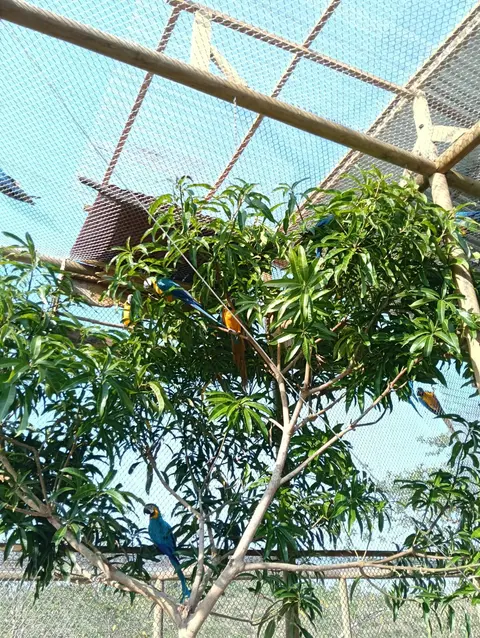
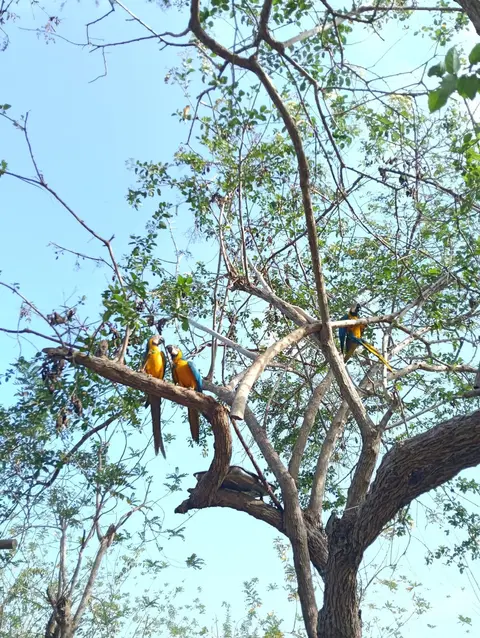
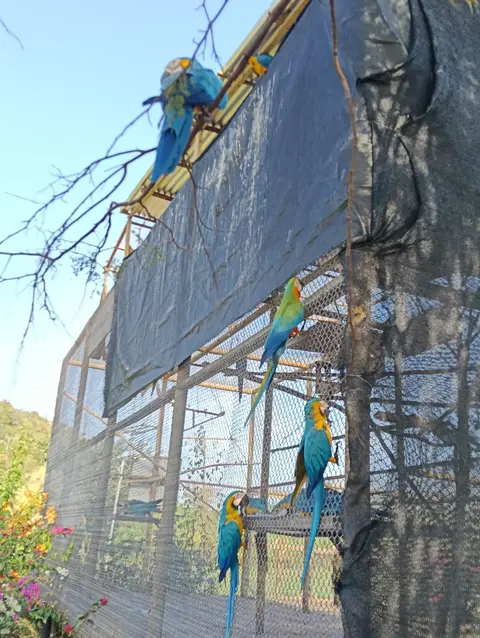
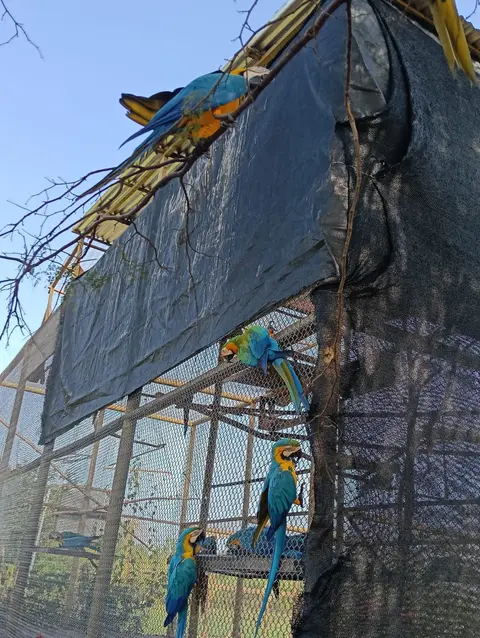
On March 9, 2026, Alberto brought the first 14 blue-and-yellow macaws to the pre-release aviary on Cerro El Peli. The following day he returned with 3 more, and so 17 Ara ararauna came to rest beneath the wire mesh and among the branches of the trees growing inside the enclosure — that space donated by Jerónimo Martins and the proyecto Ara, where the scarlet macaws also make their home. The wooden perches filled with turquoise and gold plumage, and the aviary, which from the outside already looks like a piece of jungle netted against the sky, took on that loud, unruly din that only parrots can make when there are enough of them.
Meanwhile, beyond the aviary walls, the scene had plenty of its own to offer: 18 Ara ararauna ranging free around the release site, plus a cheja wandering about as though it knew full well that this hillside belonged to it. Alberto noted down the count, took his photographs, and closed out the day's report.
Two gallinetas at the edge of lago 2
That afternoon, Carlos Andrés Matas Contreras was walking along the shores of lago 2 at the finca El Paraíso when he noticed movement in the damp grass at the water's edge. Not one, but two gallinetas moving slowly, with that unhurried calm so characteristic of them, pecking at the ground in search of something to eat. The lake still, the afternoon light golden on the water, and those two birds as though the whole world were nothing but that one quiet corner.
Carlos Andrés had the good eye to pull out his phone and record. The video shows exactly what he saw: the measured, almost ceremonial movement of the gallinetas as they searched the earth. A simple piece of footage, the kind made without much fuss, yet one that speaks clearly — that wildlife continues on its own terms, in the pastures of El Paraíso.
Field Cappuccino, Straight from the Cow
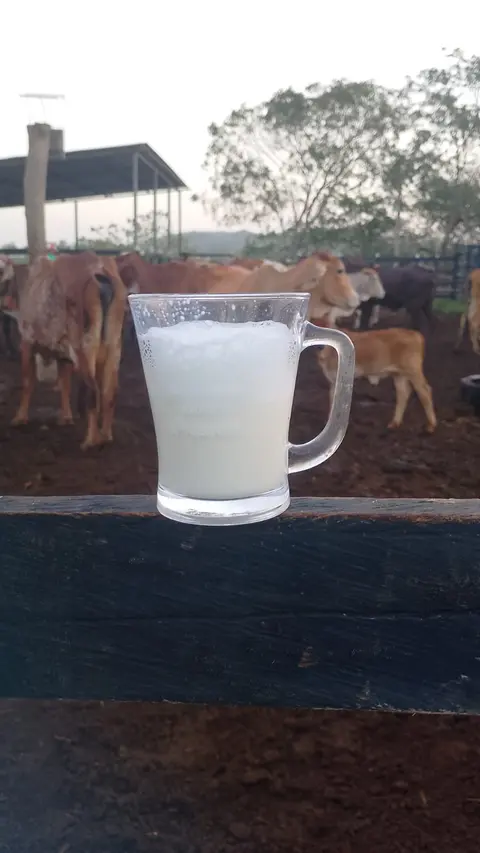
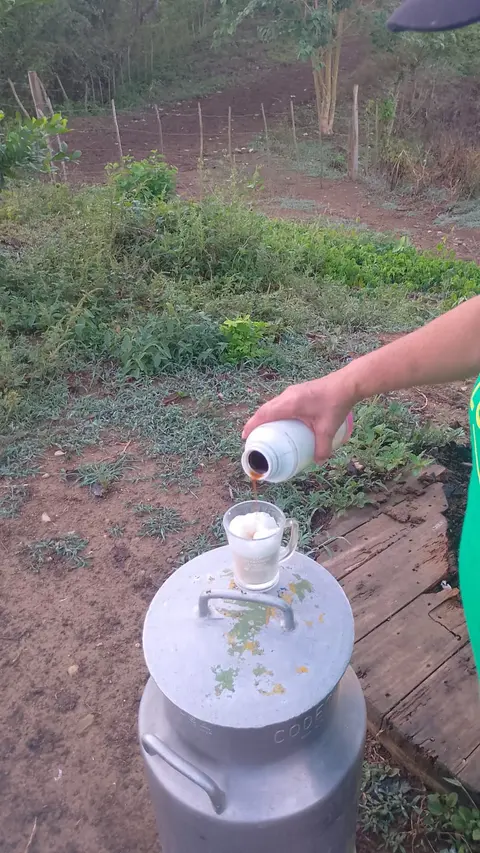
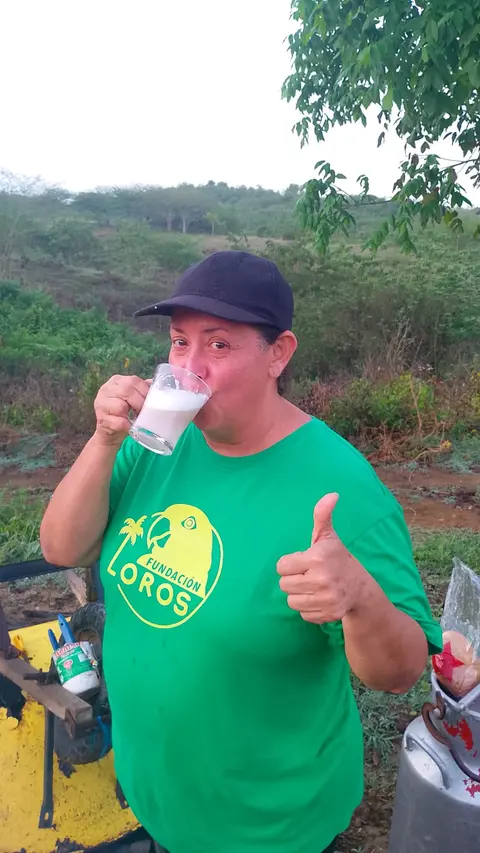
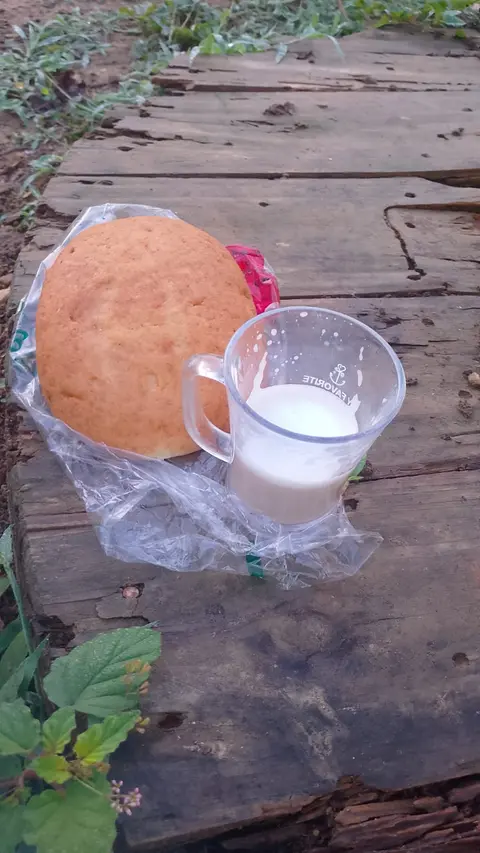
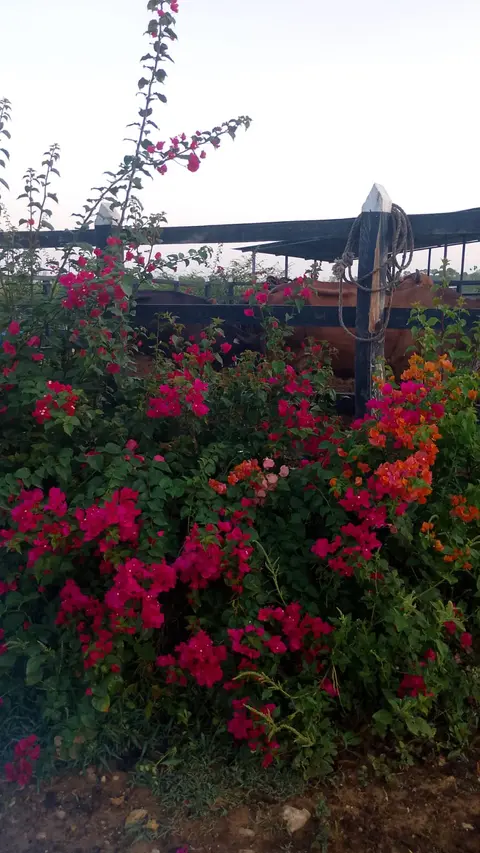
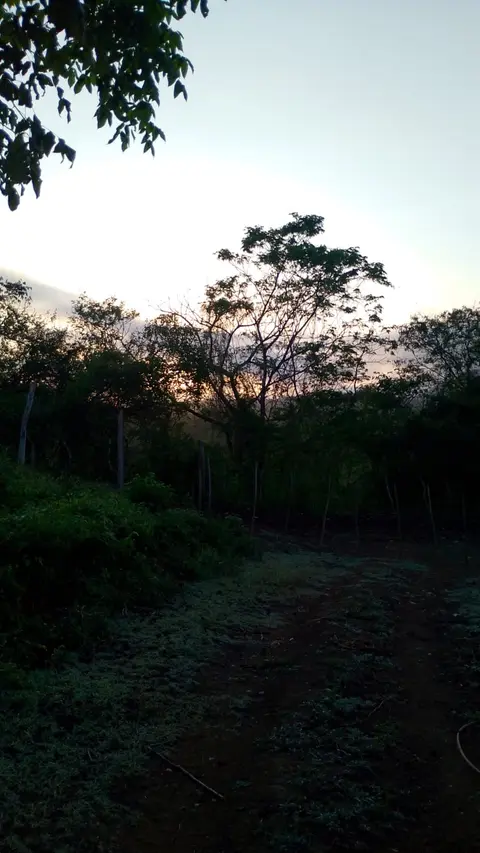
Before the sun had fully risen above the trees of finca Los Guardianes, Nilson was already in the corral with his hands on the udder. The milk fell warm and frothy into the metal pail, while the fuchsia and orange buganvilias lining the fences still held the cool of the early hours. The sky unfolded in shades of orange and blue over the pastures, and the cattle rested quietly beneath the shelter's roof, indifferent to the dawn that framed them.
Angélica Cecilia Mármol Venegas took that freshly drawn milk, combined it with coffee brewed on the spot, and the result was what she herself called a field cappuccino — straight from the cow to the glass, no middlemen, no distances. One long sip, a thumbs-up, and the day began.
That is the everyday reality at the Santuario de la Fundación Loros: conservation work that shares its hours with the five o'clock milking, with wildflowers no one planted near the corral, with the dirt path that disappears into the undergrowth while the countryside wakes slowly.
Six titis among the branches of Lago 2
At 9:15 in the morning, Carlos Andrés Matas Contreras was walking along the shore of Lago 2 at Finca El Paraíso when movement in the canopy stopped him cold: six titi monkeys were making their way through the branches, climbing without hurry and pausing to feed on fruit. The titis — those small, long-tailed primates with their sharp, lively eyes that inhabit the humid forests of Colombia's Caribbean coast — are always a sighting worth celebrating, and Carlos Andrés had the good sense to capture them on video before they vanished into the foliage.
The lake had more to say that morning. Without showing its face, the forest spoke: coronas, a ave cola de ardilla, chachalacas, and an oropéndola left their voices hanging in the air. Carlos Andrés listened carefully and noted each one down. Sometimes the field tells its story through the ears as much as through the eyes, and that sonic record is every bit as valuable as any photograph.
Eighteen Blues and a Cheja at Noon
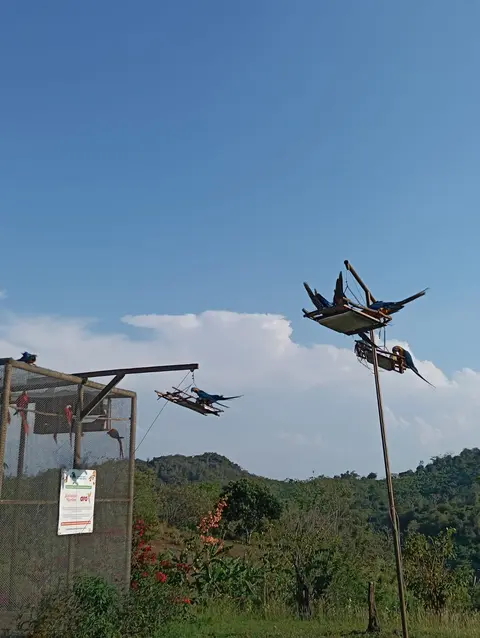
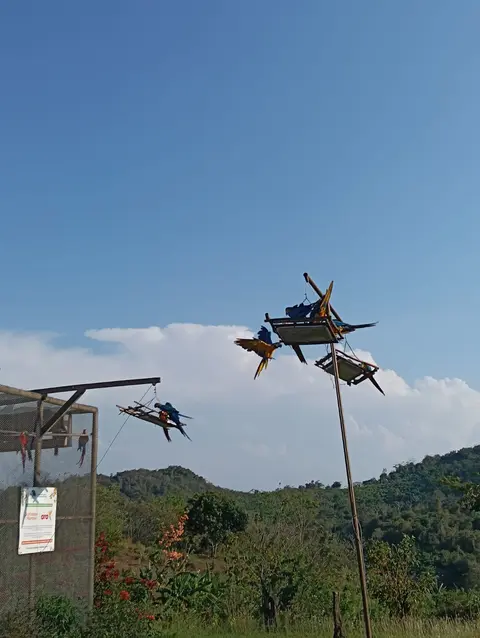
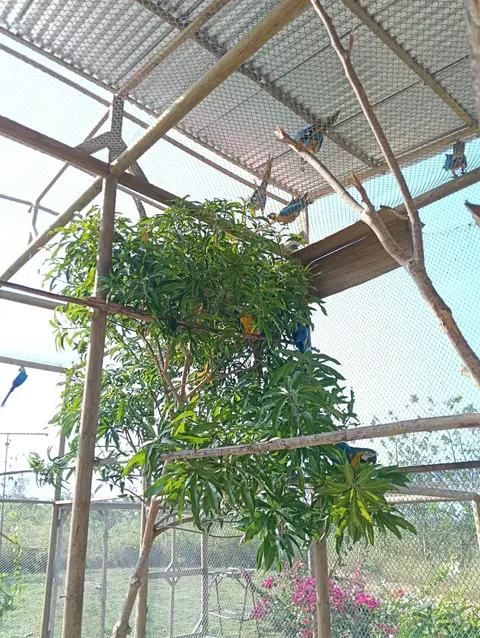
This morning, Alberto made his usual rounds through the facilities at Fundación Loros: first the release point, then the aviaries. The sun was already bearing down hard on the green hills when the blue-and-yellow macaws — eighteen in all — began to appear. Some came gliding in from the nearby trees, carrying that deep, vivid blue that catches the light differently under the open Caribbean sky. A cheja completed the group, understated among so much color.
At the release point, the Ara ararauna settled onto the wooden structure with its raised platforms, where metal trays of chopped papaya and watermelon waited for them. The same fruits had been brought to the aviaries, where other birds climbed the mesh or rested on perches made from dry branches, pink bougainvillea spilling in at the back as though it had always been part of the scene. The trays didn't last long.
From the Milk Cans to the Flight of the Birds
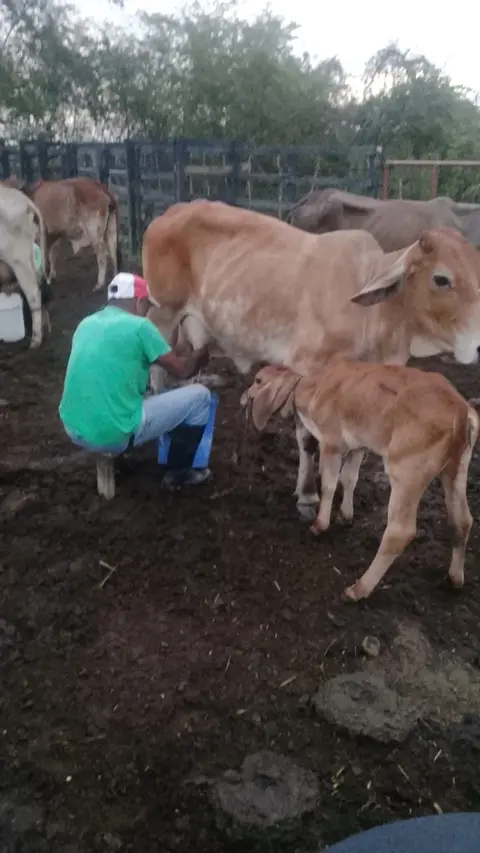
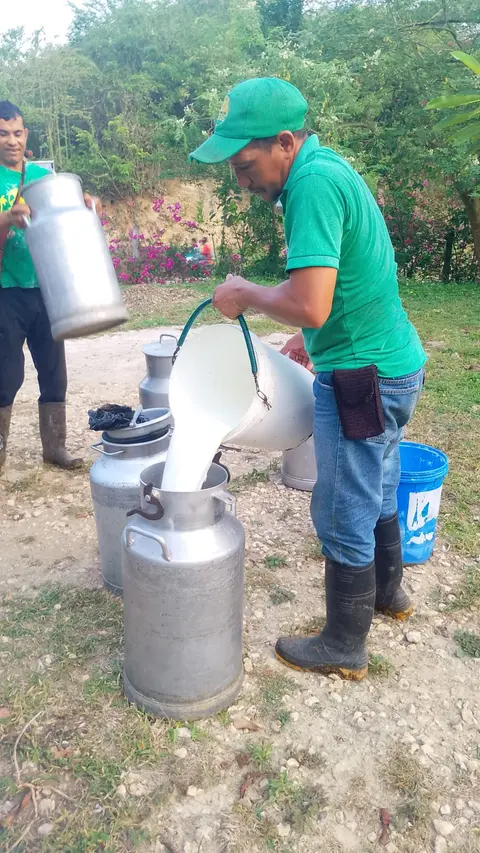
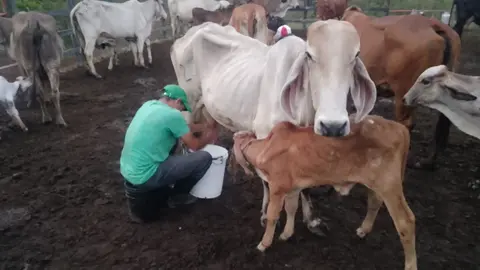
Before the sun had fully warmed the pastures of Los Guardianes and Vista Hermosa, Jendel and Eder already had their hands on the udders. The Brahman cattle — those large, patient animals — allowed the calves to approach while the workers filled the white buckets, then emptied the milk in clean, steady streams into the aluminum cantinas. All around, the dark and damp soil of the corrals, fuchsia flowers peeking through the vegetation, and the muffled sounds of the early morning fields.
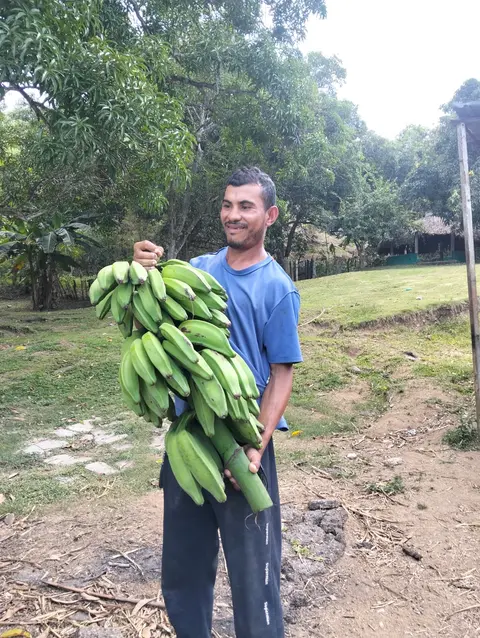
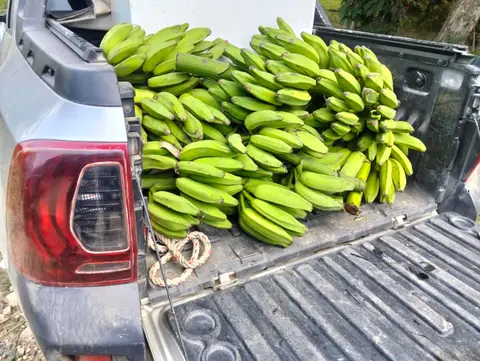
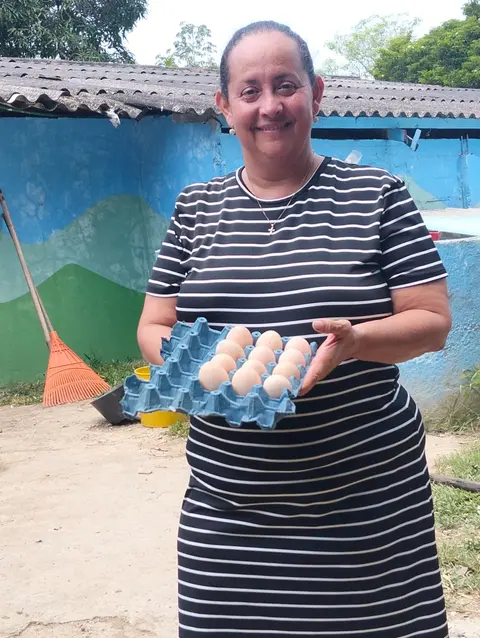
Nearby, Nilson hauled freshly cut clusters of popocho to the truck — that green, heavy load that smells of new earth. And in the rustic henhouse, among brown and grey hens settled into their nests of worn old wood, the day's eggs were gathered — the very same ones that Angélica, smiling with her blue tray, would carry straight into the hands of whoever wished to buy them, with no middlemen and no factory labels.
Milk, cheese, artisanal whey, popocho, eggs: everything that comes out of these two farms goes directly to market, and what returns in pesos is what sustains the bird conservation projects of Fundación Loros. A simple chain, without ornament, that connects the corral to the flight of the guacamayas.
At the Los Guardianes and Vista Hermosa farms of Fundación Loros, workers Jendel and Eder carry out their daily rhythms of hand-milking the cattle, while Nilson tends to the harvest of popocho and the gathering of eggs from free-range criollo hens. The fruits of this labor — fresh milk, handcrafted cheese, artisanal suero, popocho, and eggs — are sold directly to the public by Angélica, untouched by industrial process or chemical additive. Every harvest, every pail, every carefully collected egg serves a greater purpose: to sustain the bird conservation work of Fundación Loros.
Four Species, One Single Spot at El Paraíso
There are mornings when El Paraíso simply decides to be generous, without warning. Carlos Andrés Matas Contreras was walking near the kiosco when he came across something you don't see every day: an ararauna, all electric blue, and a guacamaya cheja perched at the very same spot, joined by a tucán and a squirrel that rounded out the scene as if none of them had anywhere else to be.
Four different species, one single place, all at once. Carlos didn't hesitate — he pulled out his phone and recorded two videos that now form part of the official registry of Fundación Loros. There is no better proof than that: the still image of one corner of the reserve being exactly what it is meant to be.
Rain Out of Place in Los Guardianes
In the first days of March, Eder — a member of the livestock team at Fundación Loros — raised his camera in the sector known as Los Guardianes and captured something that had no business being there: rain. It wasn't the first time. Since February, the sanctuary has been receiving rainfall during months that, as a rule, pass dry — without that murmur of water over the canopy, without that smell of wet earth that shifts the whole character of the reserve.
Eder described it as a rarity, and that simple word carries real weight. The climatic calendar the team knows by heart — the dry months, the wet ones, the months of transition — seems to have slipped out of place. What he recorded on video is not simply water falling: it is a signal that this year's rainy season may arrive broader and earlier than usual.
For now, Los Guardianes holds the moisture of that March afternoon. Eder's footage remains in the field log for what it is: a small detail that may, in time, prove significant.
Loro 31 and His Forest in the Making
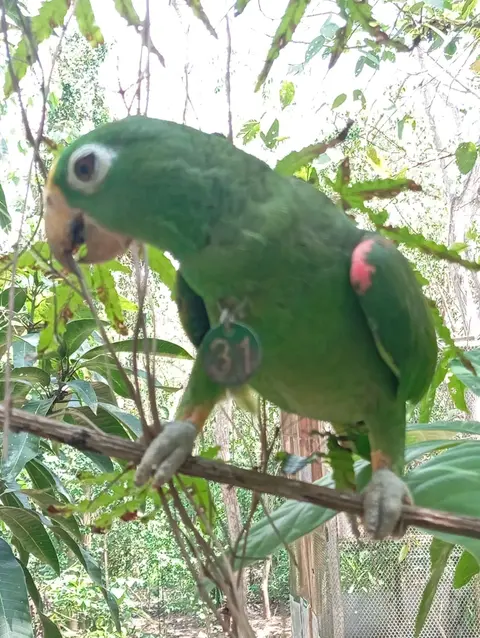
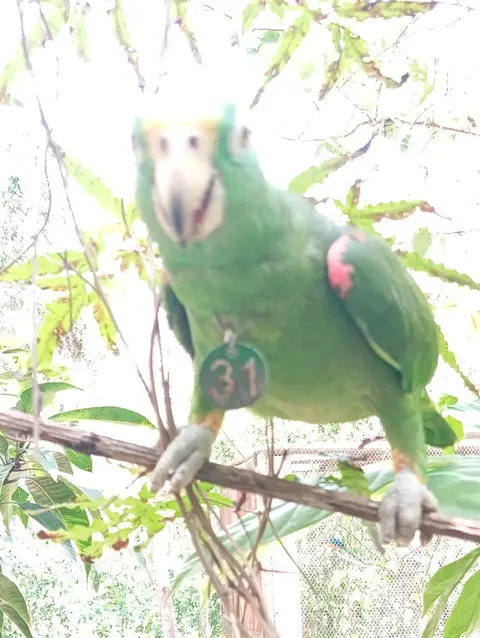
Between aviaries #3 and #4 of the Fundación Loros, there is a corner that still smells of freshly turned earth and young leaves: the Bosquecito, as Alejandro named it — the Argentine founder who one day arrived on this Caribbean land with the idea of giving the birds something that resembled a home. The forest is barely learning to be one, but it already has a permanent resident: Loro 31, an Amazonian parrot of brilliant green, reddish patches on his wings, and a flash of yellow on his head that gives him away from a distance. Around his neck hangs his numbered tag, small as a medal earned the hard way.
Omar Enrique Berdugo Cabeza knows this well, because Loro 31 accompanies him every time Omar makes his feeding rounds through that area. It is not simply that the parrot waits for food and nothing more — it is that he appears, settles nearby, watches. As if Omar's rounds were his own. Alejandro envisioned this sector with artificial nests for parrots and macaws, a work that moves forward through careful monitoring and gradual releases, allowing the birds to find their own way toward a sustainable wild life. Loro 31, with his tag around his neck and his habit of wandering freely among the young trees, is today the most living proof that such a path exists.
That afternoon, in the papaya tree of Fundación Loros, four birds turned the green canopy into an open-air dining room. There was Sombrerito — loro amazona amazona, medal B12 — true to his preferences: banana and papaya, always papaya. Beside him, his companion B11, the two of them unmistakable among the foliage by the metallic glint of their bands. A little higher up, a pair of loro real completed the gathering. Omar never managed to spot their medals, but he knows them well: they nest in an oak in the foundation's park, and every so often they make their way down here when the tree calls to them.
The foundation's papaya produces year-round, without rest, and the birds know it. They are not satisfied with the sweet orange flesh alone — they also go after the small black seeds hidden inside, the very ones that act as a natural dewormer. A quiet pharmacy, buried within the fruit, that the parrots have discovered entirely on their own.
Omar watched them in silence, from below, as their beaks opened the fruit with that unhurried precision that parrots have when they eat without rushing.