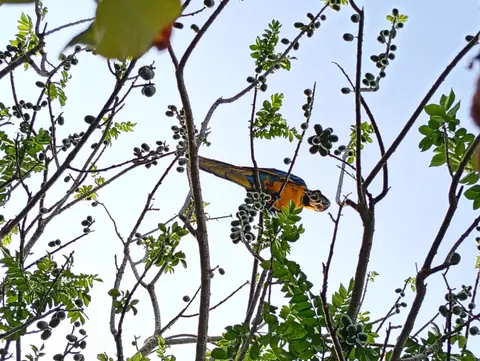
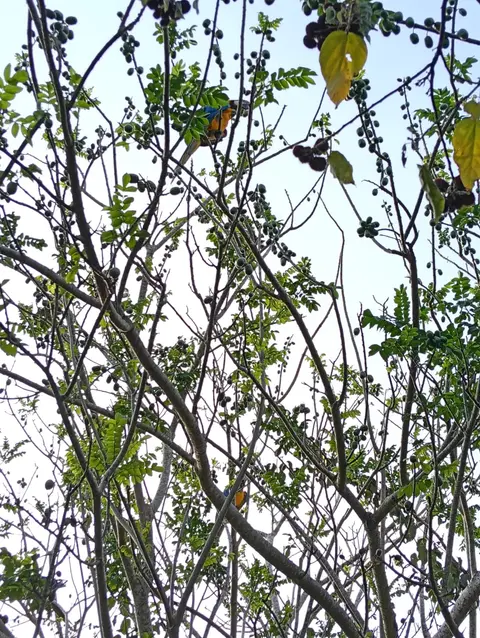
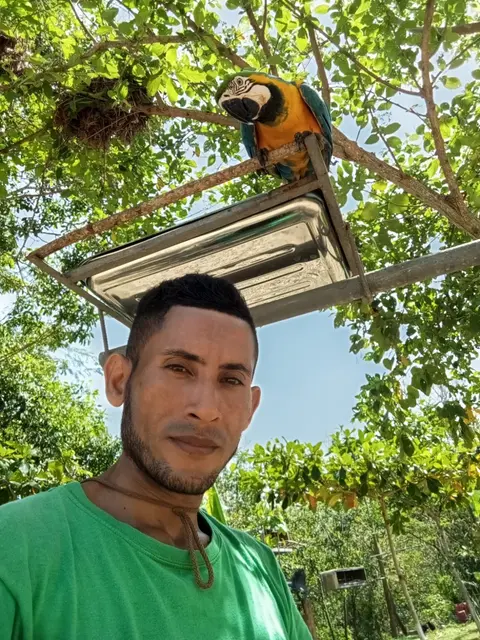
There are moments in the field that cannot be planned or repeated. Omar Enrique Berdugo Cabeza was alone in aviario N°2 when he found them: a pair of guacamayas caught up in that slow, ancient language of courtship — that exchange of glances and gentle touches that birds practice without hurry. He pulled out his phone and began to record.
That was when the mosquito appeared. It didn't come to bother or to interrupt — it came to drift, with a calm that has no business belonging to an insect of its size. It circled the pair in precise, almost calculated movements, and Omar watched it and thought what anyone would have thought: that's no mosquito, that's a drone. A tiny, buzzing witness that someone might have sent to document the moment.
Nature is like that sometimes: it gives you the scene you were looking for, and then, as a gift, sends you something you never expected. The guacamayas carried on with their business, indifferent to the observer and the intruder alike. Omar recorded everything, held his silence, and let the aviario do its work.
Macaws in the Neighborhood Ciruelos
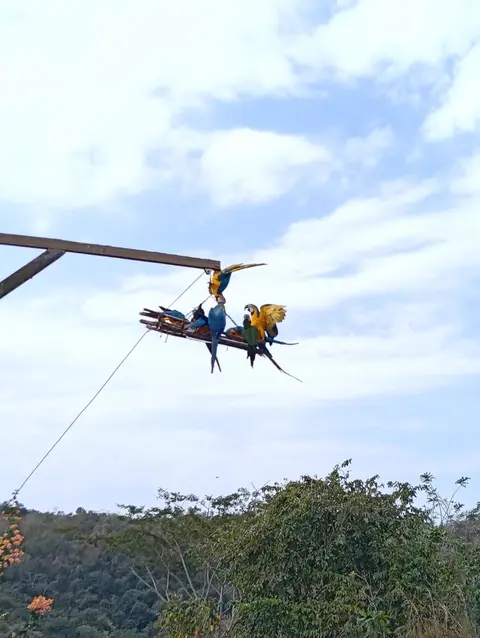
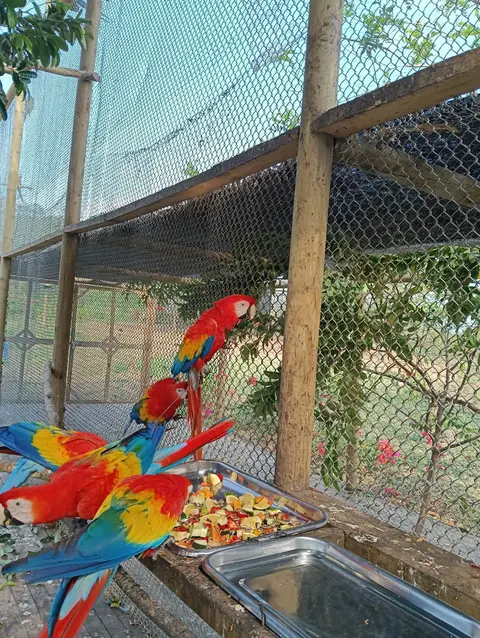
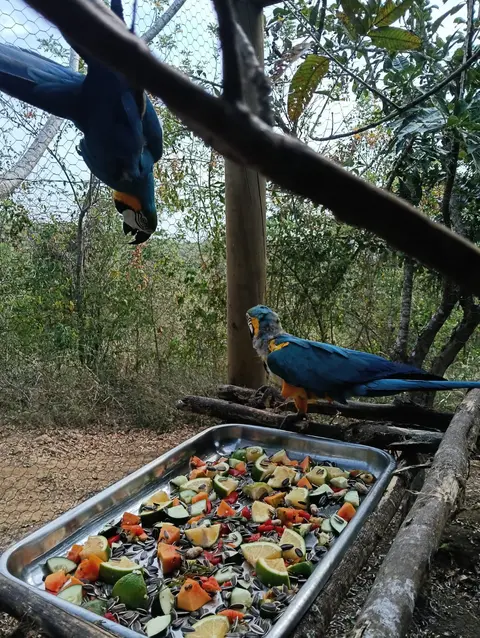
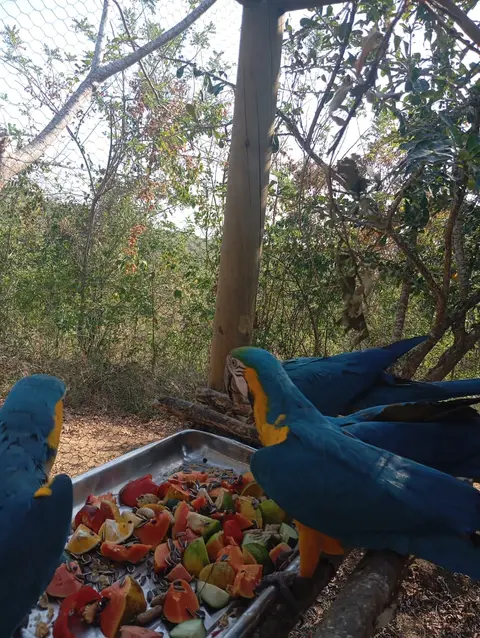
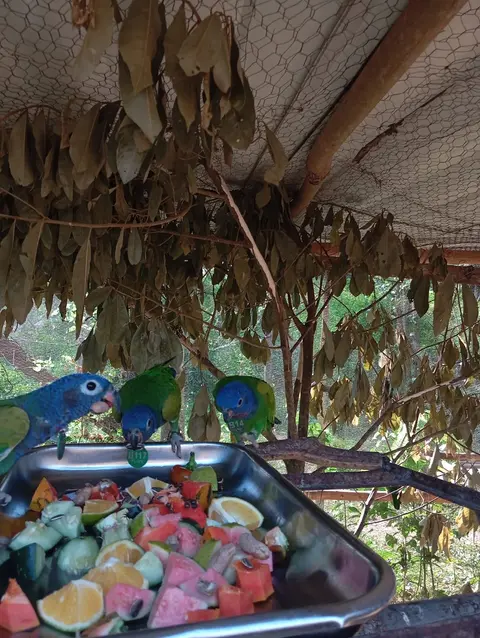
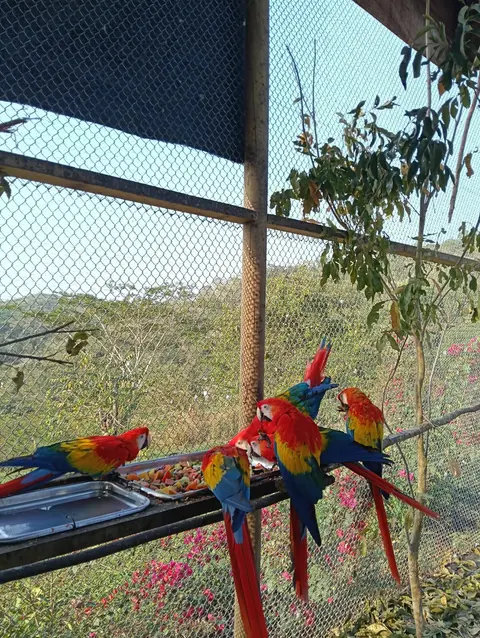
Alberto arrived at the release site that morning carrying fresh fruit and sunflower seeds: papaya, lemon, cucumber, bell pepper. The wooden feeding platforms filled quickly with color — the electric blue and blazing yellow of the blue-and-yellow macaws (Ara ararauna), and the vivid scarlet of the scarlet macaws (Ara macao) — as powerful beaks tore into the fruit pieces with that impatient familiarity macaws have always had with food.
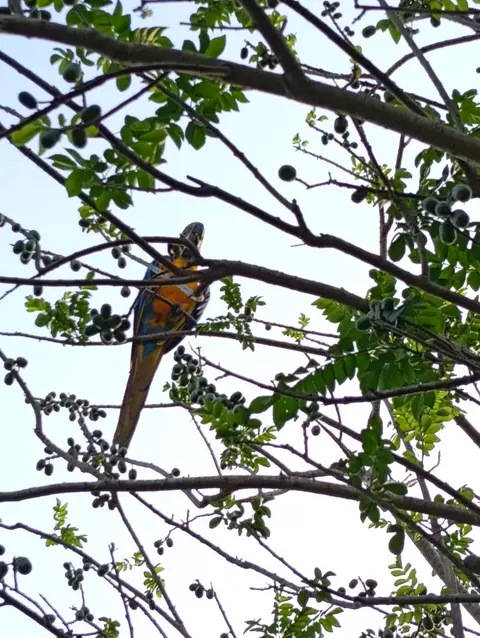
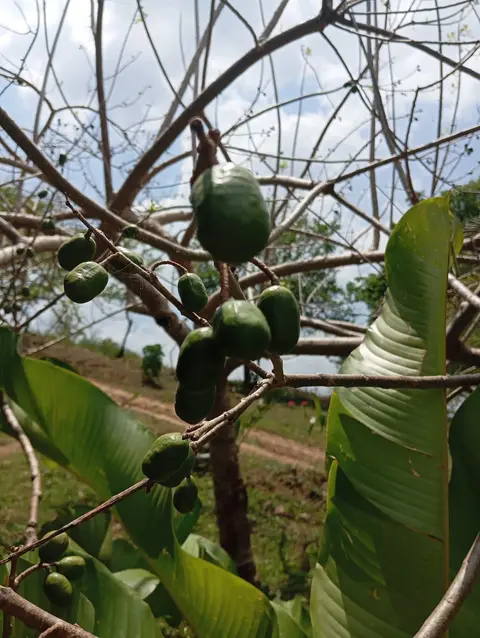
But the most important moment of the day didn't happen at the feeders. Alberto noticed that several of the birds had ventured out on their own to forage in the fruit trees surrounding the reserve. The ciruelos (Spondias purpurea) are heavy with fruit these days, and the macaws know it. Watching them move through the branches on their own terms — choosing their fruit without waiting for a prepared tray — is one of those quiet signals the team has learned to read: the birds are finding their way.
This fruiting season of the ciruelos also allows the Fundación to track the natural cycles of the surrounding vegetation — a detail that will only grow more valuable as the macaws come to depend more and more on that landscape, and less and less on the feeders.
Ninety-Seven Liters at Dawn
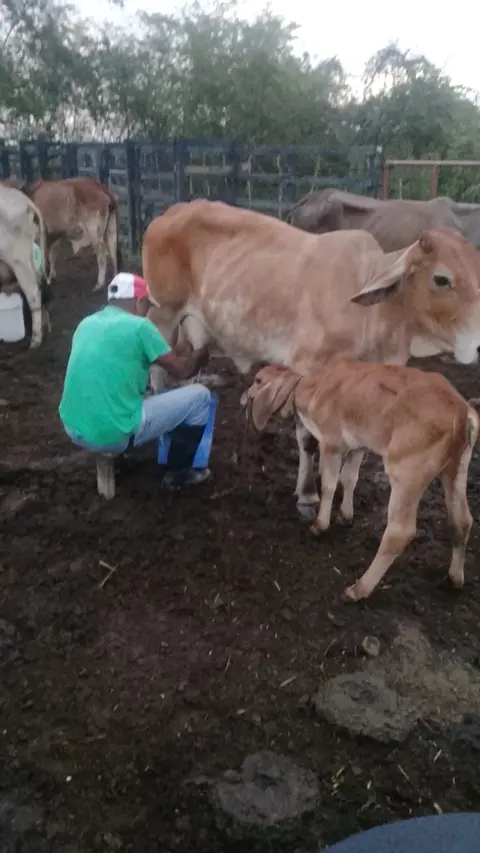
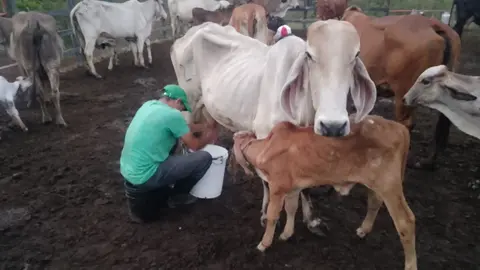
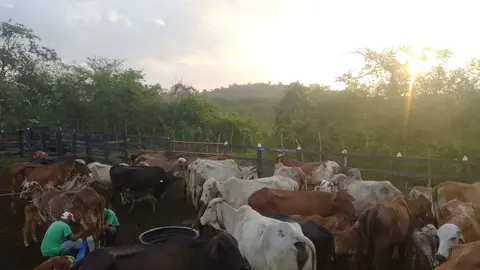
It was still the small hours of the morning when Eder, Nilson, and Jender arrived at the corral in the Guardianes sector of the reserve. The damp earth underfoot still held the cold of the night, and the cows — white Brahmans, high-backed Gyrs, and a few that might have been Girolandas — moved slowly between the wooden fences while the brown calves pressed their muzzles forward, searching for their share. The three farmhands of Fundación Loros set to work: bucket in hand, the same hand-milking as always, the same as every morning.
By the end of the day, the tally was plain: 97 liters of milk. All of it went to Juancho, an outside buyer, with nothing left over for public sale that Saturday. There was no fanfare, no special record made — just three men, a herd, and the quiet labor that holds life together in the reserve before the rest of the world stirs awake.
A Birthday Among Palms and Blue Feathers
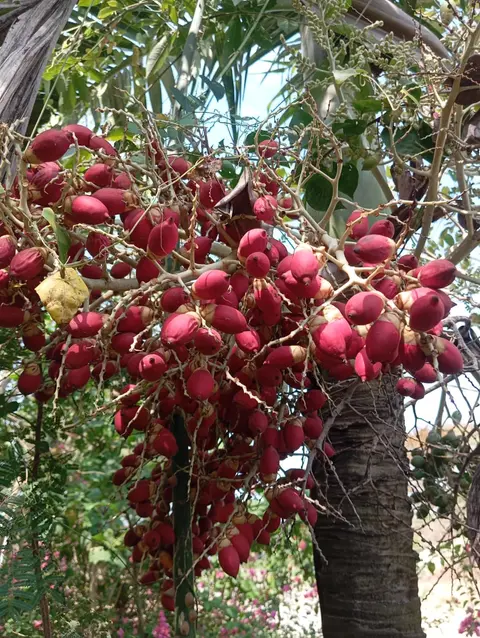
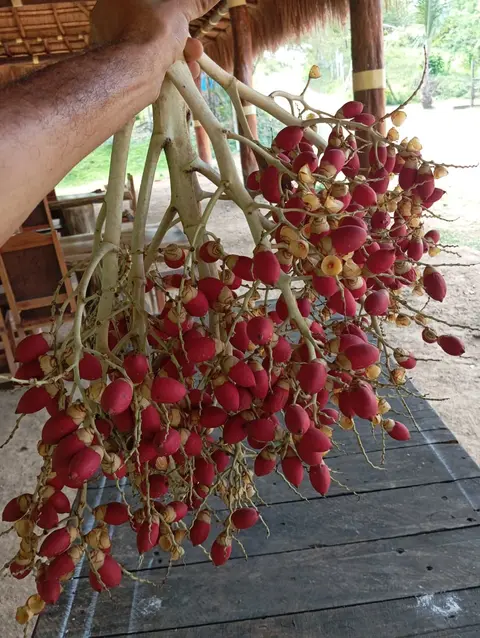
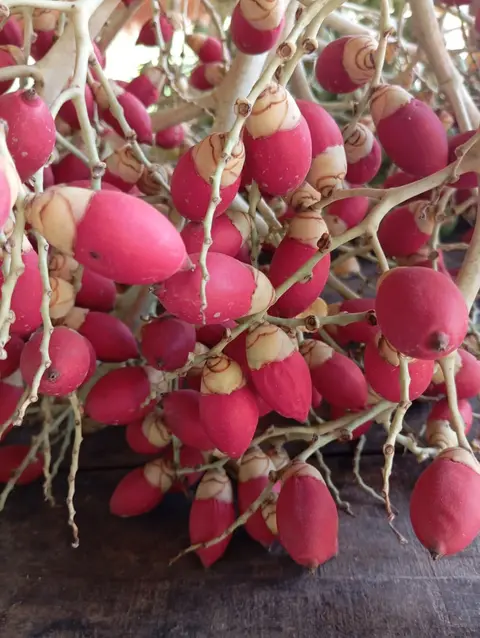
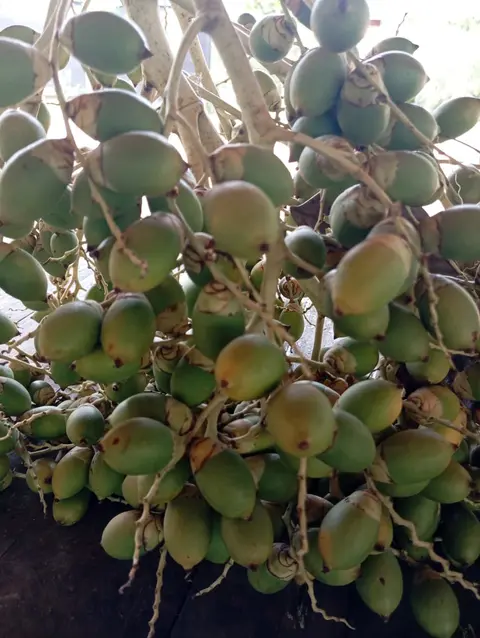
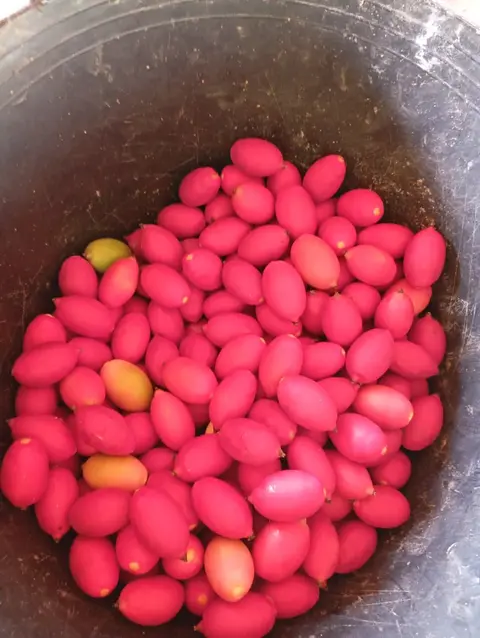
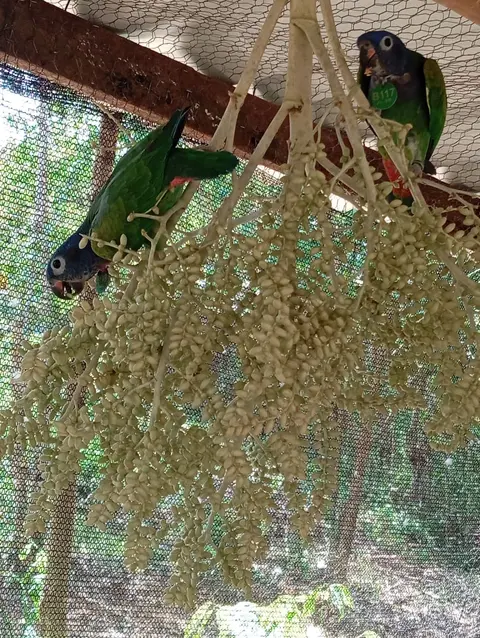
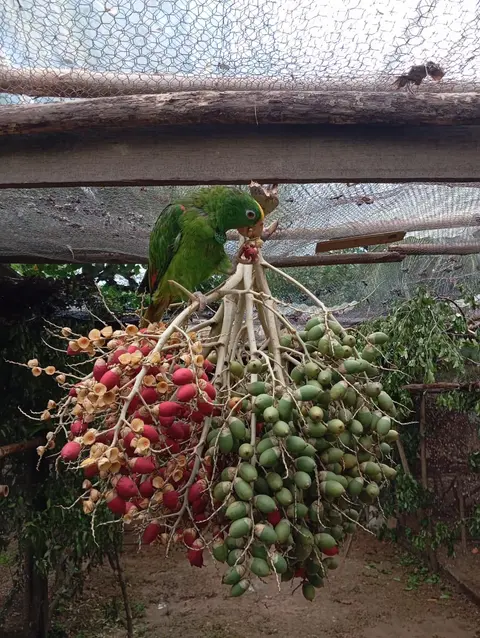
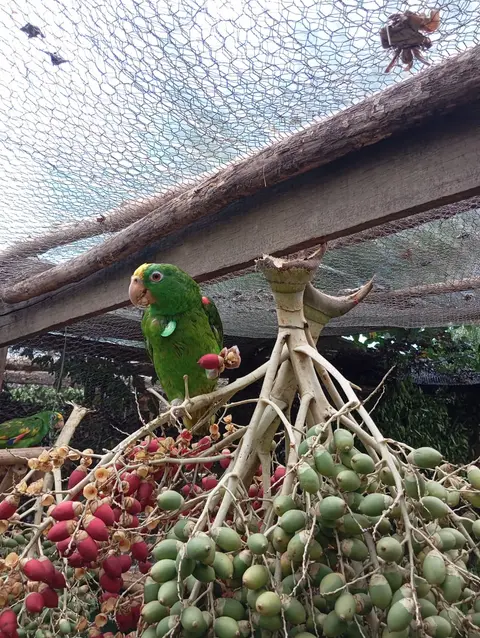
There are birthdays celebrated with cake, and there are birthdays celebrated with a bucket of Manila palm fruit and a flock of hungry parrots. Omar Enrique Berdugo's was the second kind. This morning he walked out to the guardians' point, where a palm heavy with clusters was waiting for him — fruits at every stage of ripening: the tight green ones, the half-blushed pink ones, and the deep red ones ready to fall. He cut them down, arranged them in the bucket, and carried them to the Fundación's feeding station with the calm of someone who has made that walk many times before and knows exactly what comes next.
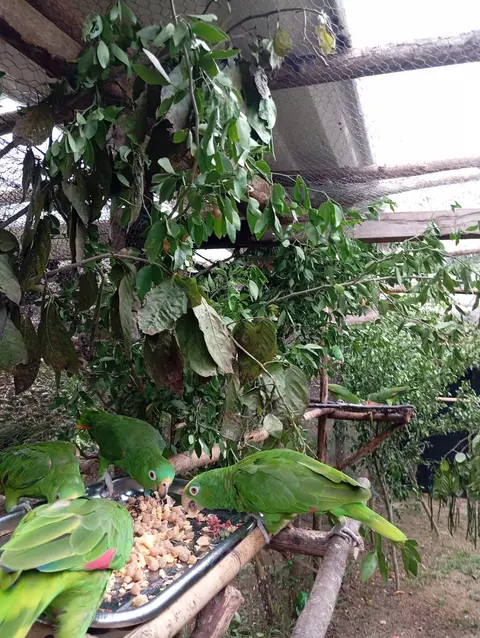
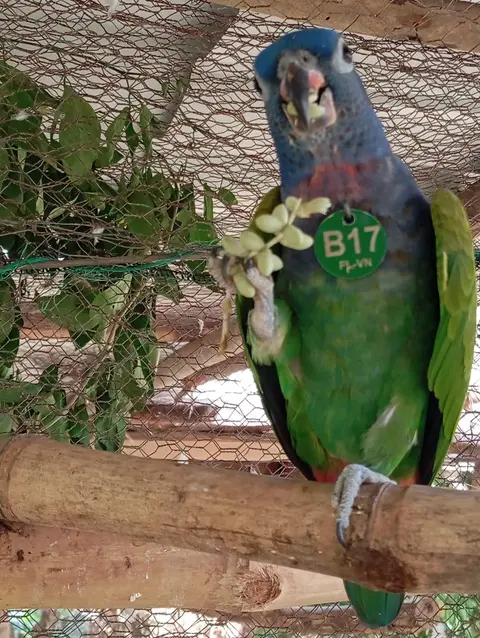
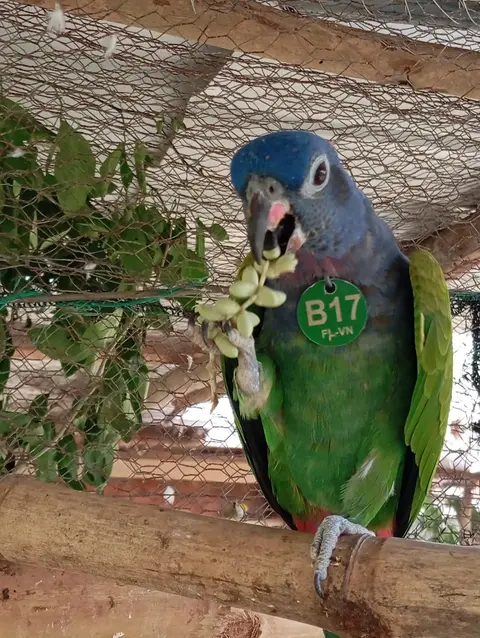
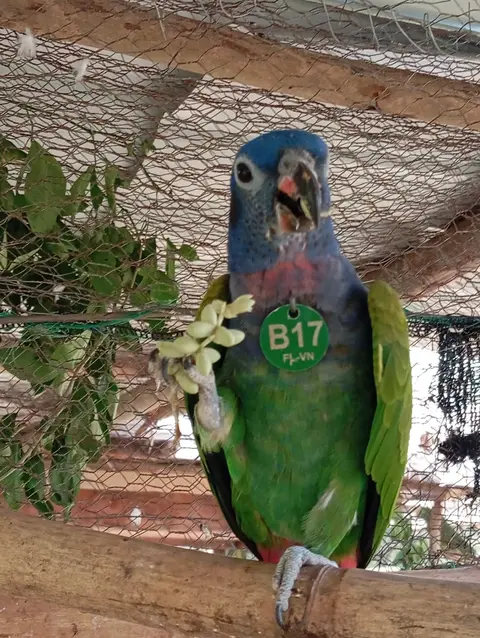
What came next was the usual uproar: green parrots — possibly amazonas — and blue-headed parrots (Pionus menstruus) descending on the feast both inside and outside the aviary. Among them, the individual registered with the green ring B17 FL-VN, who seized his cluster in one foot and worked it over with a beak full of conviction — the conviction of someone with no intention of sharing. Omar watched them, he says, feeling happy. No further explanation was needed: to have spent the day like this, among feathers and bright-colored fruit, is as good a reason as any to mark another year.
Beethoven and His Buddy at El Paraíso
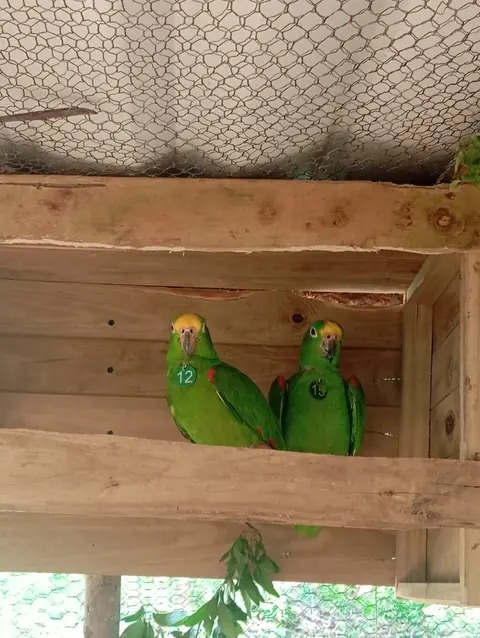
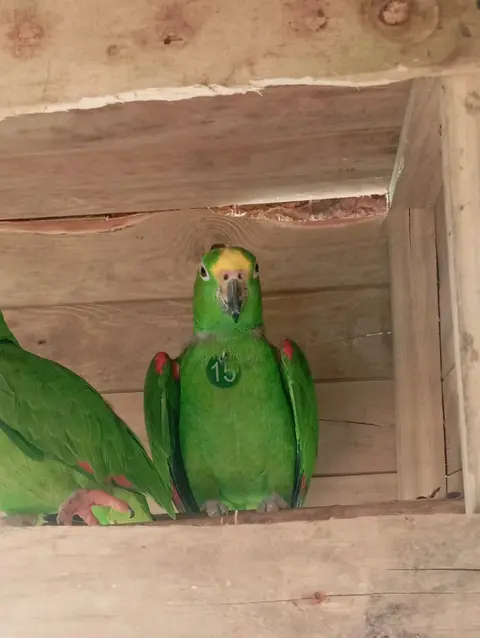
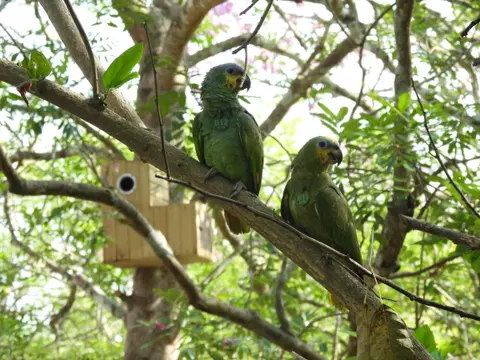
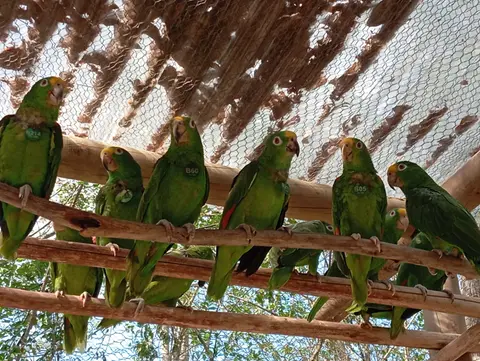
From the wooden aviary beside the main house of the El Paraíso estate, two yellow-crowned parrots watched the day unfold with that sovereign calm that Amazona ochrocephala carry when they know they are well. Omar passed by with his camera and stole a few shots: brilliant green plumage, red flashes across the wings, the yellow crown that gives the species its name. Hanging from their necks, tags 12 and 15 identified them beyond any doubt.
15 is Beethoven. 12 is, in Alejandro's words, "a friend of his" — and that is enough. Omar sent the images because Alejandro always wants to know how they are doing, and today's answer was reassuring: they look good. Sometimes the field brings no dramas, no surprises — only the quiet confirmation that two birds are still there, whole and well, sharing an aviary under the sun of El Paraíso.
Six Turtles and a Heron at Lago 1
Carlos Andrés Matas Contreras headed out into the field that afternoon with binoculars around his neck and came back with his hands full. His first find was a solitary iguana tucked into the vegetation of finca Los Guardianes, in the sector known as Valle Verde — perfectly still, as though it had been waiting for hours for someone to notice it. From there, the trail led him to Lago 1 at finca El Paraíso, where the afternoon began to reveal what it had been quietly holding.
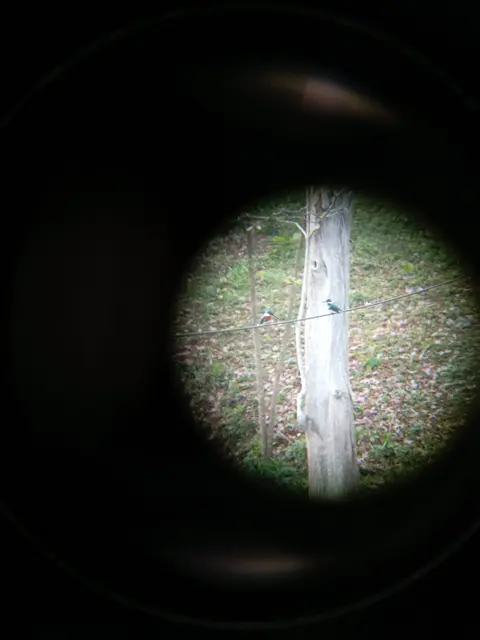
On the power line running beside the lake, two kingfishers — blue-green and orange — perched with the easy confidence of birds resting on a familiar branch. Below them, along the bank, Carlos Andrés managed to count nearly six turtles basking in the sun — but the moment they sensed his presence, they slipped into the water one by one before he could get a proper look. The day's final gift came from a heron hunting fish with the patience and precision of a creature that has spent its whole life doing exactly this.
Four sightings, a single outing, all of it documented with photos and videos taken through the binoculars. That was how Carlos Andrés filed his report: spare, unhurried, and with the lake still breathing somewhere between the lines.
Omar Enrique Berdugo Cabeza arrived at Lago #1 just as the sky over the reserve had finished pouring itself out entirely. In the branches of the roble del nido, macaws B29 and B127 were shaking their still-drenched wings, and deep inside the tree, tucked into its nest like a hanging pouch, a torche dozed — one nobody had expected to find there. The turtles, who on dry days prefer the quiet depths of the lake, had ventured out to explore the bank, grazing on fresh vegetation and drinking the rainwater threading its way between the roots.
Further along, in aviario #2, the loros were not to be outdone: they bathed beneath the streams cascading from the roof, spreading their wings and stretching their necks with that particular joy they carry when heat and rain arrive together. And near aviario #5, in the still shade of a caucho tree, a squirrel had taken ownership of the feeding station as though it had always been hers.
It was one of those days when it rains and everything in the reserve wakes up at once.
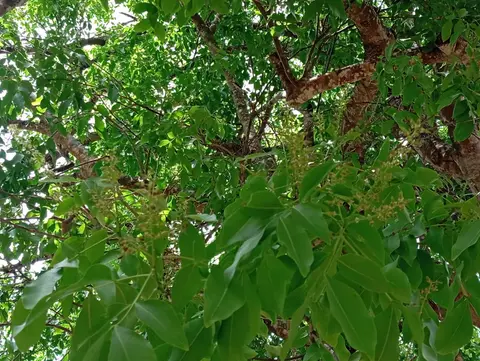
Omar Enrique Berdugo Cabeza was walking alone that afternoon of March 5th when he stopped near the tamarindo in the sector of los guardianes. There, in that familiar corner of the reserve, an orejero in full bloom awaited him — heavy with fruit, one of those trees that at Fundación Loros has already earned a story of its own. The foundation's records hold images of loros guacamallas feasting on its seeds, though that day Omar couldn't quite catch the moment — the tree stood there, generous and quiet, with no visible audience.
But the orejero does not belong only to the parrots. Omar describes it as a gathering place for venados, ñeques, and cattle alike, all drawn in by its fruit. The foundation's own guardianes often pass through — not just to observe, but to rest beneath its shade, which during the fiercest hours of the Caribbean sun feels like something close to a gift.
It is that kind of tree: one that sustains many lives without making a fuss. It offers fruit, it offers shade, it offers shelter — and it stands firm while everything else moves around it.
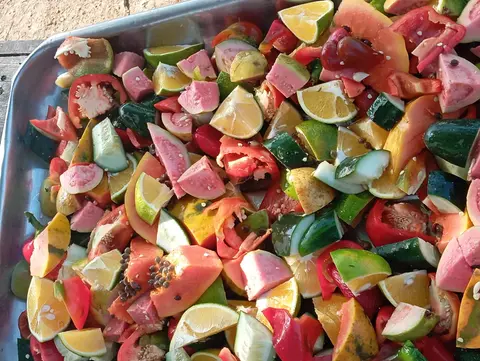
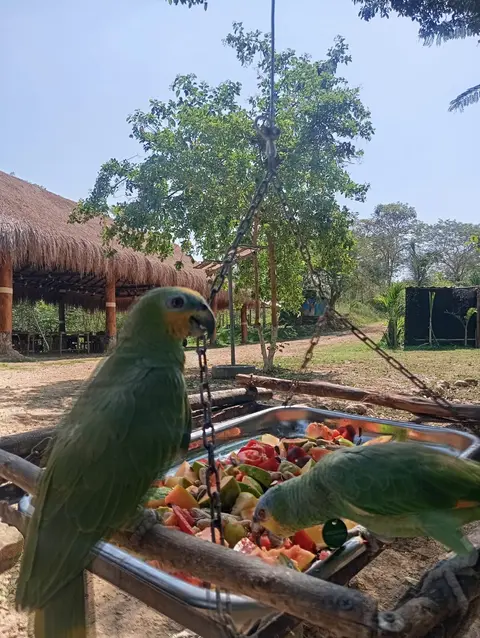
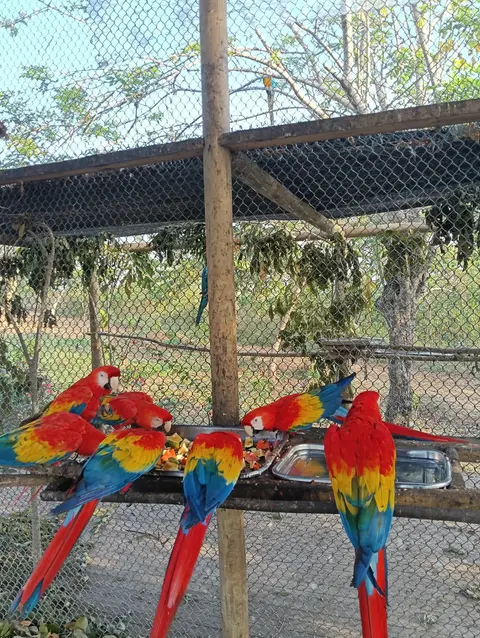
That Thursday at midday, Omar Enrique Berdugo Cabeza had his eyes fixed on the metal feeding tray in the aviary: orange, papaya, cucumber, guava, bell pepper, sunflower seeds, and peanuts, all laid out beneath the coastal sun. Eighteen blue-and-yellow macaws (*Ara ararauna*) shared the feast with the ease of birds who already know the food will come, while two chejas — discreet, as always — worked the gaps between so much blue and yellow to reach the papaya.
What caught Omar's attention was not the number of birds nor the commotion of wings, but something he has been quietly measuring for some time: on hot days, the macaws go straight for the orange. On cool, rainy days, they barely touch it. A simple observation, noted with the eye of someone who truly knows his birds, suggesting that these parrots use the orange juice as a source of liquid when the heat bears down.
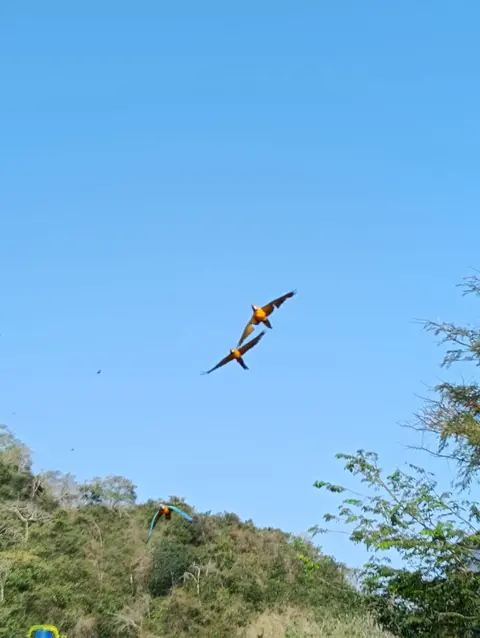
The moment was captured in photos and video: the birds in flight inside the aviary, their wings spread wide against the Caribbean blue sky, and the colorful tray that the team adjusted that very same day — no tomato, no lemon, peanuts instead of maní — following Omar's sound and careful guidance.
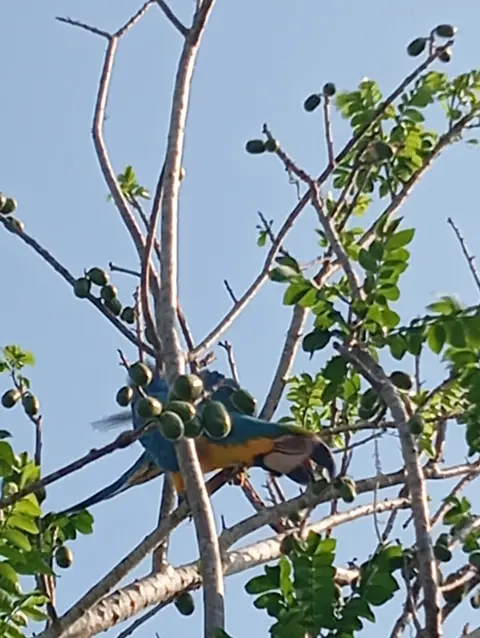
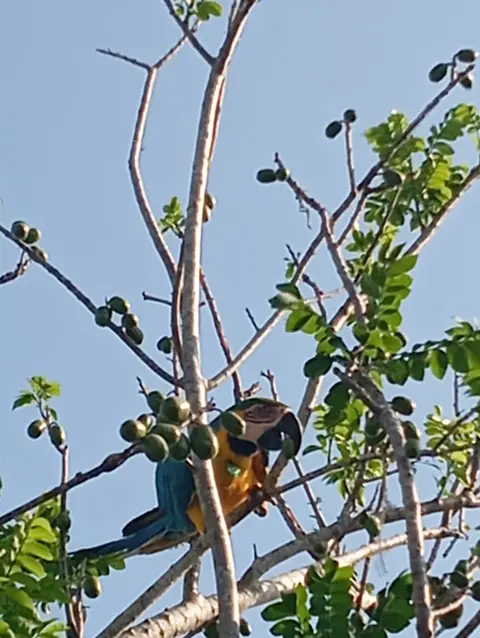
Omar Enrique Berdugo Cabeza arrived at cerro El Peligro with the morning, and what he found was worth every step of the climb: eleven Blue-and-yellow Macaws — Ara ararauna — settled into a plum tree, working the green fruits with those thick black beaks that let nothing go to waste. The turquoise blue across each bird's back and the golden yellow of their chests blazed against the clear coastal sky, and the racket they were making must have been audible long before they came into sight.
While the macaws divided up the plum tree with little in the way of ceremony, a kettle of vultures drifted higher up, tracing their slow, unhurried circles above the hill. Two different worlds sharing the same stretch of sky: some celebrating among the branches, others watching patiently from above. Omar documented the scene with five photographs and eleven videos, shot from the exact spot where the plum tree casts its shade — coordinates now marked permanently on the reserve's map.
Cerro El Peligro has a reputation for keeping secrets and offering surprises, and this Thursday in March was no exception.
Three Rescued Souls in the Robles of El Paraíso
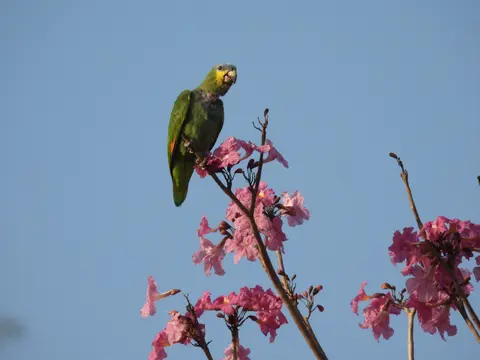
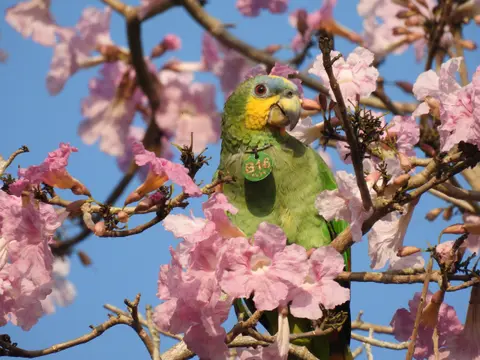
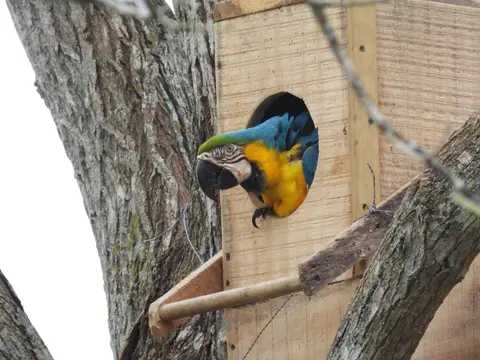
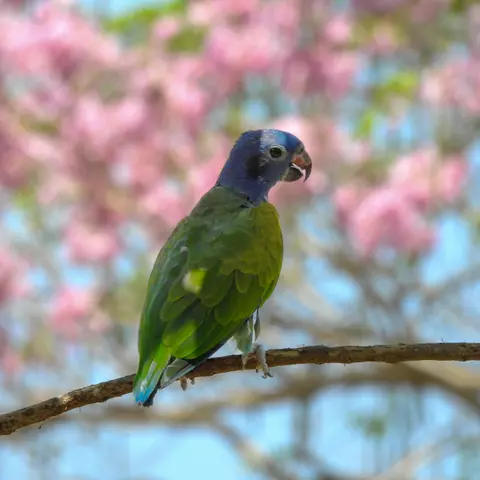
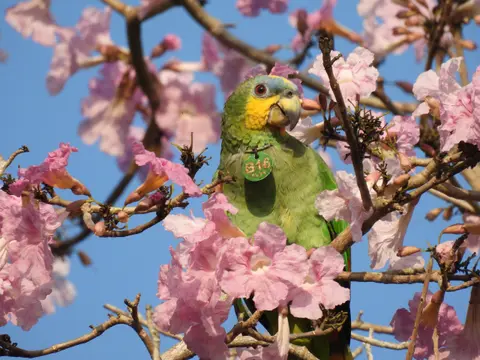
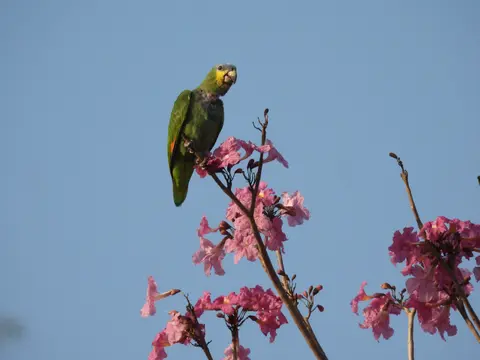
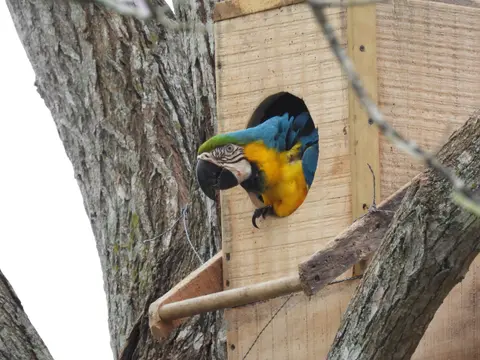
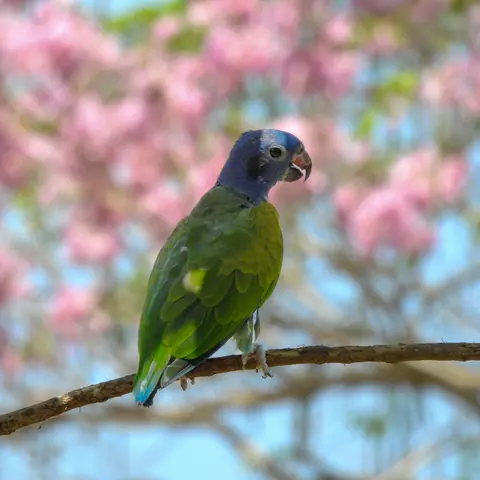
Yesterday morning, photographer Maicol walked the shoreline of the entrance lake at finca El Paraíso —where Fundación Loros was born— and found the robles (*Tabebuia* sp.) in full bloom, draped in pink flowers that set the landscape ablaze against the blue March sky. Among those branches were three visitors: an Amazonian parrot in green plumage with flashes of blue, bearing no visible band; another Amazonian identified by tag B16, perched calmly among the petals; and a blue-headed parrot (*Pionus menstruus*) its turquoise crown glowing between the blossoms. A little further along, a blue-and-yellow macaw (*Ara ararauna*) peered out with its black beak from the opening of a nest box mounted in a nearby tree.
What Maicol captured with his camera carries a layer that photographs don't reveal at first glance: all four of these individuals came to Fundación Loros as victims of wildlife trafficking. Today they live in semi-liberty within the reserve, and the place they chose to land is called, quite literally, El Paraíso — Paradise. Sometimes reality allows itself the luxury of being perfect.
Twenty-Two at the Release Point
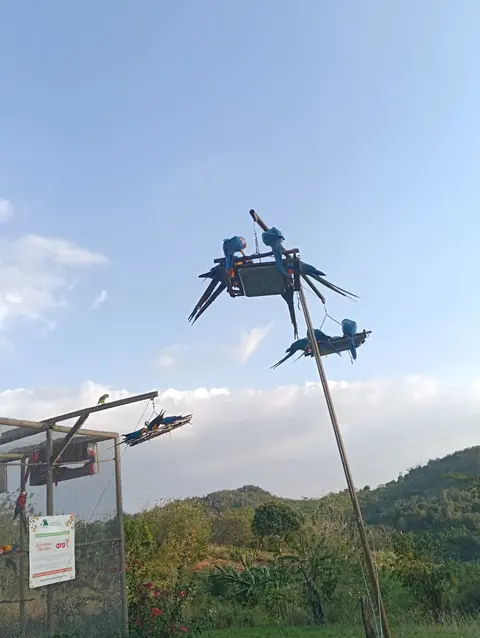
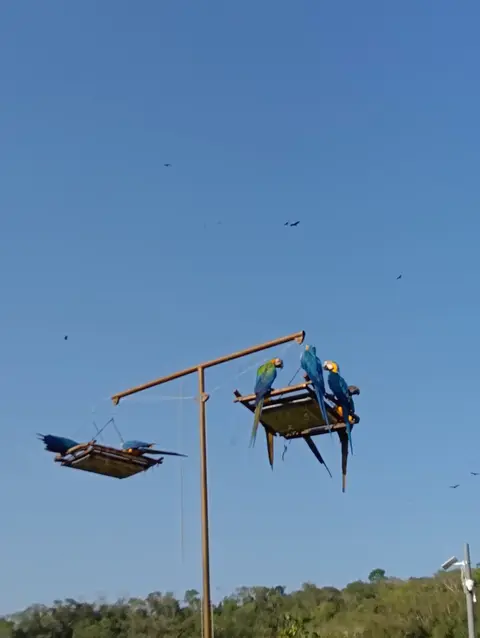
That afternoon Alberto arrived at the release point with his usual routine: the feed, the count, the careful gaze moving across perches and branches. What he found was a place full of life: 18 blue-and-yellow macaws (Ara ararauna) occupied the outer perches in full display of turquoise and gold, while 2 chejas and 2 loros reales rounded out a group of 22 individuals in total. The day's photographs say everything: the aviary filled to the brim, the hanging platforms clustered with color, and the Fundación Loros sponsors — Jerónimo Martins and Ara — on the sign in the background, silent witnesses to what is being built here.
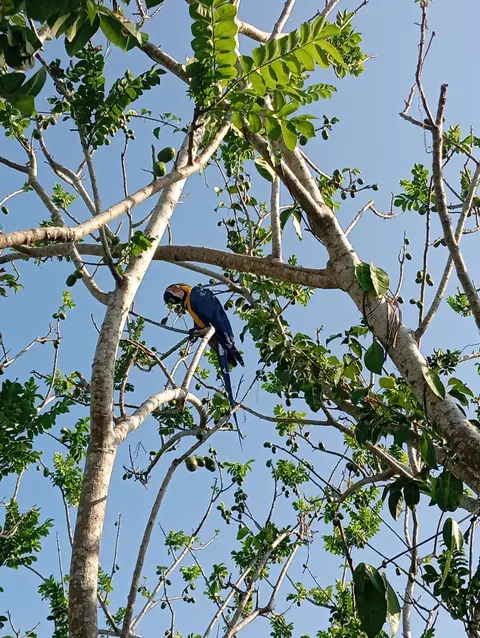
But the image that lingers is a different one: a single Ara ararauna perched at the crown of a wild tree, far from the aviary, with a wide open blue sky behind it. It is not on the perch or in the enclosure. It is simply there, in its tree, choosing to stay close. That is precisely what the natural environment adaptation process seeks — for the forest to stop being unknown territory and become, at last, home.
B29 and Her Uninvited Guests
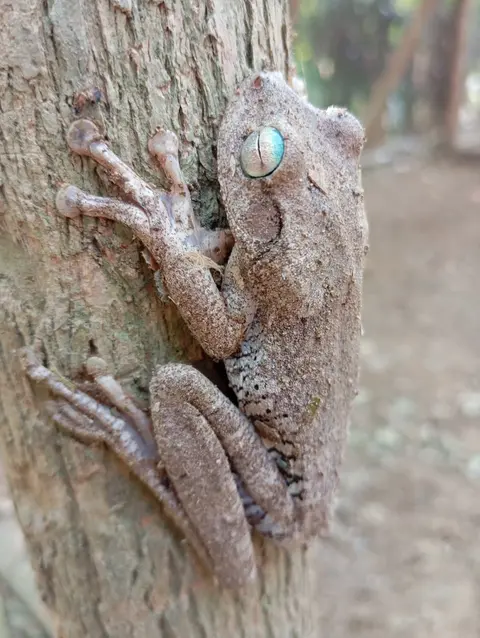
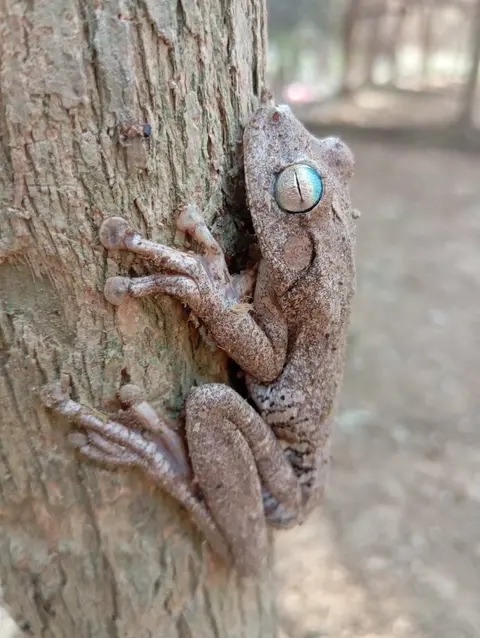
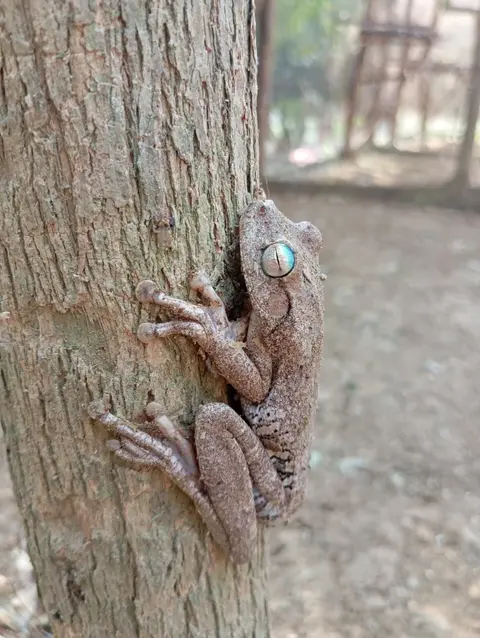
Omar Enrique Berdugo walked in that morning to run his routine cleaning of the aviaries and found that someone else had already settled in. Waiting for him in aviary #1 was the bird his hometown folks call "chupa huevo," slipped inside the enclosure as though the place were rightfully hers. In aviary #2, camouflaged against the bark of a tree with a brown skin that mirrored every crack in the trunk, rested a tree frog (Hyla sp.) — the kind you can look at ten times without ever seeing, until that iridescent blue-turquoise eye catches you, brilliant as a gemstone buried in all that camouflage.
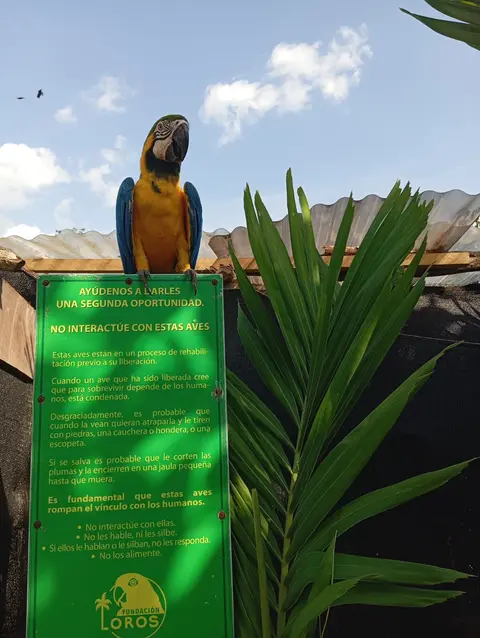
But the image that stole the day belonged to the blue-and-yellow macaw B29, perched as bold as you please on top of the Fundación's green sign — the very one that reminds visitors not to interact with the birds in rehabilitation. There she was, right above that warning, surveying the world with the quiet authority of a creature who has spent months learning what it means to be free. Omar documented everything — photos, video — before picking up his mop and bucket and carrying on. A Tuesday of cleaning that turned into something else entirely.
A Midday Plunge in Lago Valle Verde
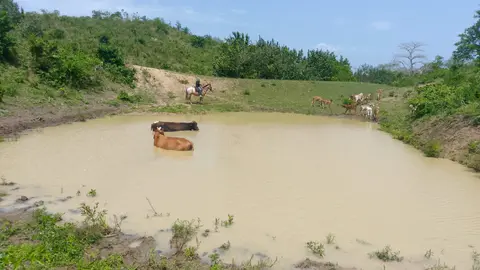
It was a sweltering afternoon on the grounds of Los Guardianes when Jender Torres and his companion Eder rode out on horseback to do what they always do: herd the calves back toward the pen. The sun bore down hard on the green hills of Villanueva, and the sky stretched wide and cloudless over that familiar ranchland — the kind of landscape you know by heart, by its stillness, by the smell of earth and brush.
It was then, passing along the banks of Lago Valle Verde — a body of water well known to anyone in the village — that the two cowboys came upon the scene: two cows standing chest-deep in the murky water, unhurried, savoring a long cool soak in the way only creatures of the field know how. Behind them, the rest of the herd grazed quietly on the hillside. Jender and Eder kept riding without breaking the moment; work doesn't wait, and the cows weren't about to come out for anyone.
At Los Guardianes, the days carry that particular blend of routine and surprise that only the countryside can offer. Sometimes the cattle, too, need their moment of rest.
Two Herons and the Silence of Vista Hermosa
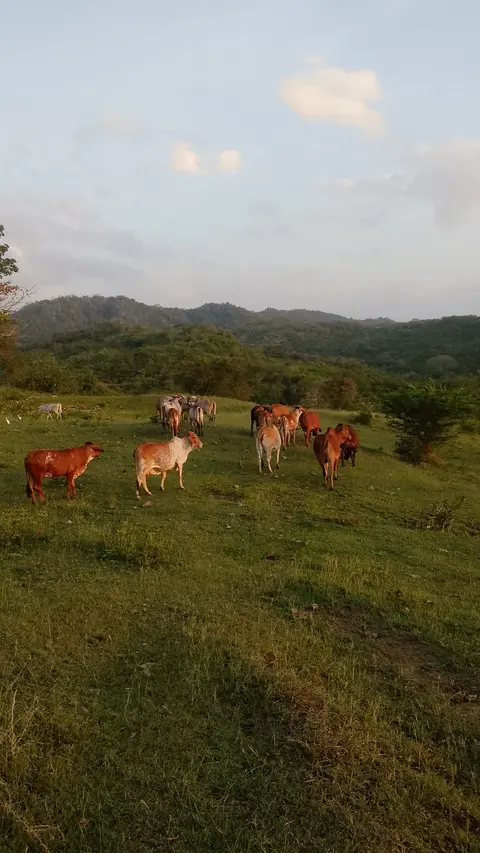
On the afternoon of March 4th, Jender Torres Álvarez was making his rounds through the grounds of Vista Hermosa when the landscape opened before him: a broad, generous green meadow, a herd of cattle in coats of brown, white, and gray grazing without hurry, and in the distance the hills cloaked in dense forest, with Cerro El Peligro keeping quiet watch from afar. Everything smelled of wet grass and open sky.
Down on the ground, close to the cattle, two Cattle Egrets (Bubulcus ibis) moved with unhurried ease among the legs of the cows. With the precise and patient beak that defines them, they picked ticks from the animals' hides — an ancient exchange between species that the Colombian savanna knows by heart. The cattle, indifferent and well-fed, went on grazing as though nothing at all were happening.
This kind of sighting, simple as it appears, speaks well of the land's condition: healthy livestock, wild birds woven naturally into the landscape, and a living corridor that ties the reserve to the hills on the horizon. Jender recorded it all with the unhurried eye of someone who has spent years learning to read the field.
Happy, a Coconut, and the Path of the Parrots
That Wednesday, two visitors arrived at Fundación Loros, eager to see up close the work being done here. Carlos climbed the palm, brought down the coconuts, and split them open with the ease of someone who has done it a hundred times. The woman received hers still fresh, green, and heavy, while Happy — the foundation's little beige dog — had already decided that the best place in the world was precisely that four-wheel-drive vehicle, right on top of her lap.
And so the 'Camino hacia la Libertad' tour began: winding through the tropical vegetation that drapes the trails of our 520 hectares, with a warm breeze on the face and the sound of the wilderness all around. It is the same route we follow so that visitors can understand, firsthand, how we prepare the parrots to return to their wild lives.
Happy stayed close the entire time, as she always does. The visitors left with hands still damp from coconut water, and with a different story about what freedom means in this corner of the Caribbean.
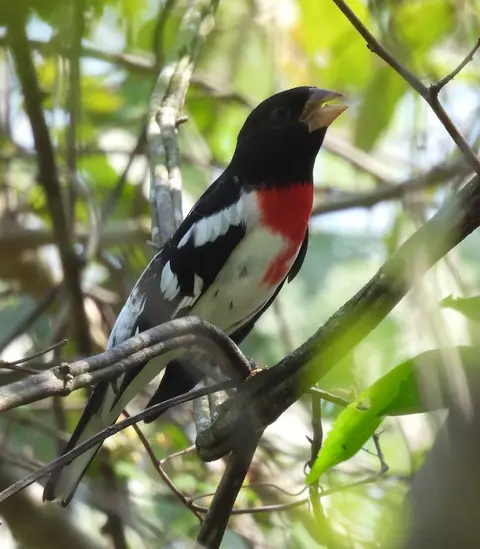
Maicol wasn't planning to make history that day. He was wandering through the forest with his camera when something stopped him cold: a Rose-breasted Grosbeak (*Pheucticus ludovicianus*) perched calmly on a slender branch, as though it had spent the entire morning waiting for someone to notice it. Head and back charcoal black, a vivid red blaze across the chest, and wings crossed with white bars — an adult male in full splendor, nearly invisible within the dense green tangle of foliage, were it not for that color that refuses to hide.
The photo reached the chronicler the following day, sent from la Poza de los Borrachos with few words, though the image spoke well enough on its own. The exact location within the sanctuary was never confirmed, but the record stands: this migratory species, which travels thousands of kilometers between North America and the Caribbean, found — for one quiet moment — a branch at Fundación Loros where it could rest and be seen.
At Fundación Loros, Omar Enrique Berdugo Cabeza and photographer Patria conducted a field survey in which they documented intense reproductive activity and wild behavior throughout the sanctuary. Blue-and-yellow macaws (*Ara ararauna*) were observed building nests, mating, and returning to their roosts, while Amazonian green parrots foraged on fresh fruit laid out at the feeding stations. Squirrels were spotted navigating obstacles to reach the hanging feeder in the park's roble tree, and gathering majagua fiber to line their nests — a small, industrious drama playing out in the canopy above. In the foundation's park area, ducks were also seen mating, adding to the chorus of life unfolding across the grounds.
Patria distinguished herself throughout the day with remarkable dedication and professionalism, capturing both photographic and audiovisual records of each encounter with quiet precision. Still, the day carried a small absence — Maicol Jia was missed, and his presence would have made the outing all the more complete.
A day in the field at Fundación Loros brought Corina and Carlos together for a full round of feeding, monitoring, and observation of birds currently undergoing rehabilitation. Inside the aviaries, three blue-headed parrots (*Pionus menstruus*) drew their attention, as did a flock of fifteen to twenty Amazonian parrots (*Amazona* sp.), each bearing an identification band — B214, B60, B05, among others. The birds moved through their routines with a quiet naturalness: a bonded pair keeping close to one another, one individual settled into the posture of a nest-tender, others resting together in loose companionship, and in aviary #2, a single parrot lifting its voice in song.
Later, Corina and Carlos made their way to the sector of Conopany, where they set out trays of fresh fruit for birds flying free — an offering placed without a word, without a glance held too long, in keeping with the protocol of non-contact and silence that governs all interaction with birds in rehabilitation. It is a deliberate restraint, one that asks the human to step back so that the wild creature may step forward, reclaiming the instincts and behaviors that will one day carry it back into the forest.
The day closed with a photographic record of the free-flying birds at the open-air feeding stations — small figures perched and feeding against a backdrop of lush tropical vegetation, unhurried, and entirely themselves.
The Solitary Steward of the Cerro
Omar Enrique Berdugo set out alone that morning, with no company but the forest and his own intimate knowledge of the land. His route traced an invisible map of resources between Cameron's aviary and the release point at the cerro: ciruelas still unripe and hanging green, the quiet flower of the mamón just beginning to show itself, clusters of palm fruit that the parrots and macaws already know by heart — they'd been spotted circling those same trees in the guardianes before.
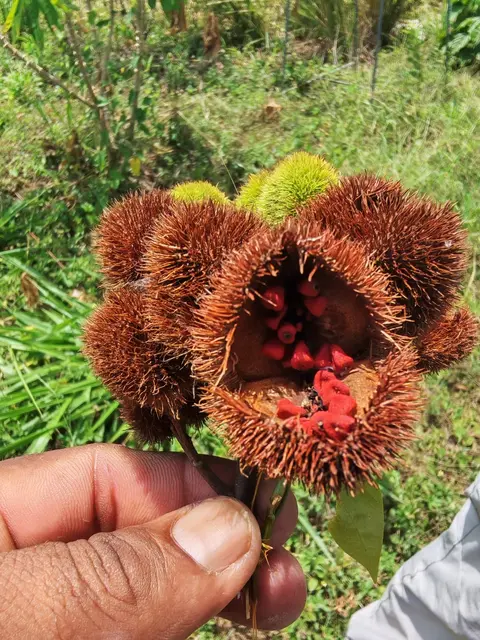
Near the aviary he found leaves of vijao, those broad, cool leaves that the campesinos of the region fold with practiced ease to wrap tamales and pasteles, or to cover a pot of rice left to cook slowly in the heat of the countryside. Not far from there came the day's most vivid discovery: at the release point on the cerro, an achiote tree — Bixa orellana — stood with its fruits split open, the red seeds glowing like small embers. The same red that seasons the cooking pots of the Caribbean coast, the same that indigenous peoples have worn on their bodies since time beyond memory.
One man, one morning, and a kind of inventory that reminds us why it matters to know a territory inch by inch before the doors of the aviary are ever opened.
During a field survey, three species were sighted across different sectors of the property. At lago 2, a group of 6 monos titis were observed, their movements captured on video. Along the arroyo of the finca Los Guardianes, a barranquero was spotted tucked within the vegetation — documented in both photographs and video — alongside an unidentified bird in the same sector, also recorded on film. A small carpintero was additionally observed at lago 1, its presence likewise captured on video.
The observer Carlos Andrés Matas Contreras set out on a field excursion along lago #1 of the reserve, where he captured on video three species of wildlife: an iguana (Iguana iguana) resting on the ground, two ringed kingfishers (Megaceryle torquata), and a little blue heron (Egretta caerulea). The sighting was documented across six videos taken throughout the course of the day.
The Oak That Burst Into Color by the Lake
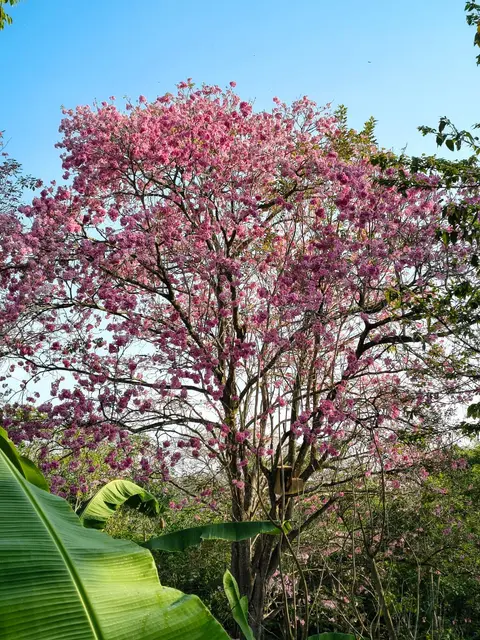
Near the lake at the entrance of Fundación Loros, a tree decided to demand attention without asking anyone's permission. Maicol found it in full bloom: a roble rosado —Tabebuia rosea— draped in flowers ranging from soft pink to deep fuchsia, so heavy with color it looked as though someone had painted it in the small hours of the morning. The clear blue sky of that Wednesday made it stand out even more, as if the two of them had struck a quiet agreement just in time for the photograph.
At the foot of the tree, the broad leaves of a banana plant kept it company without stealing the spotlight. Maicol documented the sighting with his camera, leaving a record that, in this corner of the sanctuary's 520 hectares, the roble rosado's flowering season was already well underway.
The Oropéndola That Warned the Forest
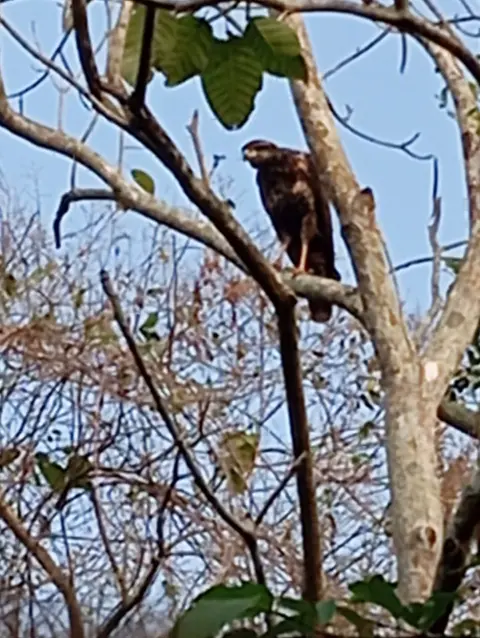
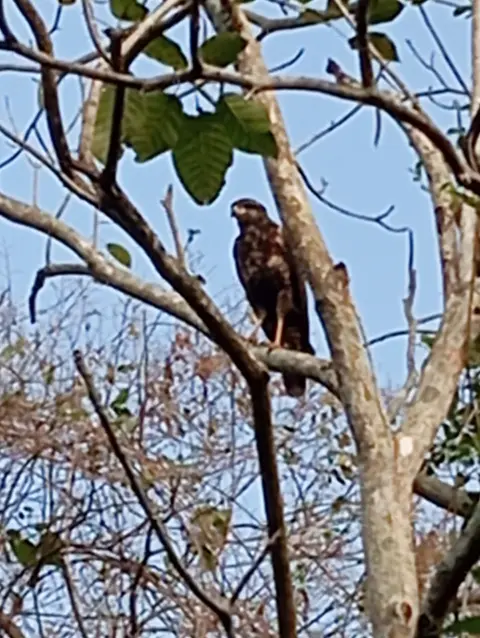
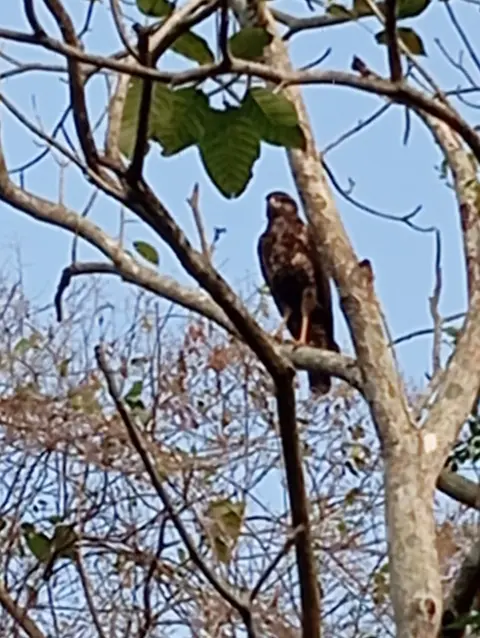
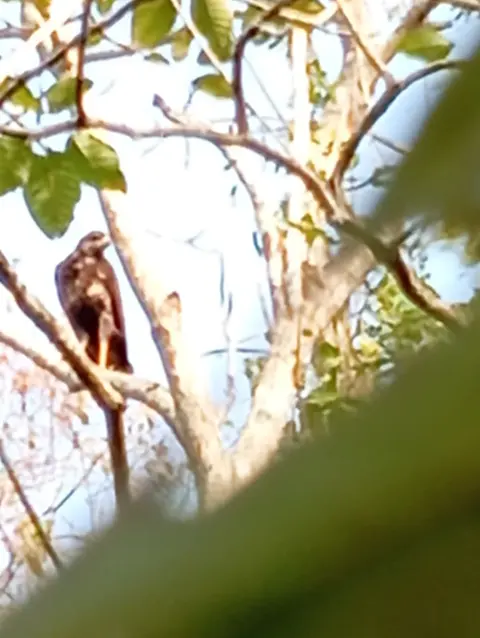
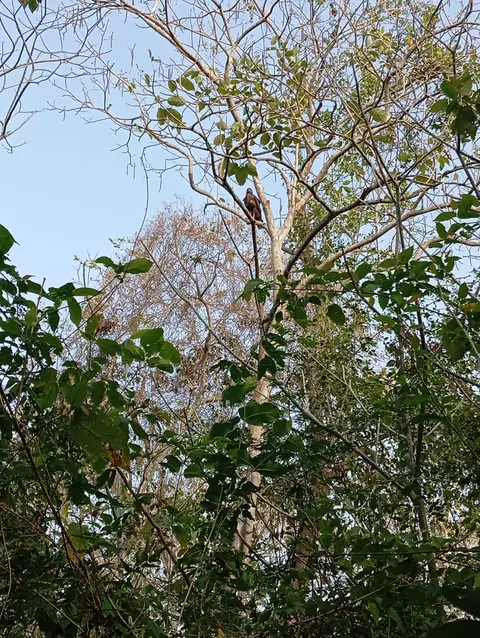
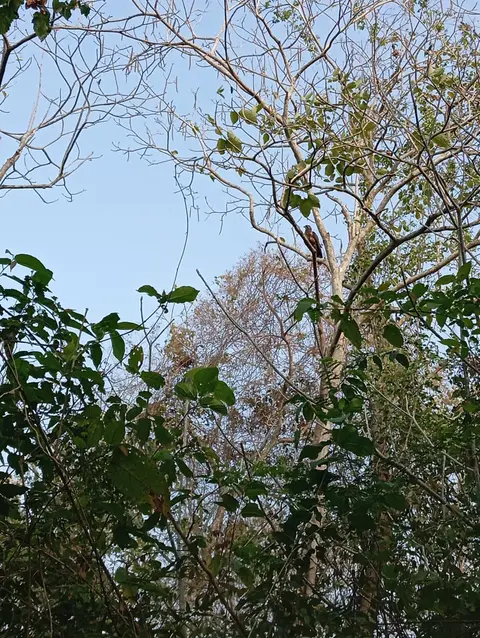
Omar Enrique Berdugo looked up and found them still, almost solemn, perched high in a great oak tree near aviaries 3 and 4. There were two: the first, a raptor of considerable size with reddish-brown plumage, settled on the branch as though the tree had always been his; the second, more understated, identified as a possible águila negra still in its juvenile stage. The clear Wednesday sky offered nowhere to hide.
But the forest already knew they were there. From a nearby branch, a crested oropéndola — black-bodied, with a bill and tail the color of old gold, larger even than a guacamaya — was sending out its alarm calls in an unbroken stream. This is how the warning system works in the reserve: no one needs to shout. It is enough for the oropéndola to speak.
Omar documented the sighting with quiet patience: 20 photographs and 11 videos of the two raptors holding their sentinel positions, while the crested oropéndola (*Psarocolius decumanus*) went on announcing to the world exactly what it had seen. Three species, one oak tree, and the record of a moment the sanctuary now holds in its memory.
A howler mother with two young on the path
Alberto set out that afternoon to bring food to the release site, walking the familiar stretch through the reserve's dense vegetation. But before he reached his destination, on the flattest part of the trail, some fifty meters short of the end, something stopped him in his tracks: a female howler monkey with two newborns clinging to her back. Two young at once — something that, in all the years of work at Fundación Loros, is rarely seen. Alberto managed to reach for his phone and start recording.
Further along, at the release site, the day kept giving. Eighteen blue-and-yellow macaws — Ara ararauna — birds well into their reintegration process, wheeled between the enclosure and the open sky above the hillside. Two chejas rounded out the group. Alberto captured them in video and in photographs: some perched beside the fruit feeder, others in full flight above the green canopy under the clear afternoon sky.
It was one of those walks where the path itself has more to offer than the destination.
B16 Among the Blooming Oaks
The oaks bloomed this week in the park area, near the house, and Maicol was wandering through with his camera when he found them. Among the branches draped in pink flowers, B16 appeared — an Amazon parrot, his green band clearly visible, perched with that particular calm parrots carry when the world seems like enough. A little further on, a Pionus menstruus — the blue-headed parrot — also allowed himself to be photographed amid the blossoms, indifferent to the lens.
What no one expected was the blue-and-yellow macaw peeking out from the opening of one of the nest boxes installed in the area. Just the head, outside — the black beak and curious eyes, like someone waking slowly on a Wednesday morning. Maicol caught that moment before she decided to retreat back inside.
We don't know whether B16 was alone or accompanied, nor how many psittacids were drifting through the park that morning. But the photographs say what words sometimes cannot reach: that when the oaks bloom, they appear too.
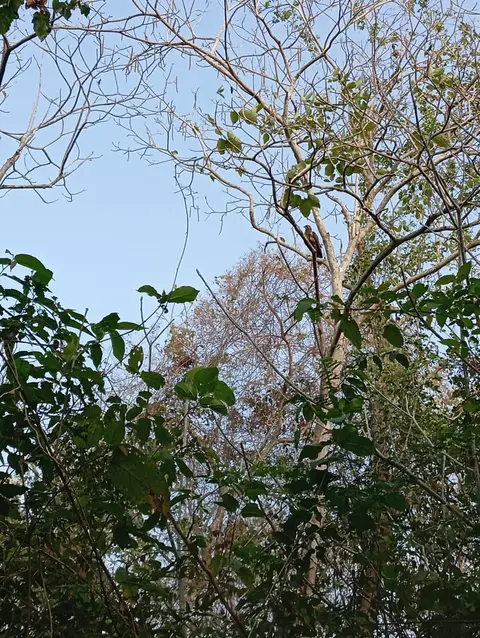
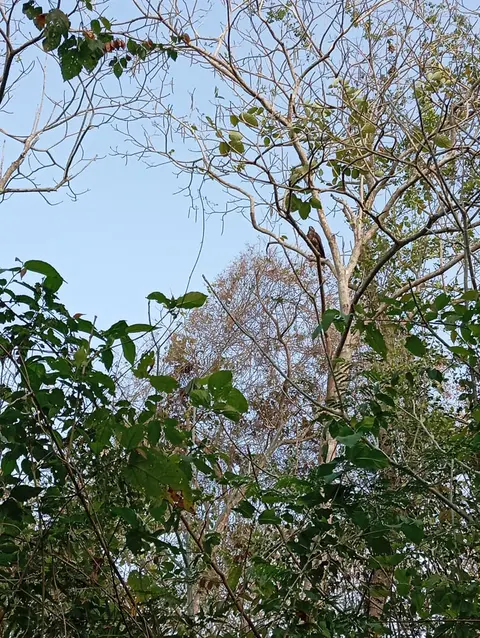
An unidentified raptor was observed — possibly a hawk or falcon of dark brown coloration, described as larger than a macaw — perched high atop a dead tree within a tropical woodland where green and desiccated vegetation intertwine. The sighting was recorded at coordinates 10.4465683, -75.2620333, beneath an open sky and under what appeared to be conditions of seasonal drought. During the encounter, a sentinel bird — described as a "cola hedionda," bearing a yellow bill and tail against a jet-black body, possibly a chamón or garrapatero — gave voice to sharp alarm calls, broadcasting the predator's presence to any creature within earshot. The report was accompanied by six photographs and a video, each frame bearing witness to the raptor in its watchful vigil above the canopy.
Happy, the Achiote, and the Pink Lagoon
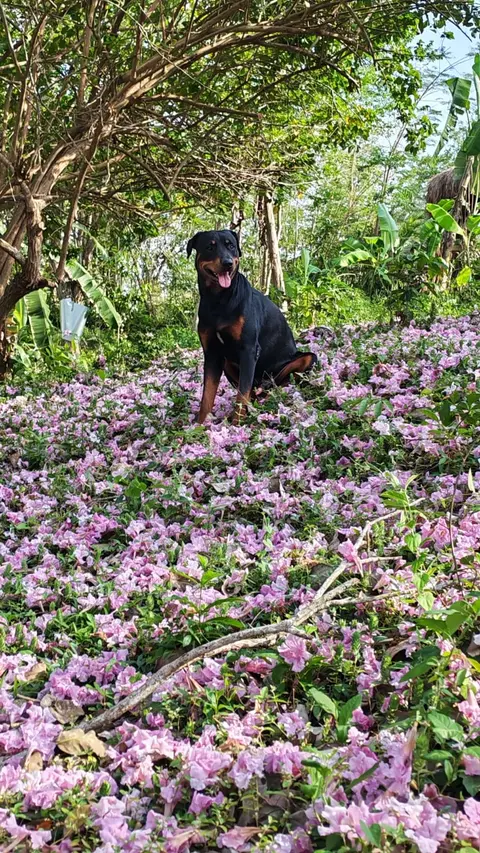
On the third of March, Corina Leonor set out to walk the territory with wide-open eyes and Happy trotting ahead, as she always does whenever there's a trail to follow. The little coastal dog knows these paths almost better than anyone, and that morning she let herself be photographed amid a carpet of pink flowers — buganvilias fallen across the green earth — tongue out, wearing the expression of someone with nowhere particular to be.
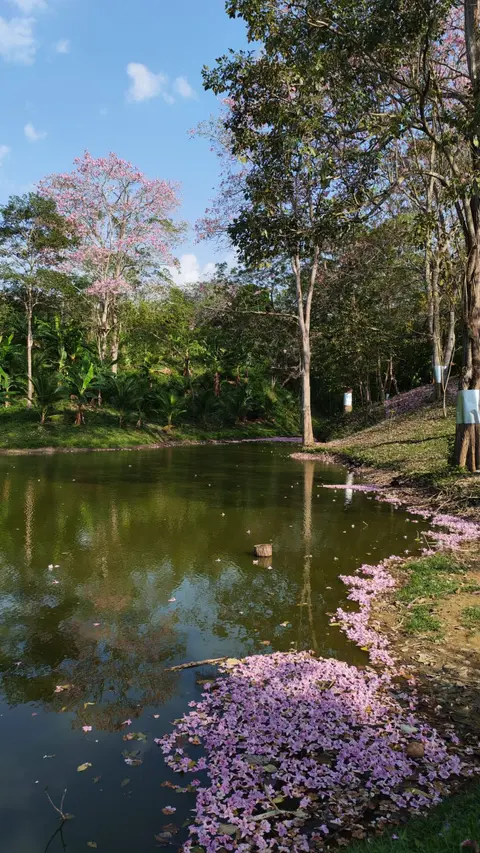
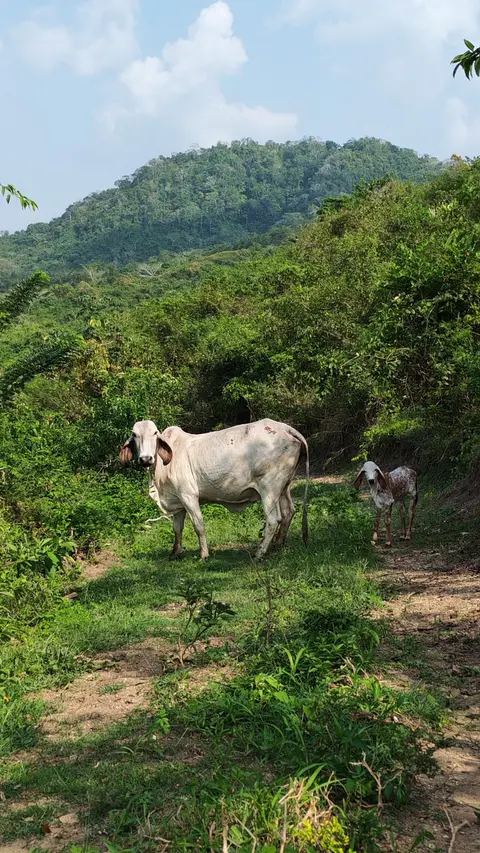
Along the way, the achiote also made its appearance: split-open fruits with their seeds burning red, that particular red that stains and lingers and calls to mind the kitchens of grandmothers. Further on, at the lagoon, a tree — possibly a Tabebuia — had shed its petals across the water and along the bank, and everything lay still and rosy beneath the blue afternoon sky. Two bovines, a white cow and her calf, grazed unhurriedly on the dirt path with the forest closing in behind them.
It was one of those days when the sanctuary reveals everything at once: native flora, domestic fauna, the familiar murmur of rural life. Happy came back happy, as she always does.
Vista Hermosa Woke in Flowers
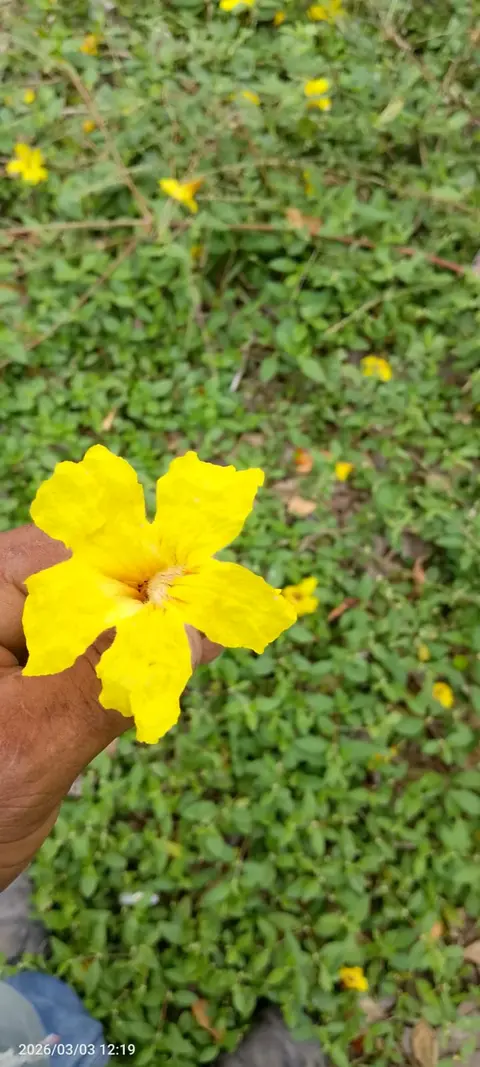
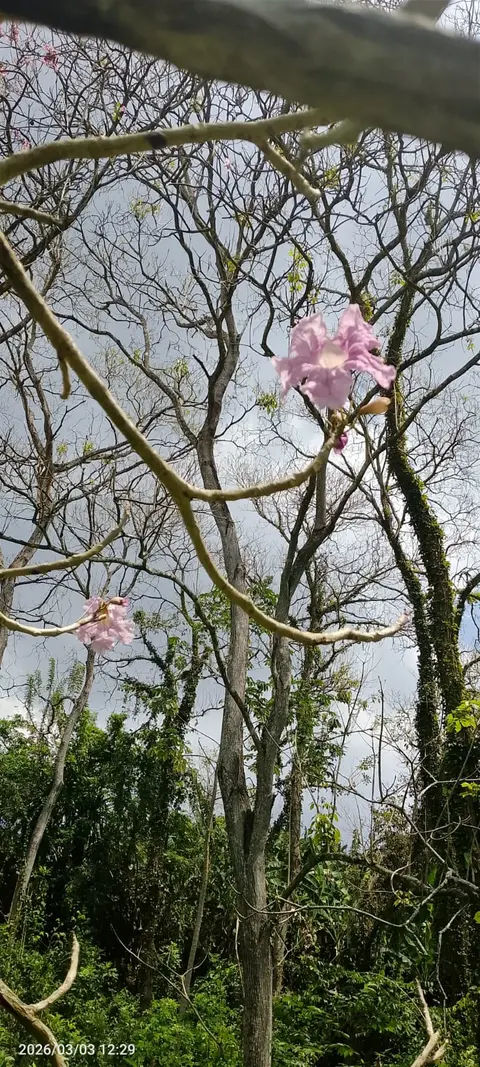
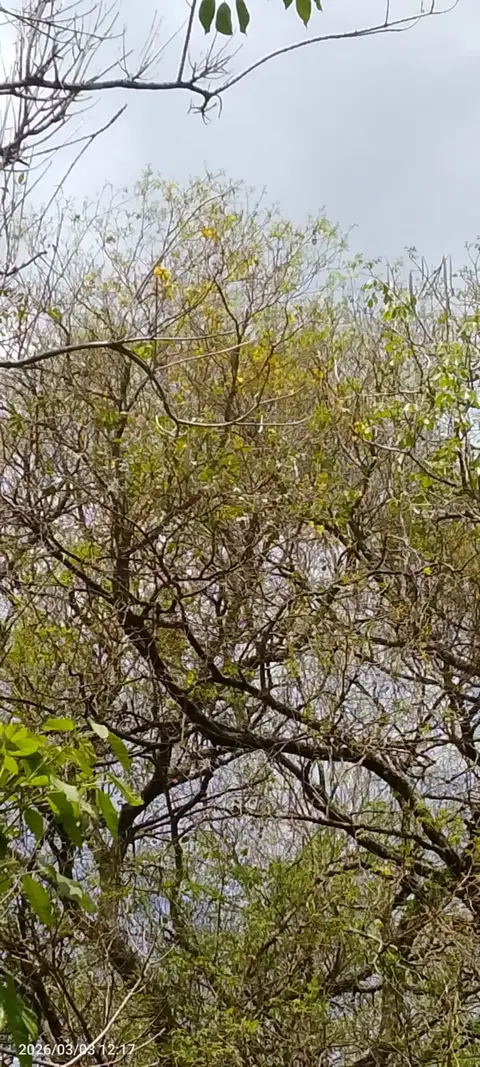
When Nilson set out to walk his land in the Vista Hermosa sector, the oak forest had already stolen a march on the day: the entire understory — that fine-grained world that usually goes unnoticed — was carpeted in pink and yellow blooms. Among them, a wild cucurbit opened its five yellow petals like small suns that had fallen to earth, while high in the branches the same trees displayed their own pink flowering against a backdrop of grey sky and still-leafless limbs. It was the dry season stepping aside for something else.
The forest was quick to fill with movement. In the trees and all around them, the chau chau and the carpintero moved from branch to branch, and lower down butterflies and dragonflies drifted among the flowers with that particular unhurried ease that insects carry when food is plentiful. Nilson documented everything: three photographs and two videos capturing the oaks in full transition, the understory transformed for a few days into something resembling a garden that belonged to no one.
It was the kind of discovery that cannot be planned for. Nilson had not gone out looking for anything in particular — he simply lives there, knows that forest, and had the eyes to recognize that what he was seeing was worth telling.
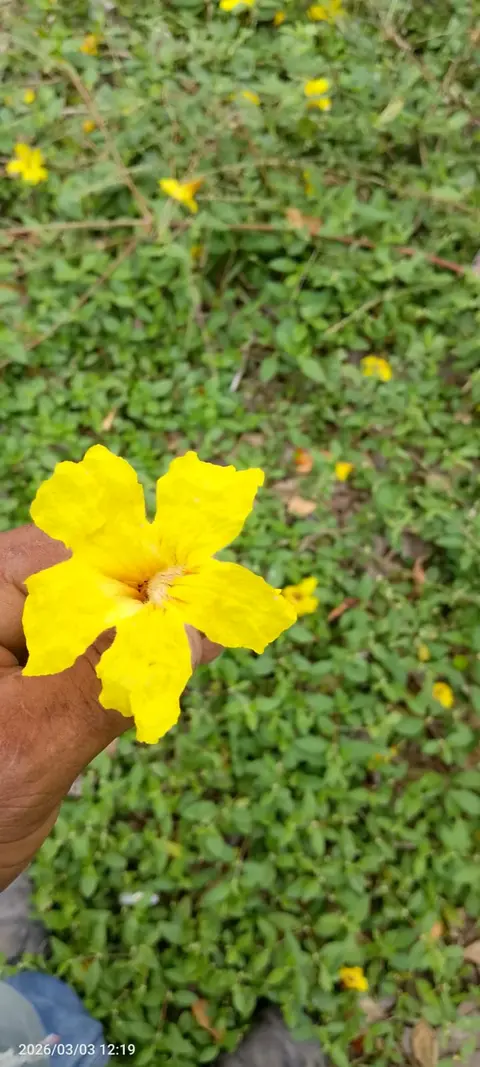
Nilson was walking alone that Tuesday when the forest offered him a double surprise: the roble and the polvillo had decided to flower together. From the coordinates where he paused, near Cartagena, the landscape smelled of open fields and was splashed with yellow in every direction — the polvillo's five-petaled blooms, their centers burnt ochre, carpeted the ground among the low-lying vegetation as if someone had scattered them there on purpose.
The forest was anything but still. A woodpecker worked away at some invisible tree, the chau chau called out from somewhere distant, and threading between them came the soft whistle of a small bird that Nilson heard but never managed to see. At one point, a red butterfly with white markings crossed his path and continued on its way.
It was midday, Nilson was alone, and the forest held more life than one might expect on a March afternoon.
In a corner of the reserve where the red brick walls never quite finished rising, life found its own rhythm. José Marín has spent four years noticing the same thing: when the season comes, the goleros return. Not to a towering tree or a distant cliff face, but to that quiet hollow among the rubble, where dry earth holds fallen leaves and wild branches grow as though no one ever thought to plant them.
This time, as in the year before, there is only one chick. The fledgling — still dressed in black, without the sheen of the adult — was moving slowly across the bare ground when José photographed it, indifferent to the outside world, sheltered by those unfinished walls that to anyone else might seem like abandonment, but to it are simply home. Coragyps atratus, which people call golero or gallinazo, carries a reputation as a bird of ill omen; yet there is something stubborn and admirable in the way this family returns to the same spot, season after season, with a faithfulness that few creatures can claim.
Four years is time enough to call it a habit. Or perhaps something more.
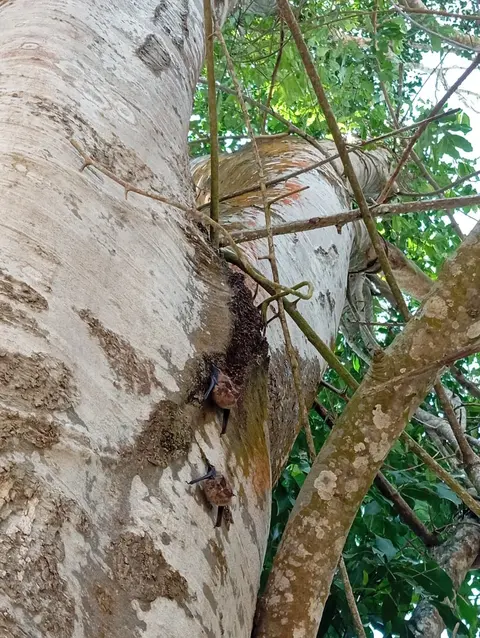
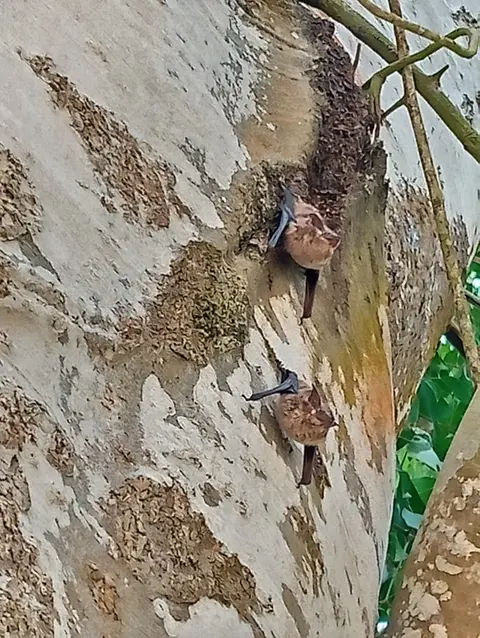
Omar Enrique Berdugo Cabeza was walking alone among the bird feeding stations when something stopped him: on the trunk of a mamón tree, clinging tightly to a crack in the bark, two bats were sleeping. The camouflage was nearly perfect — their muted browns and grays melted into the dry wood, as if the tree itself had drawn them in for the day. It was Omar's trained eye that found them, still and undisturbed, indifferent to the three o'clock heat.
Shortly after, Maico came through with his group, who were doing a birdwatching circuit in the same area. Omar called them over and showed them the find. The mamón, already a gathering point for both the free-flying and rehabilitated birds of the Fundación, turned out to be a refuge as well for these small winged mammals that sleep while the rest of the forest stirs. Two photos and two videos remain as witnesses.
Sixty Years on the Edge of the Hill
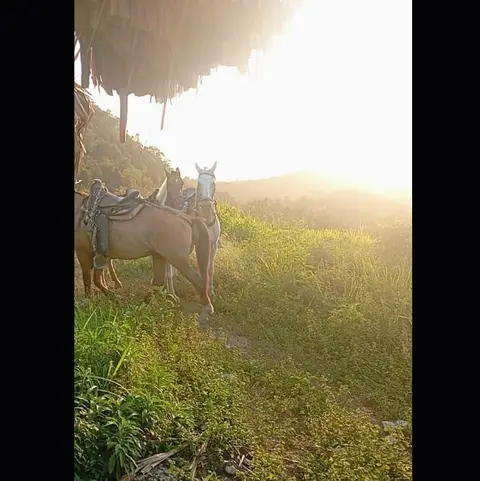
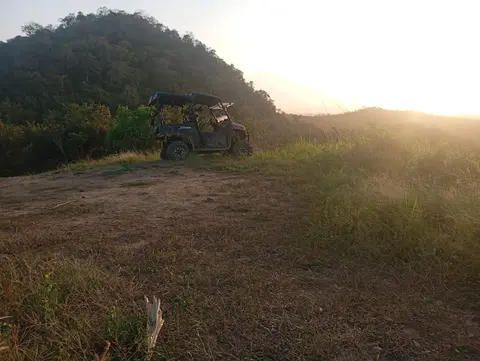
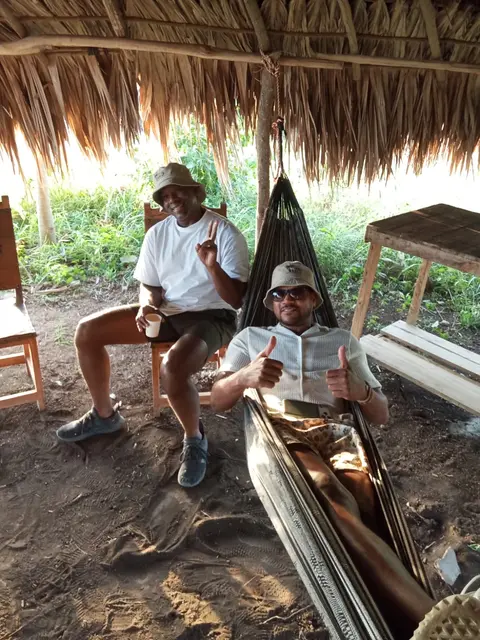
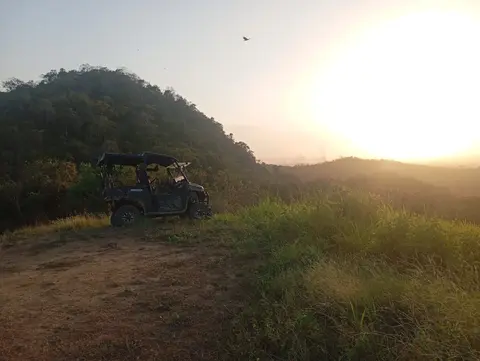
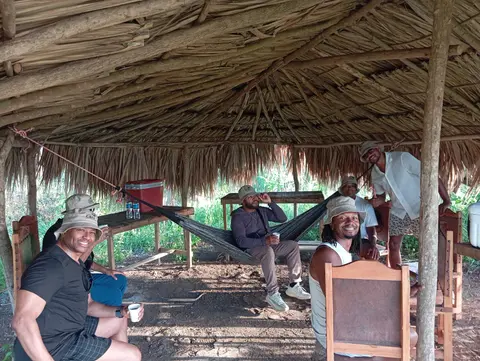
Someone in the group was turning sixty and wanted to celebrate the way only the things that truly matter are celebrated: by going up. And so it was that Alberto, Carlos, Corina, Nilson, Mateos, Mónica, Mercedes, Jhonatan Pavón, Shakeem Lane, Freddie Bevrotte, Raven Sandifer, Carlos Clark, Paul Henderson, Carl Allen, and Torrance Walker divided themselves between horses and an off-road UTV to climb up to the hilltop lookout, deep in the green heart of the reserve.
Waiting for them at the top was that spectacle the afternoon hands out free of charge: forested hills rolling as far as the eye could reach, birds riding the evening thermals, and a cool breeze that smelled of damp wilderness. The sun took its time leaving, bleeding the horizon gold, while the group stood still and watched — that particular kind of stillness that only comes when the landscape wins out over words.
Under the palapa, with hats tilted and drinks in hand, bodies found their way into hammocks and wooden chairs. Then came the return to Fundación Loros, the moon lighting the path ahead, closing out one of those birthdays that can't be measured in candles — only in kilometers walked and horizons witnessed.
Three loros reales in the oak tree by aviario 4
Omar Enrique Berdugo wasn't expecting much when he made his way toward the small woodland near aviario 4. But there they were — three loros reales perched in an oak tree that was in the midst of shedding its old leaves to make way for new ones, very much alive with activity. The birds, dressed in that vivid green that looks freshly painted, seemed entirely unbothered by his presence. They moved unhurried through the branches, and on several occasions Omar watched them mate — unmistakable proof that the breeding season had arrived in this corner of the reserve.
What made the discovery so striking was the alignment of two quiet rhythms: the oak exchanging its old foliage for new just as the loros chose that very canopy for their courtship. The moment was captured in two videos that Omar had the presence of mind to record before all three birds melted back into the green of the forest. An ordinary morning at Fundación Loros — until, quite suddenly, it wasn't.
Omar was perfectly still when he saw them arrive. Eight guacharacas —Ortalis sp.— descended on the sector marked on the map as 10.4474309, -75.2619654, and settled in without any fuss among the fruits and flowers of the uvita. They fed with that quiet familiarity animals have when they know no one is going to disturb them: pecking here, moving there, unhurried.
While the guacharacas held court over the scene, a lone woodpecker found its own feast a little further off — a ripe papaya too good to pass up. Omar captured it all on video, the kind of silent record that is worth more than any description.
What he documented that Monday afternoon is exactly what happens when the sanctuary is working as it should: wild animals foraging freely, making the most of what the landscape offers them. The uvita in flower and fruit all at once, a papaya at its perfect moment, and the fauna of the Fundación Loros doing what they do best.
Three Black Vultures Preaching by the Lake
At a quarter past three in the afternoon, Omar Enrique Berdugo Cabeza found them where lago 1 opens its waters between the vegetation. There were three black vultures — Coragyps atratus — with their wings spread toward the sun, motionless, as if they were holding up the sky with their arms. What science calls thermoregulation, Omar experienced differently: he felt that those black, solemn birds were preaching something to him, that there was in that gesture a kind of sign to keep moving forward along the path.
And perhaps both things can be true at the same time. Black vultures spread their wings to warm themselves and dry their feathers after the night, but it is also hard to witness that ritual without something stirring inside you. Omar watched them until they were finished, until they folded their wings with calm deliberateness and flew away. Then he, too, continued on his way — carrying that strange and welcome feeling left behind by encounters you were never looking for.
Harvest at Vista Hermosa for the Aviary
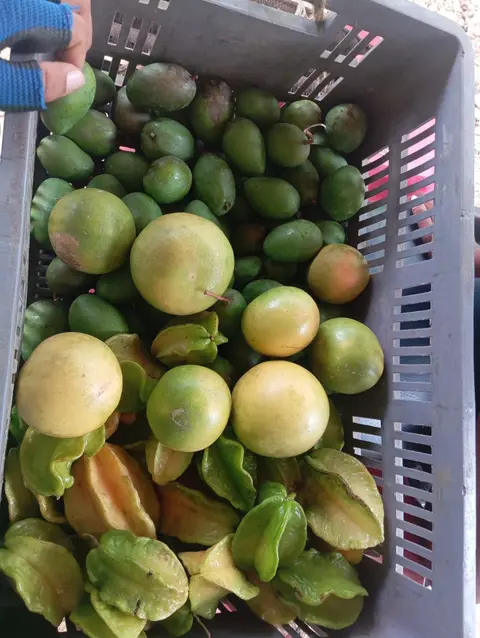
Yesterday afternoon, Omar returned to the sanctuary with a basket brimming over: green mangoes, round pomelos, and torombolo — that five-pointed star fruit that gleams as though it were hand-carved — freshly cut from the fields of Vista Hermosa, where Nilson tends the land and knows every tree by name.
The harvest was simple but deliberate. Omar moved through Nilson's groves looking for what was ready, for what could make the journey to the sanctuary without complaint. The maracuyá didn't show up this time — the harvest doesn't always give you what you hope for — but the mango and the torombolo filled the basket with colors running from deep green to translucent yellow.
That fruit will reach the feeders of the parrots and macaws at the Fundación Loros sanctuary tomorrow. They won't know where it came from, but they'll recognize in an instant the scent of ripe mango and the sharp, bright taste of carambola. For them, it's simply breakfast. For us, it's the outcome of quiet, unhurried work between two caretakers and a farm that opens its gates.
That morning at Finca El Paraíso, Carlos Andrés Matas Contreras was walking alone through the forest when a movement among the branches caught his eye. Six tití monkeys — he counted them one by one — moving with that nervous agility that defines them, leaping from tree to tree as if the forest belonged to them, which in a certain sense it does.
But the real discovery of the day was a ceiba that seemed to have summoned them all. Right there, at that very GPS point that Carlos Andrés kept sending before he could find the words to describe what he was seeing, three iguanas rested on the branches with the stillness of creatures who have occupied the same spot for centuries. And closer to the trunk, two woodcreepers moved up and down in search of insects beneath the bark, indifferent to the record being made of them.
It all happened in a single moment and a single place: tití monkeys, iguanas, and woodcreepers sharing the shade of a ceiba in El Paraíso. Carlos Andrés managed to pull out his camera and capture the video before each of them went their separate ways.
Field echoes
⭐ Historic milestone
Event: March 5, 2019
The Beginning of Everything
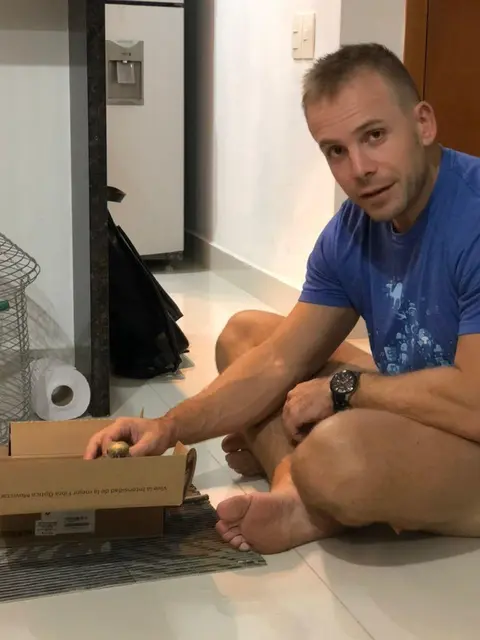
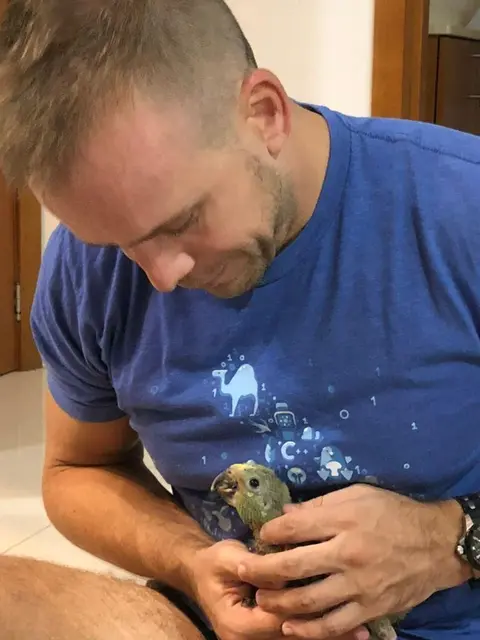
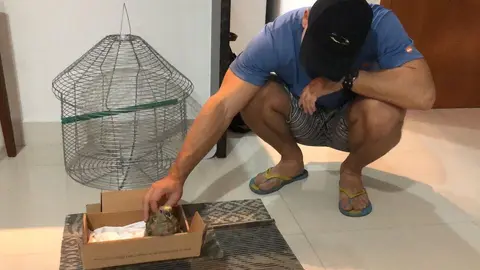
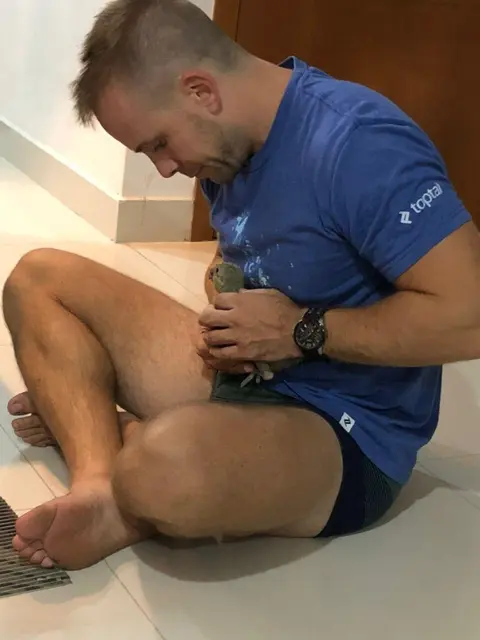
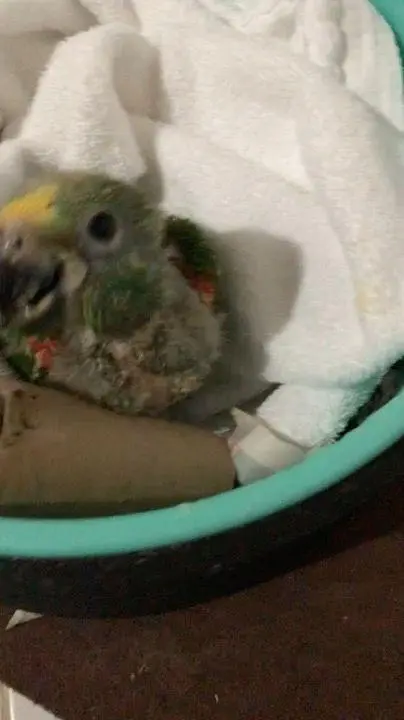
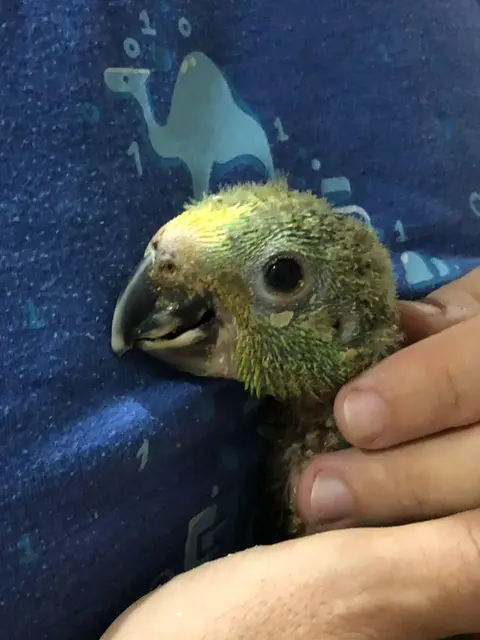
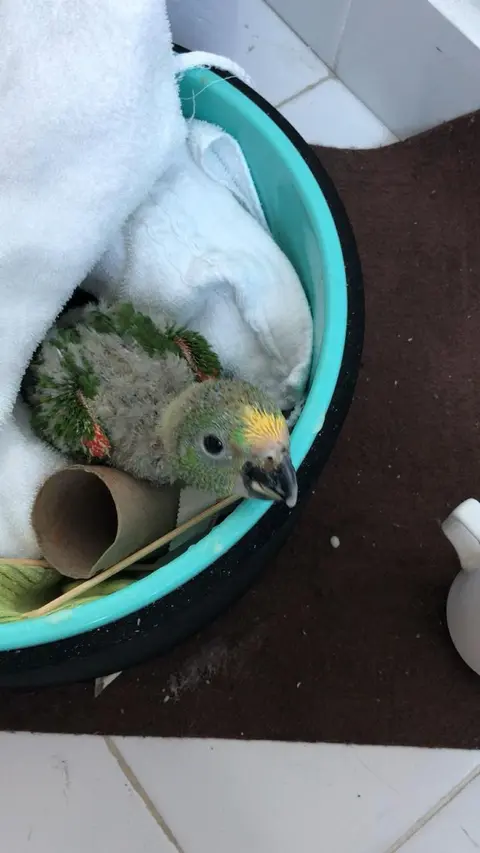
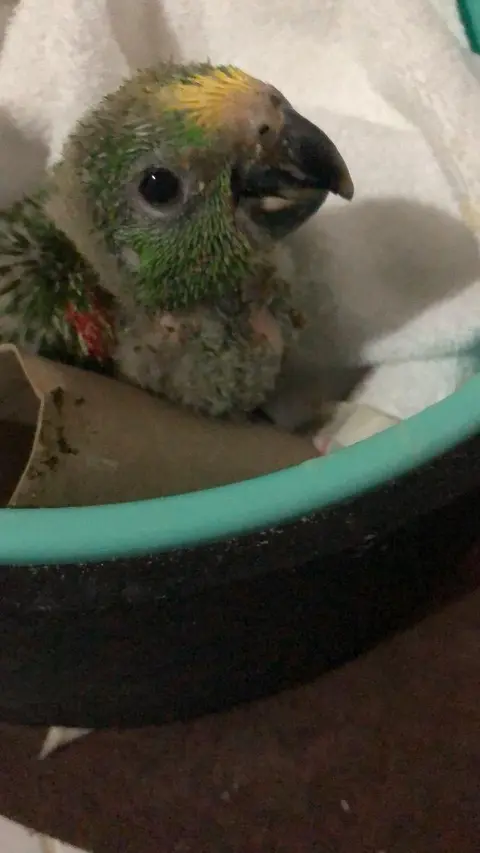
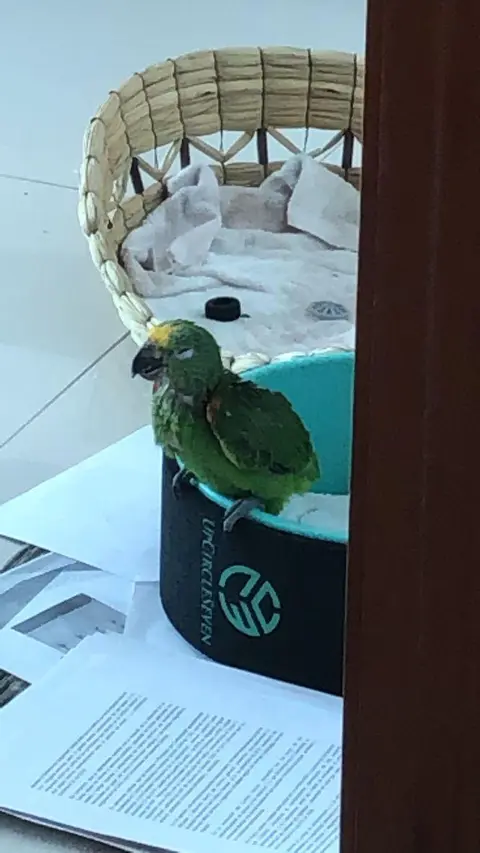
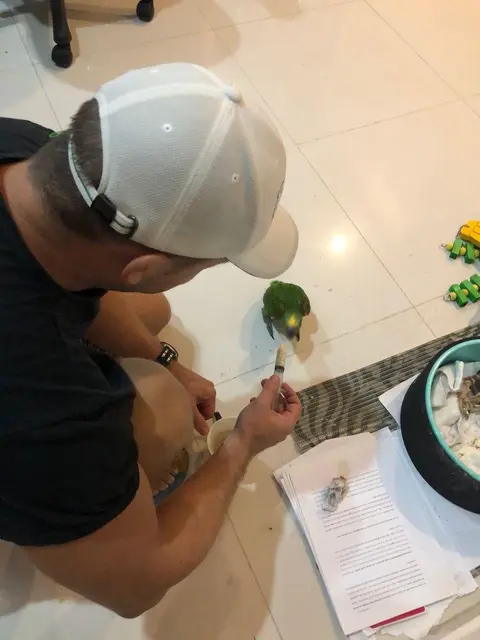
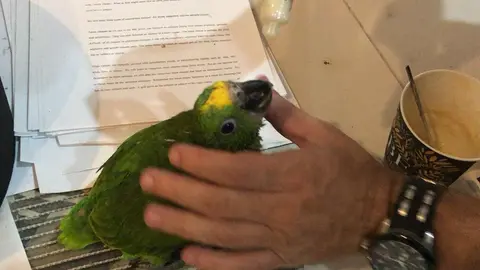
In 2019, Rosángela received a green-and-yellow chick in a cardboard box at her apartment. She had gotten it at the Bazurto market, where someone had simply offered it to her — and she had accepted, unaware that keeping an Amazonian parrot was illegal in Colombia. Her boyfriend, Alejandro Rigatuso, an Argentine citizen who had been living in the city for some time, received it with surprise, the way you receive a gift from someone you love.
What followed was pure improvisation: a turquoise gymnastics bar as a cradle, a syringe and a spoon as hand-rearing tools, and the internet as the only available veterinarian. Alejandro read, tried, adjusted. The chick grew slowly, feathers gradually replacing the grey down, its eyes growing more alert with each passing day.
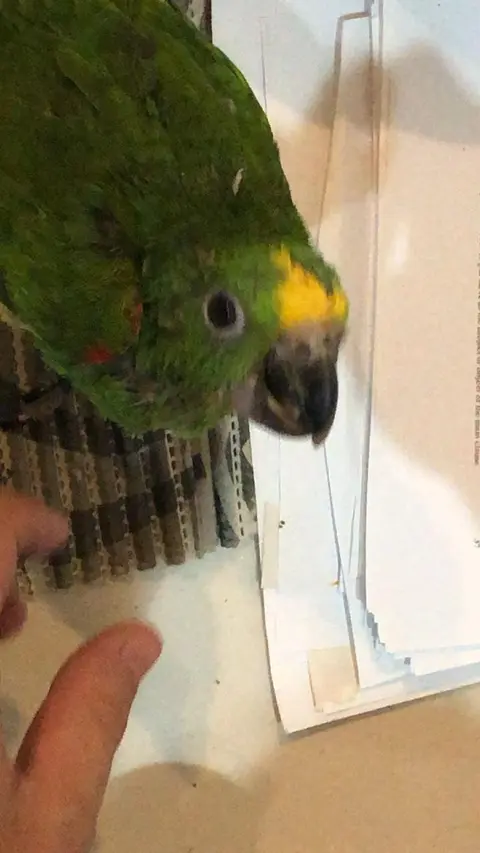
Beethoven was the first — though in the records of Fundación Loros he appears as number 15. That paradox says everything about how important things begin: without protocol, without a name, without anyone yet knowing that this moment will matter. An unexpected gift in an apartment in the El Cabrero neighborhood, and the urgent need to return that small green body to where it belonged.
From the Earth to the Table, with Caribbean Soul
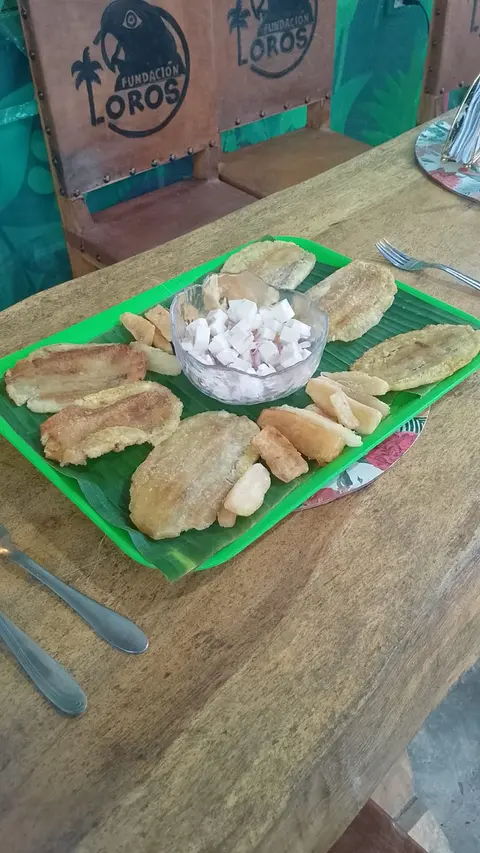
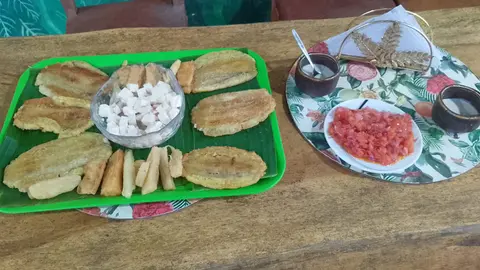
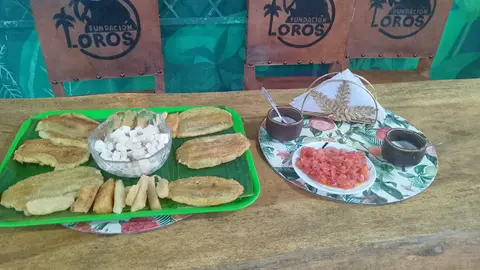
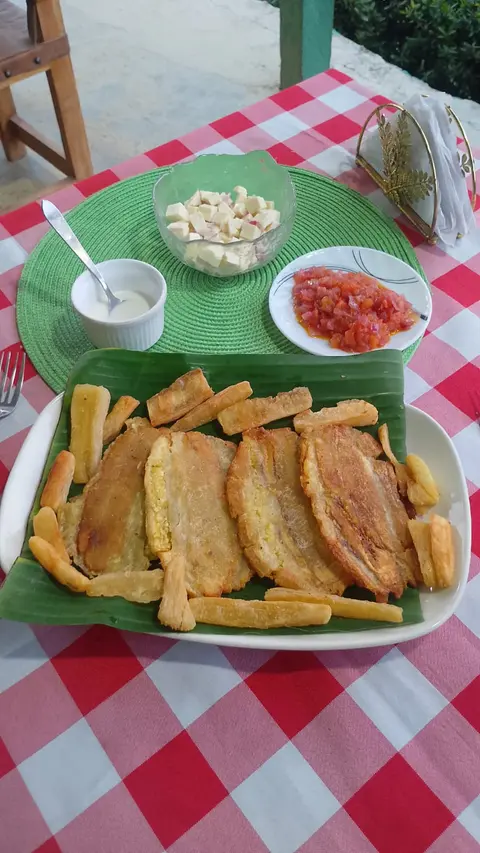
At Fundación Loros, we welcome our visitors with open hearts and with the flavors of this Caribbean land. Before the parrots take flight above their heads and the sanctuary's deep greens draw them in, we greet them with a platter laid upon a banana leaf: crispy patacones, fried yuca, cubes of white cheese, hogao, and an array of salsas. Everything harvested right here, across these 520 hectares, without a single preservative in sight. From the plant to the fire, from the fire to the table.
Behind every platter stand Angélica and Zaida — two costeñas through and through, women who cook with a sazón no book could ever teach. There is something they put into the food — patience, tenderness, Caribbean pride — that visitors feel even when they have no words for it. We want everyone who comes to Fundación Loros to fall in love with us not only because of the parrots, but also because of this little piece of coastline we serve them, warm and welcoming, in that very first sip of arrival.
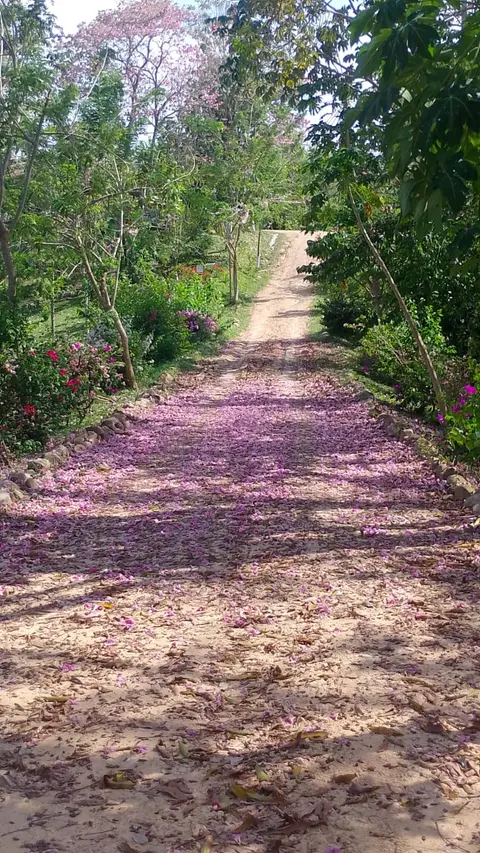
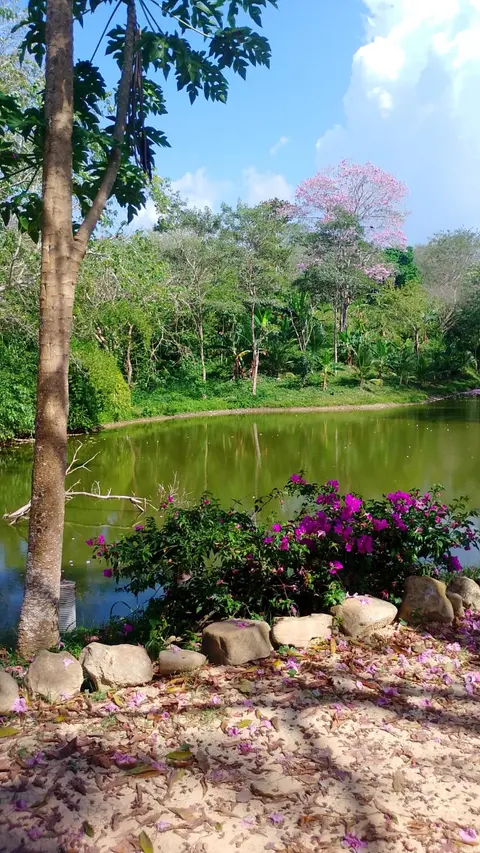
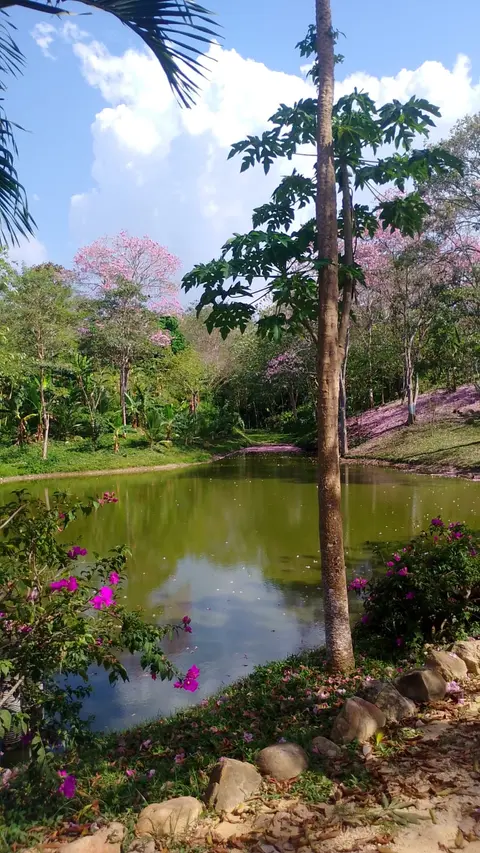
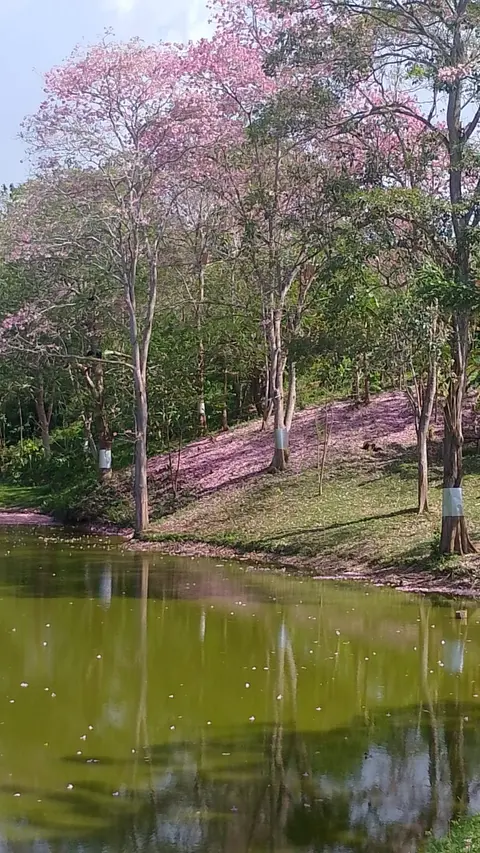
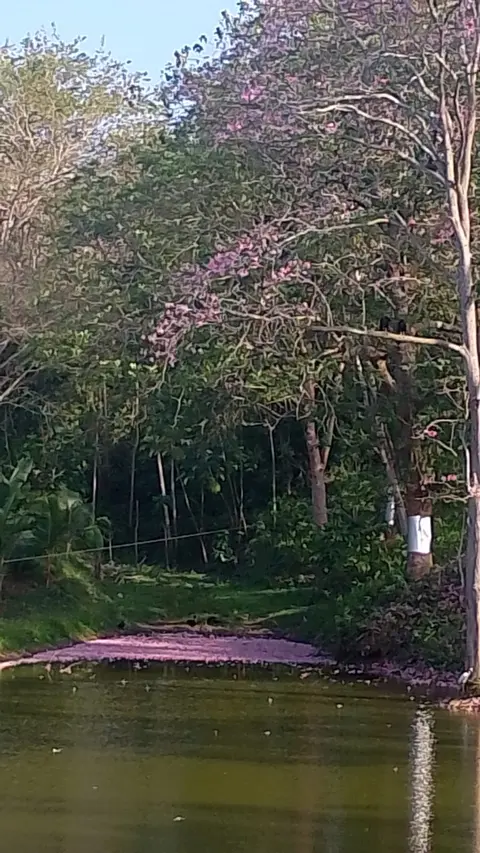
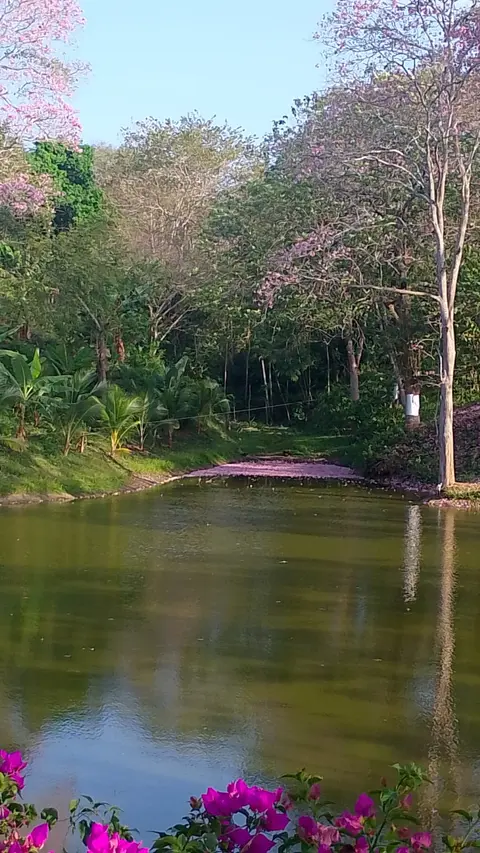
At the entrance to the El Paraíso estate, an old oak has made a habit of greeting visitors in the only way it knows how: by emptying itself entirely onto the path. Its pink blossoms cover the earth from the very first step, and the trail ceases to be a trail, becoming instead what Angélica Cecilia rightly calls her pink carpet.
There is no formal welcome here, no announcement. It simply arrives — soft and unhurried, like the breeze that drifts down from the pond where the flowering trees gaze at their own reflections in the green water. Bougainvilleas blaze in fuchsia and violet along the edges of the path, and all of it together — the color, the scent of damp earth, the gentle brush of wind against the face — stirs in whoever enters a feeling that is difficult to put into words yet instantly recognizable: the feeling of having arrived somewhere that was already waiting for you.
That is the magic of the sanctuary. It does not announce itself, it does not ask to be found. It has always been here, tucked between the petals of the oak and the still reflection of the pond, waiting for every visitor who dares to cross the threshold of El Paraíso.