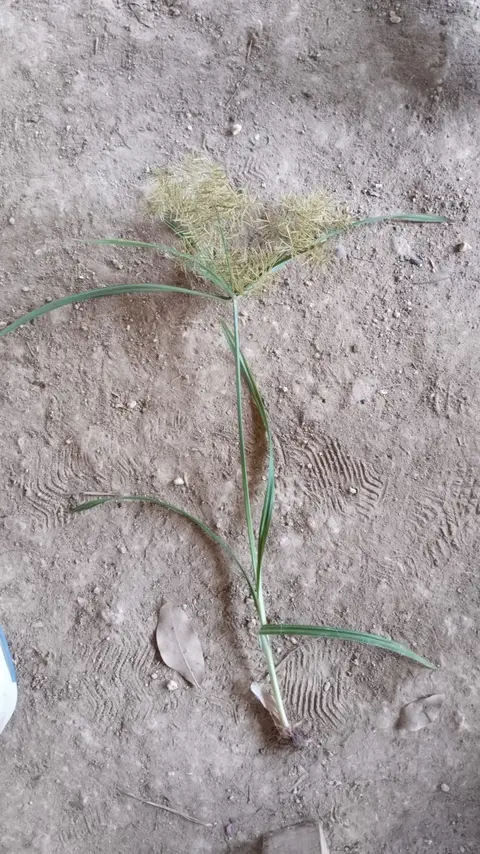
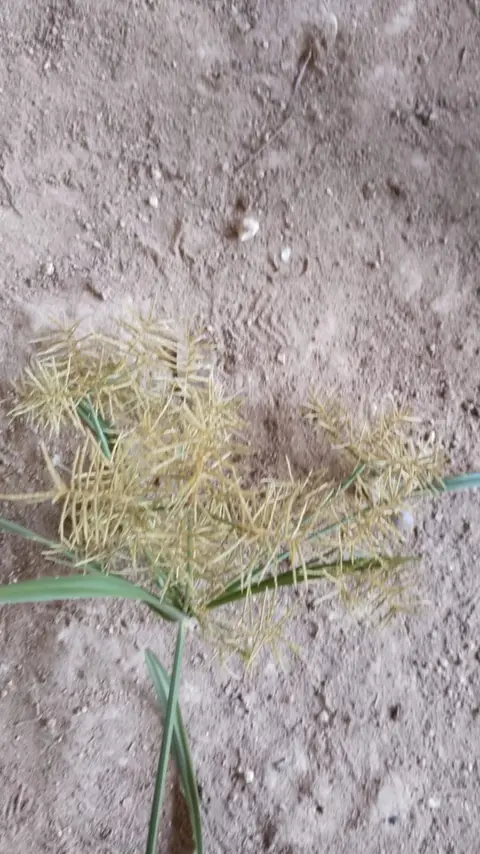
Two Coquillos on Dry Ground
Jillian Pomare arrived that Sunday with two plants in hand, roots and all. She set them down on the compact, sandy soil — the kind of ground where footprints tell the story of fieldwork's comings and goings. They were two specimens of Cyperus sp. — what in these lands we call coquillo or junco — unmistakable with their triangular stems and their open inflorescences like small feather dusters: one still yellow-green, the other already dry and golden, as though the passage of time between the two had occurred within the space of a few centimeters.
The record stands as follows: two plants pulled up by the root, laid out on arid earth, with no company but a single fallen dry leaf at their side. No animals, no visible people. Only that silent gesture of drawing something out of the ground to look at it closely — which is, more often than not, the first step toward understanding what is growing and what is being displaced across the open terrain of the reserve. Coquillo is a tenacious weed in agricultural zones, and its presence here deserves attention.