The Orejero That Carries History and Squirrels
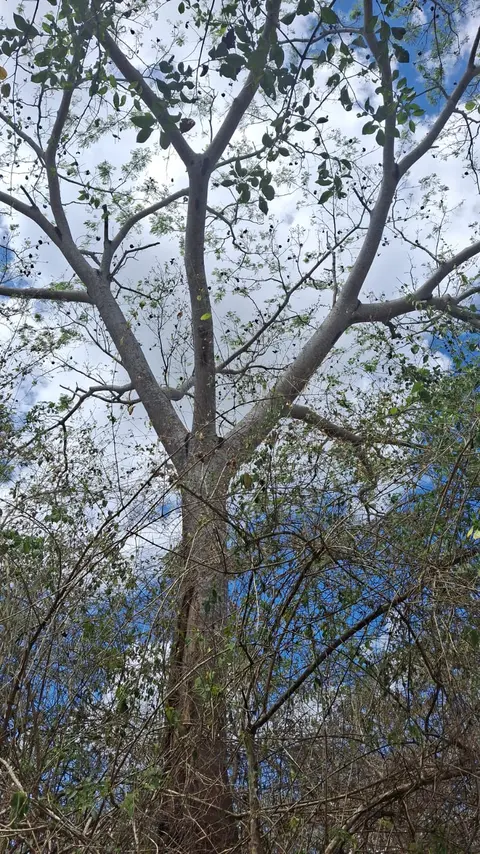
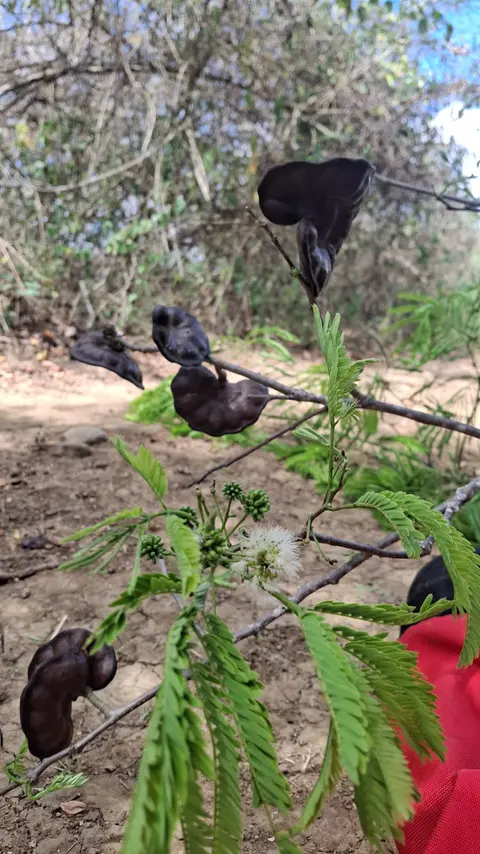
Michel found it standing upright and solitary in the dry scrubland, its grey trunk splitting toward the sky like open arms: a grand orejero, Enterolobium cyclocarpum, documented in one of the most arid sectors of the sanctuary. What caught the eye most was seeing it in two moments at once — the swollen black mature pods hanging alongside small, spongy white flowers, as though the tree refused to choose between its past and its future.
The orejero carries centuries of use on its back. Its fruits are used to make dulce de carito, a flavor well known to the people of Colombia's Caribbean coast, and they also serve to soothe throat infections. The trunk and branches feed heavy charcoal kilns. But there was one detail Michel mentioned almost in passing: squirrels frequent that tree a great deal, drawn in by its seeds and pods. And so, in silence, the orejero has spent decades being pantry, medicine, and shelter all at once.
It has been recorded at the exact coordinates where Michel found it, within the reserve's tropical dry scrubland. A tree that, it seems, has never needed anyone to explain what it's for.