Maicol was making his rounds through the macaw release zone, near cerro Peligro, when he spotted it: a gavilán sabanero perched with the calm of a creature that knows exactly what it's doing. The *Buteogallus meridionalis* — bebe humo, as it's known in these parts — is an opportunist hunter. When fire sweeps across the savanna and lizards scatter in a panic, it's already there, waiting at the edge of the flames. There's no need to chase anything; it only has to know how to read the smoke.
The sighting was captured on video: the broad wings, the rufous chest, that unhurried gaze that announces nothing. Maicol was clear about it — this hawk has no interest in the reserve's birds. Its business is on the ground, with the lizards slipping through the undergrowth. That's what makes its presence in the macaw release zone a good sign — a predator that fits, one that plays its role without disturbing what the sanctuary is quietly building, little by little, between that hillside and the open sky.
The Raptor That Awakened the Release Point
This afternoon, at the aras release point, the silence was broken by something unexpected. The guacamayas drifting through the area began to vocalize with urgency — that piercing cry that leaves no room for doubt: something had put them on edge. Alberto looked up and found it — a dark, broad silhouette cutting across the sky in wide, powerful wingbeats. A raptor, eagle or falcon, soaring over the site as though the territory belonged to it alone.
It took only a single pass through the air for the aras to scatter all at once. Every last one. In an instant they went from restless circling and shrieking to vanishing completely from the horizon, driven off by that instinct no captivity ever fully erases. Alberto managed to capture two videos of the event before the raptor, too, dissolved among the trees.
The exact species has yet to be confirmed — the footage will be crucial in identifying it — but what became clear is that the release point is a living space, where the aras are not only learning to fly free, but also to read the sky with their eyes wide open.
The Banana and the Secret Inside the Mango
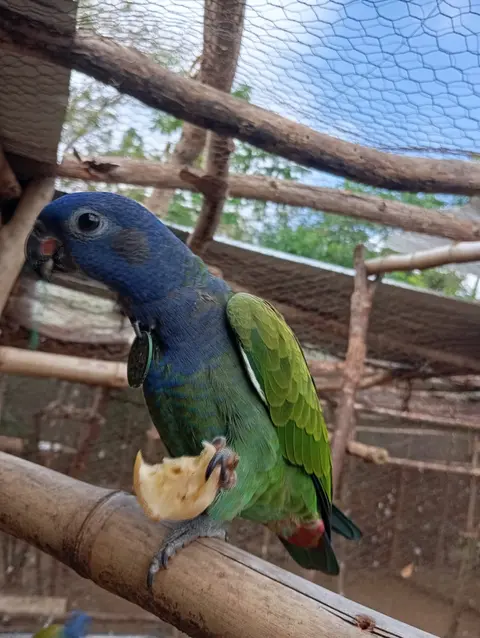
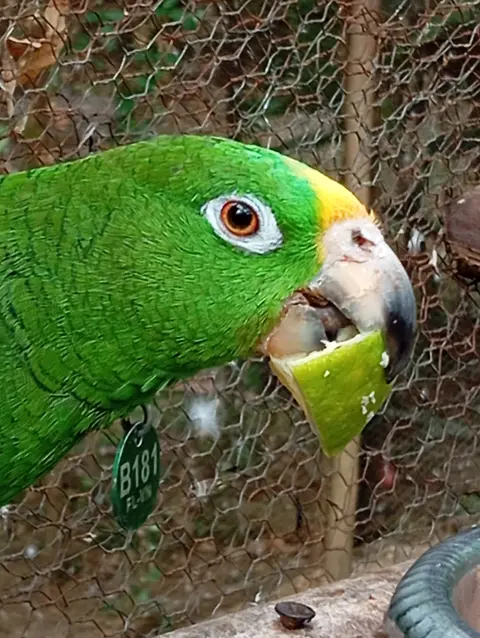
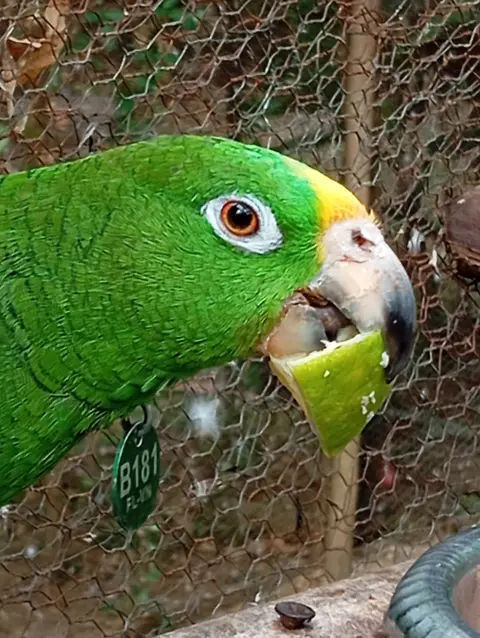
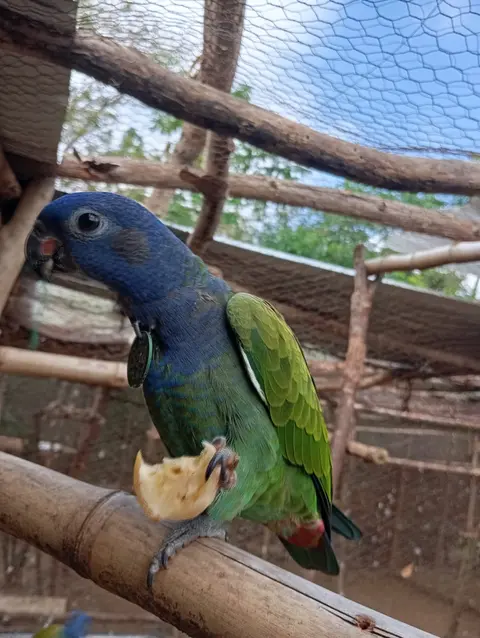
Just past four in the morning on April 11th, Omar made his way through aviaries 1, 2, 3, and 4 of Fundación Loros, fruit basket in hand. Orange, pineapple, banana, mango — the same routine as always — and yet the birds never fail to find a way to surprise you. The guacamayas went straight for the banana, without hesitation, leaving everything else for later. The blue-headed parrots (Pionus menstruus), on the other hand, were drawn to the orange and pineapple: juicy fruits, cool and yielding, that come apart between the beak.
But the most striking observation came from the Amazonian parrots — among them the individual banded with the green ring B181. They weren't satisfied with the mango's flesh. With patience and precision, they worked at the pit until they cracked it open, eating what lay inside — a seed rich in fats that, out in the wild, would be a hard-won prize. It's the kind of behavior that reminds you why the road back to the forest is built slowly, day by day, fruit by fruit.
B29 and the Water Station in the Shade
On Sunday, March 29th, at half past seven in the morning, the macaw B29 appeared alone among the branches of an almond tree. She was calm, the way someone is when they have nowhere to be, while a few visitors photographed her from below. That stillness of the early hours — before the heat starts pressing down — is one of the few things the field offers for free.
Later, Omar Enrique Berdugo Cabeza made his way to the Uvita tree to do what he always does: check the water station he himself had installed, and refill it with clean, cool water. It is not a spectacular gesture, but it is one of those quiet acts of care that hold the work of the reserve together. Omar made sure the container sat well in the shade, because out here, near Cartagena, the sun is unforgiving and lukewarm water serves no one.
B29 spent the entire sighting alone. No visible company — but with fresh water waiting for her in the Uvita.
The dejas and the nest that was falling apart
On Friday, April 3rd, at half past four in the afternoon, Omar Enrique Berdugo Cabeza was making his rounds through aviario 1 when something caught his eye: a pair of dejas had built their nest in a sorry state — a wooden box with a hole through which the tiny eggs were slipping toward empty air. There was no need to think twice. Something had to be done.
Omar found coconut shells to give the eggs a safe place to rest, and replaced the damaged nest with one in better shape. But the dejas were not exactly welcoming. At first they stayed put, suspicious, eyeing the new nest the way one eyes a stranger who has walked into your home uninvited. They wouldn't go in. They were wary, mistrustful — maliciosas, as Omar puts it.
Trust, however, came slowly — the way most things worth having tend to. Over the course of the hours, the pair began to draw closer, to explore, and in the end, they accepted the change. Today they are inside, calm and settled, their little eggs safe. A small story from aviario 1 that began with a hole in the wood and ended well.
The Bees That Mistook Seeds for Flowers
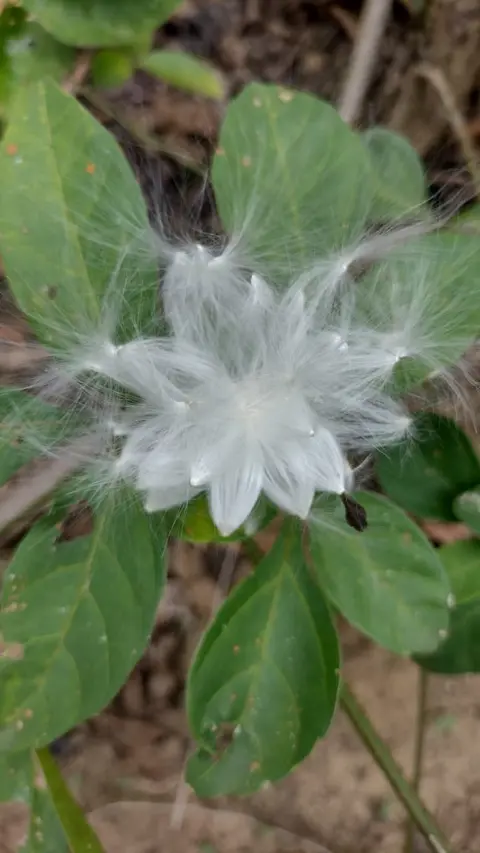
In the piedmont sector, José Marín stopped before something that, at first glance, looked like a flower: a white mass, silky and luminous against the green of the vegetation. But it was no flower. It was a cluster of seeds ready to take flight, carried by those cottony filaments that plants of the family Apocynaceae — as Michel Salas and Jorge Alcalá would later confirm — use to surrender themselves to the wind. An old strategy, elegant and silent.
What came next was the curious part: the bees. They approached that spongy structure with the same conviction they bring to a corolla in full bloom. It was José who noticed the detail and clarified it at once — not a flower, those are seeds. But the bees, it seemed, could not tell the difference, or simply did not care. That misunderstanding between insect and plant was captured in photo and video straight from the field — poor signal, but a sharp eye.
You don't always need to know the name of what you're seeing to recognize that it's worth stopping for. This time, the wonder was right there in the piedmont, waiting for someone to pause and look.
An Owl, a Sloth, and the Forest That Received Them
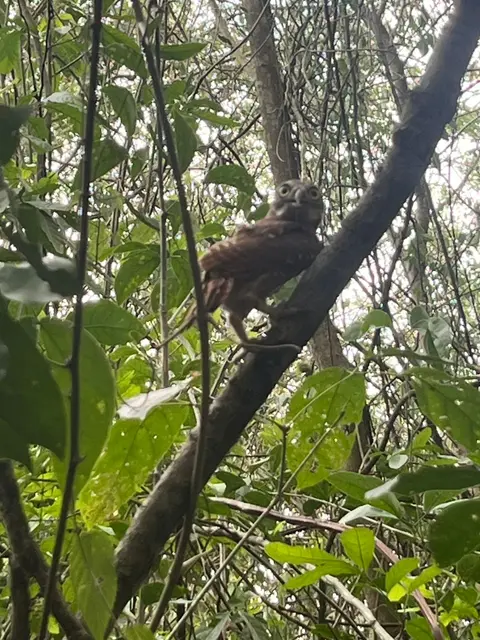
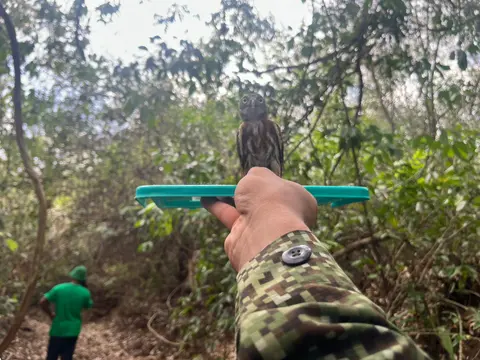
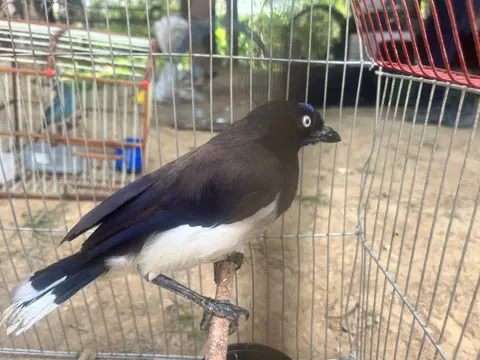
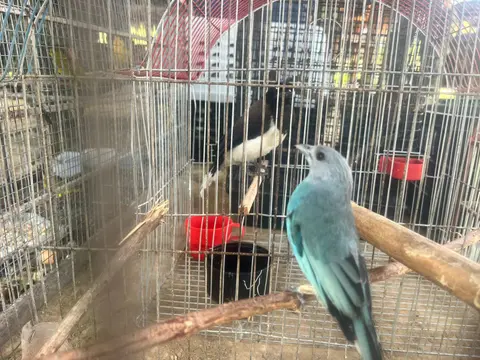
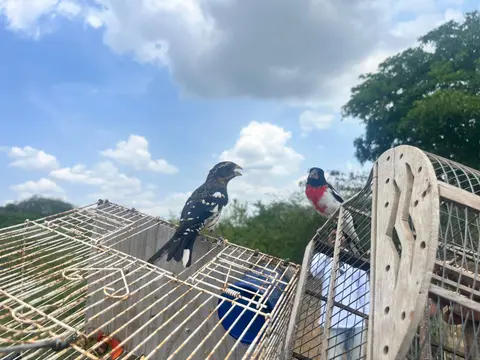
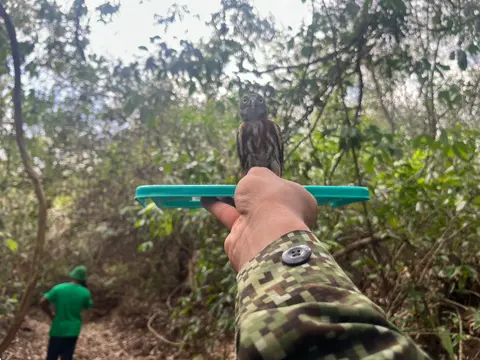
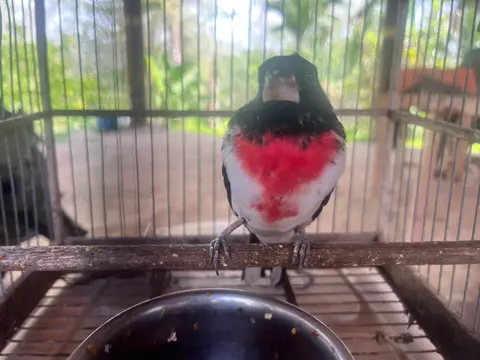
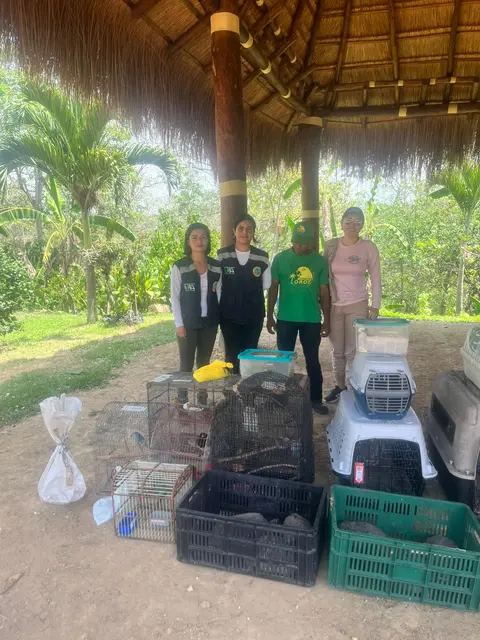
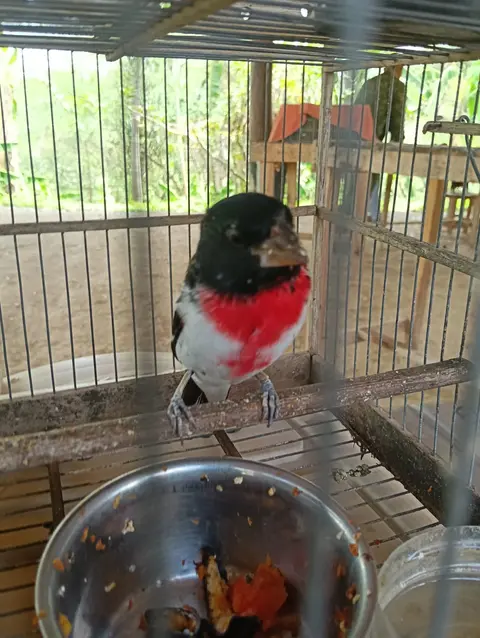
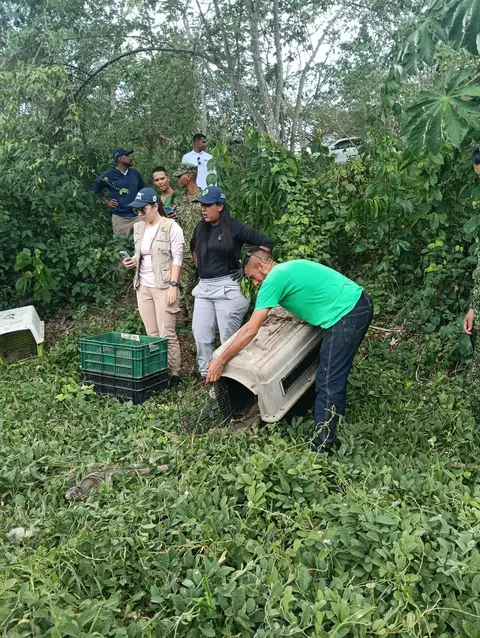
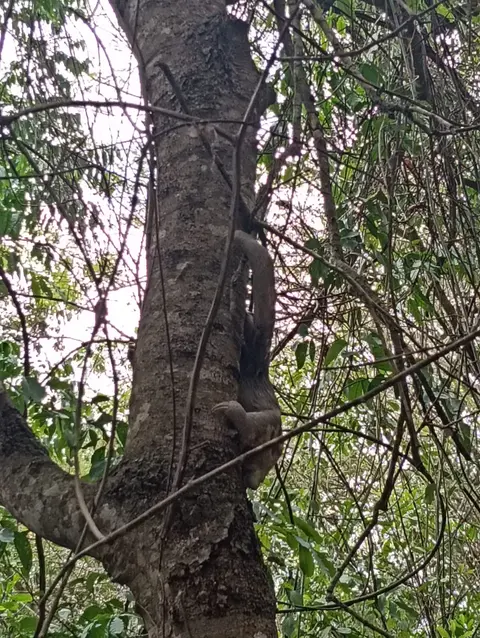
Yesterday afternoon, Marcela and Alberto headed into the forest alongside EPA and Cardique, carrying cages, boxes, and the quiet certainty that there were animals to be given back to the wild. The release brought together a young owl — brown-feathered, with enormous eyes that regarded the world as though it still couldn't quite believe it — a blue-gray tanager wearing that particular shade of open sky that belongs to very few living things, and a rose-breasted grosbeak whose chest bore a red patch like a glowing ember. Each one left its cage with the calm or the vertigo particular to its kind.
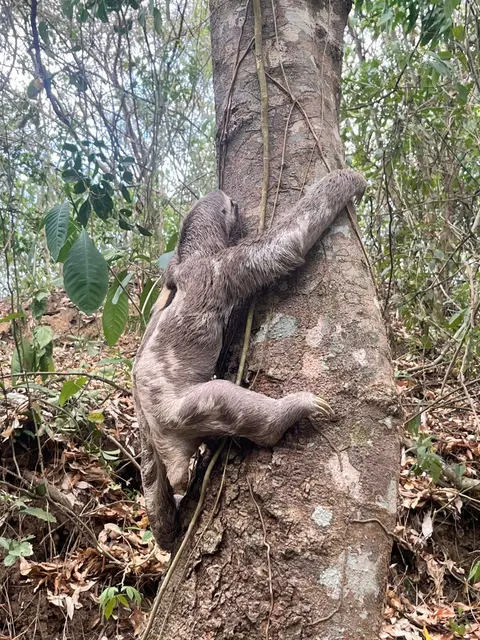
The slowest moment belonged to the three-toed sloth. With its long curved claws and its own sovereign sense of time, it climbed the trunk of an understory tree as though waking from a very long dream — which, in a way, was exactly what had happened. The team's camouflage dissolved among the lianas and broad leaves as the birds found their branches and the mammals found their rhythm. The coordination between the Fundación and the environmental authorities made it possible for that dense, humid tropical forest to have, at the very least, three more animals that belong to it.
The Fundación's staff noticed that several of the birds arrived thirsty — dry-billed, eyes sharp with alertness. The release had been rapid, what the technicians call a "hard" release: no preconditioning, no gradual adaptation period that allows an animal to recalibrate its instincts before returning to the wild. The Fundación opens its doors to the competent authorities when they arrive with confiscated wildlife, because someone has to receive them. But what happened that Tuesday is recorded here as an institutional observation: urgency is not always an ally of well-being.
Nine Species, One Hurried Afternoon
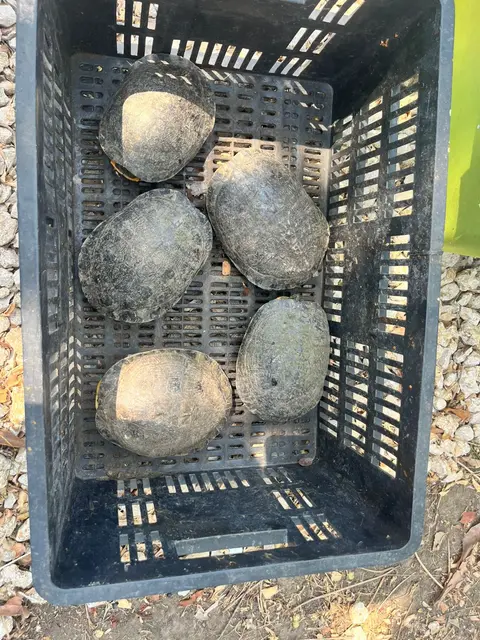
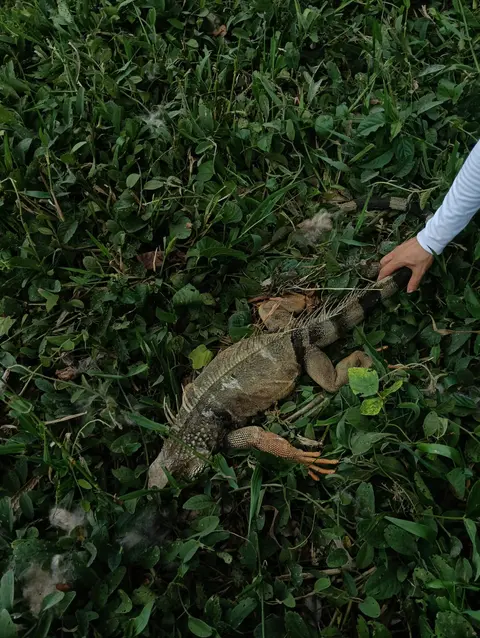
On Tuesday, officials from the EPA of Cartagena and Cardique arrived at the Fundación Loros property carrying cages, boxes, and urgency. The list was long: iguanas, morrocoy, chau chau, papayero, azulejo, degollados, pigua, perezoso, boas, and a cardinal pechirojo with a scarlet breast that watched from its wooden cage with a stillness that stood in quiet contrast to all the commotion around it. The forest received them all — without the time each animal deserved.
The Foundation's staff noticed that several birds had arrived thirsty, their beaks dry, their eyes wide and watchful. The release was swift — the kind technicians call a "hard" release: no pre-conditioning, no gradual adaptation period that allows an animal to recalibrate its instincts before returning to the wild. The Foundation opens its doors to the competent authorities when they arrive with confiscated fauna, because someone has to receive them. But what happened that Tuesday is recorded here as an institutional observation: urgency is not always an ally of welfare.
The cardinal pechirojo was the last to leave its cage. For a moment it stood still at the edge, as if measuring the air. Then it disappeared into the dense green canopy of the forest, which at that hour of the afternoon smelled of damp earth and something without an easy name — something close to freedom, even if it arrived without the preparation that should have come before it.
A Calf's First Day at Vista Hermosa
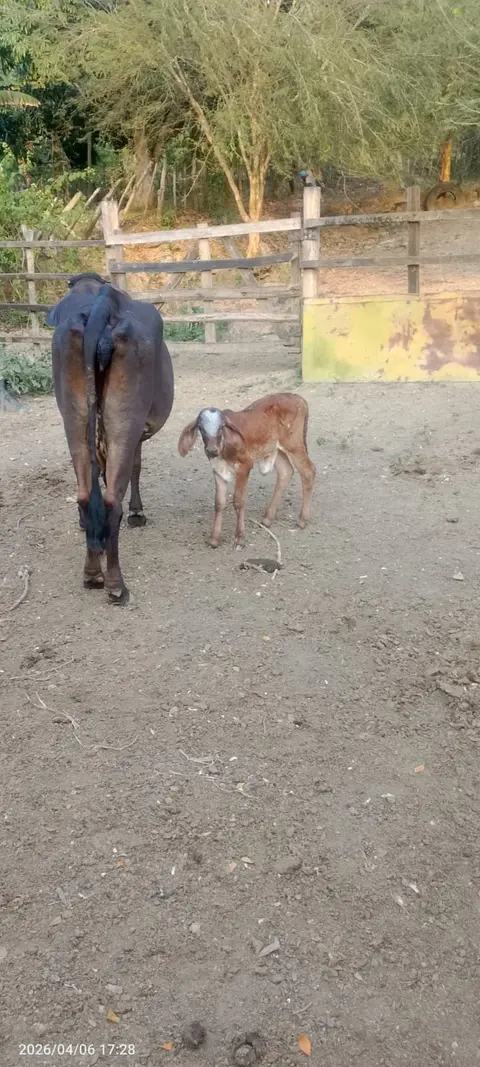
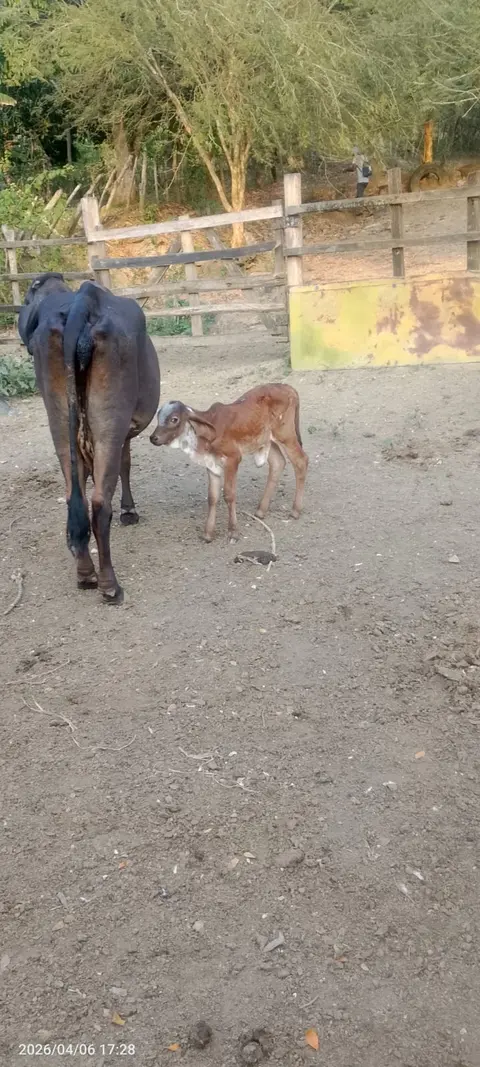
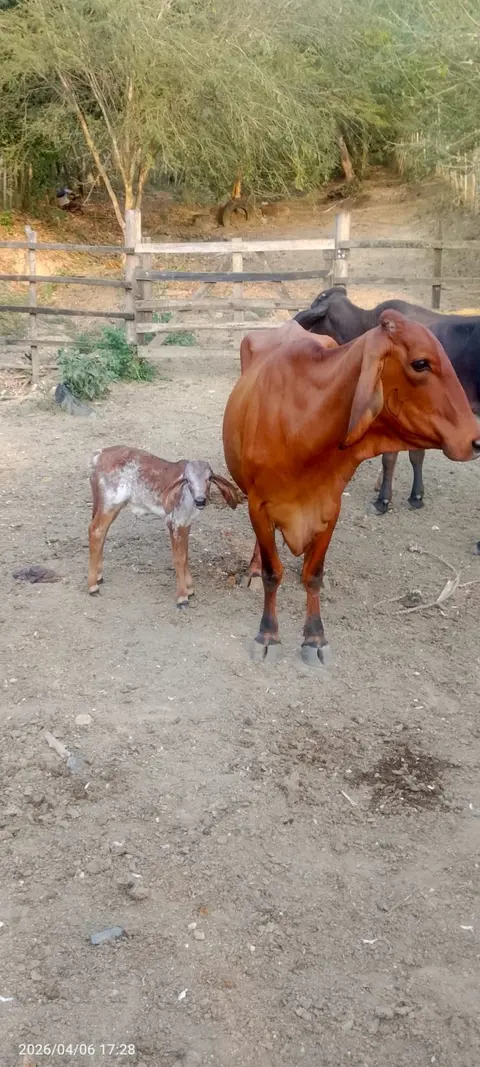
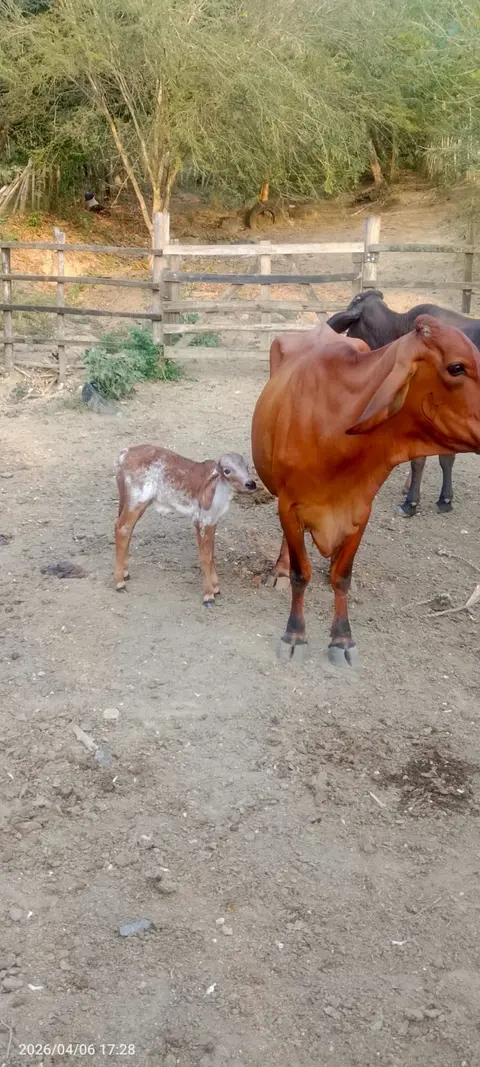
On the sixth of April, in the paddock at Vista Hermosa, a black-coated Girolanda cow gave birth to a reddish-brown calf with a white face. The newborn was still searching for balance on trembling legs when Nilson noticed what could not be overlooked: a small infection in the navel — that slender thread between life within and life beyond.
Without delay, Nilson cleaned and dressed the wound, administering antibiotic, analgesic, and anti-inflammatory. The late afternoon photographs — taken at 5:28 p.m. — show the calf beside its mother, coat still damp from the birth, a wooden fence in the background and the trees drawing a green line across the horizon. A scene as old as cattle-keeping itself, yet with one quiet difference: someone had been watching closely.
By the end of the day, the calf was already doing better.
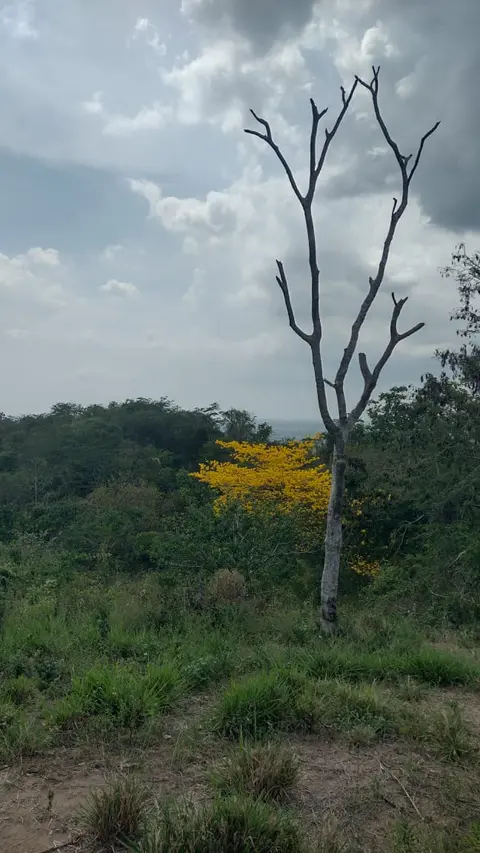
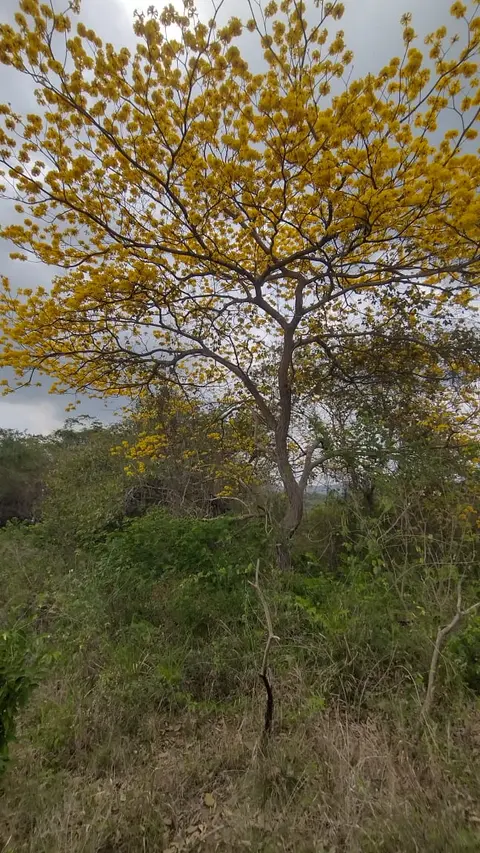
José Marín was walking through the pastures of the Fundación when he saw it: a guayacán bursting with yellow in the middle of a cloudy afternoon. Handroanthus chrysanthus, with its sun-colored flowers and grey trunk splayed open like arms, commanded the landscape as though it were the only tree that had anything to say that Monday in April.
What makes the sighting special is not just the tree in bloom, but what stands before it: a dry log, without a single leaf, its bare branches pointing up toward the overcast sky. The contrast feels almost deliberate — as if the reserve had placed the two seasons of the forest face to face, the one that rests and the one that celebrates, and left it to the observer to decide which is which.
The guayacán blooms without warning, without rain to summon it or a date marked on any calendar. It simply appears, all at once, whenever it pleases. And José was there to witness it.
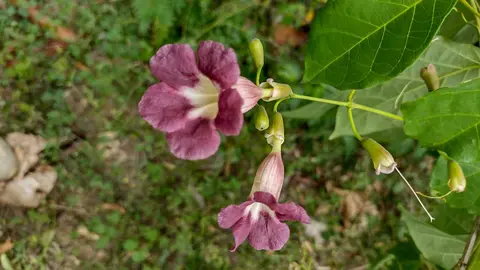
José Marín found it without looking, the way the most beautiful things in the field tend to appear. A climbing vine tangled through the low vegetation, with rose-purple flowers and white centers opening beside still-closed green buds, as though the plant were showing its entire story in a single glance. Its large, glossy leaves caught the afternoon light with an intensity that made it hard to simply walk past.
It sits at coordinates 10.4459413, -75.2642093, within the reserve, and its tubular flowers suggest it may belong to the family Bignoniaceae — though that has yet to be confirmed. Out in the field, giving it a name proved impossible, and perhaps that is the most honest thing an observer can do: record what is seen without manufacturing certainties. The photograph remains. The location remains. Now it falls to those who know their botany.
Meanwhile, that climbing vine goes on flowering, indifferent to whether it has a name or not.
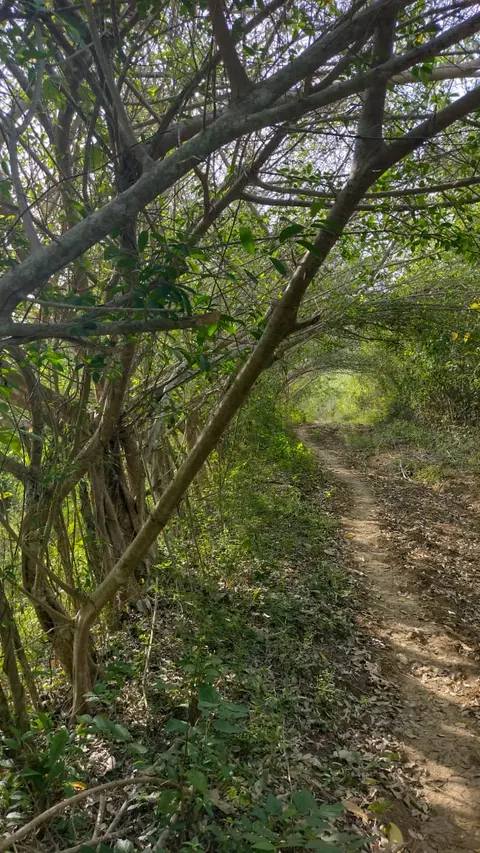
That Monday in April, José Marín was walking along one of the reserve's most densely overgrown trails when he found her: a solitary gallineta, still among the leaf litter, as though she were part of the ground itself. The forested corridor formed around her a closed vault of branches and green foliage — the kind that lets sunlight through only in thin threads that dissolve somewhere far down the path.
The bird was alone. No company, no hurry, no sign of unease at the presence of the observer. José managed to film her before she disappeared into the thick vegetation, and the photograph left of the place says everything: damp earth, fallen leaves, silence. The kind of scene you come across when a forest has been quietly healing for a long time, undisturbed.
It was a brief sighting, almost understated. But in a reserve where every species tells its own story about the health of the forest, seeing a gallineta at ease on that trail is a good sign that something is working well out there, deep inside.
José Marín was alone that morning when he decided to leave a mango out for the squirrel. But before she could appear, Cheja arrived — one of the reserve's macaws — drawn perhaps by the color or the scent of the ripe fruit. She approached, examined it in her own unhurried way, and something in her seemed to understand that this particular meal was not meant for her beak. Without drama or struggle, she turned and went on her way. A few minutes later, the squirrel claimed what was hers and settled in with the mango, undisturbed. All of it caught on camera.
A little further on, just a few meters away, José came across a young bird in what appeared to be good health. There were no signs of injury or distress — it was doing well, by his practiced field judgment. That moment, too, was recorded.
It was a quiet day at the reserve — no urgencies, no emergencies — one of those days when wildlife simply goes about its business and all you have to do is be present enough to watch it unfold.