What the Wilderness Holds: Family Leguminosae
Michel Salas and Jorge Alcalá set out to walk the sanctuary with a botanist's eye. The day was given over to plant characterization — that patient work of stopping, looking, photographing, of giving names and records to what the forest has long known by heart. The coordinates led them to a stretch where vegetation mingles in different ages and forms: young shrubs, already-grown trees, and climbing vines that twist themselves between the two.
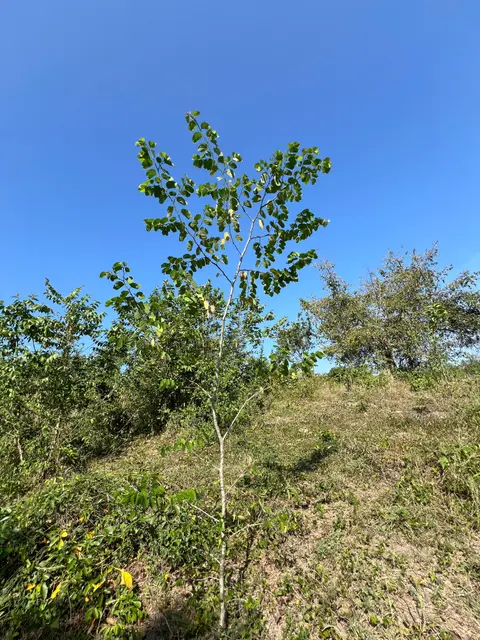
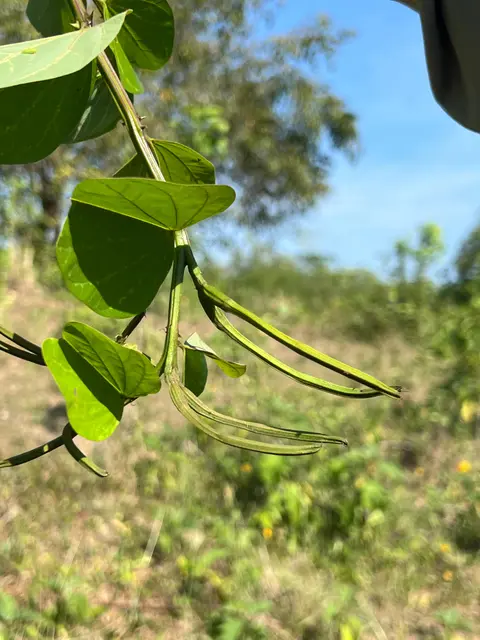
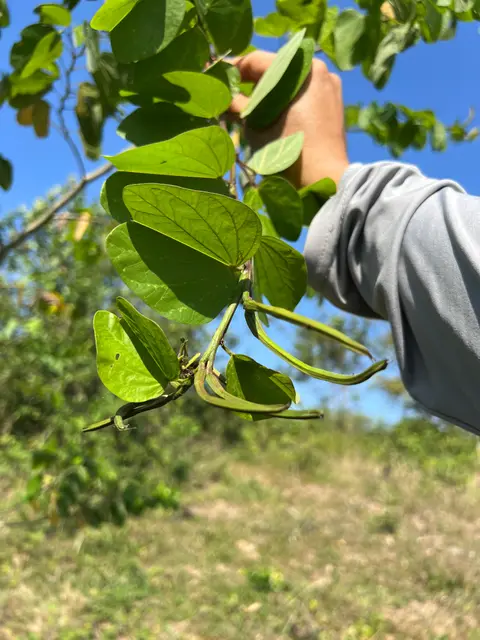
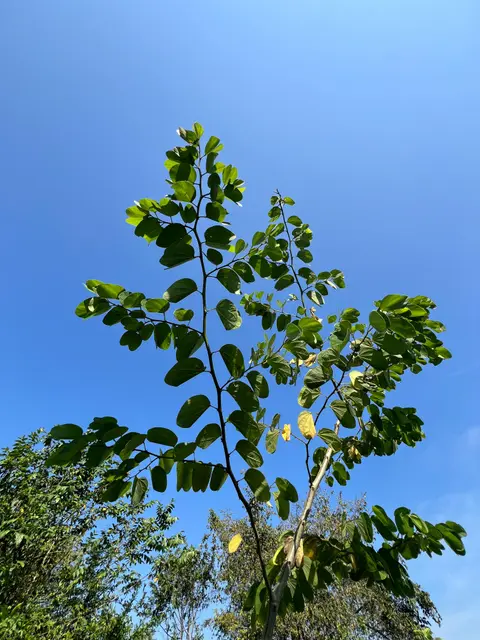
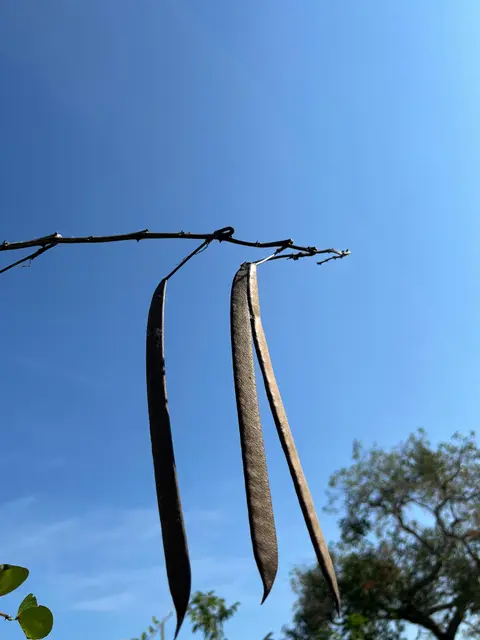
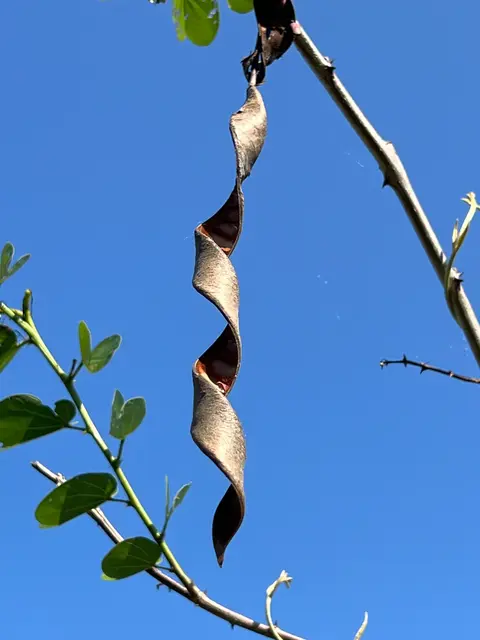
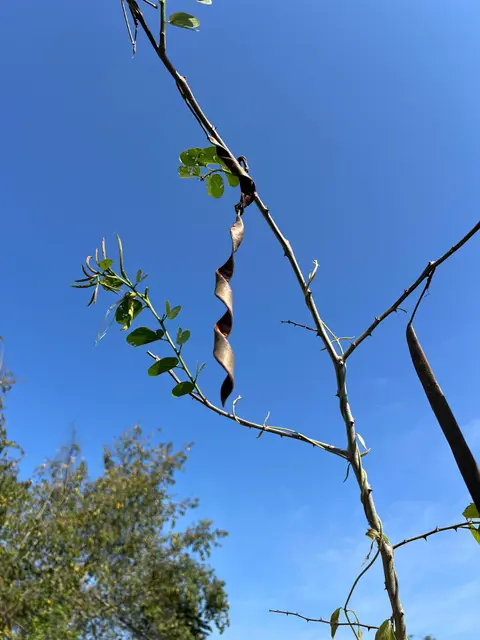
What they found, almost without meaning to, was an entire chapter of the family Leguminosae. There was the Pata e' Vaca (Bauhinia sp.), its leaves split into two lobes like footprints pressed into the air. A little further on, a tree with yellow flowers that seemed a likely Cassia, and a climbing vine bearing long green pods that hung suspended in the foliage. And then, twisted against the blue sky, the dried pods of what could well be a Prosopis or an acacia — hard, coiled in spirals, as though the fruit had learned to unwind on its own as it dried.
Seven photographs remained from the walk: young trees with all their future ahead of them, fruits at different stages of ripeness, and Michel's hand holding a branch to give a sense of scale. A quiet inventory, without fanfare — the kind that speaks to the plant life sustaining this corner of wilderness near Cartagena.