The Aloe That Bloomed in the Courtyard
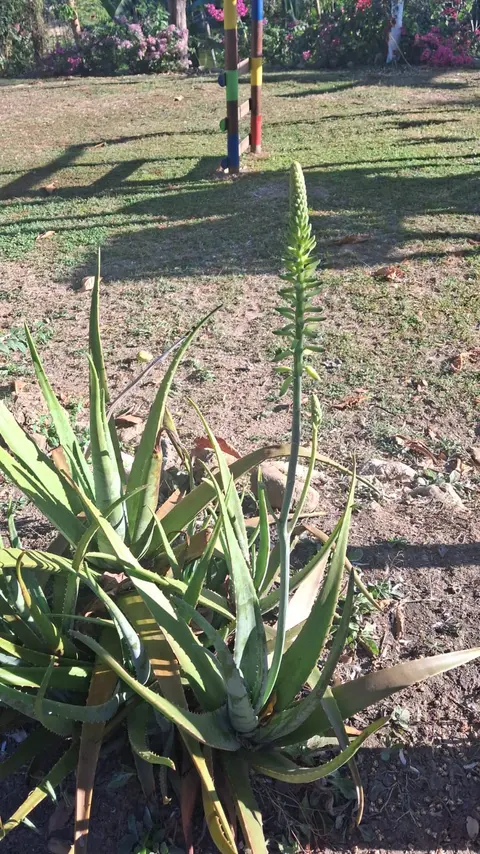
On March 22nd, Salomé Piza noticed something most people overlook, even when it's right in front of them: an aloe vera in full bloom. The plant stood upright in a garden within the Fundación's area of influence, its long, firm stalk reaching skyward the way it does when the moment finally comes — surrounded by thick, spiny leaves that hold water like a kept secret. The sun bore down hard on the dry earth, and in the background, a pink bougainvillea splashed color against a wooden structure painted in vivid hues.
The Aloe vera — the everyday sábila, the one that has lived in planters and patios for generations — is rarely the centerpiece of any wildlife sighting. But this record carries its own quiet value: it documents that within the reserve's surroundings, there are plants with long histories of human use that still bloom, still follow their cycles, still deserve to have someone look at them closely. Salomé looked. She photographed it, and she reported it. Sometimes that's how monitoring begins — with what is near, with what was always there.