A Newborn Tití and a Tree for the Guacamayas
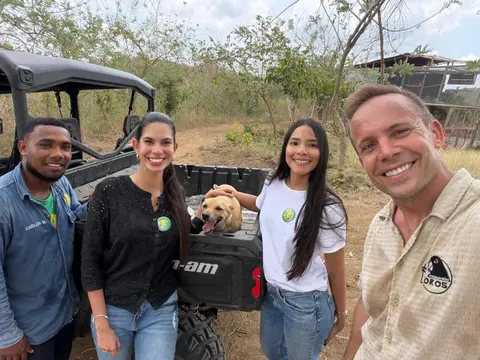
Victoria and Rosa arrived at the reserve ready to dive in headfirst, and the day rose to meet them. Together with Alejandro and Carlos, they made their way through the aviaries early in the morning — preparing food for the loros, running flight exercises, and pausing to assess the rehabilitation progress of several individuals. B177 still hasn't taken off — it moves only along the walls of aviario 1 — while B190 is flying now, but hasn't yet mastered landing and keeps hitting the mesh. These are the slow advances, the ones measured in weeks, the ones that matter most. Loros B11 and B12, on the other hand, greeted the visitors in the parque de niños with all the confidence in the world.
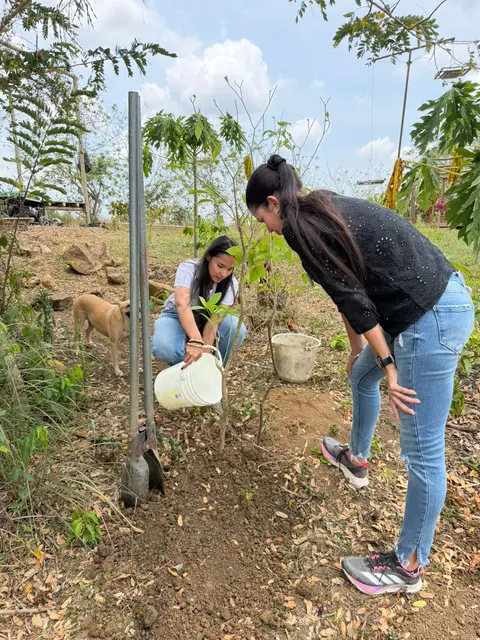
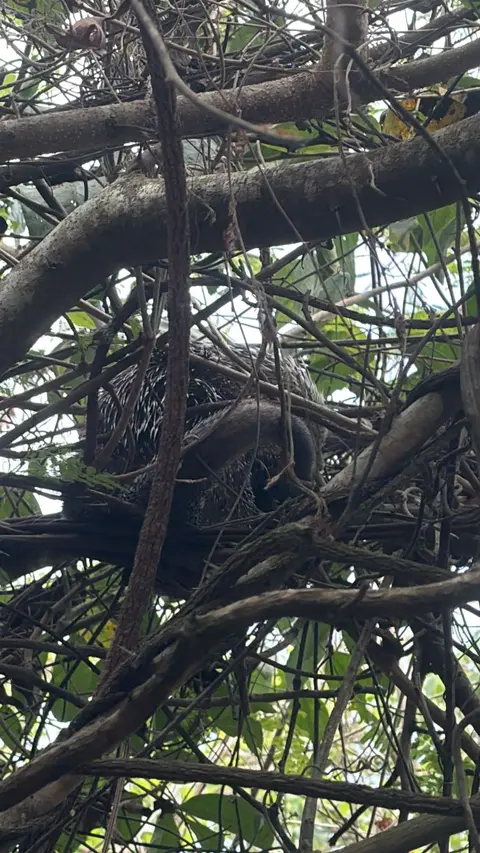
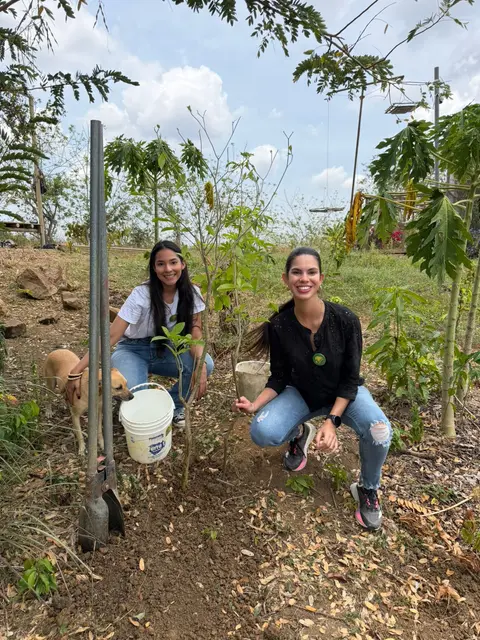
During the ride through the reserve in the Can-Am, Carlos proved he had the eyes of a hawk: moving at speed, he picked out squirrels, iguanas, and tortoises, and then — hidden high in the canopy — a coendú, the arboreal porcupine of these forests, so perfectly camouflaged among the branches it seemed to be part of the tree itself. At the lago de la ceiba, a female tití appeared between the trees with something impossibly small clinging to her body: a newborn, born just the day before. She didn't come down to the feeding stations. She held her position ten meters up and fifteen meters away, watching us with quiet wariness — as it should be. Happy, the reserve's scrappy little mixed-breed dog, kept pace with every step of the journey. At the end of the day, Victoria and Rosa picked up a shovel and planted a tree in the area where the guacamayas learn to fly free.